Before you start
Uxmal sits in the low Puuc hills of Yucatán, about an hour south of Mérida, and has been a UNESCO World Heritage Site since 1996. This short guide covers the ceremonial core in visit order: pyramid, courtyards, ballcourt, and palace platform.
Use it as a self-guided tour of Uxmal: 7 stops in visit order, each played when you’re ready, at your own pace.
 Free preview · Stop 1
Pyramid of the Magician
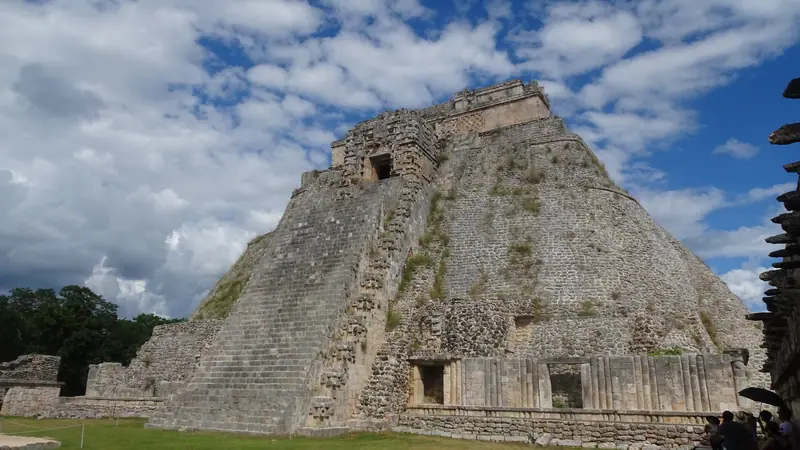
The Pyramid of the Magician greets you at the entrance and is the tallest building on the site, rising about 35 metres. Look at its base: rather than the usual square, it is oval, which makes it unusual among Maya pyramids. What looks like one structure is in fact five temples built one over another between the 6th and 10th centuries. The steep western stairway is lined with masks of Chaac, and near the top a doorway forms the gaping jaws of a monster, in the Chenes style from further south. Local legend says a dwarf magician raised it in a single night; it is a lovely story, but folklore rather than building history. The stairs are generally closed to climbing, so enjoy it from the ground and walk round to see that rounded profile.
Photo: Gary Todd from Xinzheng, China · CC0 · Wikimedia Commons
What to see at Uxmal: 7 stops, in visit order
- 01
 Pyramid of the MagicianPirámide del AdivinoFree preview
- 02
 Quadrangle of the BirdsCuadrángulo de los PájarosIn the guide
- 03
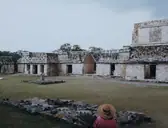 Nunnery QuadrangleCuadrángulo de las MonjasIn the guide
- 04
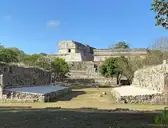 BallcourtJuego de PelotaIn the guide
- 05
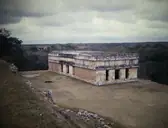 House of the TurtlesCasa de las TortugasIn the guide
- 06
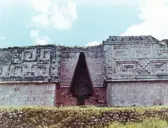 Governor’s PalacePalacio del GobernadorIn the guide
- 07
 Great PyramidGran PirámideIn the guide
Site map of Uxmal
History of Uxmal
Uxmal was raised by the Maya of the Puuc region in Yucatán. Maya civilisation spans nearly four thousand years: from village life around 2000 BCE, through the Preclassic and Classic florescence (about 250–900 CE), into the Postclassic, until Spanish conquest ended independent Maya kingdoms between the 1520s and 1697 — though millions of Maya people still live across Mexico and Central America today. Uxmal itself peaked from roughly the seventh to the tenth centuries CE as a city of tens of thousands, known for finely cut Puuc stonework, astronomy, and devotion to the rain god Chaac. With no rivers or cenotes, they stored rain in chultunes, which is why Chaac’s masks crowd so many façades. After the tenth century building slowed and the city declined, yet Uxmal lived on in legend and pilgrimage.
Uxmal guide: questions
How many stops does the Uxmal guide have?
7 stops, in visit order: 1. Pyramid of the Magician; 2. Quadrangle of the Birds; 3. Nunnery Quadrangle; 4. Ballcourt; 5. House of the Turtles; 6. Governor’s Palace; 7. Great Pyramid.
Can I do a self-guided tour of Uxmal with this guide?
Yes. The guide is made for a self-guided tour: 7 stops in visit order, each with a photo, a story and a voice, so you can explore Uxmal at your own pace, without joining a group. Download it before you go and it works offline.
How long do you need at Uxmal?
We suggest allowing about 2 hours. The 7 stops add up to about 6 minutes of listening, and you play each one when you’re ready, so you can linger wherever you like.
How long is each guide?
The 7 stops add up to about 6 minutes of listening in total. You play each stop when you’re ready, so you can go at your own pace.
Does the guide work offline?
Yes, once it’s downloaded. The guide is a single self-contained web page (about 6.7 MB) with the photos, text and audio built in. Download it to your phone before you go (Wi-Fi is best); after that it opens in any modern browser on iPhone or Android, with no app, account or mobile signal needed.
Does it use GPS or need my location?
No. The guide doesn’t use GPS and doesn’t know where you are: you play each stop when you reach it. It works on iPhone and Android in any modern browser, and it’s in English.
What’s included?
One self-contained HTML guide: 7 stops in visit order, each with a photo, text and a voice, plus the story of who built the site.
Who built Uxmal?
Uxmal was raised by the Maya of the Puuc region in Yucatán. Maya civilisation spans nearly four thousand years: from village life around 2000 BCE, through the Preclassic and Classic florescence (about 250–900 CE), into the Postclassic, until Spanish conquest ended independent Maya kingdoms between the 1520s and 1697 — though millions of Maya people still live across Mexico and Central America today.
Is there a free audio guide to Uxmal?
The first stop, Pyramid of the Magician, is free to read and hear on this page, so you can try the Uxmal audio tour before you buy. The full guide, with all 7 stops, is a one-off purchase: download it once and it’s yours to keep, working offline.
Is the Uxmal guide worth it?
If you’d like to know what you’re looking at, yes. For $10 you get 7 stops in visit order, each with a photo, a short history and a voice you play when you’re ready, plus a site map of the stops, and about 6 minutes of listening in all. It’s short on purpose, so you spend your time looking, not listening. It’s yours to keep, works offline and needs no app. The first stop is free on this page, so you can try it before you buy. If you’d like hours of detail, a guided tour will go deeper.
Audio guide or guided tour?
It depends how you like to visit. This guide lets you explore Uxmal at your own pace, at any time, for a one-off price. A guided tour gives you a live expert you can ask questions, but at fixed times and usually for a higher price. Many people use both: a tour for the big picture, and the guide to read beforehand or to revisit the stops in their own time.
Is this the official Uxmal guide?
No. It’s an independent guide by The Historian Guide, not affiliated with or endorsed by the operator of Uxmal. For tickets and opening hours, check the official site operator before you go.
Does the guide include entry tickets or opening hours?
No. The guide is a digital companion only. Admission to Uxmal is separate, so check the official site operator for current tickets and opening hours before you go.
- Stop 1 · Pyramid of the Magician (also the cover): Gary Todd from Xinzheng, China · CC0 · Wikimedia Commons · resized
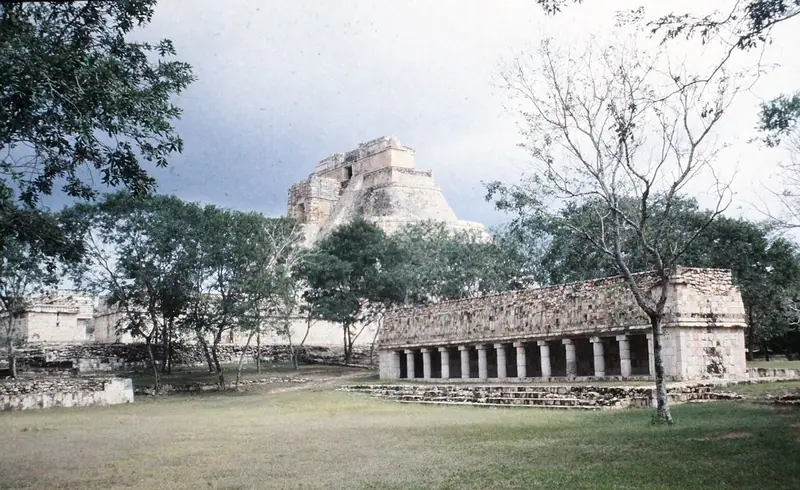
- Stop 2 · Quadrangle of the Birds: Katja Schulz from Washington, D. C., USA · CC BY 2.0 · Wikimedia Commons · resized
- Stop 3 · Nunnery Quadrangle: Gary Todd from Xinzheng, China · CC0 · Wikimedia Commons · resized
- Stop 4 · Ballcourt: Sharon Hahn Darlin · CC BY 2.0 · Wikimedia Commons · resized
- Stop 5 · House of the Turtles: Gary Todd from Xinzheng, China · CC0 · Wikimedia Commons · resized
- Stop 6 · Governor’s Palace: Jeff Hart · CC BY 2.0 · Wikimedia Commons · resized
- Stop 7 · Great Pyramid: Eden, Janine and Jim from New York City · CC BY 2.0 · Wikimedia Commons · resized


All photographs from Wikimedia Commons under the licences shown.
More guides in Mexico
 New Spain and Mexico8 stops · Colonial and modern Mexico
The Basilica of Guadalupe audio guide
Cross the great plaza of the world’s most visited Catholic shrine to see the image of Our Lady of Guadalupe, then climb the hill of Tepeyac.
 Maya6 stops · c. 600–800 CE
Bonampak audio guide
Three small rooms in the Lacandon forest painted with vivid Maya murals: a royal court, a battle and a celebration.
 Maya6 stops · c. 250–900 CE
Calakmul audio guide
Capital of the Snake Kingdom, rising out of the Campeche rainforest.
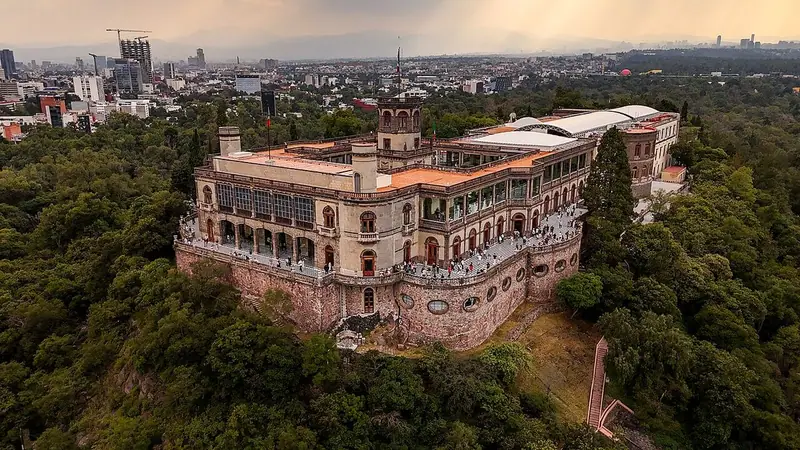 New Spain and Mexico8 stops · Second Mexican Empire
Chapultepec Castle audio guide
Climb the hill of Chapultepec to the castle of a viceroy, an emperor and presidents, now the National Museum of History.
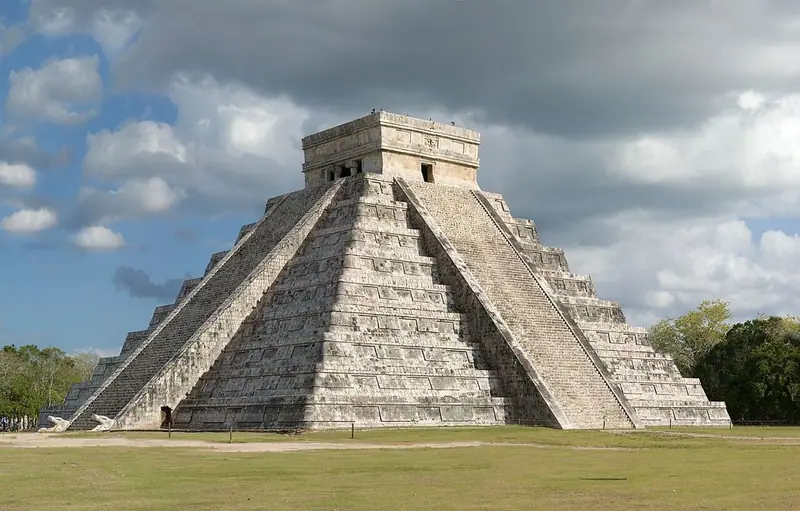 Maya8 stops · c. 600–1200 CE
Chichén Itzá audio guide
El Castillo and its serpent of light, the greatest ballcourt in Mesoamerica and the Sacred Cenote.
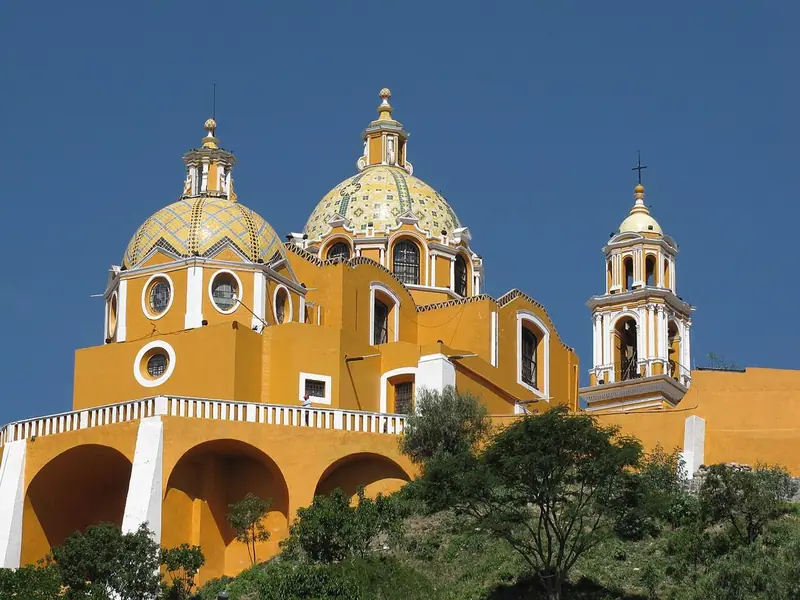 Mesoamerican6 stops · c. 300 BCE – 900 CE (pyramid)
Cholula audio guide
Tunnel into the Great Pyramid, then climb to the church on its summit and the view of the volcanoes.
Every guide, in every country
Uxmal and every other guide we publish, including future ones. One payment, no subscription.