Before you start
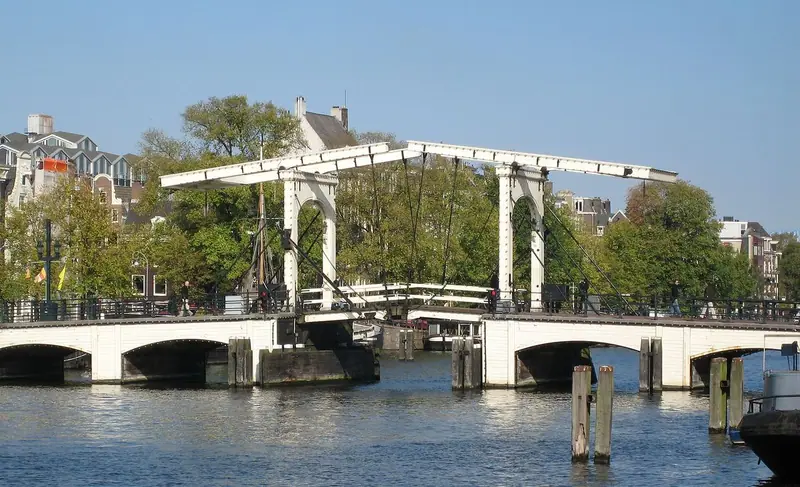
Amsterdam grew from a fishing village beside a dam on the river Amstel into the richest city in the world in the seventeenth century, the Dutch Golden Age. To house its booming population and its wealthy merchants, the city planned and dug a great ring of canals, lined with tall houses, warehouses and gardens. This guide begins on the Dam, where the city was born, visits the hidden courtyard of the Begijnhof and the Mint Tower, then follows the grandest stretch of the canal ring past the Golden Bend and a merchant’s house to the Skinny Bridge over the Amstel. The route is about two and a half kilometres and takes two to three hours with visits. For the Anne Frank House and the Rijksmuseum, see their separate guides.
Use it as a self-guided tour of the Amsterdam Canal Ring: 6 stops in visit order, each played when you’re ready, at your own pace.
 Free preview · Stop 1
The Dam and the Royal Palace
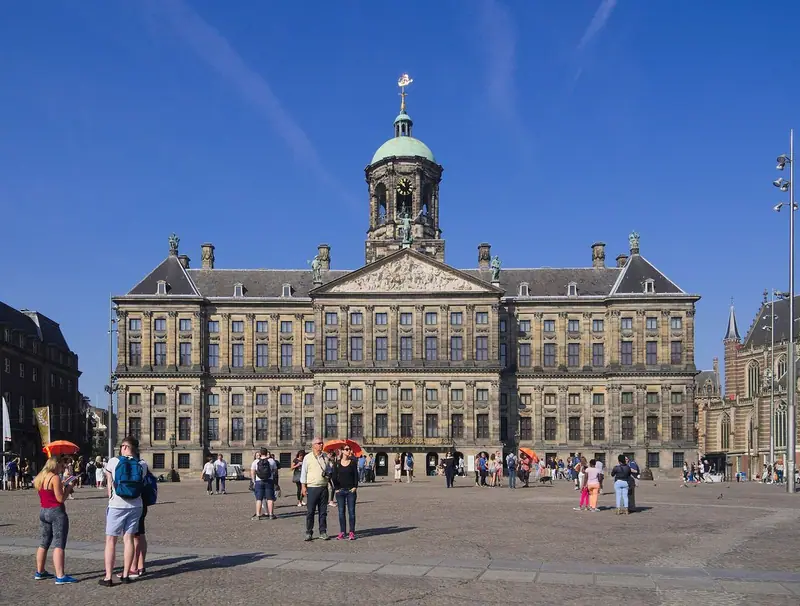
The Dam is the square where Amsterdam was born. Around 1270 a dam was built across the river Amstel here, joining the settlements on either bank and giving the city its name. The great classical building on the west side was built from 1648 as the city’s town hall, designed by Jacob van Campen to show off Amsterdam’s wealth and power at the end of the long war with Spain. Its marble halls were decorated with sculptures and paintings celebrating the city, and on its roof a bronze figure of Atlas carries the globe. In 1808, when the Netherlands were ruled by Napoleon’s brother Louis, it became a royal palace, and it is still used by the Dutch royal family for state occasions. Beside it stands the Nieuwe Kerk, the New Church, begun in 1380, where Dutch monarchs are inaugurated. Across the square rises the National Monument, a white stone pillar set up in 1956 in memory of the victims of the Second World War, where the nation gathers each year on 4 May. From the Dam, walk south down the Kalverstraat and turn right through a small gateway into the Begijnhof.
Photo: C messier · CC BY-SA 4.0 · Wikimedia Commons
What to see at the Amsterdam Canal Ring: 6 stops, in visit order
- 01
 The Dam and the Royal PalaceWhere the city beganFree preview
- 02
 The BegijnhofThe hidden courtyardIn the guide
- 03
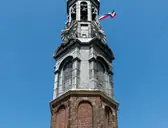 The Mint TowerThe old city gateIn the guide
- 04
 The Golden BendThe grandest stretch of the canalsIn the guide
- 05
 Museum Van LoonA merchant’s houseIn the guide
- 06
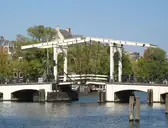 The Skinny BridgeAcross the AmstelIn the guide
Site map of the Amsterdam Canal Ring
History of the Amsterdam Canal Ring
Around 1270 people living beside the river Amstel built a dam across it, and the settlement that grew up there took its name from it: Amstelredamme. In 1578, during the Dutch Revolt against Spanish rule, the city went over to the Protestant side in what was called the Alteration. After the Spanish took Antwerp in 1585, merchants, craftsmen and refugees poured north, and Amsterdam became the trading centre of Europe. The Dutch East India Company, founded in 1602, sent its ships to Asia, and the city’s bankers and merchants grew rich. From 1613 the city built the three main canals of the ring, the Herengracht, the Keizersgracht and the Prinsengracht, extending them towards the Amstel from about 1660. In 1672, the Disaster Year, the Dutch Republic was invaded, and the city’s golden age began to fade.
The full history continues in the guide.
The Amsterdam Canal Ring guide: questions
How many stops does the Amsterdam Canal Ring guide have?
6 stops, in visit order: 1. The Dam and the Royal Palace; 2. The Begijnhof; 3. The Mint Tower; 4. The Golden Bend; 5. Museum Van Loon; 6. The Skinny Bridge.
Can I do a self-guided tour of the Amsterdam Canal Ring with this guide?
Yes. The guide is made for a self-guided tour: 6 stops in visit order, each with a photo, a story and a voice, so you can explore the Amsterdam Canal Ring at your own pace, without joining a group. Download it before you go and it works offline.
How long is each guide?
The 6 stops add up to about 5 minutes of listening in total. You play each stop when you’re ready, so you can go at your own pace.
Does the guide work offline?
Yes, once it’s downloaded. The guide is a single self-contained web page (about 6.5 MB) with the photos, text and audio built in. Download it to your phone before you go (Wi-Fi is best); after that it opens in any modern browser on iPhone or Android, with no app, account or mobile signal needed.
Does it use GPS or need my location?
No. The guide doesn’t use GPS and doesn’t know where you are: you play each stop when you reach it. It works on iPhone and Android in any modern browser, and it’s in English.
What’s included?
One self-contained HTML guide: 6 stops in visit order, each with a photo, text and a voice, plus the story of who built the site.
Who built the Amsterdam Canal Ring?
Around 1270 people living beside the river Amstel built a dam across it, and the settlement that grew up there took its name from it: Amstelredamme. In 1578, during the Dutch Revolt against Spanish rule, the city went over to the Protestant side in what was called the Alteration.
Is there a free audio guide to the Amsterdam Canal Ring?
The first stop, The Dam and the Royal Palace, is free to read and hear on this page, so you can try the Amsterdam Canal Ring audio tour before you buy. The full guide, with all 6 stops, is a one-off purchase: download it once and it’s yours to keep, working offline.
Is the Amsterdam Canal Ring guide worth it?
If you’d like to know what you’re looking at, yes. For $10 you get 6 stops in visit order, each with a photo, a short history and a voice you play when you’re ready, plus a site map of the stops, and about 5 minutes of listening in all. It’s short on purpose, so you spend your time looking, not listening. It’s yours to keep, works offline and needs no app. The first stop is free on this page, so you can try it before you buy. If you’d like hours of detail, a guided tour will go deeper.
Audio guide or guided tour?
It depends how you like to visit. This guide lets you explore the Amsterdam Canal Ring at your own pace, at any time, for a one-off price. A guided tour gives you a live expert you can ask questions, but at fixed times and usually for a higher price. Many people use both: a tour for the big picture, and the guide to read beforehand or to revisit the stops in their own time.
Is this the official Amsterdam Canal Ring guide?
No. It’s an independent guide by The Historian Guide, not affiliated with or endorsed by the operator of the Amsterdam Canal Ring. For tickets and opening hours, check the official site operator before you go.
Does the guide include entry tickets or opening hours?
No. The guide is a digital companion only. Admission to the Amsterdam Canal Ring is separate, so check the official site operator for current tickets and opening hours before you go.
- Stop 1 · The Dam and the Royal Palace: C messier · CC BY-SA 4.0 · Wikimedia Commons · resized
- Stop 2 · The Begijnhof: Dietmar Rabich · CC BY-SA 4.0 · Wikimedia Commons · resized
- Stop 3 · The Mint Tower: Dietmar Rabich · CC BY-SA 4.0 · Wikimedia Commons · resized
- Stop 4 · The Golden Bend: Gerrit Adriaenszoon Berckheyde · CC0 · Wikimedia Commons · resized
- Stop 5 · Museum Van Loon: Jean-Christophe BENOIST · CC BY-SA 3.0 · Wikimedia Commons · resized
- Stop 6 · The Skinny Bridge (also the cover): S Sepp · CC BY-SA 3.0 · Wikimedia Commons · resized


All photographs from Wikimedia Commons under the licences shown.
More guides in Netherlands
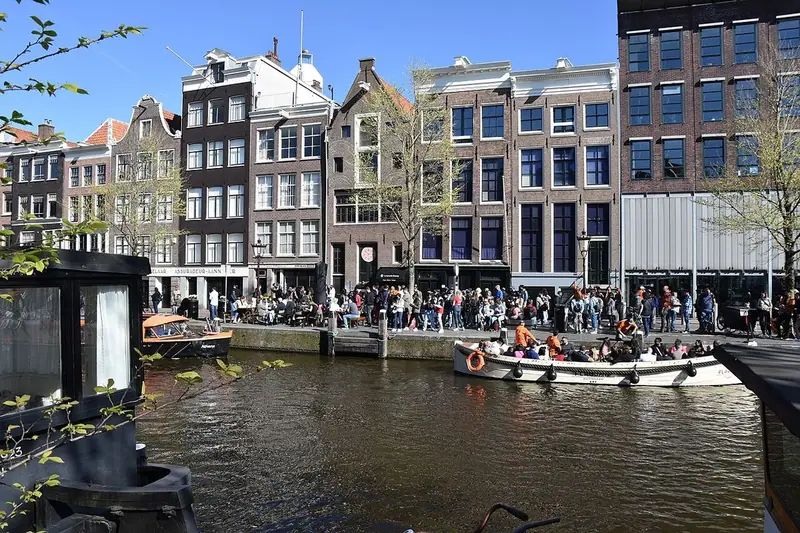 Modern7 stops · 1635 house; hiding 1942–1944
Anne Frank House audio guide
Pass behind the bookcase into the hiding place on the Prinsengracht where Anne Frank wrote her diary during the Second World War.
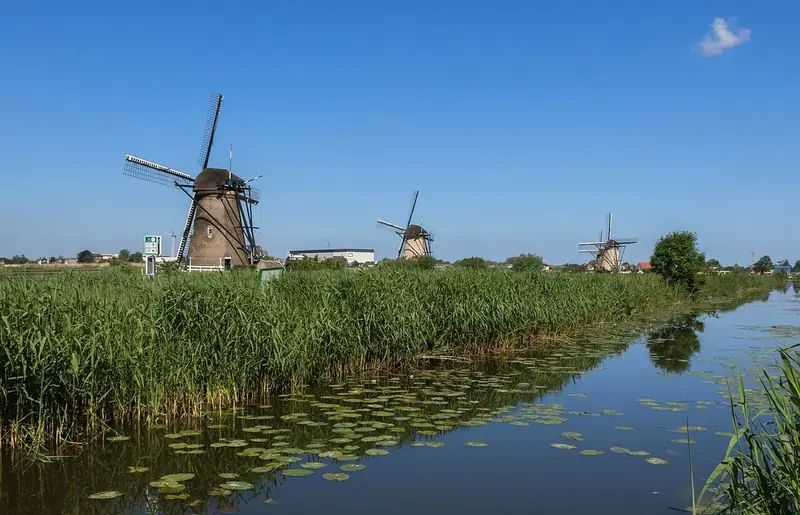 Dutch Republic7 stops · 1360s–1868 CE
Kinderdijk audio guide
Dikes across a low polder between rows of windmills built in 1738 and 1740 to lift the water in stages, the largest group of old mills in the Netherlands.
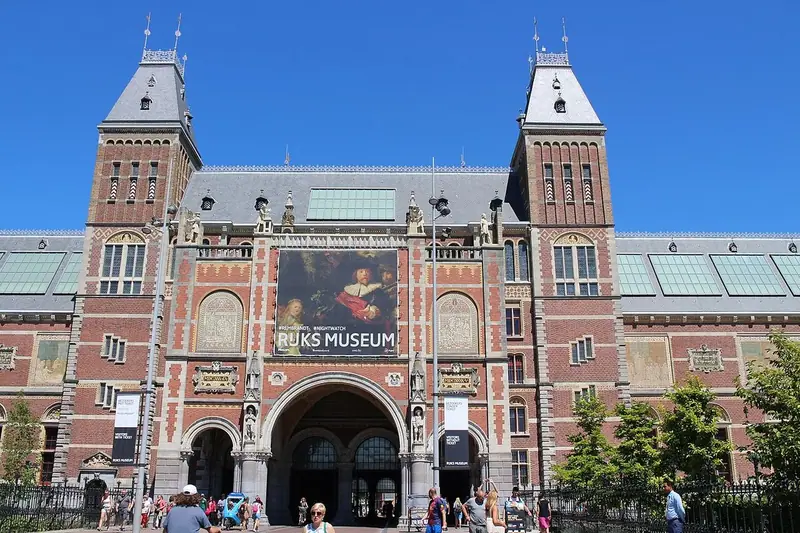 Dutch Republic8 stops · 17th century; museum 1798
Rijksmuseum audio guide
From the Great Hall down the Gallery of Honour to The Milkmaid and The Night Watch, the treasures of the Dutch Golden Age.
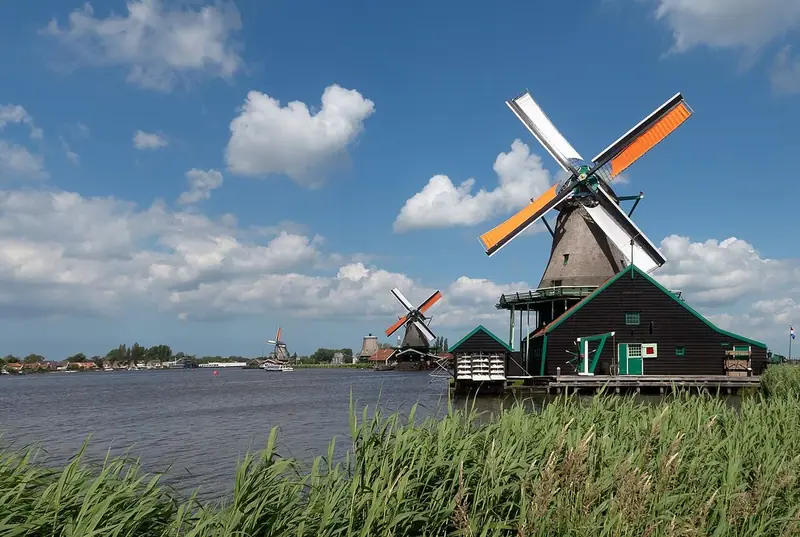 Dutch Republic7 stops · 17th–18th century CE
Zaanse Schans audio guide
The green wooden houses and working windmills of the Zaan, one of the earliest industrial regions in Europe.
Every guide, in every country
The Amsterdam Canal Ring and every other guide we publish, including future ones. One payment, no subscription.