Before you start
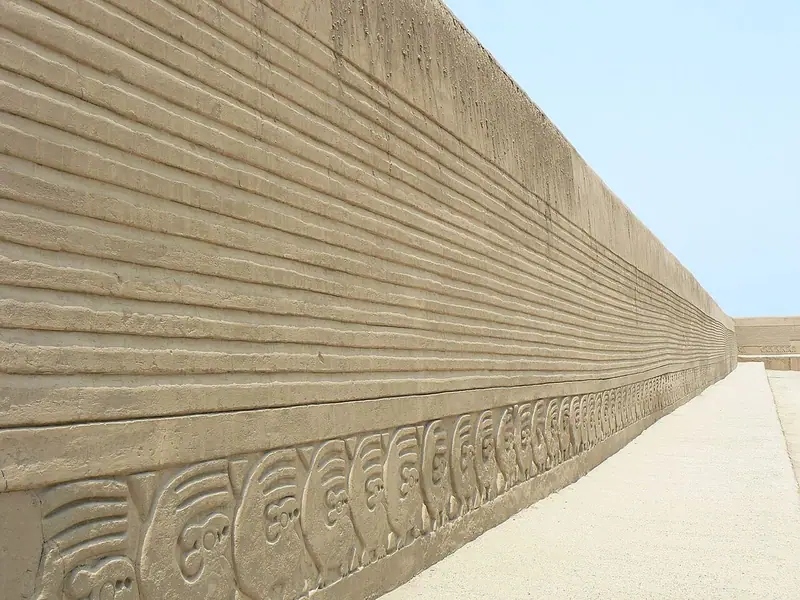
Chan Chan stands in the coastal desert of northern Peru, at the mouth of the Moche Valley, about five kilometres west of the city of Trujillo and close to the Pacific Ocean. It was the capital of the kingdom of Chimor, and it is considered the largest city built of earth in the Americas. The site covers about 20 square kilometres, with a dense centre of about six square kilometres containing ten great walled palaces, known as ciudadelas. UNESCO inscribed Chan Chan as a World Heritage Site in 1986, and placed it at once on its List of World Heritage in Danger, because its earthen walls are so fragile. The sun is strong and there is little shade, so bring a hat, sun cream and water. The route begins at the site museum, explores the palace of Nik An, also known as Tschudi, and ends at two temple mounds on the edge of Trujillo, the Huaca Esmeralda and the Huaca Arco Iris.
Use it as a self-guided tour of Chan Chan: 8 stops in visit order, each played when you’re ready, at your own pace.
 Free preview · Stop 1
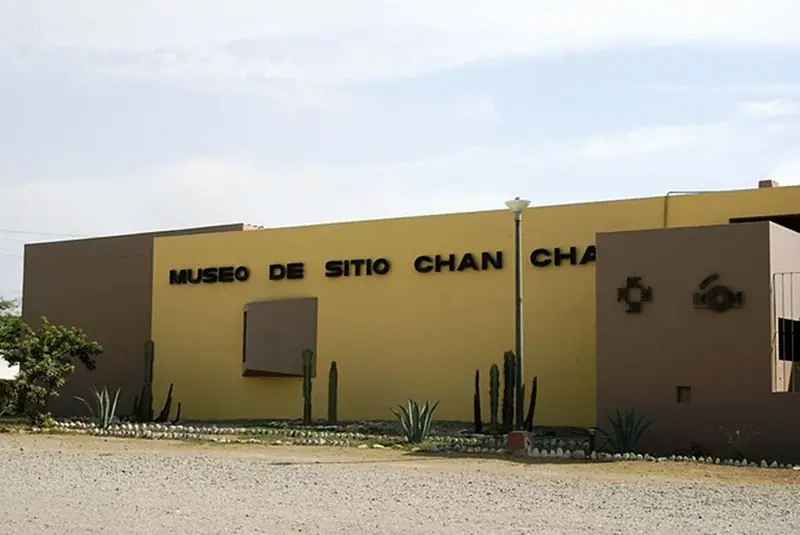
The Site Museum
Begin at the site museum, which cares for the objects recovered during excavations at Chan Chan. Here you can see the world of the Chimú elite: fine textiles, objects of gold, silver and copper, pottery used in ritual feasts and the sacred Spondylus shells. The Chimú were famous for their metalwork, pottery and weaving, and their craftsmen were organised in workshops within the city. Look for the original wooden figures that once stood in the doorways of the palaces, perhaps guardians or noble officials, which have been moved here for their protection. The Chimú believed, it is said, that the sun created three eggs: one of gold for the rulers and nobles, one of silver for their wives, and one of copper for everyone else.
Photo: uranio (Luís) · CC BY-SA 2.0 · Wikimedia Commons
What to see at Chan Chan: 8 stops, in visit order
- 01
 The Site MuseumThe treasures of ChimorFree preview
- 02
 The Walls of Nik AnA palace built against earthquakesIn the guide
- 03
 The Ceremonial PlazaThe great court of Nik AnIn the guide
- 04
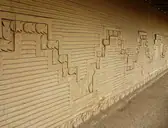 The Sea FriezesFish, waves and netsIn the guide
- 05
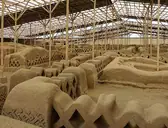 The AudienciasRooms of powerIn the guide
- 06
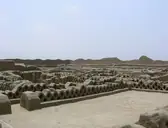 The Storerooms and the Royal TombWealth, water and the deadIn the guide
- 07
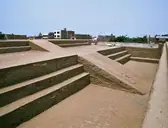 Huaca EsmeraldaA temple of nets and ottersIn the guide
- 08
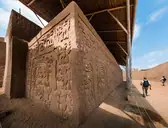 Huaca Arco IrisThe temple of the rainbowIn the guide
Site map of Chan Chan
History of Chan Chan
Chan Chan was built by the Chimú, a people of the north coast of Peru whose culture emerged around 900 CE. Their kingdom, Chimor, grew by conquest into a state that stretched along much of the coast. Its people spoke Quingnam, a language now extinct, and they lived in a sharply divided society, from the rulers and nobles in the palaces to the artisans who worked in small homes that doubled as workshops. Tradition recalls a dynasty of ten kings, beginning with Tacaynamo, and some scholars link the ten palaces to these rulers. Water was everything in this rainless desert, and the Chimú dug wells and canals from the Moche River to irrigate the land. Around 1470 the Inca conquered Chimor and its last king, Minchancaman, and the city declined.
The full history continues in the guide.
Chan Chan guide: questions
How many stops does the Chan Chan guide have?
8 stops, in visit order: 1. The Site Museum; 2. The Walls of Nik An; 3. The Ceremonial Plaza; 4. The Sea Friezes; 5. The Audiencias; 6. The Storerooms and the Royal Tomb; 7. Huaca Esmeralda; 8. Huaca Arco Iris.
Can I do a self-guided tour of Chan Chan with this guide?
Yes. The guide is made for a self-guided tour: 8 stops in visit order, each with a photo, a story and a voice, so you can explore Chan Chan at your own pace, without joining a group. Download it before you go and it works offline.
How long do you need at Chan Chan?
We suggest allowing half a day. The 8 stops add up to about 6 minutes of listening, and you play each one when you’re ready, so you can linger wherever you like.
How long is each guide?
The 8 stops add up to about 6 minutes of listening in total. You play each stop when you’re ready, so you can go at your own pace.
Does the guide work offline?
Yes, once it’s downloaded. The guide is a single self-contained web page (about 7.0 MB) with the photos, text and audio built in. Download it to your phone before you go (Wi-Fi is best); after that it opens in any modern browser on iPhone or Android, with no app, account or mobile signal needed.
Does it use GPS or need my location?
No. The guide doesn’t use GPS and doesn’t know where you are: you play each stop when you reach it. It works on iPhone and Android in any modern browser, and it’s in English.
What’s included?
One self-contained HTML guide: 8 stops in visit order, each with a photo, text and a voice, plus the story of who built the site.
Who built Chan Chan?
Chan Chan was built by the Chimú, a people of the north coast of Peru whose culture emerged around 900 CE. Their kingdom, Chimor, grew by conquest into a state that stretched along much of the coast.
Where is Chan Chan?
Chan Chan stands in the coastal desert of northern Peru, at the mouth of the Moche Valley, about five kilometres west of the city of Trujillo and close to the Pacific Ocean.
Is there a free audio guide to Chan Chan?
The first stop, The Site Museum, is free to read and hear on this page, so you can try the Chan Chan audio tour before you buy. The full guide, with all 8 stops, is a one-off purchase: download it once and it’s yours to keep, working offline.
Is the Chan Chan guide worth it?
If you’d like to know what you’re looking at, yes. For $10 you get 8 stops in visit order, each with a photo, a short history and a voice you play when you’re ready, plus a site map of the stops, and about 6 minutes of listening in all. It’s short on purpose, so you spend your time looking, not listening. It’s yours to keep, works offline and needs no app. The first stop is free on this page, so you can try it before you buy. If you’d like hours of detail, a guided tour will go deeper.
Audio guide or guided tour?
It depends how you like to visit. This guide lets you explore Chan Chan at your own pace, at any time, for a one-off price. A guided tour gives you a live expert you can ask questions, but at fixed times and usually for a higher price. Many people use both: a tour for the big picture, and the guide to read beforehand or to revisit the stops in their own time.
Is this the official Chan Chan guide?
No. It’s an independent guide by The Historian Guide, not affiliated with or endorsed by the operator of Chan Chan. For tickets and opening hours, check the official site operator before you go.
Does the guide include entry tickets or opening hours?
No. The guide is a digital companion only. Admission to Chan Chan is separate, so check the official site operator for current tickets and opening hours before you go.
- Stop 1 · The Site Museum: uranio (Luís) · CC BY-SA 2.0 · Wikimedia Commons · resized
- Stop 2 · The Walls of Nik An (also the cover): Kevstan · CC BY-SA 3.0 · Wikimedia Commons · resized
- Stop 3 · The Ceremonial Plaza: Veronique Debord · CC BY-SA 2.0 · Wikimedia Commons · resized
- Stop 4 · The Sea Friezes: Velvet · CC BY-SA 4.0 · Wikimedia Commons · resized
- Stop 5 · The Audiencias: Velvet · CC BY-SA 4.0 · Wikimedia Commons · resized
- Stop 6 · The Storerooms and the Royal Tomb: Kevstan · CC BY-SA 3.0 · Wikimedia Commons · resized
- Stop 7 · Huaca Esmeralda: Bruno Girin · CC BY-SA 2.0 · Wikimedia Commons · resized
- Stop 8 · Huaca Arco Iris: Ozesama · CC BY-SA 4.0 · Wikimedia Commons · resized


All photographs from Wikimedia Commons under the licences shown.
More guides in Peru
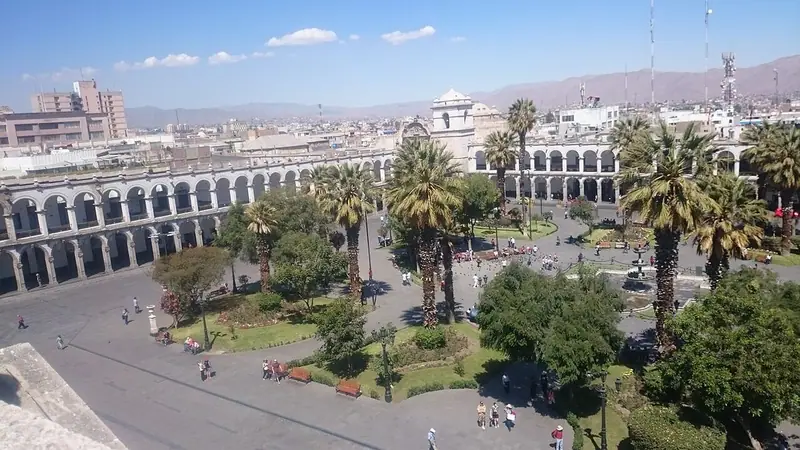 Spanish Colonial7 stops · 16th–19th century CE
Arequipa audio guide
The White City of volcanic stone: the Santa Catalina Monastery, the cathedral and La Compañía on the Plaza de Armas, the ice maiden Juanita and the Yanahuara viewpoint.
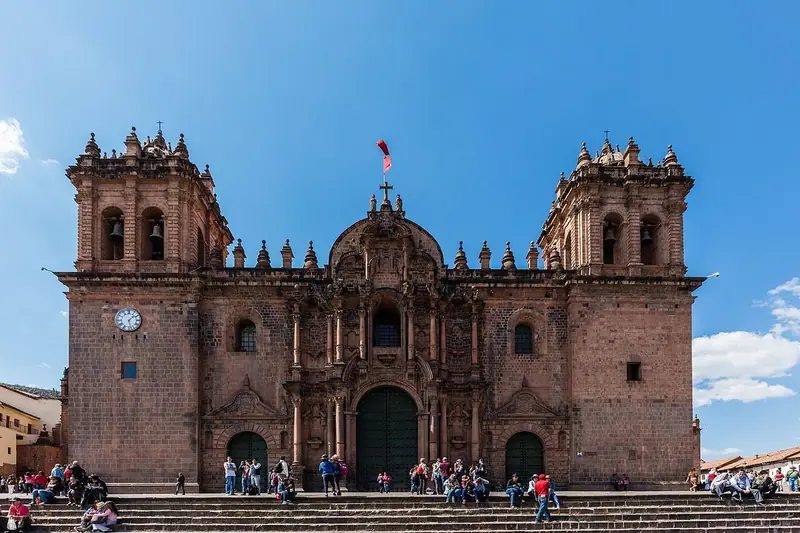 Inca7 stops · 15th–18th century CE
Historic Centre of Cusco audio guide
From the Plaza de Armas past the Twelve-Angled Stone and San Blas to the Qorikancha, temple of the Incas.
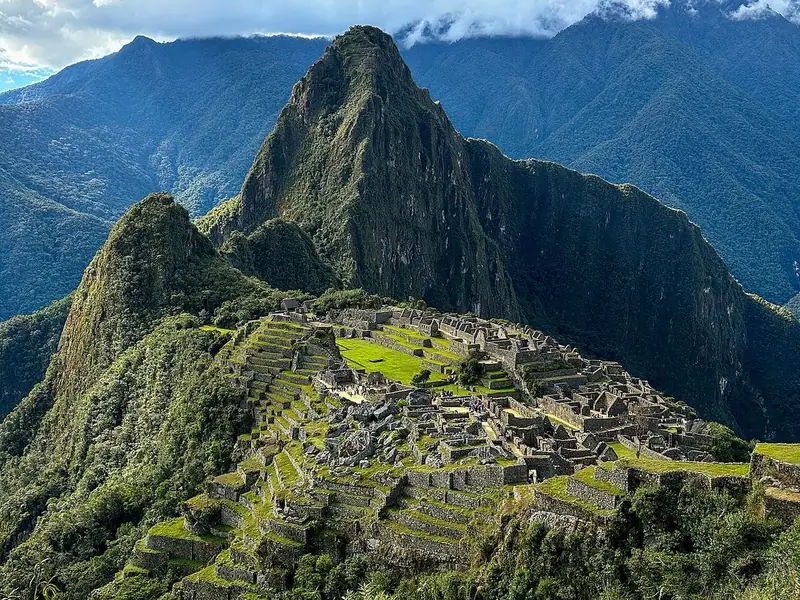 Inca8 stops · 15th century CE
Machu Picchu audio guide
Through the city gate to the Temple of the Sun, the Intihuatana and the Temple of the Condor, high above the Urubamba.
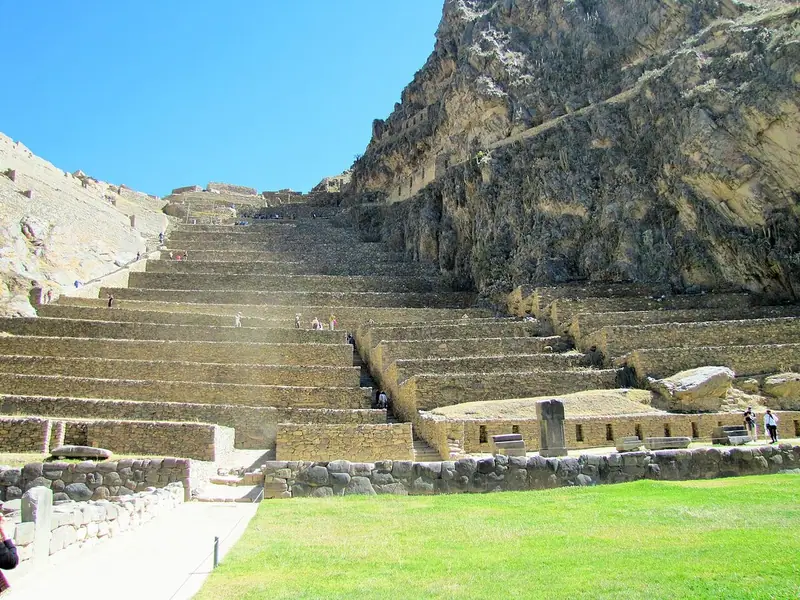 Inca6 stops · 15th–16th century CE
Ollantaytambo audio guide
The Pumatallis terraces, the Temple Sector’s six great monoliths and the Inca town below.
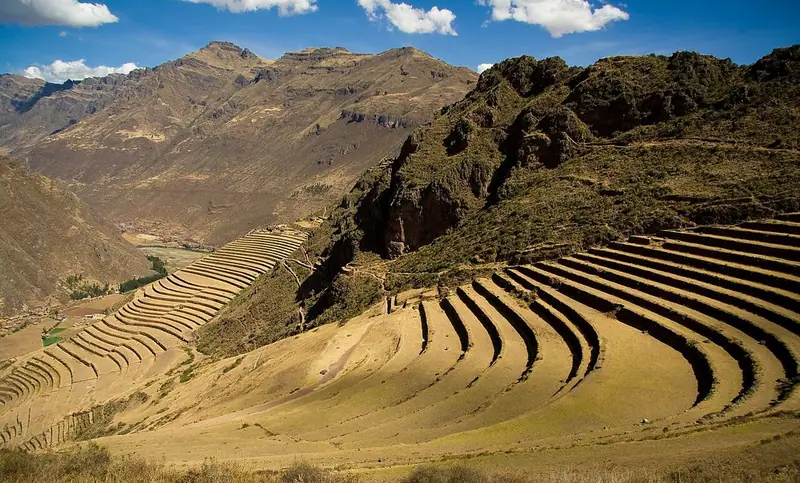 Inca6 stops · 15th century CE
Pisac audio guide
Sweeping terraces and the Intiwatana on a ridge high above the Sacred Valley, then the path down to the town.
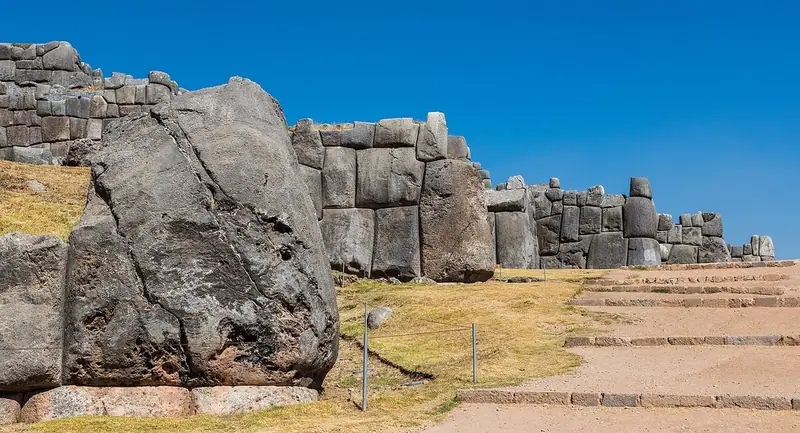 Inca6 stops · 15th–16th century CE
Sacsayhuamán audio guide
Zigzag walls of giant fitted stones on the hill above Cusco, guarding the Inca capital.
Every guide, in every country
Chan Chan and every other guide we publish, including future ones. One payment, no subscription.