Before you start
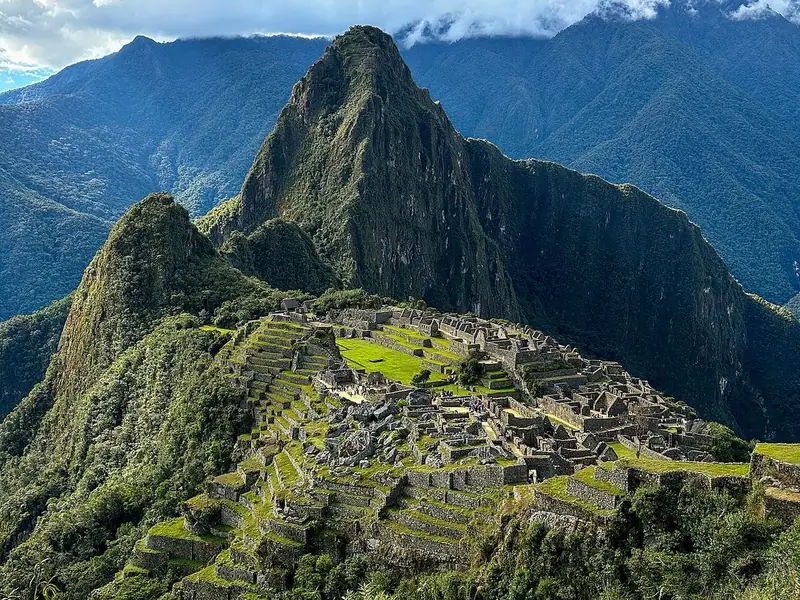
Machu Picchu stands on a mountain ridge at about 2,430 metres above sea level, high above the Urubamba River, roughly eighty kilometres north-west of Cusco. Most visitors take the train from Cusco or Ollantaytambo to the town of Machupicchu, often called Aguas Calientes, and then the bus up the winding road to the entrance; others arrive on foot along the Inca Trail. Entry is by timed ticket for a set circuit, and visits follow fixed one-way routes, so which buildings you can approach depends on your ticket; some are seen only from above or outside. Paths are stepped, steep and uneven. This guide follows the classic sequence from the Guardhouse and the terraces through the city gate to the Temple of the Sun, the Sacred Plaza, the Intihuatana, the Sacred Rock and the Temple of the Condor.
Use it as a self-guided tour of Machu Picchu: 8 stops in visit order, each played when you’re ready, at your own pace.
 Free preview · Stop 1
The Guardhouse
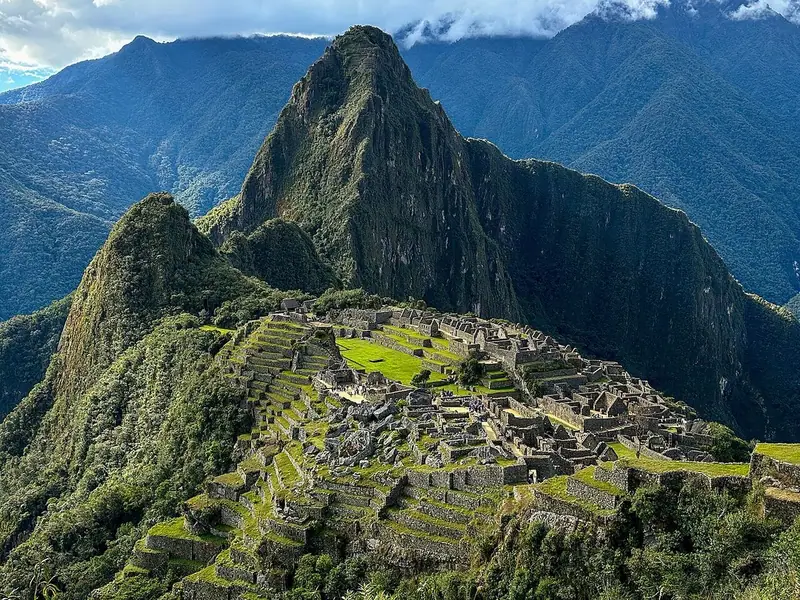
Climb from the entrance to the small thatched building on the high terraces, known as the Guardhouse or the Hut of the Caretaker of the Funerary Rock. It is built in a three-sided style called wayrona, open on one long side. From here you see the famous view: the whole city spread along the ridge below you, with the peak of Huayna Picchu rising behind it, and the deep canyon of the Urubamba River on either side. Nearby is a carved boulder known as the Funerary Rock; its name comes from early explorers, who guessed that it was used in rituals for the dead, but its purpose is not known. Look along the ridge and notice how the city is divided: farming terraces on one side and the urban area on the other, separated by a long dry moat and a wall.
Photo: Steve FUNG · CC BY-SA 4.0 · Wikimedia Commons
What to see at Machu Picchu: 8 stops, in visit order
- 01
 The GuardhouseThe classic viewFree preview
- 02
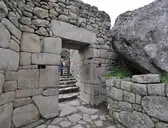 Terraces and City GateThe agricultural sectorIn the guide
- 03
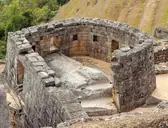 Temple of the SunThe TorreónIn the guide
- 04
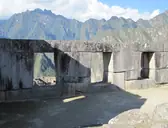 Three WindowsThe temple on the plazaIn the guide
- 05
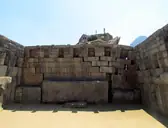 The Main TempleOn the Sacred PlazaIn the guide
- 06
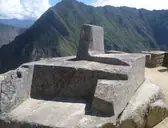 The IntihuatanaThe hitching post of the SunIn the guide
- 07
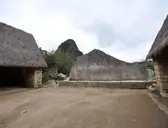 The Sacred RockAt the end of the plazaIn the guide
- 08
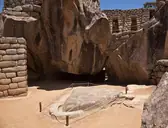 Temple of the CondorA bird carved in stoneIn the guide
Site map of Machu Picchu
History of Machu Picchu
Machu Picchu was built by the Incas, whose empire, Tawantinsuyu, became the largest in the Americas in the fifteenth and early sixteenth centuries, stretching along the Andes from present-day Ecuador to Chile, with its capital at Cusco. Their rise to empire began under the ruler Pachacuti, who came to power around 1438, though Andean civilisations had flourished in the region for thousands of years before them. Machu Picchu is thought to have been a royal estate of Pachacuti, built in the mid-fifteenth century; radiocarbon dating suggests it was occupied from about 1420 to 1530. It was abandoned around the time of the Spanish conquest, which began in 1532 and ended the empire. Local farmers always knew the site, but it became world famous after the American historian Hiram Bingham reached it in 1911.
Machu Picchu guide: questions
How many stops does the Machu Picchu guide have?
8 stops, in visit order: 1. The Guardhouse; 2. Terraces and City Gate; 3. Temple of the Sun; 4. Three Windows; 5. The Main Temple; 6. The Intihuatana; 7. The Sacred Rock; 8. Temple of the Condor.
Can I do a self-guided tour of Machu Picchu with this guide?
Yes. The guide is made for a self-guided tour: 8 stops in visit order, each with a photo, a story and a voice, so you can explore Machu Picchu at your own pace, without joining a group. Download it before you go and it works offline.
How long is each guide?
The 8 stops add up to about 5 minutes of listening in total. You play each stop when you’re ready, so you can go at your own pace.
Does the guide work offline?
Yes, once it’s downloaded. The guide is a single self-contained web page (about 8.0 MB) with the photos, text and audio built in. Download it to your phone before you go (Wi-Fi is best); after that it opens in any modern browser on iPhone or Android, with no app, account or mobile signal needed.
Does it use GPS or need my location?
No. The guide doesn’t use GPS and doesn’t know where you are: you play each stop when you reach it. It works on iPhone and Android in any modern browser, and it’s in English.
What’s included?
One self-contained HTML guide: 8 stops in visit order, each with a photo, text and a voice, plus the story of who built the site.
Who built Machu Picchu?
Machu Picchu was built by the Incas, whose empire, Tawantinsuyu, became the largest in the Americas in the fifteenth and early sixteenth centuries, stretching along the Andes from present-day Ecuador to Chile, with its capital at Cusco. Their rise to empire began under the ruler Pachacuti, who came to power around 1438, though Andean civilisations had flourished in the region for thousands of years before them.
Is there a free audio guide to Machu Picchu?
The first stop, The Guardhouse, is free to read and hear on this page, so you can try the Machu Picchu audio tour before you buy. The full guide, with all 8 stops, is a one-off purchase: download it once and it’s yours to keep, working offline.
Is the Machu Picchu guide worth it?
If you’d like to know what you’re looking at, yes. For $10 you get 8 stops in visit order, each with a photo, a short history and a voice you play when you’re ready, plus a site map of the stops, and about 5 minutes of listening in all. It’s short on purpose, so you spend your time looking, not listening. It’s yours to keep, works offline and needs no app. The first stop is free on this page, so you can try it before you buy. If you’d like hours of detail, a guided tour will go deeper.
Audio guide or guided tour?
It depends how you like to visit. This guide lets you explore Machu Picchu at your own pace, at any time, for a one-off price. A guided tour gives you a live expert you can ask questions, but at fixed times and usually for a higher price. Many people use both: a tour for the big picture, and the guide to read beforehand or to revisit the stops in their own time.
Is this the official Machu Picchu guide?
No. It’s an independent guide by The Historian Guide, not affiliated with or endorsed by the operator of Machu Picchu. For tickets and opening hours, check the official site operator before you go.
Does the guide include entry tickets or opening hours?
No. The guide is a digital companion only. Admission to Machu Picchu is separate, so check the official site operator for current tickets and opening hours before you go.
- Stop 1 · The Guardhouse (also the cover): Steve FUNG · CC BY-SA 4.0 · Wikimedia Commons · resized
- Stop 2 · Terraces and City Gate: Jorge Láscar from Australia · CC BY 2.0 · Wikimedia Commons · resized
- Stop 3 · Temple of the Sun: Hans Brian Brandsberg Berg · CC BY 2.0 · Wikimedia Commons · resized
- Stop 4 · Three Windows: David Berkowitz from New York, NY, USA · CC BY 2.0 · Wikimedia Commons · resized
- Stop 5 · The Main Temple: bobistraveling · CC BY 2.0 · Wikimedia Commons · resized
- Stop 6 · The Intihuatana: Alesegura · CC BY-SA 4.0 · Wikimedia Commons · resized
- Stop 7 · The Sacred Rock: Jorge Láscar from Australia · CC BY 2.0 · Wikimedia Commons · resized
- Stop 8 · Temple of the Condor: Unukorno · CC BY 3.0 · Wikimedia Commons · resized


All photographs from Wikimedia Commons under the licences shown.
More guides in Peru
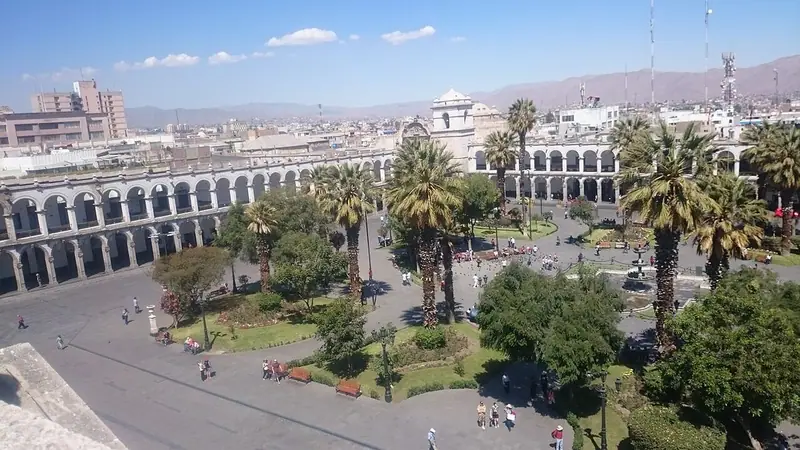 Spanish Colonial7 stops · 16th–19th century CE
Arequipa audio guide
The White City of volcanic stone: the Santa Catalina Monastery, the cathedral and La Compañía on the Plaza de Armas, the ice maiden Juanita and the Yanahuara viewpoint.
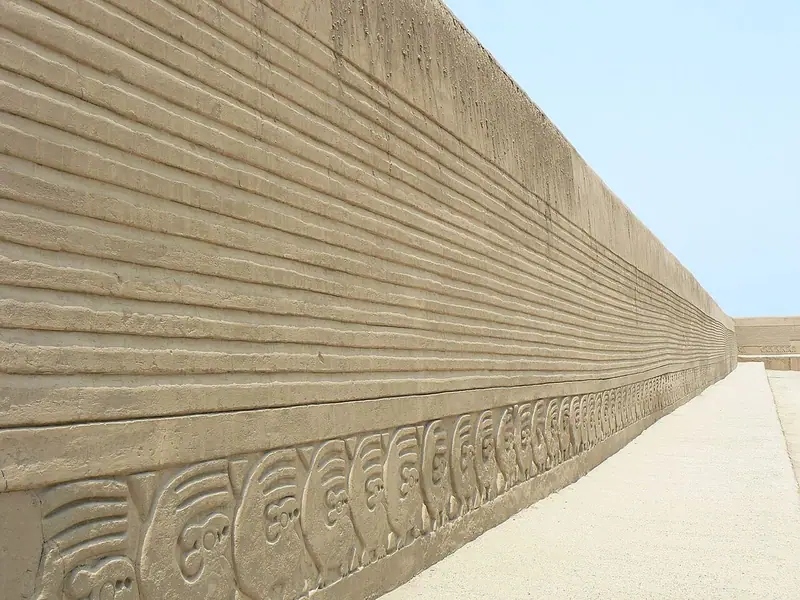 Chimú8 stops · c. 900 – 1470 CE
Chan Chan audio guide
The vast adobe capital of the Chimú kings by the Pacific: the palace of Nik An with its friezes of fish and nets, its audiencias and royal tomb, and the rainbow temple of the Huaca Arco Iris.
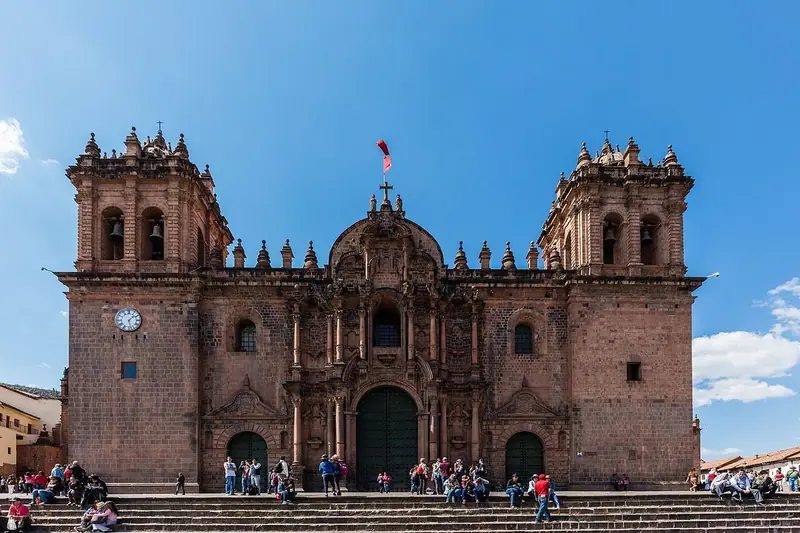 Inca7 stops · 15th–18th century CE
Historic Centre of Cusco audio guide
From the Plaza de Armas past the Twelve-Angled Stone and San Blas to the Qorikancha, temple of the Incas.
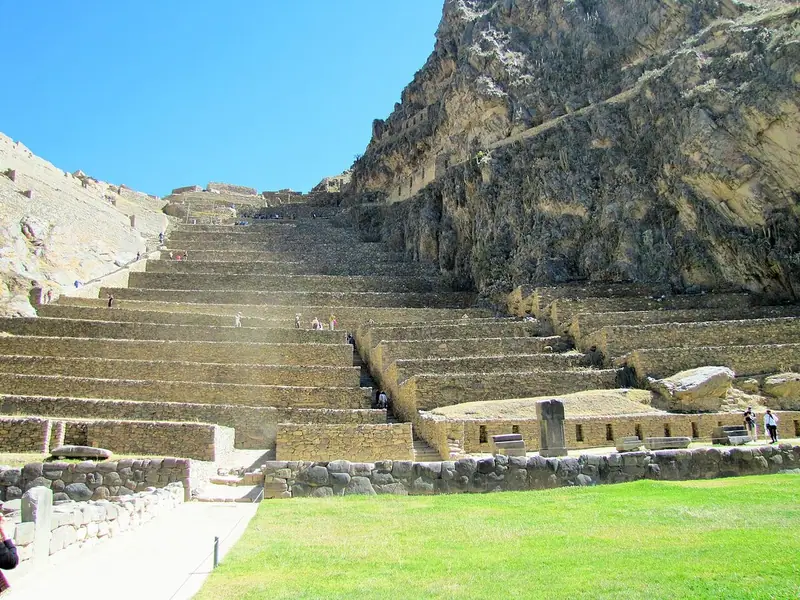 Inca6 stops · 15th–16th century CE
Ollantaytambo audio guide
The Pumatallis terraces, the Temple Sector’s six great monoliths and the Inca town below.
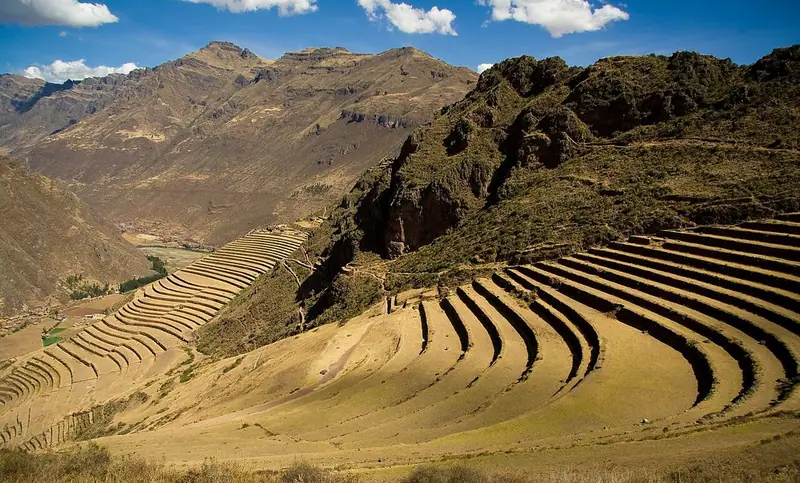 Inca6 stops · 15th century CE
Pisac audio guide
Sweeping terraces and the Intiwatana on a ridge high above the Sacred Valley, then the path down to the town.
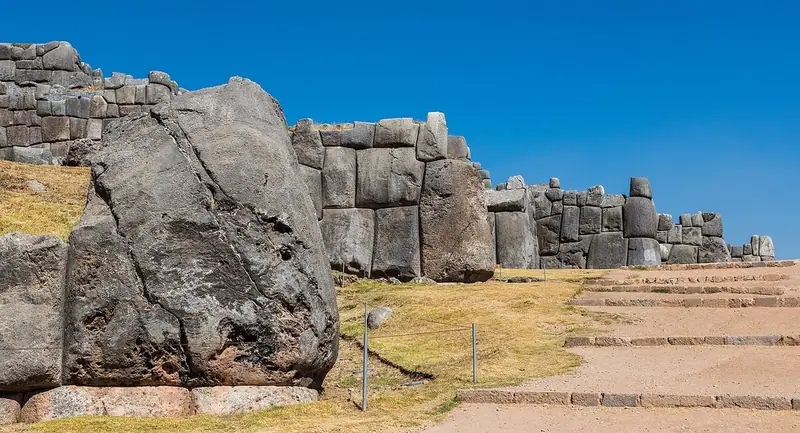 Inca6 stops · 15th–16th century CE
Sacsayhuamán audio guide
Zigzag walls of giant fitted stones on the hill above Cusco, guarding the Inca capital.
Every guide, in every country
Machu Picchu and every other guide we publish, including future ones. One payment, no subscription.