Before you start
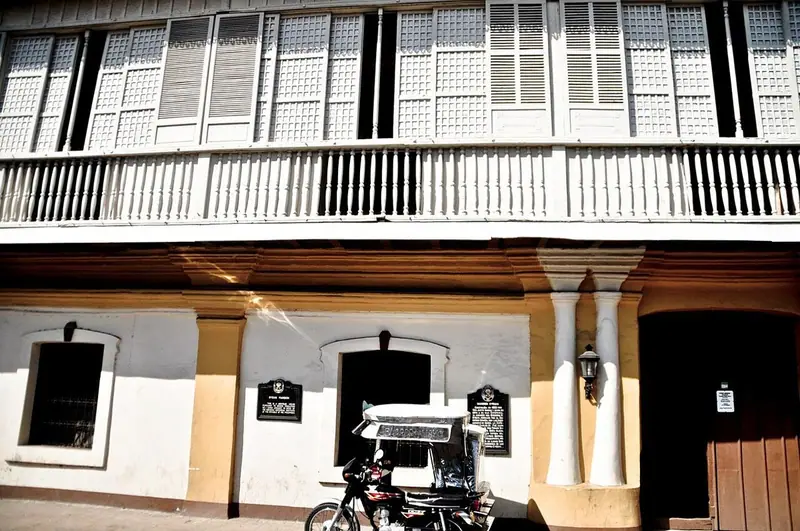
Vigan, on the north-west coast of Luzon, is the best-preserved Spanish colonial town in Asia, and its historic centre was inscribed as a UNESCO World Heritage Site in 1999. Its streets of stone mansions with wooden upper floors mix Filipino, Chinese, Spanish and Mexican influences, built by merchants who grew rich on trade across the South China Sea. The tour starts in Plaza Salcedo, visits the cathedral and the archbishop’s palace, the house of a martyred priest, the cobbled Calle Crisologo and a merchant’s mansion, and ends among the potters who make Vigan’s famous jars. Walk early or late, when it is cooler.
Use it as a self-guided tour of Vigan: 7 stops in visit order, each played when you’re ready, at your own pace.
 Free preview · Stop 1
Plaza Salcedo
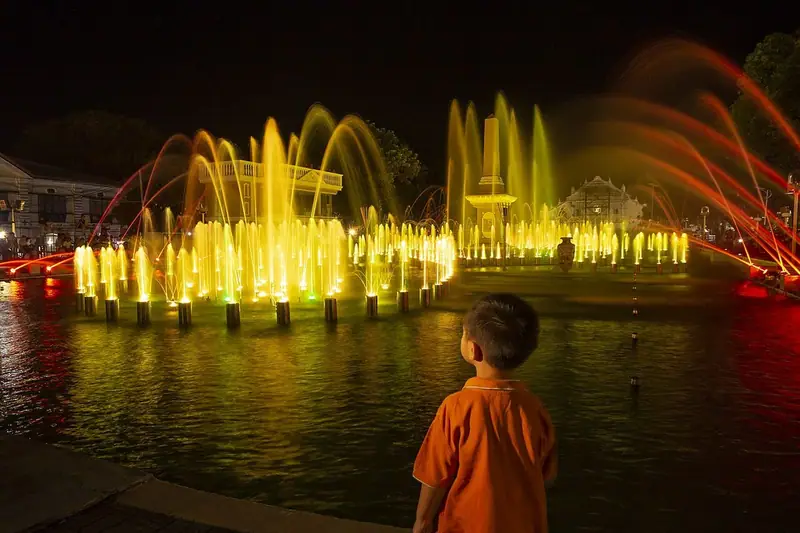
Begin in Plaza Salcedo, the long main square of Vigan, named after the town’s Spanish founder, Juan de Salcedo. The town was laid out around this square in a grid of streets, following the pattern of Intramuros in Manila, with the church, the government and the houses of the leading families close to the centre. Look at the obelisk in the middle of the square, and at the pool where a fountain show is held in the evenings. The square is also remembered as the place where Gabriela Silang was executed by the Spanish in 1763. She took over the leadership of a revolt in the Ilocos region after her husband, Diego Silang, was assassinated, and she is honoured today as a national heroine. Look around you at the old buildings of the provincial government, and then walk to the cathedral.
Photo: Jessartcam · CC BY-SA 4.0 · Wikimedia Commons
What to see at Vigan: 7 stops, in visit order
- 01
 Plaza SalcedoHeart of the townFree preview
- 02
 The CathedralEarthquake BaroqueIn the guide
- 03
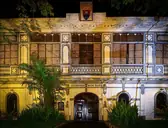 The Archbishop’s PalaceThe ArzobispadoIn the guide
- 04
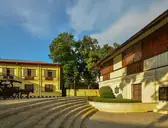 Padre Burgos HouseA martyred priestIn the guide
- 05
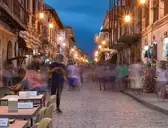 Calle CrisologoStreets of stone housesIn the guide
- 06
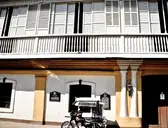 Syquia MansionA president’s houseIn the guide
- 07
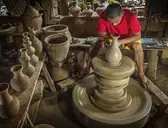 The Burnay PottersJars from the earthIn the guide
Site map of Vigan
History of Vigan
Long before the Spanish came, Chinese and other traders sailed up the river to trade with the Ilocano people here. In 1572 the Spanish conquistador Juan de Salcedo arrived, and founded a town that he named Villa Fernandina, after a young son of King Philip the Second. It became the centre of Spanish rule in northern Luzon, and in 1758 the seat of the bishop was moved here. Spanish rule ended in 1898, followed by American rule and the Japanese occupation in the Second World War, and the Philippines became independent in 1946. Vigan escaped the destruction suffered by many towns in the war.
Vigan guide: questions
How many stops does the Vigan guide have?
7 stops, in visit order: 1. Plaza Salcedo; 2. The Cathedral; 3. The Archbishop’s Palace; 4. Padre Burgos House; 5. Calle Crisologo; 6. Syquia Mansion; 7. The Burnay Potters.
Can I do a self-guided tour of Vigan with this guide?
Yes. The guide is made for a self-guided tour: 7 stops in visit order, each with a photo, a story and a voice, so you can explore Vigan at your own pace, without joining a group. Download it before you go and it works offline.
How long is each guide?
The 7 stops add up to about 5 minutes of listening in total. You play each stop when you’re ready, so you can go at your own pace.
Does the guide work offline?
Yes, once it’s downloaded. The guide is a single self-contained web page (about 6.4 MB) with the photos, text and audio built in. Download it to your phone before you go (Wi-Fi is best); after that it opens in any modern browser on iPhone or Android, with no app, account or mobile signal needed.
Does it use GPS or need my location?
No. The guide doesn’t use GPS and doesn’t know where you are: you play each stop when you reach it. It works on iPhone and Android in any modern browser, and it’s in English.
What’s included?
One self-contained HTML guide: 7 stops in visit order, each with a photo, text and a voice, plus the story of who built the site.
Who built Vigan?
Long before the Spanish came, Chinese and other traders sailed up the river to trade with the Ilocano people here. In 1572 the Spanish conquistador Juan de Salcedo arrived, and founded a town that he named Villa Fernandina, after a young son of King Philip the Second.
Is there a free audio guide to Vigan?
The first stop, Plaza Salcedo, is free to read and hear on this page, so you can try the Vigan audio tour before you buy. The full guide, with all 7 stops, is a one-off purchase: download it once and it’s yours to keep, working offline.
Is the Vigan guide worth it?
If you’d like to know what you’re looking at, yes. For $10 you get 7 stops in visit order, each with a photo, a short history and a voice you play when you’re ready, plus a site map of the stops, and about 5 minutes of listening in all. It’s short on purpose, so you spend your time looking, not listening. It’s yours to keep, works offline and needs no app. The first stop is free on this page, so you can try it before you buy. If you’d like hours of detail, a guided tour will go deeper.
Audio guide or guided tour?
It depends how you like to visit. This guide lets you explore Vigan at your own pace, at any time, for a one-off price. A guided tour gives you a live expert you can ask questions, but at fixed times and usually for a higher price. Many people use both: a tour for the big picture, and the guide to read beforehand or to revisit the stops in their own time.
Is this the official Vigan guide?
No. It’s an independent guide by The Historian Guide, not affiliated with or endorsed by the operator of Vigan. For tickets and opening hours, check the official site operator before you go.
Does the guide include entry tickets or opening hours?
No. The guide is a digital companion only. Admission to Vigan is separate, so check the official site operator for current tickets and opening hours before you go.
- Stop 1 · Plaza Salcedo: Jessartcam · CC BY-SA 4.0 · Wikimedia Commons · resized
- Stop 2 · The Cathedral: Luzviminda7641 · CC0 · Wikimedia Commons · resized
- Stop 3 · The Archbishop’s Palace: Jsinglador · CC BY-SA 4.0 · Wikimedia Commons · resized
- Stop 4 · Padre Burgos House: Jsinglador · CC BY-SA 4.0 · Wikimedia Commons · resized
- Stop 5 · Calle Crisologo: Roniel Soriano · CC BY-SA 4.0 · Wikimedia Commons · resized
- Stop 6 · Syquia Mansion (also the cover): Markadan · CC BY 4.0 · Wikimedia Commons · resized
- Stop 7 · The Burnay Potters: Ranieljosecastaneda · CC BY-SA 4.0 · Wikimedia Commons · resized


All photographs from Wikimedia Commons under the licences shown.
More guides in Philippines
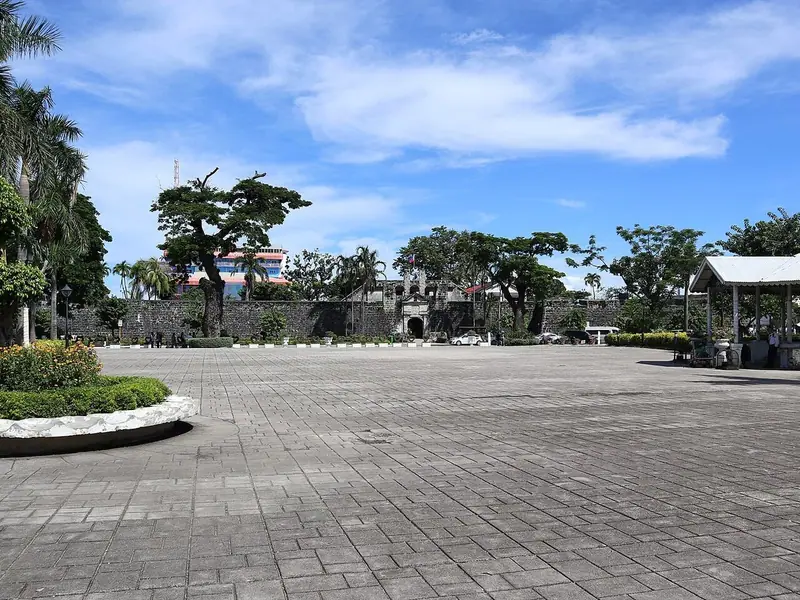 Spanish Colonial8 stops · 1565–1898
Historic Cebu audio guide
Start at Fort San Pedro and walk to Magellan’s Cross and the Basilica of the Santo Niño in the oldest Spanish city in the Philippines.
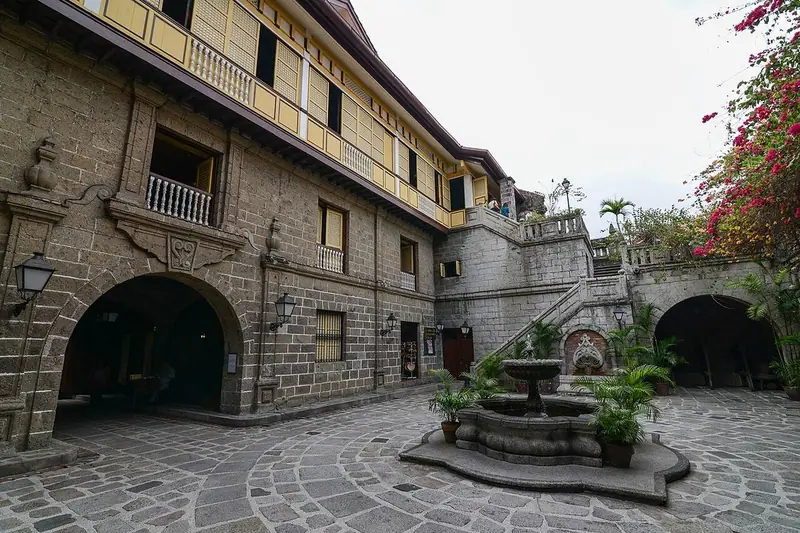 Spanish Colonial8 stops · 1571–1898
Intramuros audio guide
The walls of old Manila, from Fort Santiago and the Rizal Shrine to Manila Cathedral and San Agustin Church.
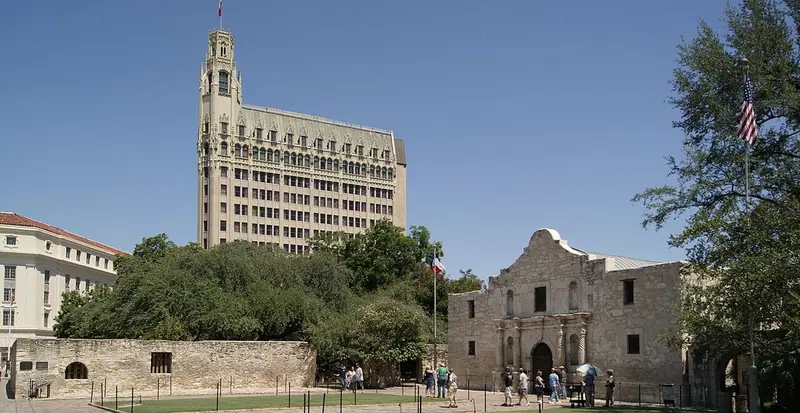 Spanish Colonial7 stops · 1718–1782
Alamo and San Antonio Missions audio guide
From the battle-scarred Alamo to Mission San José and the Espada Aqueduct, the five missions that made San Antonio.
Every guide, in every country
Vigan and every other guide we publish, including future ones. One payment, no subscription.