Before you start
Intramuros, Latin for within the walls, is the old walled city of Manila, standing beside the mouth of the Pasig River. For more than three centuries it was the seat of Spanish government in the Philippines, a city of churches, convents, schools and stone houses enclosed by massive walls. Almost all of it was destroyed in 1945, and much of what you see today has been restored or rebuilt. This guide starts at Fort Santiago, at the northern tip of the walled city, and heads south past the cathedral and the great Augustinian church to the San Diego bastion, finishing on top of the walls. The streets are flat and the walk takes around three hours with visits. Manila is hot and humid, so start early, carry water and use the shade of the old streets.
Use it as a self-guided tour of Intramuros: 8 stops in visit order, each played when you’re ready, at your own pace.
 Free preview · Stop 1
Fort Santiago
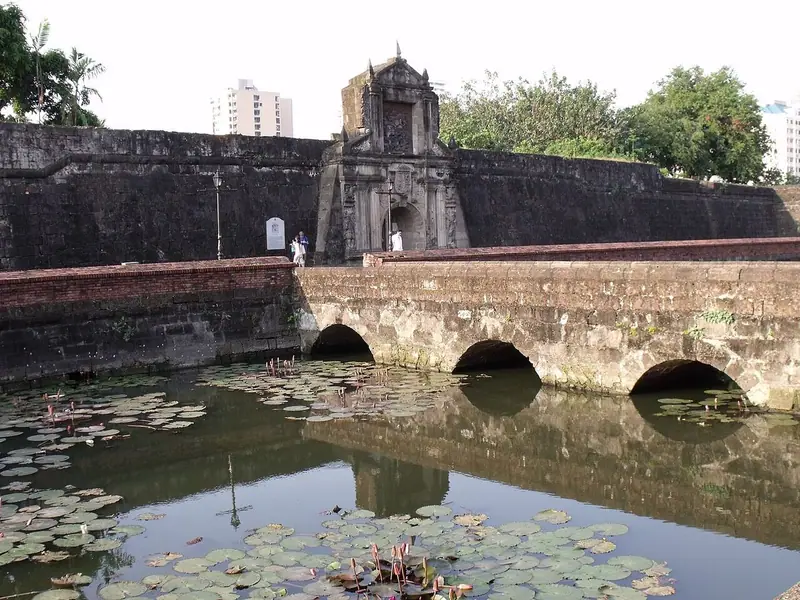
Begin at Fort Santiago, the citadel that guards the northern tip of Intramuros where the Pasig River meets Manila Bay. The Spanish began a fort here soon after they claimed Manila in 1571, on the site of the old settlement of Maynila, and it was rebuilt in stone between 1590 and 1593. The fort is named after Saint James, the patron saint of Spain, and above the main gate you can see a carved relief of the saint on horseback. Walk through the gate into the Plaza de Armas, the old parade ground. Look at the thick walls and the bastions at each corner of the triangular fort. Under Spanish, American and Japanese rule, the fort’s cells were used as prisons. During the Japanese occupation, many prisoners were held and killed here, and the fort was badly damaged in the fighting of 1945.
Photo: André Héroux · CC BY 3.0 · Wikimedia Commons
What to see at Intramuros: 8 stops, in visit order
- 01
 Fort SantiagoCitadel by the riverFree preview
- 02
 Rizal ShrineThe hero’s last walkIn the guide
- 03
 Plaza RomaThe old main squareIn the guide
- 04
 Manila CathedralEight times rebuiltIn the guide
- 05
 Casa ManilaA colonial houseIn the guide
- 06
 San Agustin ChurchThe great survivorIn the guide
- 07
 Baluarte de San DiegoThe ace of spadesIn the guide
- 08
 The WallsA walk on the rampartsIn the guide
Site map of Intramuros
History of Intramuros
Before the Spanish arrived, a fortified Muslim settlement called Maynila stood at the mouth of the Pasig River, one of several trading polities around Manila Bay whose leaders included Rajah Sulaiman, Rajah Matanda and Lakan Dula. Spanish forces under Miguel López de Legazpi, sailing from New Spain, now Mexico, took the area, and on 24 June 1571 Legazpi declared Manila the capital of the new colony. Stone walls were begun in 1590 under Governor-General Gómez Pérez Dasmariñas, and work on the defences continued until 1872. Spanish rule lasted until 1898, followed by American rule, Japanese occupation from 1942, and independence in 1946. In February and March 1945, during the Battle of Manila, Intramuros was almost entirely flattened, and at least 100,000 civilians died in the city.
Intramuros guide: questions
How many stops does the Intramuros guide have?
8 stops, in visit order: 1. Fort Santiago; 2. Rizal Shrine; 3. Plaza Roma; 4. Manila Cathedral; 5. Casa Manila; 6. San Agustin Church; 7. Baluarte de San Diego; 8. The Walls.
Can I do a self-guided tour of Intramuros with this guide?
Yes. The guide is made for a self-guided tour: 8 stops in visit order, each with a photo, a story and a voice, so you can explore Intramuros at your own pace, without joining a group. Download it before you go and it works offline.
How long is each guide?
The 8 stops add up to about 6 minutes of listening in total. You play each stop when you’re ready, so you can go at your own pace.
Does the guide work offline?
Yes, once it’s downloaded. The guide is a single self-contained web page (about 7.7 MB) with the photos, text and audio built in. Download it to your phone before you go (Wi-Fi is best); after that it opens in any modern browser on iPhone or Android, with no app, account or mobile signal needed.
Does it use GPS or need my location?
No. The guide doesn’t use GPS and doesn’t know where you are: you play each stop when you reach it. It works on iPhone and Android in any modern browser, and it’s in English.
What’s included?
One self-contained HTML guide: 8 stops in visit order, each with a photo, text and a voice, plus the story of who built the site.
Who built Intramuros?
Before the Spanish arrived, a fortified Muslim settlement called Maynila stood at the mouth of the Pasig River, one of several trading polities around Manila Bay whose leaders included Rajah Sulaiman, Rajah Matanda and Lakan Dula. Spanish forces under Miguel López de Legazpi, sailing from New Spain, now Mexico, took the area, and on 24 June 1571 Legazpi declared Manila the capital of the new colony.
Where is Intramuros?
Intramuros, Latin for within the walls, is the old walled city of Manila, standing beside the mouth of the Pasig River.
Is there a free audio guide to Intramuros?
The first stop, Fort Santiago, is free to read and hear on this page, so you can try the Intramuros audio tour before you buy. The full guide, with all 8 stops, is a one-off purchase: download it once and it’s yours to keep, working offline.
Is the Intramuros guide worth it?
If you’d like to know what you’re looking at, yes. For $10 you get 8 stops in visit order, each with a photo, a short history and a voice you play when you’re ready, plus a site map of the stops, and about 6 minutes of listening in all. It’s short on purpose, so you spend your time looking, not listening. It’s yours to keep, works offline and needs no app. The first stop is free on this page, so you can try it before you buy. If you’d like hours of detail, a guided tour will go deeper.
Audio guide or guided tour?
It depends how you like to visit. This guide lets you explore Intramuros at your own pace, at any time, for a one-off price. A guided tour gives you a live expert you can ask questions, but at fixed times and usually for a higher price. Many people use both: a tour for the big picture, and the guide to read beforehand or to revisit the stops in their own time.
Is this the official Intramuros guide?
No. It’s an independent guide by The Historian Guide, not affiliated with or endorsed by the operator of Intramuros. For tickets and opening hours, check the official site operator before you go.
Does the guide include entry tickets or opening hours?
No. The guide is a digital companion only. Admission to Intramuros is separate, so check the official site operator for current tickets and opening hours before you go.
- Stop 1 · Fort Santiago: André Héroux · CC BY 3.0 · Wikimedia Commons · resized
- Stop 2 · Rizal Shrine: Jorge Láscar from Melbourne, Australia · CC BY 2.0 · Wikimedia Commons · resized
- Stop 3 · Plaza Roma: Kej Andrés (Ryomaandres) · CC BY-SA 4.0 · Wikimedia Commons · resized
- Stop 4 · Manila Cathedral: Christian Mike Tangonan · CC BY-SA 4.0 · Wikimedia Commons · resized
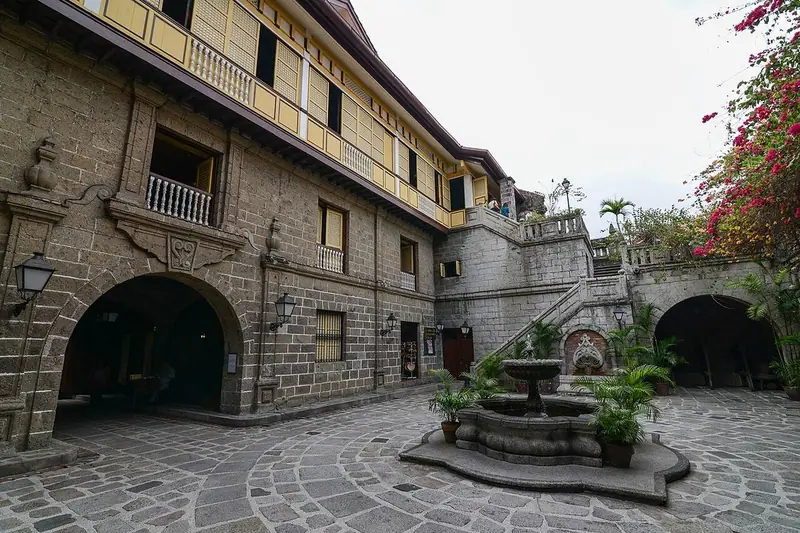
- Stop 5 · Casa Manila (also the cover): Jorge Láscar from Melbourne, Australia · CC BY 2.0 · Wikimedia Commons · resized
- Stop 6 · San Agustin Church: Diego Delso · CC BY-SA 4.0 · Wikimedia Commons · resized
- Stop 7 · Baluarte de San Diego: Froi Rivera · CC BY-SA 4.0 · Wikimedia Commons · resized
- Stop 8 · The Walls: Brenden Brain · CC BY-SA 3.0 · Wikimedia Commons · resized


All photographs from Wikimedia Commons under the licences shown.
More guides in Philippines
 Spanish Colonial8 stops · 1565–1898
Historic Cebu audio guide
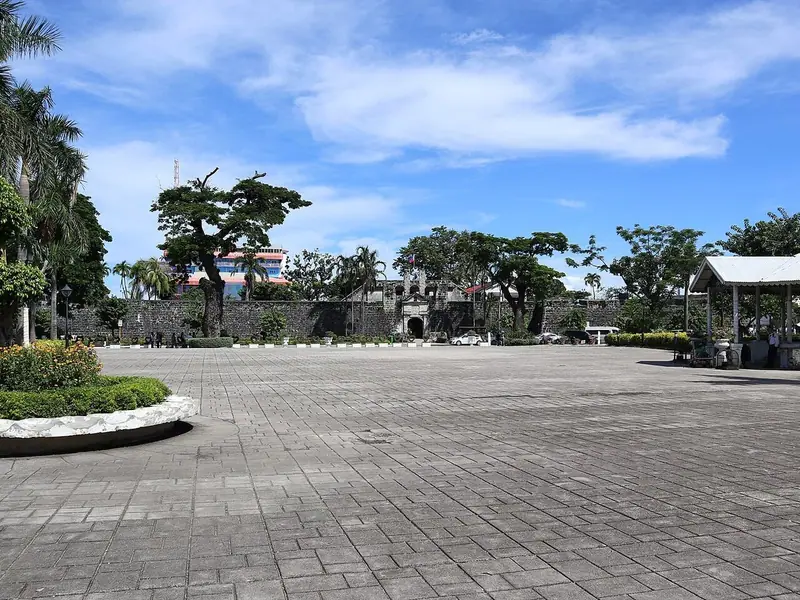
Start at Fort San Pedro and walk to Magellan’s Cross and the Basilica of the Santo Niño in the oldest Spanish city in the Philippines.
 Spanish Colonial7 stops · 1572–1898
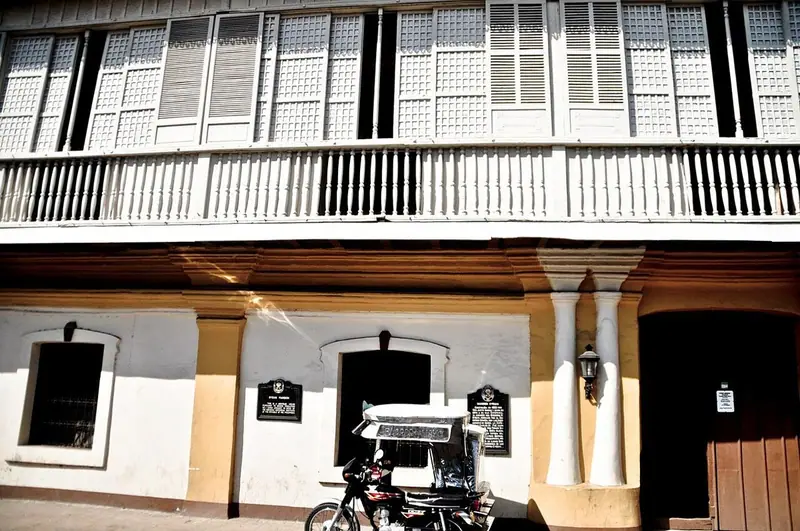
Vigan audio guide
Calle Crisologo and the stone mansions of the best-preserved Spanish colonial town in Asia, then the Burnay potters.
 Spanish Colonial7 stops · 1718–1782
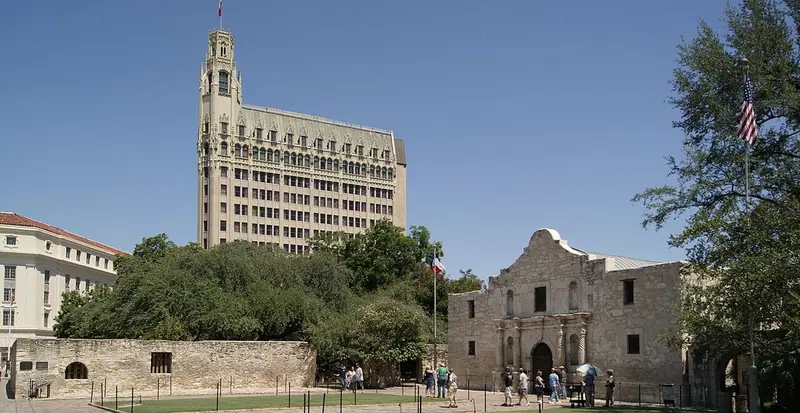
Alamo and San Antonio Missions audio guide
From the battle-scarred Alamo to Mission San José and the Espada Aqueduct, the five missions that made San Antonio.
Every guide, in every country
Intramuros and every other guide we publish, including future ones. One payment, no subscription.