Before you start
Évora stands on a low hill in the Alentejo, a city of white walls and granite, where a Roman temple still stands in what was once the forum. This guide begins at that temple, climbs to the cathedral on the town’s highest point, and crosses the main square to the Church of St Francis and its Chapel of Bones. It then visits the old Jesuit college, now the University of Évora, and finishes where the Aqueduct of Silver Water still strides into the streets. The route is about two kilometres and takes two to three hours with visits. The great stone circle of the Almendres Cromlech, older than the pyramids, lies a short drive west of the town and is well worth a separate excursion.
Use it as a self-guided tour of Évora: 6 stops in visit order, each played when you’re ready, at your own pace.
 Free preview · Stop 1
The Roman Temple
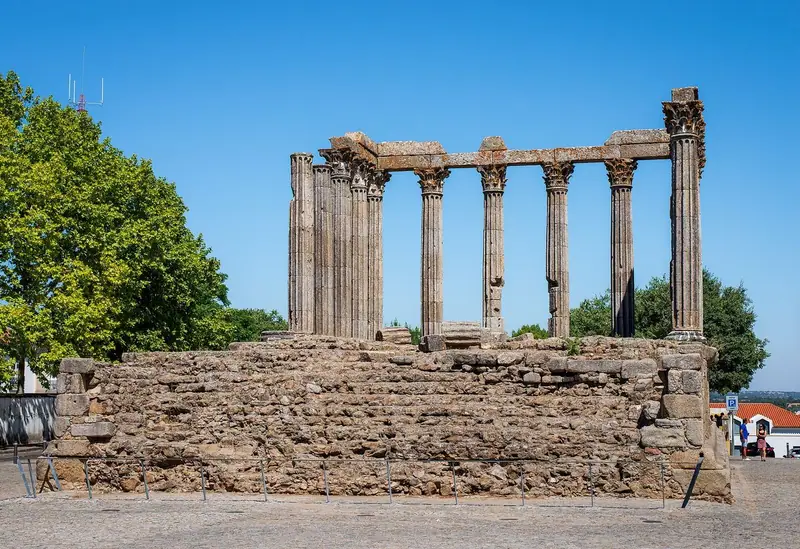
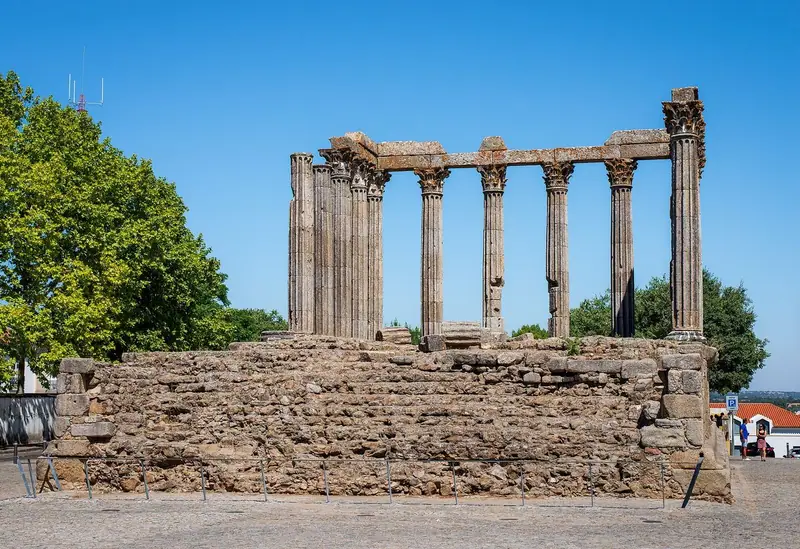
Fourteen granite columns with Corinthian capitals of Estremoz marble still stand on a tall podium, the remains of a temple built in the first century CE in the forum of the Roman town. It is often called the Temple of Diana, but that name is a later invention; it was most likely dedicated to the imperial cult of Augustus. In the Middle Ages the ruin was built into a tower of the town’s castle, and from the fourteenth century until 1836 it was used as a butcher’s shop, which, by walling the columns in, helped to save them. When the later buildings were cleared in the nineteenth century, the temple stood free again: a pagan shrine at the heart of a Christian city. From the temple, walk a short way uphill to the cathedral, which occupies the highest ground in Évora.
Photo: Norbert Nagel · CC BY-SA 3.0 · Wikimedia Commons
What to see at Évora: 6 stops, in visit order
- 01
 The Roman TempleThe forum of Liberalitas IuliaFree preview
- 02
 Évora CathedralThe largest of Portugal’s medieval cathedralsIn the guide
- 03
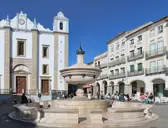 Praça do GiraldoThe heart of the townIn the guide
- 04
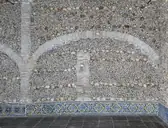 The Chapel of Bones‘We bones that are here, for yours we wait’In the guide
- 05
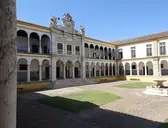 The University of ÉvoraThe College of the Holy SpiritIn the guide
- 06
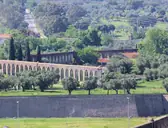 The Aqueduct of Silver WaterWater into the streetsIn the guide
Site map of Évora
History of Évora
The Romans founded a town here called Liberalitas Iulia, and in the first century CE they raised a temple in its forum, probably in honour of the emperor Augustus. After the empire faded, Évora passed to the Visigoths and then to Muslim rule. In 1166 Gerald the Fearless took the town for the King of Portugal, and work on a cathedral began soon afterwards. In the later Middle Ages Évora was a royal seat: kings held court here, and in the sixteenth century Cardinal Henry, later king himself, rebuilt the main square, founded a Jesuit college and brought water into the city by a new aqueduct. The historic centre was declared a World Heritage Site in 1988.
Évora guide: questions
How many stops does the Évora guide have?
6 stops, in visit order: 1. The Roman Temple; 2. Évora Cathedral; 3. Praça do Giraldo; 4. The Chapel of Bones; 5. The University of Évora; 6. The Aqueduct of Silver Water.
Can I do a self-guided tour of Évora with this guide?
Yes. The guide is made for a self-guided tour: 6 stops in visit order, each with a photo, a story and a voice, so you can explore Évora at your own pace, without joining a group. Download it before you go and it works offline.
How long is each guide?
The 6 stops add up to about 4 minutes of listening in total. You play each stop when you’re ready, so you can go at your own pace.
Does the guide work offline?
Yes, once it’s downloaded. The guide is a single self-contained web page (about 6.3 MB) with the photos, text and audio built in. Download it to your phone before you go (Wi-Fi is best); after that it opens in any modern browser on iPhone or Android, with no app, account or mobile signal needed.
Does it use GPS or need my location?
No. The guide doesn’t use GPS and doesn’t know where you are: you play each stop when you reach it. It works on iPhone and Android in any modern browser, and it’s in English.
What’s included?
One self-contained HTML guide: 6 stops in visit order, each with a photo, text and a voice, plus the story of who built the site.
Who built Évora?
The Romans founded a town here called Liberalitas Iulia, and in the first century CE they raised a temple in its forum, probably in honour of the emperor Augustus. After the empire faded, Évora passed to the Visigoths and then to Muslim rule.
Where is Évora?
Évora stands on a low hill in the Alentejo, a city of white walls and granite, where a Roman temple still stands in what was once the forum.
Is there a free audio guide to Évora?
The first stop, The Roman Temple, is free to read and hear on this page, so you can try the Évora audio tour before you buy. The full guide, with all 6 stops, is a one-off purchase: download it once and it’s yours to keep, working offline.
Is the Évora guide worth it?
If you’d like to know what you’re looking at, yes. For $10 you get 6 stops in visit order, each with a photo, a short history and a voice you play when you’re ready, plus a site map of the stops, and about 4 minutes of listening in all. It’s short on purpose, so you spend your time looking, not listening. It’s yours to keep, works offline and needs no app. The first stop is free on this page, so you can try it before you buy. If you’d like hours of detail, a guided tour will go deeper.
Audio guide or guided tour?
It depends how you like to visit. This guide lets you explore Évora at your own pace, at any time, for a one-off price. A guided tour gives you a live expert you can ask questions, but at fixed times and usually for a higher price. Many people use both: a tour for the big picture, and the guide to read beforehand or to revisit the stops in their own time.
Is this the official Évora guide?
No. It’s an independent guide by The Historian Guide, not affiliated with or endorsed by the operator of Évora. For tickets and opening hours, check the official site operator before you go.
Does the guide include entry tickets or opening hours?
No. The guide is a digital companion only. Admission to Évora is separate, so check the official site operator for current tickets and opening hours before you go.
- Stop 1 · The Roman Temple (also the cover): Norbert Nagel · CC BY-SA 3.0 · Wikimedia Commons · resized
- Stop 2 · Évora Cathedral: Ingo Mehling · CC BY-SA 4.0 · Wikimedia Commons · resized
- Stop 3 · Praça do Giraldo: Ingo Mehling · CC BY-SA 4.0 · Wikimedia Commons · resized
- Stop 4 · The Chapel of Bones: Ingo Mehling · CC BY-SA 4.0 · Wikimedia Commons · resized
- Stop 5 · The University of Évora: Joseolgon · CC BY-SA 4.0 · Wikimedia Commons · resized
- Stop 6 · The Aqueduct of Silver Water: Ken & Nyetta · CC BY 2.0 · Wikimedia Commons · resized


All photographs from Wikimedia Commons under the licences shown.
More guides in Portugal
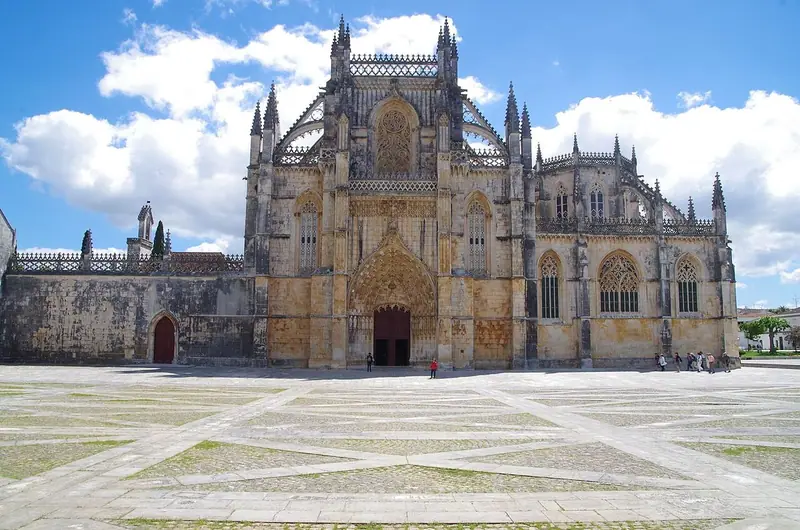 Gothic8 stops · from 1387 CE
Batalha Monastery audio guide
The golden limestone abbey King João I founded after Aljubarrota, from its late Gothic portal to the Unfinished Chapels, open to the sky.
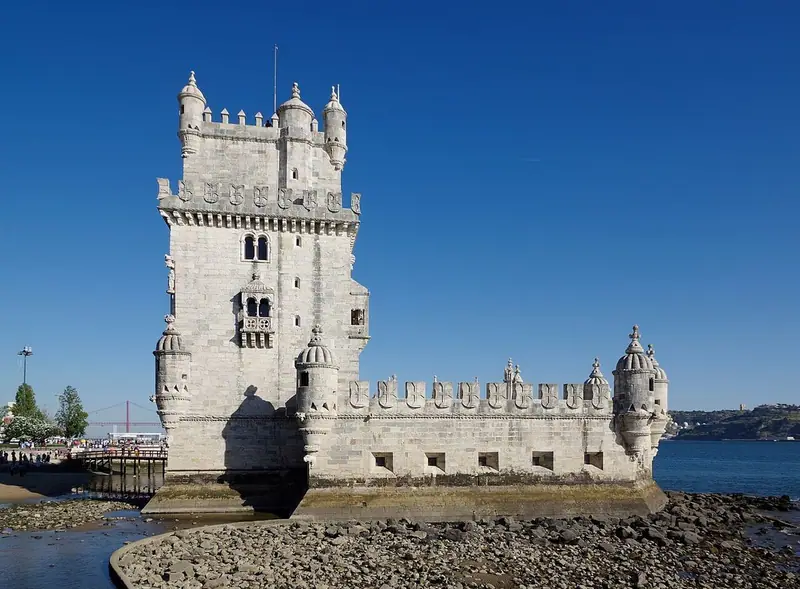 Manueline6 stops · 1514–1520
Belém Tower audio guide
A riverside fortress on the Tagus, built in Portugal’s Age of Discovery, from the bastion up to the loggia.
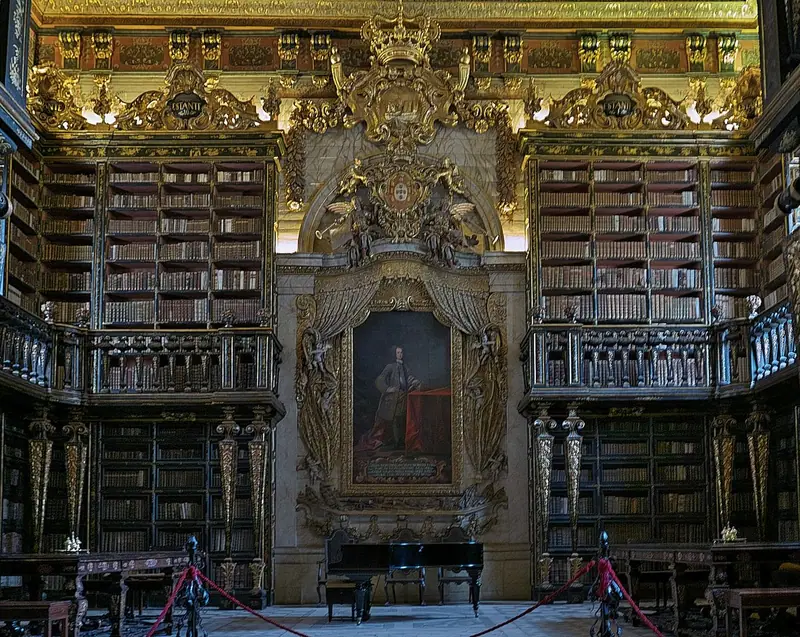 Portuguese6 stops · 1131–1728
Coimbra University and Old Town audio guide
Up the hill from the tombs of Portugal’s first kings at Santa Cruz through the Almedina Arch to the Old Cathedral, the Roman galleries under the museum, the university courtyard and the Joanina Library.
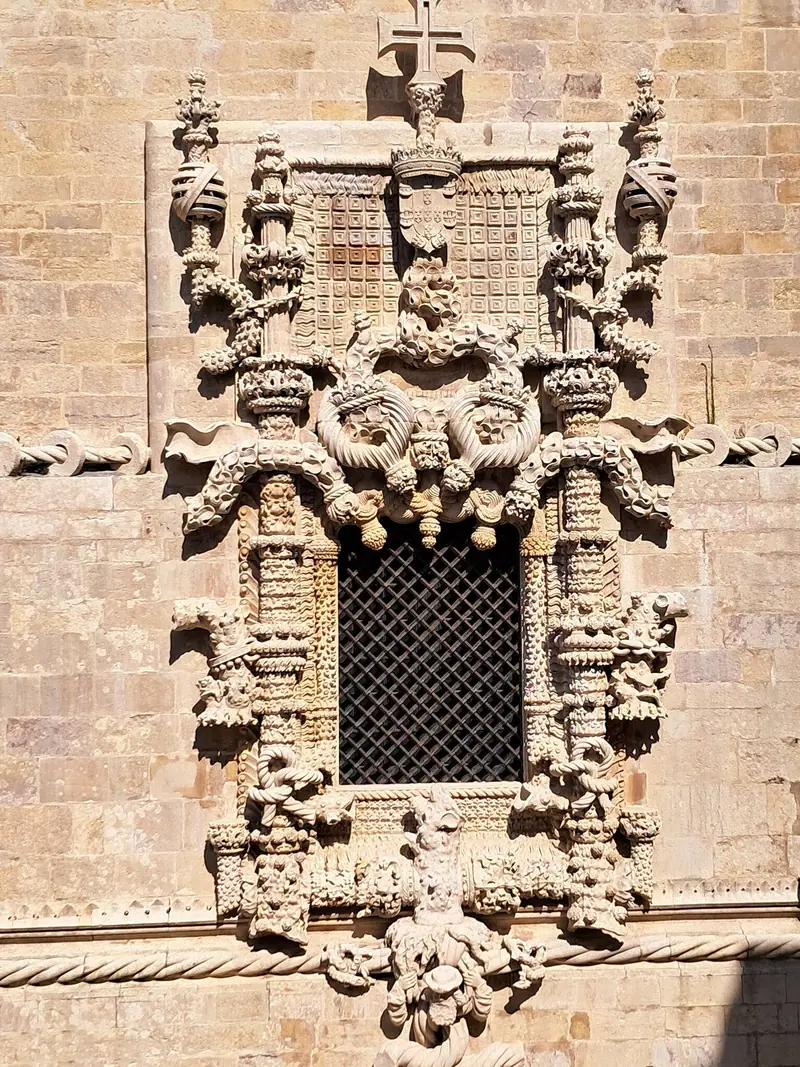 Knights Templar and the Order of Christ6 stops · 1160–1614
The Convent of Christ audio guide
The Templar castle and round church at Tomar, the Manueline window and great cloister of the Order of Christ, and the burial church of Santa Maria do Olival in the town below.
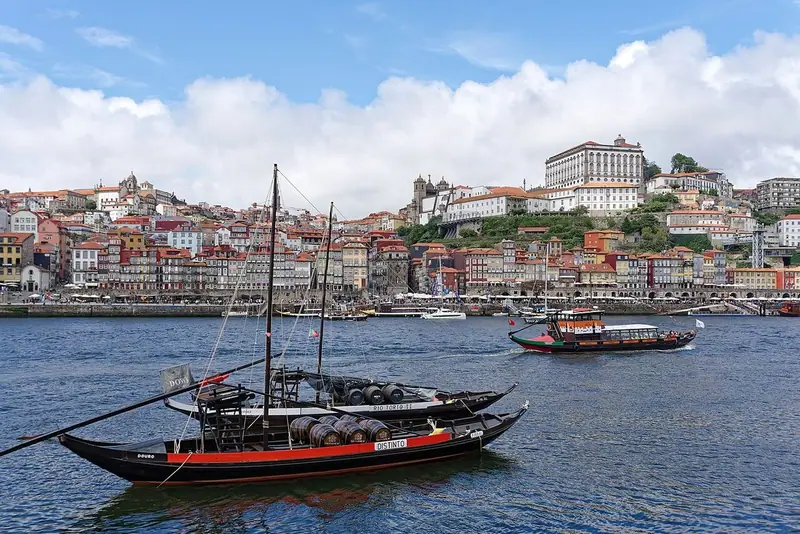 Kingdom of Portugal10 stops · 12th c. – 1886 (cathedral to the Dom Luís I Bridge)
Historic Centre of Porto audio guide
Granite lanes tumbling to the Douro: the fortress cathedral, Nasoni’s Clérigos Tower, gilded São Francisco, the Stock Exchange and Seyrig’s iron bridge.
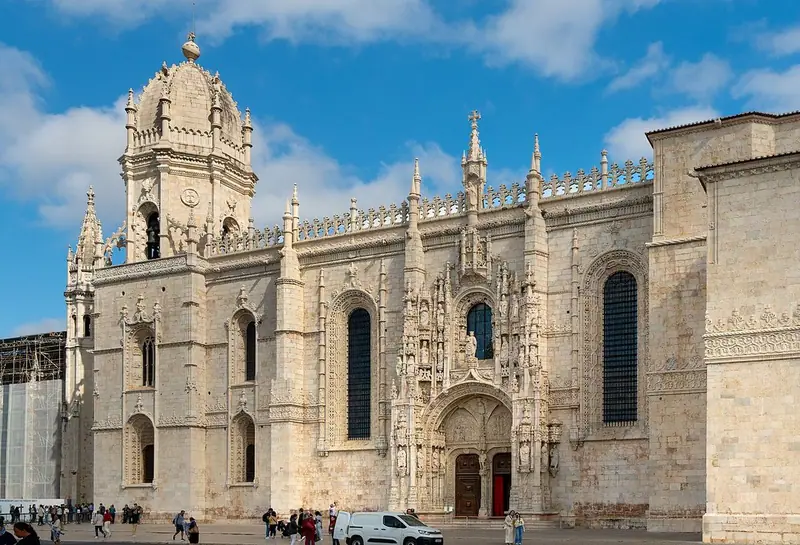 Manueline7 stops · 1501–1601
Jerónimos Monastery audio guide
Carved portals, the tombs of Vasco da Gama and Camões, and the great two-storey cloister.
Every guide, in every country
Évora and every other guide we publish, including future ones. One payment, no subscription.