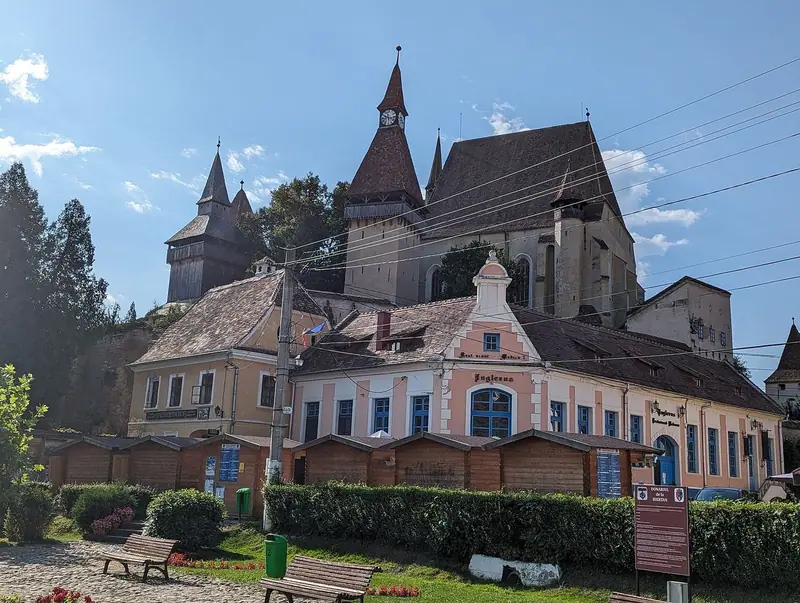
Before you start
This is not a town walk. It is a day’s journey, or a leisurely two, by car through southern Transylvania, from the Țara Bârsei around Brașov west towards Sighișoara and Mediaș, to six of the fortified parish churches built by the Transylvanian Saxons. When these villages could not afford a full town wall, they fortified the church itself, with ring-walls, towers and store-rooms, and in time of raid the whole community took refuge there. Seven such villages, of more than a hundred and fifty that survive, form a World Heritage Site; five of the six stops on this route are among them. The sixth, Hărman, stands a few kilometres from Prejmer and belongs to the same tradition. The driving distance from Prejmer to Valea Viilor is a little over a hundred kilometres, but the roads are slower than the figure suggests, and each church deserves an unhurried visit. Sighișoara, which lies on the way, has its own guide.
Use it as a self-guided tour of Transylvanian Fortified Churches: 6 stops in visit order, each played when you’re ready, at your own pace.
 Free preview · Stop 1
Prejmer
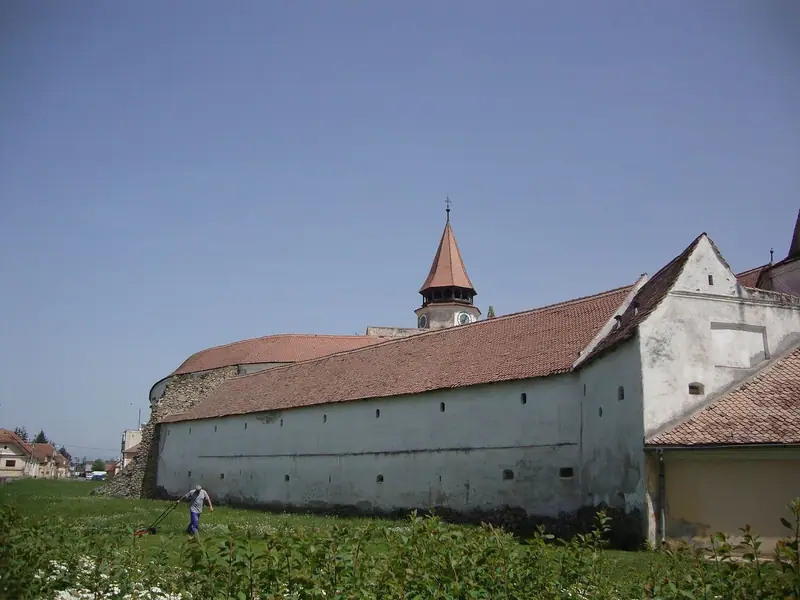
Begin at Prejmer, Tartlau in German, a few kilometres north-east of Brașov, which has the most complete and imposing of all the Saxon church-fortresses. The church itself was begun in 1218 by the Teutonic Knights, who had been granted land in this corner of Transylvania by King Andrew the Second, and it was finished by the Cistercians after the knights were expelled. Its plan is a Greek cross, unique in Transylvania and rare in this part of Europe. Around it stands a massive ring-wall, in places some fourteen metres high, with a single, strongly defended entrance and, inside the wall, several hundred rooms in which the villagers took shelter, each family with its own numbered cell. A barbican and an inner court make the approach long and narrow. The altarpiece, of about 1450, is among the oldest in the province. Prejmer was tested in many raids and never taken by assault. It is part of the World Heritage Site, and it is the right place to learn the type before you see the more intimate villages to the west.
Photo: XeresNelro · CC BY-SA 4.0 · Wikimedia Commons
What to see at Transylvanian Fortified Churches: 6 stops, in visit order
- 01
 PrejmerThe strongest church-fortressFree preview
- 02
 HărmanThe neighbour of PrejmerIn the guide
- 03
 ViscriThe white church in the fieldsIn the guide
- 04
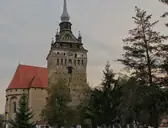 SaschizThe church and the hill citadelIn the guide
- 05
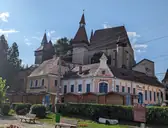 BiertanThe bishops’ churchIn the guide
- 06
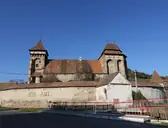 Valea ViilorThe church in the vine-valleyIn the guide
Site map of Transylvanian Fortified Churches
History of Transylvanian Fortified Churches
In the twelfth and thirteenth centuries the kings of Hungary invited German-speaking settlers, later known as Transylvanian Saxons, to colonise the south and east of Transylvania. They founded market towns such as Brașov, Sibiu and Sighișoara, and a dense scatter of villages, each with a parish church. From the thirteenth century the region was exposed to Mongol and later Ottoman raids, and the Saxons responded by fortifying. The greater towns built full walls; the villages turned their churches into fortresses, with one or more rings of wall, gate towers, and rooms in which families could live out a siege, storing grain and bacon in the lofts above the nave. After the Reformation the churches became Lutheran, which most of them remain, though the Saxon communities themselves have much diminished since the mid-twentieth century.
The full history continues in the guide.
Transylvanian Fortified Churches guide: questions
How many stops does the Transylvanian Fortified Churches guide have?
6 stops, in visit order: 1. Prejmer; 2. Hărman; 3. Viscri; 4. Saschiz; 5. Biertan; 6. Valea Viilor.
Can I do a self-guided tour of Transylvanian Fortified Churches with this guide?
Yes. The guide is made for a self-guided tour: 6 stops in visit order, each with a photo, a story and a voice, so you can explore Transylvanian Fortified Churches at your own pace, without joining a group. Download it before you go and it works offline.
How long is each guide?
The 6 stops add up to about 5 minutes of listening in total. You play each stop when you’re ready, so you can go at your own pace.
Does the guide work offline?
Yes, once it’s downloaded. The guide is a single self-contained web page (about 6.3 MB) with the photos, text and audio built in. Download it to your phone before you go (Wi-Fi is best); after that it opens in any modern browser on iPhone or Android, with no app, account or mobile signal needed.
Does it use GPS or need my location?
No. The guide doesn’t use GPS and doesn’t know where you are: you play each stop when you reach it. It works on iPhone and Android in any modern browser, and it’s in English.
What’s included?
One self-contained HTML guide: 6 stops in visit order, each with a photo, text and a voice, plus the story of who built the site.
Who built Transylvanian Fortified Churches?
In the twelfth and thirteenth centuries the kings of Hungary invited German-speaking settlers, later known as Transylvanian Saxons, to colonise the south and east of Transylvania. They founded market towns such as Brașov, Sibiu and Sighișoara, and a dense scatter of villages, each with a parish church.
Is there a free audio guide to Transylvanian Fortified Churches?
The first stop, Prejmer, is free to read and hear on this page, so you can try the Transylvanian Fortified Churches audio tour before you buy. The full guide, with all 6 stops, is a one-off purchase: download it once and it’s yours to keep, working offline.
Is the Transylvanian Fortified Churches guide worth it?
If you’d like to know what you’re looking at, yes. For $10 you get 6 stops in visit order, each with a photo, a short history and a voice you play when you’re ready, plus a site map of the stops, and about 5 minutes of listening in all. It’s short on purpose, so you spend your time looking, not listening. It’s yours to keep, works offline and needs no app. The first stop is free on this page, so you can try it before you buy. If you’d like hours of detail, a guided tour will go deeper.
Audio guide or guided tour?
It depends how you like to visit. This guide lets you explore Transylvanian Fortified Churches at your own pace, at any time, for a one-off price. A guided tour gives you a live expert you can ask questions, but at fixed times and usually for a higher price. Many people use both: a tour for the big picture, and the guide to read beforehand or to revisit the stops in their own time.
Is this the official Transylvanian Fortified Churches guide?
No. It’s an independent guide by The Historian Guide, not affiliated with or endorsed by the operator of Transylvanian Fortified Churches. For tickets and opening hours, check the official site operator before you go.
Does the guide include entry tickets or opening hours?
No. The guide is a digital companion only. Admission to Transylvanian Fortified Churches is separate, so check the official site operator for current tickets and opening hours before you go.
- Stop 1 · Prejmer: XeresNelro · CC BY-SA 4.0 · Wikimedia Commons · resized
- Stop 2 · Hărman: Andrei Stroe · CC BY-SA 4.0 · Wikimedia Commons · resized
- Stop 3 · Viscri: Superchilum · CC BY-SA 4.0 · Wikimedia Commons · resized
- Stop 4 · Saschiz: Antony Stanley from Gloucester, UK · CC BY-SA 2.0 · Wikimedia Commons · resized
- Stop 5 · Biertan (also the cover): Андрей Романенко · CC BY-SA 4.0 · Wikimedia Commons · resized
- Stop 6 · Valea Viilor: Neighbor's goat · CC BY-SA 3.0 ro · Wikimedia Commons · resized


All photographs from Wikimedia Commons under the licences shown.
More guides in Romania
 Transylvanian Saxon7 stops · 1377–20th century
Bran Castle audio guide
Climb from the Carpathian pass to the castle on the rock, and find the real story of Saxon townsmen and Queen Marie behind the Dracula legend.
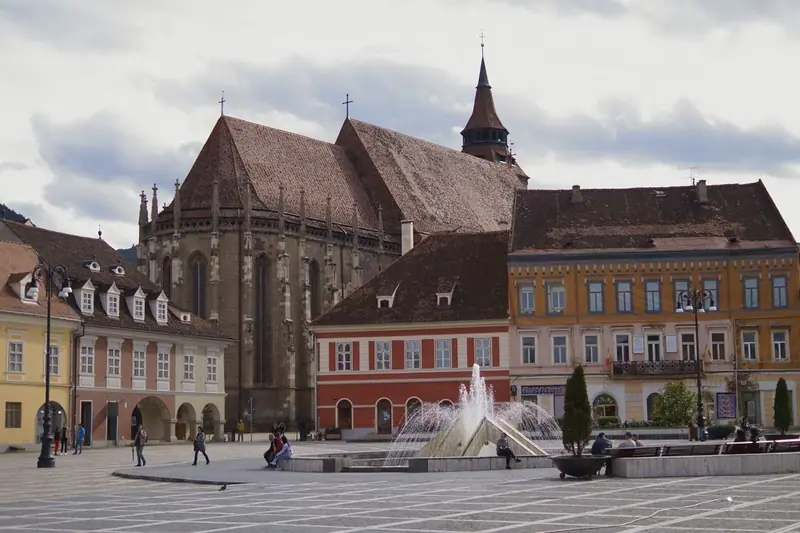 Transylvanian Saxon6 stops · 13th century–1820s
Brașov audio guide
From Council Square and the Black Church, through Rope Street and Catherine’s Gate to the White and Black Towers, and out to the Șchei Gate and the Orthodox church of St Nicholas.
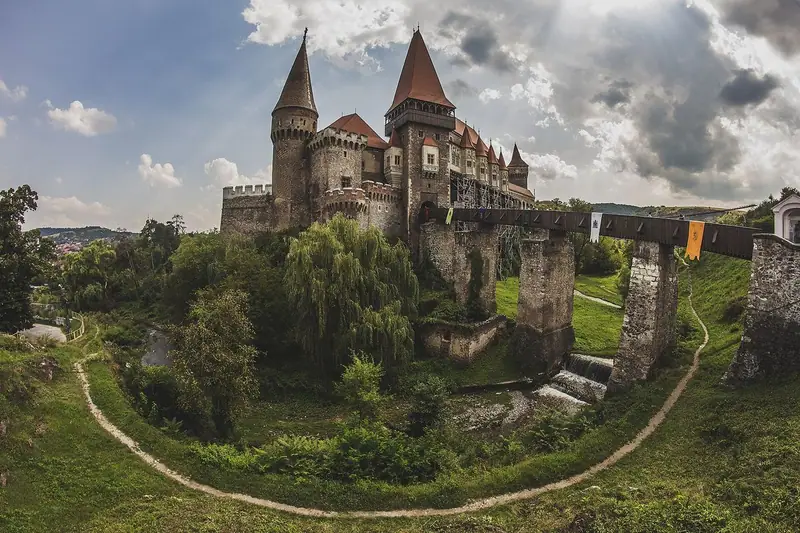 Hungarian and Transylvanian7 stops · 1446–1480
Corvin Castle audio guide
Through John Hunyadi’s castle at Hunedoara: the tall bridge and gatehouse, the inner court and well, the Knights’ Hall and Diet Hall, the chapel, the Neboisa Tower, and the later court with the bear pit and Capistrano Tower.
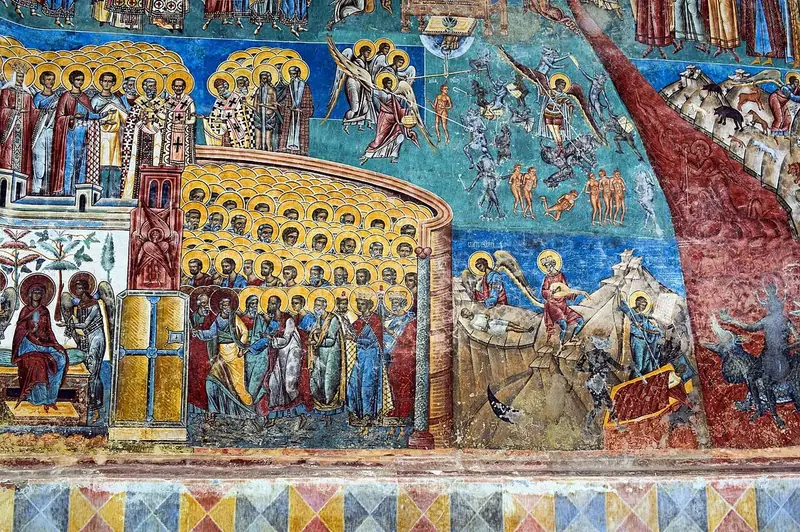 Byzantine8 stops · 1487 – c. 1601 CE
Painted Churches of Bucovina audio guide
Eight churches of Moldavia whose outer walls are covered in sixteenth-century frescoes, from Stephen the Great’s Pătrăuți to the Last Judgement of Voroneț.
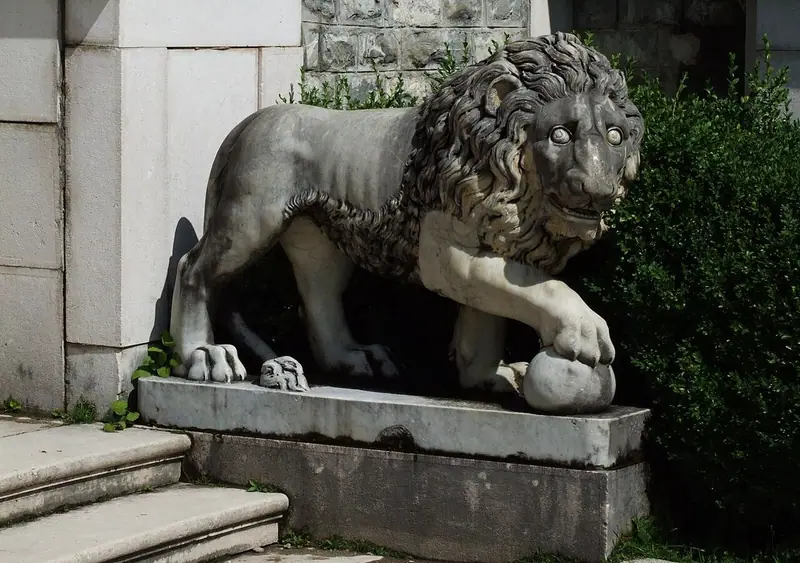 Kingdom of Romania8 stops · 1873–1947
Peleș Castle audio guide
Climb through the royal estate to Carol I’s palace of towers and timber, from the Hall of Honour to the armouries and theatre.
 Medieval8 stops · 13th–16th century
Sighișoara audio guide
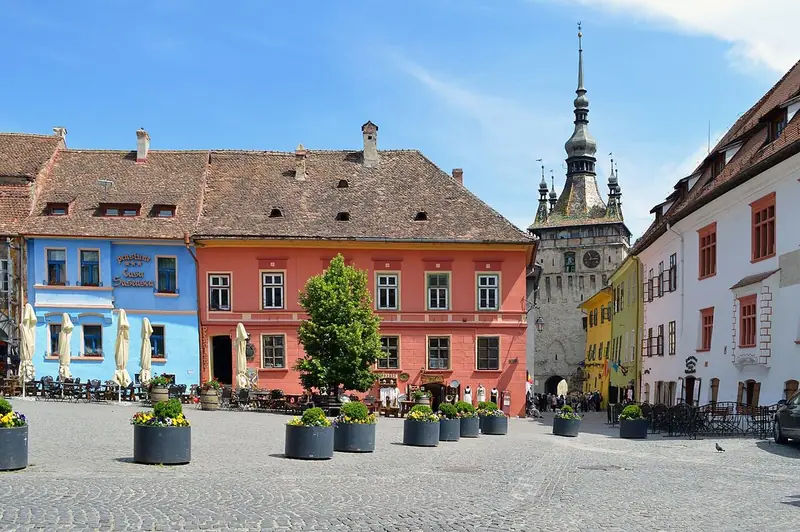
The hilltop citadel of Sighișoara, from the clock tower up the Scholars’ Stairs to the Church on the Hill and the guild towers.
Every guide, in every country
Transylvanian Fortified Churches and every other guide we publish, including future ones. One payment, no subscription.