Before you start
The Cradle of Humankind lies in rolling grassland about fifty kilometres north-west of Johannesburg, in Gauteng. Beneath it runs a maze of limestone caves that have given up more fossils of our early ancestors and their relatives than almost anywhere else on Earth. Since 1999 it has been a World Heritage Site, listed by UNESCO as part of the Fossil Hominid Sites of South Africa. This guide begins at the Sterkfontein Caves, where you go underground with a guide, and ends at Maropeng, the official visitor centre, a short drive away. Allow half a day, and wear sturdy shoes for the steps and low passages in the caves.
Use it as a self-guided tour of the Cradle of Humankind: 8 stops in visit order, each played when you’re ready, at your own pace.
 Free preview · Stop 1
Sterkfontein
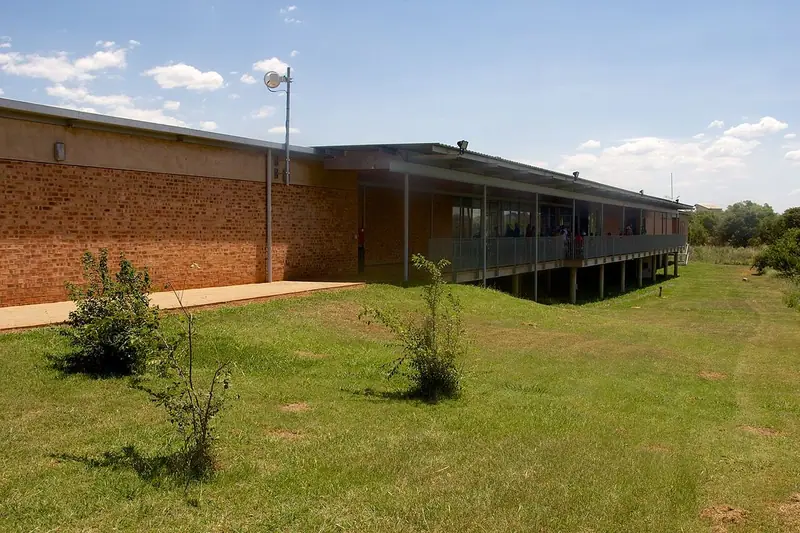
Begin at the visitor centre of the Sterkfontein Caves, a low modern building set in the grassland above the caves. The name Sterkfontein is Afrikaans for strong spring. The caves belong to the University of the Witwatersrand in Johannesburg, whose scientists have worked here for almost ninety years. Before you go underground, look at the displays, which tell the story of the caves and their fossils. Sterkfontein is one of the richest sites in the world for early hominin fossils, with hundreds of specimens found so far, belonging to Australopithecus, to early members of our own genus, Homo, and to their robust cousin Paranthropus. Notice how few of the bones are complete. Most fossils are small pieces, teeth and fragments of skull, and scientists build the story of our past from them. Join the next guided tour of the caves here.
Photo: Mike Peel · CC BY-SA 4.0 · Wikimedia Commons
What to see at the Cradle of Humankind: 8 stops, in visit order
- 01
 SterkfonteinThe strong springFree preview
- 02
 The ExcavationThe longest digIn the guide
- 03
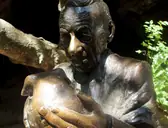 Robert BroomThe finder of Mrs PlesIn the guide
- 04
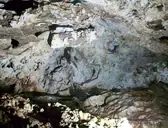 Into the CavesUnderground at SterkfonteinIn the guide
- 05
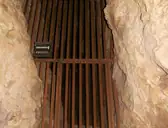 Little FootThe Silberberg GrottoIn the guide
- 06
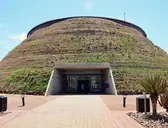 MaropengThe TumulusIn the guide
- 07
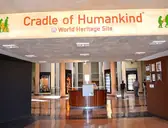 Inside MaropengThe human storyIn the guide
- 08
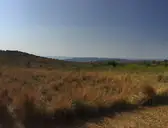 The ViewAcross the CradleIn the guide
Site map of the Cradle of Humankind
History of the Cradle of Humankind
No one built the Cradle: it was made by water and time. About two and a half billion years ago a shallow sea laid down the dolomite rock of these hills, and over millions of years rainwater slowly dissolved it into caves. Bones of animals and early hominins fell or were carried into the caves, and were sealed in a hard, cement-like rock called breccia. In the 1890s lime miners blasting the caves noticed the fossils. In 1925 Raymond Dart described the Taung Child, found the year before in a quarry far to the south-west, as an early human relative, and from 1936 Robert Broom searched Sterkfontein for an adult of its kind. Scientists from the University of the Witwatersrand and around the world have worked here ever since, and new finds are still being made.
Cradle of Humankind guide: questions
How many stops does the Cradle of Humankind guide have?
8 stops, in visit order: 1. Sterkfontein; 2. The Excavation; 3. Robert Broom; 4. Into the Caves; 5. Little Foot; 6. Maropeng; 7. Inside Maropeng; 8. The View.
Can I do a self-guided tour of the Cradle of Humankind with this guide?
Yes. The guide is made for a self-guided tour: 8 stops in visit order, each with a photo, a story and a voice, so you can explore the Cradle of Humankind at your own pace, without joining a group. Download it before you go and it works offline.
How long do you need at the Cradle of Humankind?
We suggest allowing half a day. The 8 stops add up to about 6 minutes of listening, and you play each one when you’re ready, so you can linger wherever you like.
How long is each guide?
The 8 stops add up to about 6 minutes of listening in total. You play each stop when you’re ready, so you can go at your own pace.
Does the guide work offline?
Yes, once it’s downloaded. The guide is a single self-contained web page (about 7.5 MB) with the photos, text and audio built in. Download it to your phone before you go (Wi-Fi is best); after that it opens in any modern browser on iPhone or Android, with no app, account or mobile signal needed.
Does it use GPS or need my location?
No. The guide doesn’t use GPS and doesn’t know where you are: you play each stop when you reach it. It works on iPhone and Android in any modern browser, and it’s in English.
What’s included?
One self-contained HTML guide: 8 stops in visit order, each with a photo, text and a voice, plus the story of who built the site.
Who built the Cradle of Humankind?
No one built the Cradle: it was made by water and time. About two and a half billion years ago a shallow sea laid down the dolomite rock of these hills, and over millions of years rainwater slowly dissolved it into caves.
Where is the Cradle of Humankind?
The Cradle of Humankind lies in rolling grassland about fifty kilometres north-west of Johannesburg, in Gauteng.
Is there a free audio guide to the Cradle of Humankind?
The first stop, Sterkfontein, is free to read and hear on this page, so you can try the Cradle of Humankind audio tour before you buy. The full guide, with all 8 stops, is a one-off purchase: download it once and it’s yours to keep, working offline.
Is the Cradle of Humankind guide worth it?
If you’d like to know what you’re looking at, yes. For $10 you get 8 stops in visit order, each with a photo, a short history and a voice you play when you’re ready, plus a site map of the stops, and about 6 minutes of listening in all. It’s short on purpose, so you spend your time looking, not listening. It’s yours to keep, works offline and needs no app. The first stop is free on this page, so you can try it before you buy. If you’d like hours of detail, a guided tour will go deeper.
Audio guide or guided tour?
It depends how you like to visit. This guide lets you explore the Cradle of Humankind at your own pace, at any time, for a one-off price. A guided tour gives you a live expert you can ask questions, but at fixed times and usually for a higher price. Many people use both: a tour for the big picture, and the guide to read beforehand or to revisit the stops in their own time.
Is this the official Cradle of Humankind guide?
No. It’s an independent guide by The Historian Guide, not affiliated with or endorsed by the operator of the Cradle of Humankind. For tickets and opening hours, check the official site operator before you go.
Does the guide include entry tickets or opening hours?
No. The guide is a digital companion only. Admission to the Cradle of Humankind is separate, so check the official site operator for current tickets and opening hours before you go.
- Stop 1 · Sterkfontein: Photograph by Mike Peel (www.mikepeel.net). · CC BY-SA 4.0 · Wikimedia Commons · resized
- Stop 2 · The Excavation: Photograph by Mike Peel (www.mikepeel.net). · CC BY-SA 4.0 · Wikimedia Commons · resized
- Stop 3 · Robert Broom: Photograph by Mike Peel (www.mikepeel.net). · CC BY-SA 4.0 · Wikimedia Commons · cropped and resized
- Stop 4 · Into the Caves: Photograph by Mike Peel (www.mikepeel.net). · CC BY-SA 4.0 · Wikimedia Commons · resized
- Stop 5 · Little Foot: Photograph by Mike Peel (www.mikepeel.net). · CC BY-SA 4.0 · Wikimedia Commons · cropped and resized
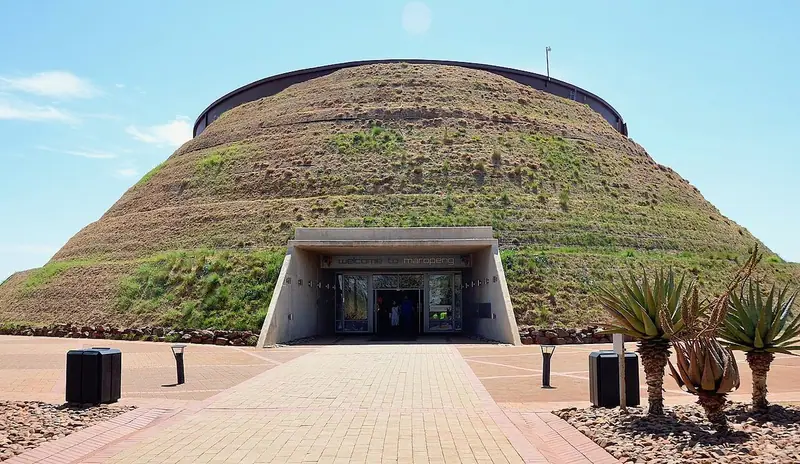
- Stop 6 · Maropeng (also the cover): Olga Ernst · CC BY-SA 4.0 · Wikimedia Commons · resized
- Stop 7 · Inside Maropeng: Olga Ernst · CC BY-SA 4.0 · Wikimedia Commons · resized
- Stop 8 · The View: Olof Somell (Nobel Museum) · CC BY-SA 4.0 · Wikimedia Commons · resized


All photographs from Wikimedia Commons under the licences shown.
More guides in South Africa
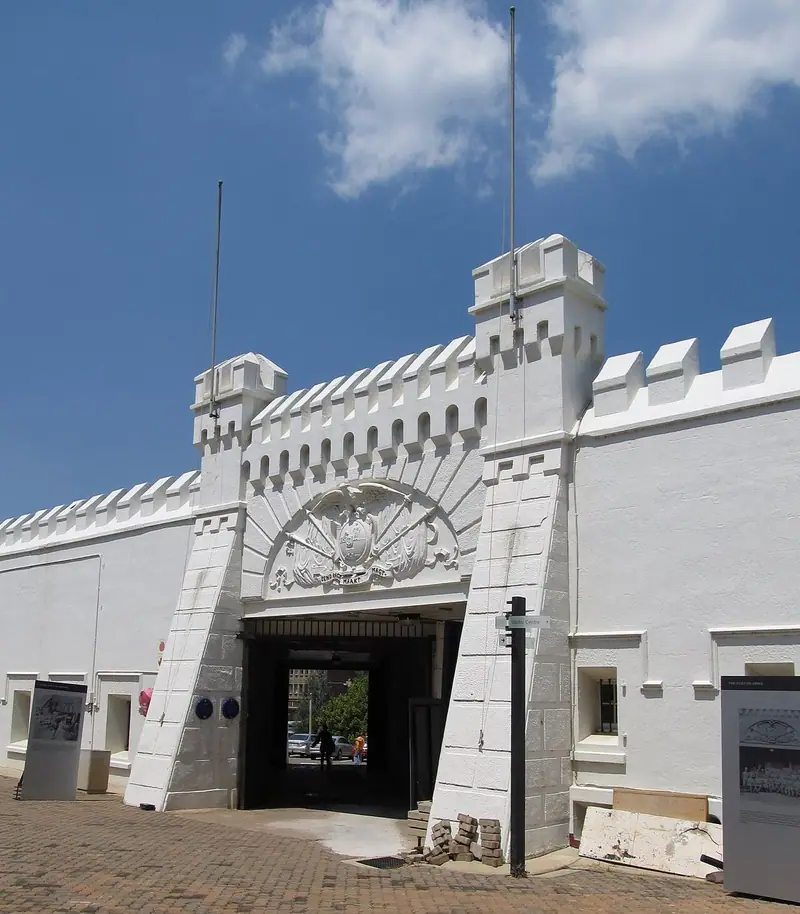 South African7 stops · 1892–2004
Constitution Hill audio guide
The old fort and Number Four, where famous South Africans were imprisoned, and the Constitutional Court that stands there today.
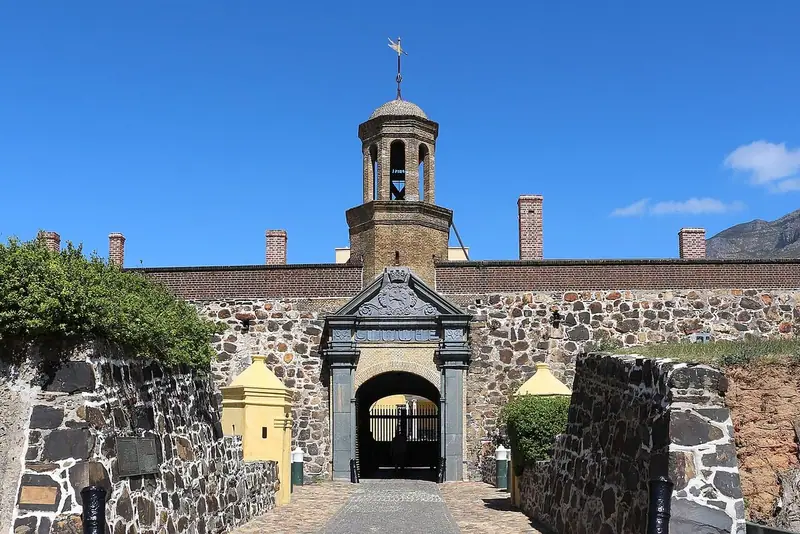 Dutch Colonial8 stops · 17th–20th century
Historic Cape Town audio guide
From the Castle of Good Hope through the City Bowl, past the Company’s Garden and the Slave Lodge, to the Bo-Kaap.
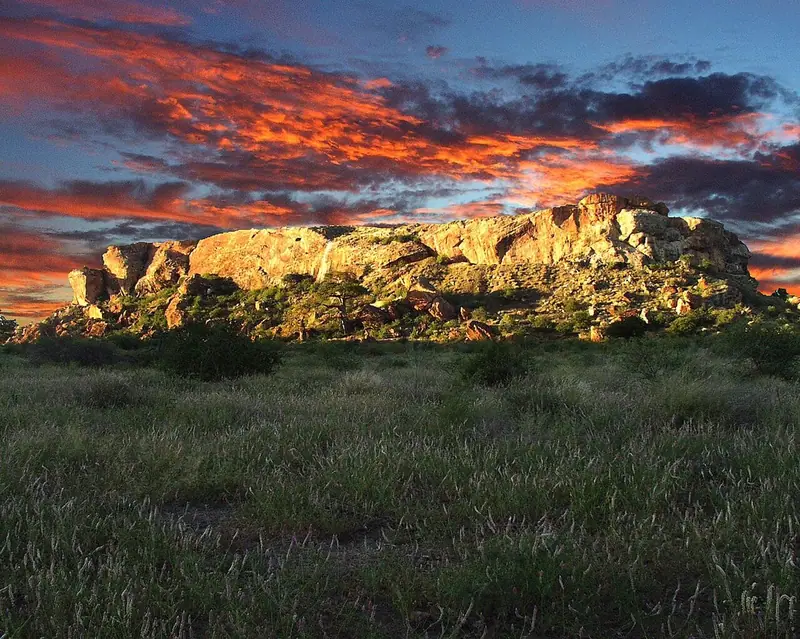 Mapungubwe7 stops · c. 900–1300
Mapungubwe audio guide
The hilltop seat of southern Africa’s first great kingdom, home of the gold rhinoceros, where the Limpopo meets the Shashe.
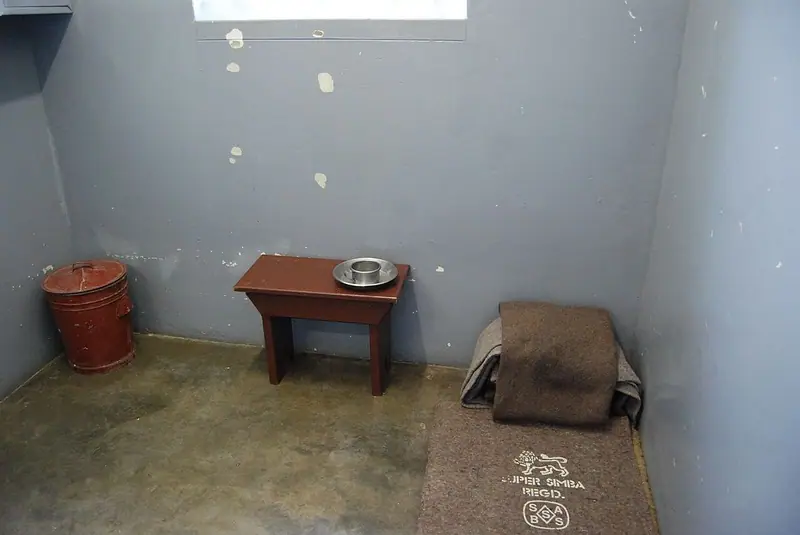 European Colonial7 stops · 1652–1996
Robben Island audio guide
Cross Table Bay to the island where leaders of the struggle against apartheid were held, from the lime quarry to Mandela’s cell.
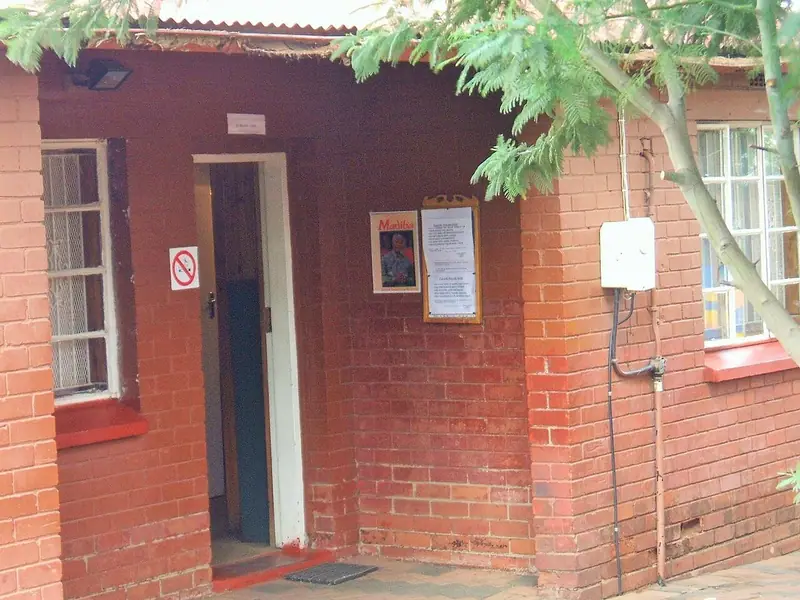 South African7 stops · 1904–2002
Soweto audio guide
Vilakazi Street, the homes of Mandela and Tutu, and the places where the student uprising of 16 June 1976 is remembered.
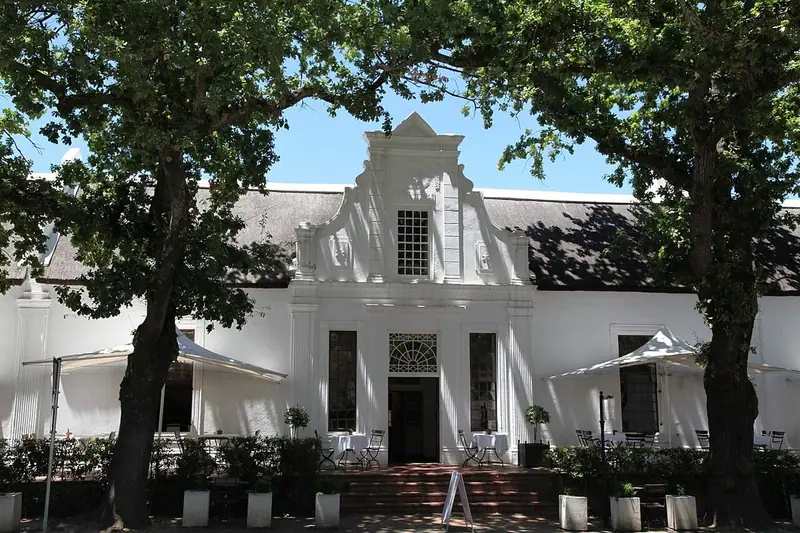 Dutch Colonial8 stops · 1679–1964
Stellenbosch audio guide
The City of Oaks: the Braak, the powder magazine, Cape Dutch Dorp Street and the Moederkerk, and the lost community of Die Vlakte.
Every guide, in every country
Cradle of Humankind and every other guide we publish, including future ones. One payment, no subscription.