Before you start
Cape Town is South Africa’s oldest European-founded city, set between Table Mountain and Table Bay. Its compact centre, the City Bowl, holds more than three centuries of history: the fort of the Dutch East India Company, the lodge where enslaved people were held, the garden that fed passing ships, and places that recall the struggle against apartheid and its end. This guide starts at the Castle of Good Hope, crosses the Grand Parade and the city centre, and ends among the colourful houses of the Bo-Kaap. Walk in daylight, keep valuables out of sight, and stay aware of your surroundings, as you would in any large city.
Use it as a self-guided tour of Historic Cape Town: 8 stops in visit order, each played when you’re ready, at your own pace.
 Free preview · Stop 1
Castle of Good Hope
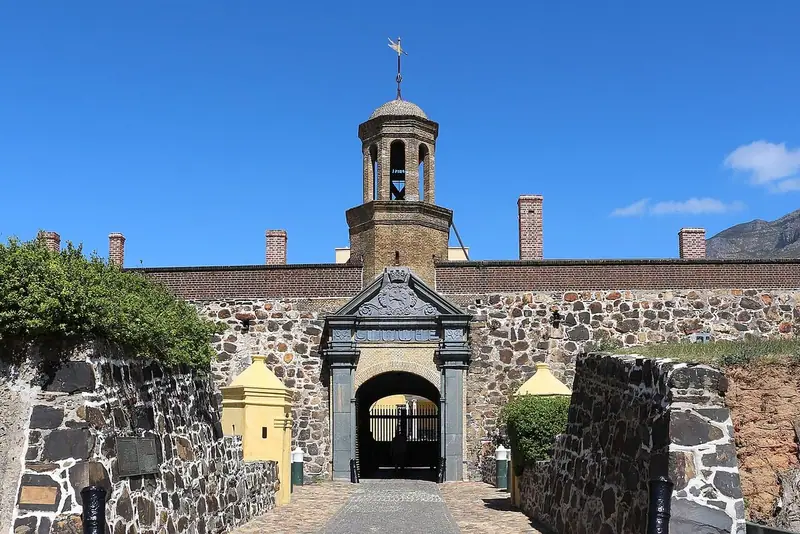
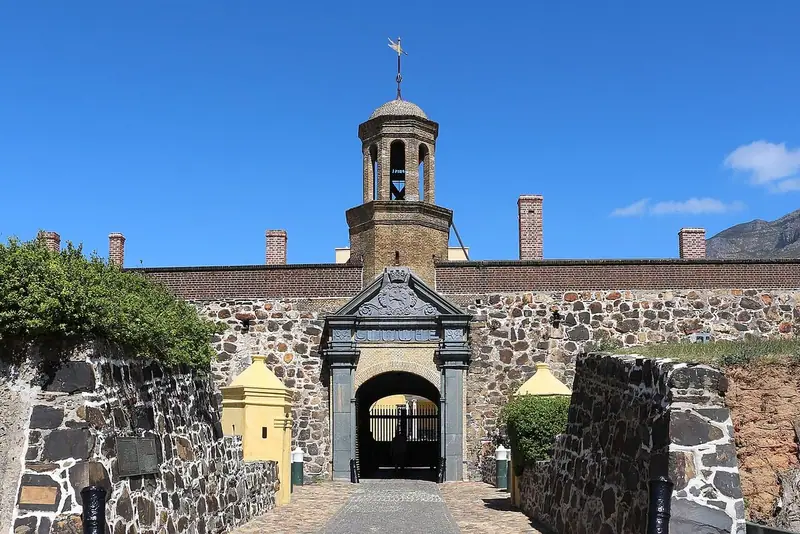
Begin at the Castle of Good Hope, a five-pointed star fort of stone and brick built by the Dutch East India Company between 1666 and 1679. It is the oldest surviving colonial building in South Africa. Its five bastions are named after titles held by William of Orange: Leerdam, Buuren, Katzenellenbogen, Nassau and Oranje. The castle originally stood close to the shoreline, before land was reclaimed from the sea. For centuries it was the centre of civil and military life in the colony, housing the governor, soldiers, workshops, stores and prison cells, and it remained a military headquarters into modern times. Walk through the gateway, with its bell tower, into the courtyard, and look for the balcony from which announcements were once made. Inside you can visit the museum collections, the old prison cells and the walls along the bastions.
Photo: Bernard Gagnon · CC BY-SA 4.0 · Wikimedia Commons
What to see at Historic Cape Town: 8 stops, in visit order
- 01
 Castle of Good HopeThe Company’s fortFree preview
- 02
 Grand Parade and City HallMandela’s first speechIn the guide
- 03
 District Six MuseumA neighbourhood erasedIn the guide
- 04
 Company’s GardenWhere the city beganIn the guide
- 05
 St George’s CathedralThe people’s cathedralIn the guide
- 06
 Slave LodgeA history of slaveryIn the guide
- 07
 Greenmarket SquareMarket and town houseIn the guide
- 08
 Bo-KaapColour on the hillsideIn the guide
Site map of Historic Cape Town
History of Historic Cape Town
The Khoekhoe and San peoples lived on the Cape for thousands of years before Europeans arrived. In 1652 the Dutch East India Company set up a station here under Jan van Riebeeck to supply its ships sailing between Europe and Asia. The colony depended heavily on enslaved people brought from Africa, Madagascar, India and South-East Asia, until slavery ended in the 1830s, after the Cape had passed to Britain. In the twentieth century, apartheid laws divided the city by race and forced tens of thousands of people from their homes. Nelson Mandela was released from prison in 1990, and South Africa held its first democratic elections in 1994.
Historic Cape Town guide: questions
How many stops does the Historic Cape Town guide have?
8 stops, in visit order: 1. Castle of Good Hope; 2. Grand Parade and City Hall; 3. District Six Museum; 4. Company’s Garden; 5. St George’s Cathedral; 6. Slave Lodge; 7. Greenmarket Square; 8. Bo-Kaap.
Can I do a self-guided tour of Historic Cape Town with this guide?
Yes. The guide is made for a self-guided tour: 8 stops in visit order, each with a photo, a story and a voice, so you can explore Historic Cape Town at your own pace, without joining a group. Download it before you go and it works offline.
How long is each guide?
The 8 stops add up to about 6 minutes of listening in total. You play each stop when you’re ready, so you can go at your own pace.
Does the guide work offline?
Yes, once it’s downloaded. The guide is a single self-contained web page (about 7.8 MB) with the photos, text and audio built in. Download it to your phone before you go (Wi-Fi is best); after that it opens in any modern browser on iPhone or Android, with no app, account or mobile signal needed.
Does it use GPS or need my location?
No. The guide doesn’t use GPS and doesn’t know where you are: you play each stop when you reach it. It works on iPhone and Android in any modern browser, and it’s in English.
What’s included?
One self-contained HTML guide: 8 stops in visit order, each with a photo, text and a voice, plus the story of who built the site.
Who built Historic Cape Town?
The Khoekhoe and San peoples lived on the Cape for thousands of years before Europeans arrived. In 1652 the Dutch East India Company set up a station here under Jan van Riebeeck to supply its ships sailing between Europe and Asia.
Where is Historic Cape Town?
Cape Town is South Africa’s oldest European-founded city, set between Table Mountain and Table Bay.
Is there a free audio guide to Historic Cape Town?
The first stop, Castle of Good Hope, is free to read and hear on this page, so you can try the Historic Cape Town audio tour before you buy. The full guide, with all 8 stops, is a one-off purchase: download it once and it’s yours to keep, working offline.
Is the Historic Cape Town guide worth it?
If you’d like to know what you’re looking at, yes. For $10 you get 8 stops in visit order, each with a photo, a short history and a voice you play when you’re ready, plus a site map of the stops, and about 6 minutes of listening in all. It’s short on purpose, so you spend your time looking, not listening. It’s yours to keep, works offline and needs no app. The first stop is free on this page, so you can try it before you buy. If you’d like hours of detail, a guided tour will go deeper.
Audio guide or guided tour?
It depends how you like to visit. This guide lets you explore Historic Cape Town at your own pace, at any time, for a one-off price. A guided tour gives you a live expert you can ask questions, but at fixed times and usually for a higher price. Many people use both: a tour for the big picture, and the guide to read beforehand or to revisit the stops in their own time.
Is this the official Historic Cape Town guide?
No. It’s an independent guide by The Historian Guide, not affiliated with or endorsed by the operator of Historic Cape Town. For tickets and opening hours, check the official site operator before you go.
Does the guide include entry tickets or opening hours?
No. The guide is a digital companion only. Admission to Historic Cape Town is separate, so check the official site operator for current tickets and opening hours before you go.
- Stop 1 · Castle of Good Hope (also the cover): Bernard Gagnon · CC BY-SA 4.0 · Wikimedia Commons · resized
- Stop 2 · Grand Parade and City Hall: Martinvl · CC BY-SA 4.0 · Wikimedia Commons · resized
- Stop 3 · District Six Museum: HelenOnline · CC BY-SA 4.0 · Wikimedia Commons · resized
- Stop 4 · Company’s Garden: Dietmar Rabich · CC BY-SA 4.0 · Wikimedia Commons · resized
- Stop 5 · St George’s Cathedral: Dietmar Rabich · CC BY-SA 4.0 · Wikimedia Commons · resized
- Stop 6 · Slave Lodge: HelenOnline · CC BY-SA 4.0 · Wikimedia Commons · resized
- Stop 7 · Greenmarket Square: Discott · CC BY-SA 3.0 · Wikimedia Commons · resized
- Stop 8 · Bo-Kaap: © Moheen Reeyad · CC BY-SA 4.0 · Wikimedia Commons · resized


All photographs from Wikimedia Commons under the licences shown.
More guides in South Africa
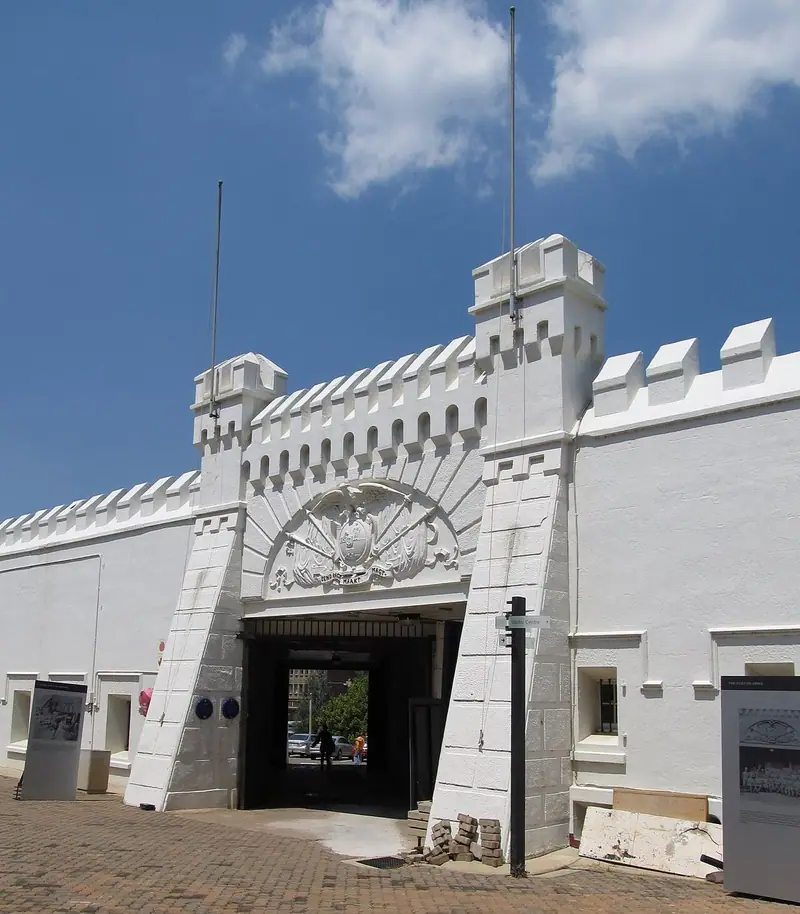 South African7 stops · 1892–2004
Constitution Hill audio guide
The old fort and Number Four, where famous South Africans were imprisoned, and the Constitutional Court that stands there today.
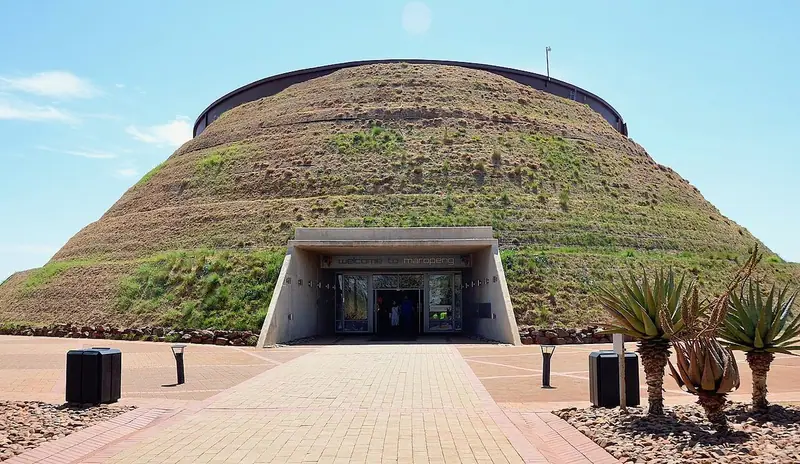 Early Hominins8 stops · c. 3.7 million – 250,000 years ago
Cradle of Humankind audio guide
Underground at Sterkfontein, where Mrs Ples and Little Foot were found, then Maropeng and the story of how we became human.
 Mapungubwe7 stops · c. 900–1300
Mapungubwe audio guide
The hilltop seat of southern Africa’s first great kingdom, home of the gold rhinoceros, where the Limpopo meets the Shashe.
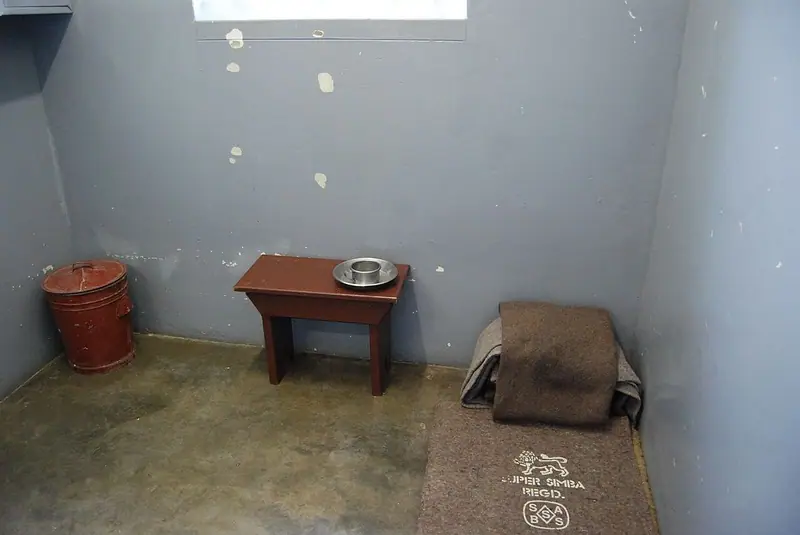 European Colonial7 stops · 1652–1996
Robben Island audio guide
Cross Table Bay to the island where leaders of the struggle against apartheid were held, from the lime quarry to Mandela’s cell.
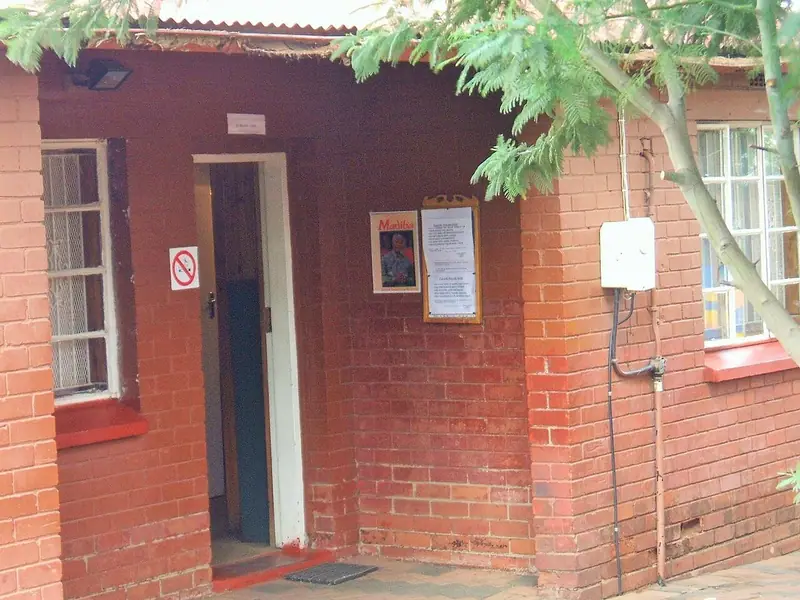 South African7 stops · 1904–2002
Soweto audio guide
Vilakazi Street, the homes of Mandela and Tutu, and the places where the student uprising of 16 June 1976 is remembered.
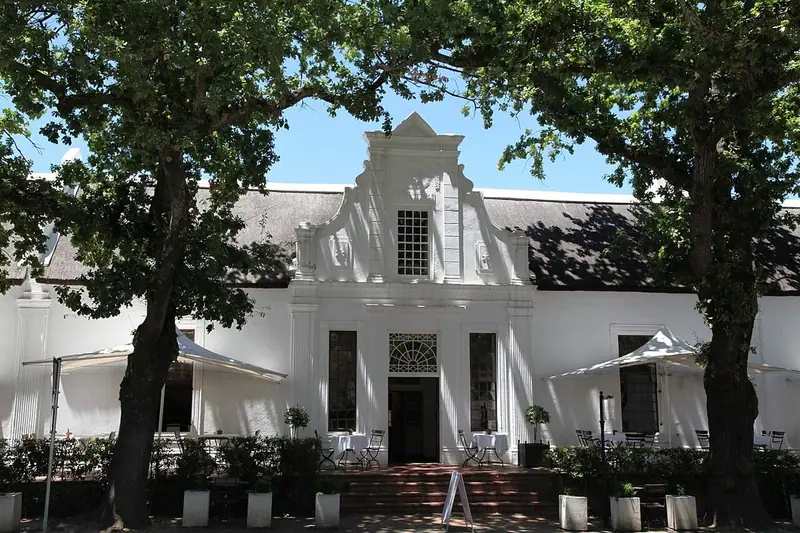 Dutch Colonial8 stops · 1679–1964
Stellenbosch audio guide
The City of Oaks: the Braak, the powder magazine, Cape Dutch Dorp Street and the Moederkerk, and the lost community of Die Vlakte.
Every guide, in every country
Historic Cape Town and every other guide we publish, including future ones. One payment, no subscription.