Before you start
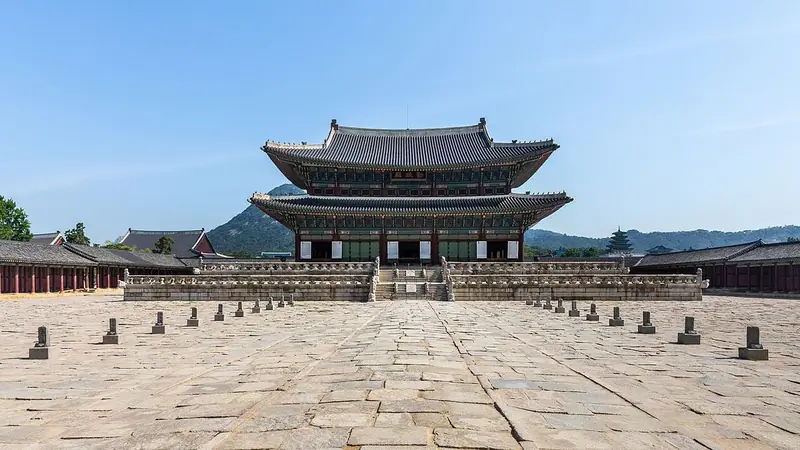
Gyeongbokgung, the ‘Palace of Great Blessings’, lies in the heart of Seoul at the northern end of the broad avenue of Sejong-daero, with the granite peak of Bugaksan rising behind it. It was the first and grandest royal palace of the Joseon dynasty and is today one of the most visited sights in South Korea. Much of what you see has been rebuilt: the palace was burned in 1592, reconstructed in the 1860s, then largely dismantled during Japanese colonial rule, and restoration has been under way since 1990. The grounds are large but flat and easy to walk. This guide follows the main axis from the great gate of Gwanghwamun to the throne hall and the king’s office, then turns west to the banquet pavilion of Gyeonghoeru, east through the royal living quarters and garden, and north to the island pavilion of Hyangwonjeong.
Use it as a self-guided tour of Gyeongbokgung: 8 stops in visit order, each played when you’re ready, at your own pace.
 Free preview · Stop 1
Gwanghwamun
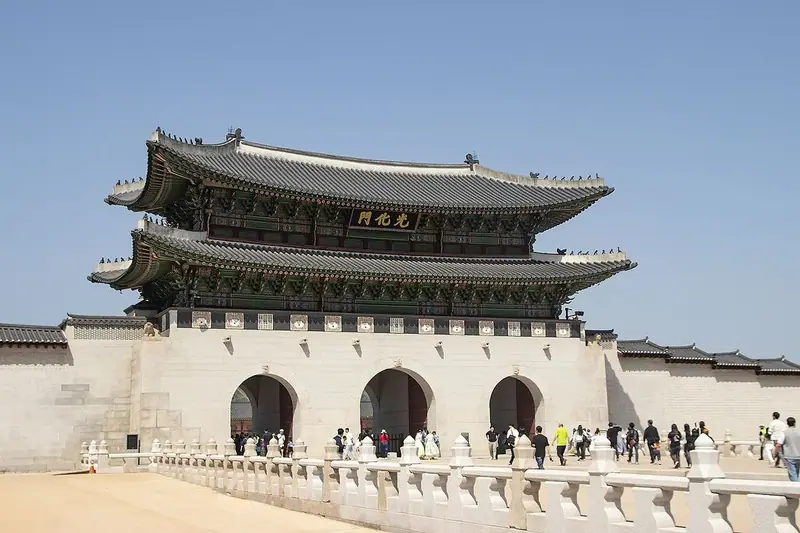
Begin at Gwanghwamun, the main southern gate of the palace, with its three arched openings and a two-storey wooden pavilion above. The central arch was reserved for the king. Like most of the palace, the gate has had a turbulent history: burned in 1592, rebuilt in the 1860s, moved aside during the colonial period, damaged in the Korean War and recreated in concrete, it was finally rebuilt in wood on its original site in 2010. Look for the pair of stone haetae, mythical lion-like creatures believed to guard against fire and to judge right from wrong. If you arrive at the right time, you can watch the changing of the royal guard, a colourful re-enactment held in front of the gate, with drums, banners and guards in Joseon-era costume. Then walk through into the first courtyard.
Photo: *Youngjin · CC BY-SA 4.0 · Wikimedia Commons
What to see at Gyeongbokgung: 8 stops, in visit order
- 01
 GwanghwamunMain GateFree preview
- 02
 HeungnyemunSecond GateIn the guide
- 03
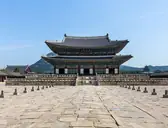 GeunjeongjeonThrone HallIn the guide
- 04
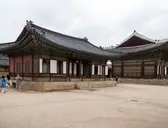 SajeongjeonKing’s OfficeIn the guide
- 05
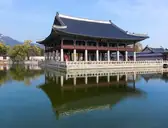 GyeonghoeruBanquet PavilionIn the guide
- 06
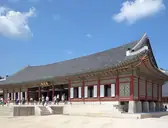 Royal Living QuartersGangnyeongjeon and GyotaejeonIn the guide
- 07
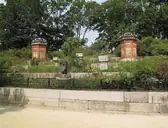 Amisan GardenQueen’s GardenIn the guide
- 08
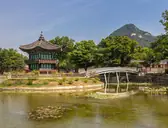 HyangwonjeongIsland PavilionIn the guide
Site map of Gyeongbokgung
History of Gyeongbokgung
Gyeongbokgung was built by the Joseon dynasty, which ruled Korea for more than five centuries, from 1392 until 1897, when King Gojong proclaimed the Korean Empire; that empire ended with Japanese annexation in 1910. The dynasty’s founder, King Taejo, made Hanyang, today’s Seoul, his capital and completed the first phase of this palace in 1395, and his official Jeong Do-jeon gave it and its halls their names. Under Sejong the Great, in the fifteenth century, it was the centre of court life and learning, where the Korean alphabet, Hangeul, was developed. Carpenters, masons and painters of the royal workshops built the halls in wood on stone platforms, following Confucian ideas of order and hierarchy. After the palace burned in 1592, during the Japanese invasions, it lay in ruins for some 270 years until a vast rebuilding began in 1865, early in King Gojong’s reign.
Gyeongbokgung guide: questions
How many stops does the Gyeongbokgung guide have?
8 stops, in visit order: 1. Gwanghwamun; 2. Heungnyemun; 3. Geunjeongjeon; 4. Sajeongjeon; 5. Gyeonghoeru; 6. Royal Living Quarters; 7. Amisan Garden; 8. Hyangwonjeong.
Can I do a self-guided tour of Gyeongbokgung with this guide?
Yes. The guide is made for a self-guided tour: 8 stops in visit order, each with a photo, a story and a voice, so you can explore Gyeongbokgung at your own pace, without joining a group. Download it before you go and it works offline.
How long is each guide?
The 8 stops add up to about 6 minutes of listening in total. You play each stop when you’re ready, so you can go at your own pace.
Does the guide work offline?
Yes, once it’s downloaded. The guide is a single self-contained web page (about 7.1 MB) with the photos, text and audio built in. Download it to your phone before you go (Wi-Fi is best); after that it opens in any modern browser on iPhone or Android, with no app, account or mobile signal needed.
Does it use GPS or need my location?
No. The guide doesn’t use GPS and doesn’t know where you are: you play each stop when you reach it. It works on iPhone and Android in any modern browser, and it’s in English.
What’s included?
One self-contained HTML guide: 8 stops in visit order, each with a photo, text and a voice, plus the story of who built the site.
Who built Gyeongbokgung?
Gyeongbokgung was built by the Joseon dynasty, which ruled Korea for more than five centuries, from 1392 until 1897, when King Gojong proclaimed the Korean Empire; that empire ended with Japanese annexation in 1910. The dynasty’s founder, King Taejo, made Hanyang, today’s Seoul, his capital and completed the first phase of this palace in 1395, and his official Jeong Do-jeon gave it and its halls their names.
Where is Gyeongbokgung?
Gyeongbokgung, the ‘Palace of Great Blessings’, lies in the heart of Seoul at the northern end of the broad avenue of Sejong-daero, with the granite peak of Bugaksan rising behind it.
Is there a free audio guide to Gyeongbokgung?
The first stop, Gwanghwamun, is free to read and hear on this page, so you can try the Gyeongbokgung audio tour before you buy. The full guide, with all 8 stops, is a one-off purchase: download it once and it’s yours to keep, working offline.
Is the Gyeongbokgung guide worth it?
If you’d like to know what you’re looking at, yes. For $10 you get 8 stops in visit order, each with a photo, a short history and a voice you play when you’re ready, plus a site map of the stops, and about 6 minutes of listening in all. It’s short on purpose, so you spend your time looking, not listening. It’s yours to keep, works offline and needs no app. The first stop is free on this page, so you can try it before you buy. If you’d like hours of detail, a guided tour will go deeper.
Audio guide or guided tour?
It depends how you like to visit. This guide lets you explore Gyeongbokgung at your own pace, at any time, for a one-off price. A guided tour gives you a live expert you can ask questions, but at fixed times and usually for a higher price. Many people use both: a tour for the big picture, and the guide to read beforehand or to revisit the stops in their own time.
Is this the official Gyeongbokgung guide?
No. It’s an independent guide by The Historian Guide, not affiliated with or endorsed by the operator of Gyeongbokgung. For tickets and opening hours, check the official site operator before you go.
Does the guide include entry tickets or opening hours?
No. The guide is a digital companion only. Admission to Gyeongbokgung is separate, so check the official site operator for current tickets and opening hours before you go.
- Stop 1 · Gwanghwamun: *Youngjin · CC BY-SA 4.0 · Wikimedia Commons · resized
- Stop 2 · Heungnyemun: AnbyG · CC BY-SA 4.0 · Wikimedia Commons · resized
- Stop 3 · Geunjeongjeon (also the cover): Basile Morin · CC BY-SA 4.0 · Wikimedia Commons · resized
- Stop 4 · Sajeongjeon: Tristan Surtel · CC BY-SA 4.0 · Wikimedia Commons · resized
- Stop 5 · Gyeonghoeru: © Frank Schulenburg · CC BY-SA 4.0 · Wikimedia Commons · resized
- Stop 6 · Royal Living Quarters: Spike · CC BY-SA 4.0 · Wikimedia Commons · resized
- Stop 7 · Amisan Garden: G41rn8 · CC BY-SA 4.0 · Wikimedia Commons · resized
- Stop 8 · Hyangwonjeong: Basile Morin · CC BY-SA 4.0 · Wikimedia Commons · resized


All photographs from Wikimedia Commons under the licences shown.
More guides in South Korea
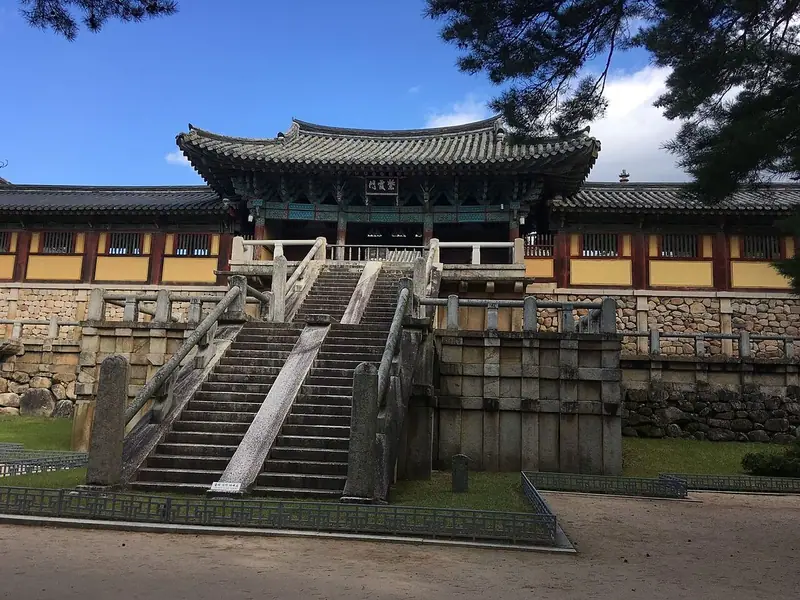 Silla8 stops · 751–774 CE
Bulguksa and Seokguram audio guide
Stone stairways and twin pagodas at the Temple of the Buddha Land, then up the mountain to the Buddha of Seokguram.
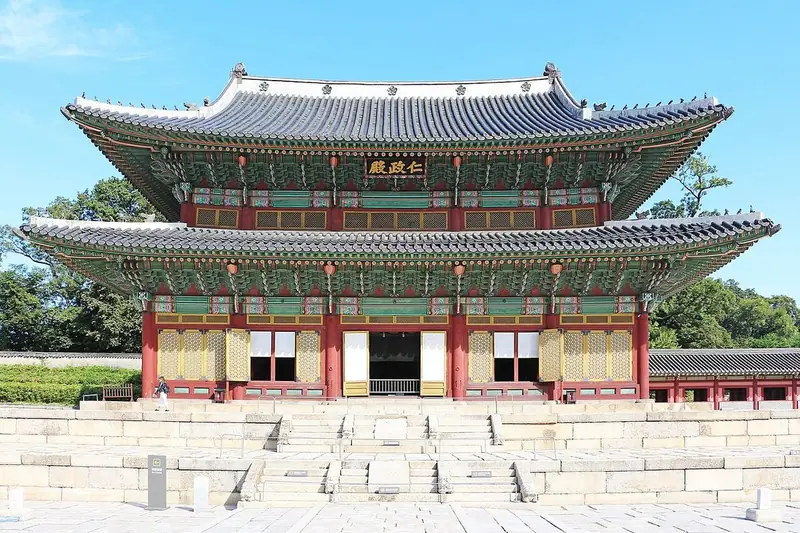 Joseon8 stops · from 1405
Changdeokgung audio guide
A Joseon palace whose halls are tucked into the slopes, with garden ponds and pavilions behind.
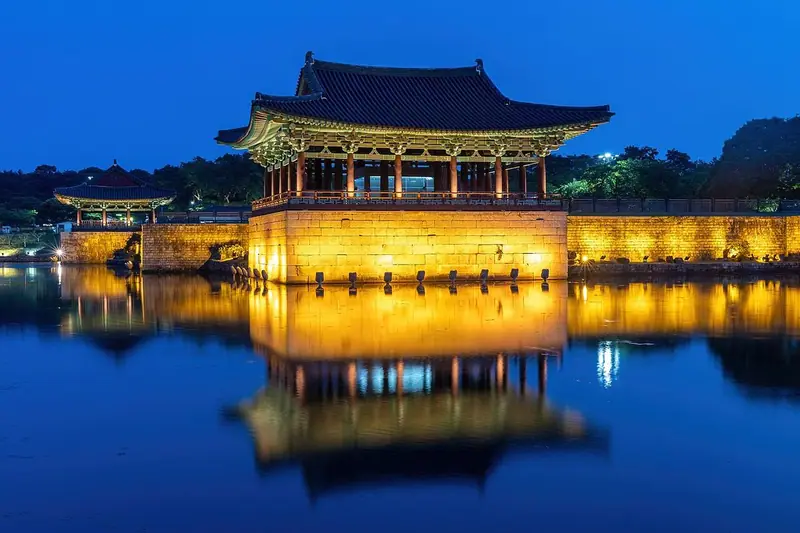 Silla8 stops · 57 BCE – 935 CE
Gyeongju Historic Areas audio guide
Royal tombs, Cheomseongdae and the palace pond of Donggung and Wolji, in Silla’s capital of almost a thousand years.
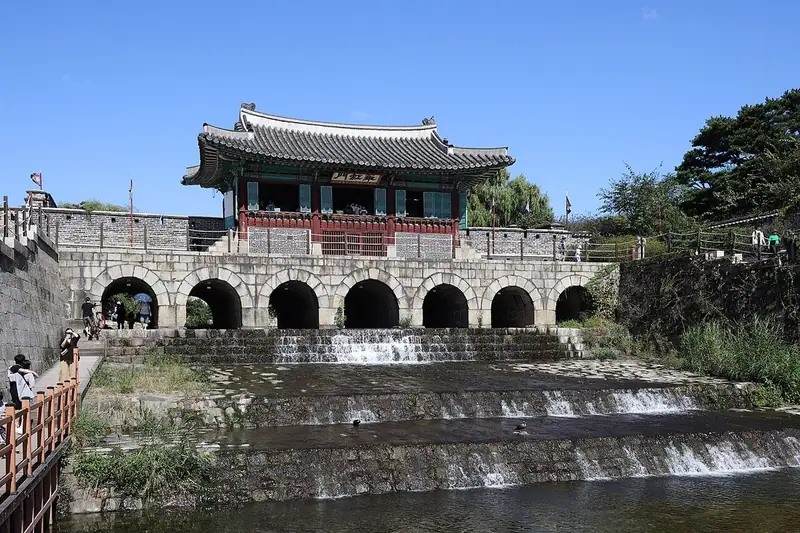 Joseon8 stops · 1794–1796
Hwaseong Fortress audio guide
The walls of King Jeongjo’s fortress over Paldalsan, past great gates, command posts and the beacon tower.
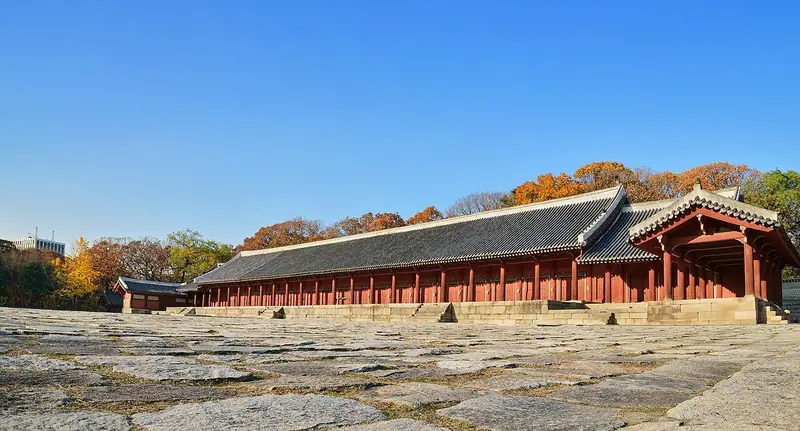 Joseon7 stops · 1395; rebuilt 1608
Jongmyo Shrine audio guide
Along the spirit path to the long hall of Jeongjeon, where the tablets of Joseon’s kings and queens still receive their rites.
Every guide, in every country
Gyeongbokgung and every other guide we publish, including future ones. One payment, no subscription.