Before you start
Gyeongju, in the south-east of South Korea, was the capital of the Silla kingdom for almost a thousand years, and its centre is still scattered with royal tombs, palace sites and temples. The Gyeongju Historic Areas became a UNESCO World Heritage Site in 2000. This guide covers the compact heart of the old capital, which you can explore on foot or by bicycle in a day. It begins at the great grassy tomb mounds of Daereungwon, continues past the observatory of Cheomseongdae, the sacred grove of Gyerim and the palace site of Wolseong to the national museum, then visits the palace pond of Donggung and Wolji before ending at the temple sites of Hwangnyongsa and Bunhwangsa. Distances are short and the ground is flat.
Use it as a self-guided tour of the Gyeongju Historic Areas: 8 stops in visit order, each played when you’re ready, at your own pace.
 Free preview · Stop 1
Daereungwon
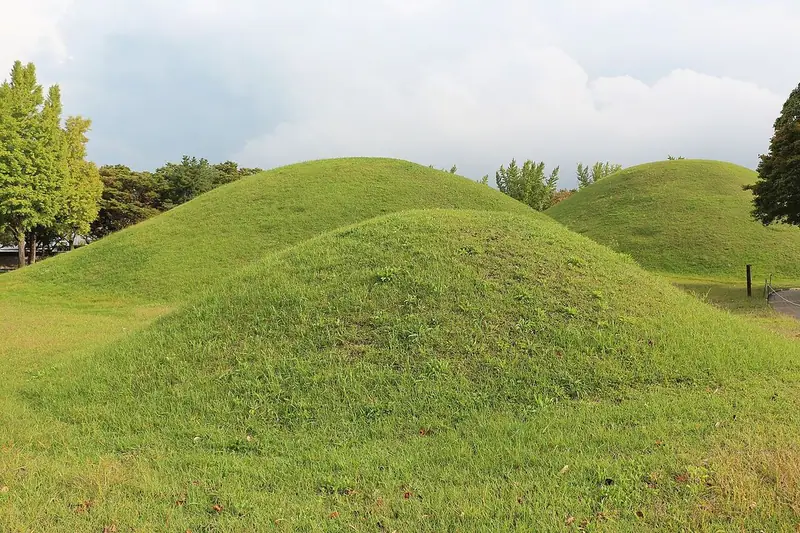
Begin at Daereungwon, a park of great grassy mounds in the middle of the city. There are twenty-three tombs here, of Silla kings, queens and nobles, some of them over twenty metres high, rising among pine trees like small green hills. Most date from the fifth and sixth centuries. Each covers a wooden burial chamber which was buried under a heap of stones and then a mound of earth. Because the stones collapsed on to the chamber as the wood rotted, robbers found the tombs very hard to break into, and many treasures survived until excavation in the twentieth century. Look for the largest of all, a double mound joined like a gourd, which held a king and a queen. Walk slowly along the paths between the mounds, one of the most photographed views in Korea, especially at sunset.
Photo: Bernard Gagnon · CC0 · Wikimedia Commons
What to see at the Gyeongju Historic Areas: 8 stops, in visit order
- 01
 DaereungwonRoyal Tomb ParkFree preview
- 02
 CheonmachongHeavenly Horse TombIn the guide
- 03
 CheomseongdaeStar-Gazing TowerIn the guide
- 04
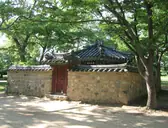 GyerimSacred GroveIn the guide
- 05
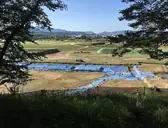 WolseongCrescent Moon PalaceIn the guide
- 06
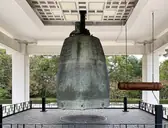 Gyeongju National MuseumTreasures of SillaIn the guide
- 07
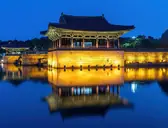 Donggung and WoljiPalace PondIn the guide
- 08
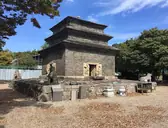 Hwangnyongsa and BunhwangsaTemple SitesIn the guide
Site map of the Gyeongju Historic Areas
History of the Gyeongju Historic Areas
Gyeongju was the capital of Silla, a kingdom which according to tradition was founded in 57 BCE and lasted until 935 CE, one of the longest-ruling dynasties in history. Silla began as a small state in the south-east of the peninsula and grew powerful in the sixth century, when it adopted Buddhism. In alliance with Tang China it defeated the rival kingdoms of Baekje in 660 and Goguryeo in 668, and then drove out the Tang, ruling most of Korea. During this Unified Silla period Gyeongju became a great city, rich in temples and palaces. Silla’s kings and nobles were buried under huge earth mounds filled with gold. The kingdom weakened in the ninth century, and in 935 its last king surrendered to the new kingdom of Goryeo.
Gyeongju Historic Areas guide: questions
How many stops does the Gyeongju Historic Areas guide have?
8 stops, in visit order: 1. Daereungwon; 2. Cheonmachong; 3. Cheomseongdae; 4. Gyerim; 5. Wolseong; 6. Gyeongju National Museum; 7. Donggung and Wolji; 8. Hwangnyongsa and Bunhwangsa.
Can I do a self-guided tour of the Gyeongju Historic Areas with this guide?
Yes. The guide is made for a self-guided tour: 8 stops in visit order, each with a photo, a story and a voice, so you can explore the Gyeongju Historic Areas at your own pace, without joining a group. Download it before you go and it works offline.
How long is each guide?
The 8 stops add up to about 6 minutes of listening in total. You play each stop when you’re ready, so you can go at your own pace.
Does the guide work offline?
Yes, once it’s downloaded. The guide is a single self-contained web page (about 7.8 MB) with the photos, text and audio built in. Download it to your phone before you go (Wi-Fi is best); after that it opens in any modern browser on iPhone or Android, with no app, account or mobile signal needed.
Does it use GPS or need my location?
No. The guide doesn’t use GPS and doesn’t know where you are: you play each stop when you reach it. It works on iPhone and Android in any modern browser, and it’s in English.
What’s included?
One self-contained HTML guide: 8 stops in visit order, each with a photo, text and a voice, plus the story of who built the site.
Who built the Gyeongju Historic Areas?
Gyeongju was the capital of Silla, a kingdom which according to tradition was founded in 57 BCE and lasted until 935 CE, one of the longest-ruling dynasties in history. Silla began as a small state in the south-east of the peninsula and grew powerful in the sixth century, when it adopted Buddhism.
Where is the Gyeongju Historic Areas?
Gyeongju, in the south-east of South Korea, was the capital of the Silla kingdom for almost a thousand years, and its centre is still scattered with royal tombs, palace sites and temples.
Is there a free audio guide to the Gyeongju Historic Areas?
The first stop, Daereungwon, is free to read and hear on this page, so you can try the Gyeongju Historic Areas audio tour before you buy. The full guide, with all 8 stops, is a one-off purchase: download it once and it’s yours to keep, working offline.
Is the Gyeongju Historic Areas guide worth it?
If you’d like to know what you’re looking at, yes. For $10 you get 8 stops in visit order, each with a photo, a short history and a voice you play when you’re ready, plus a site map of the stops, and about 6 minutes of listening in all. It’s short on purpose, so you spend your time looking, not listening. It’s yours to keep, works offline and needs no app. The first stop is free on this page, so you can try it before you buy. If you’d like hours of detail, a guided tour will go deeper.
Audio guide or guided tour?
It depends how you like to visit. This guide lets you explore the Gyeongju Historic Areas at your own pace, at any time, for a one-off price. A guided tour gives you a live expert you can ask questions, but at fixed times and usually for a higher price. Many people use both: a tour for the big picture, and the guide to read beforehand or to revisit the stops in their own time.
Is this the official Gyeongju Historic Areas guide?
No. It’s an independent guide by The Historian Guide, not affiliated with or endorsed by the operator of the Gyeongju Historic Areas. For tickets and opening hours, check the official site operator before you go.
Does the guide include entry tickets or opening hours?
No. The guide is a digital companion only. Admission to the Gyeongju Historic Areas is separate, so check the official site operator for current tickets and opening hours before you go.
- Stop 1 · Daereungwon: Bernard Gagnon · CC0 · Wikimedia Commons · resized
- Stop 2 · Cheonmachong: Christophe95 · CC BY-SA 4.0 · Wikimedia Commons · resized
- Stop 3 · Cheomseongdae: by Junho Jung at Flickr from South Korea · CC BY-SA 3.0 · Wikimedia Commons · resized
- Stop 4 · Gyerim: Alain Seguin from Ottawa, Canada · CC BY-SA 3.0 · Wikimedia Commons · resized
- Stop 5 · Wolseong: Christophe95 · CC BY-SA 4.0 · Wikimedia Commons · resized
- Stop 6 · Gyeongju National Museum: Bernard Gagnon · CC0 · Wikimedia Commons · resized
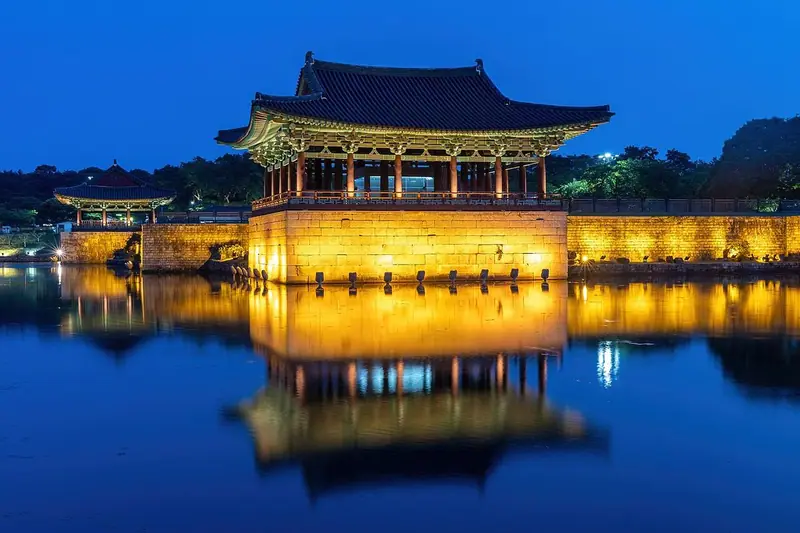
- Stop 7 · Donggung and Wolji (also the cover): Basile Morin · CC BY-SA 4.0 · Wikimedia Commons · resized
- Stop 8 · Hwangnyongsa and Bunhwangsa: Christophe95 · CC BY-SA 4.0 · Wikimedia Commons · resized


All photographs from Wikimedia Commons under the licences shown.
More guides in South Korea
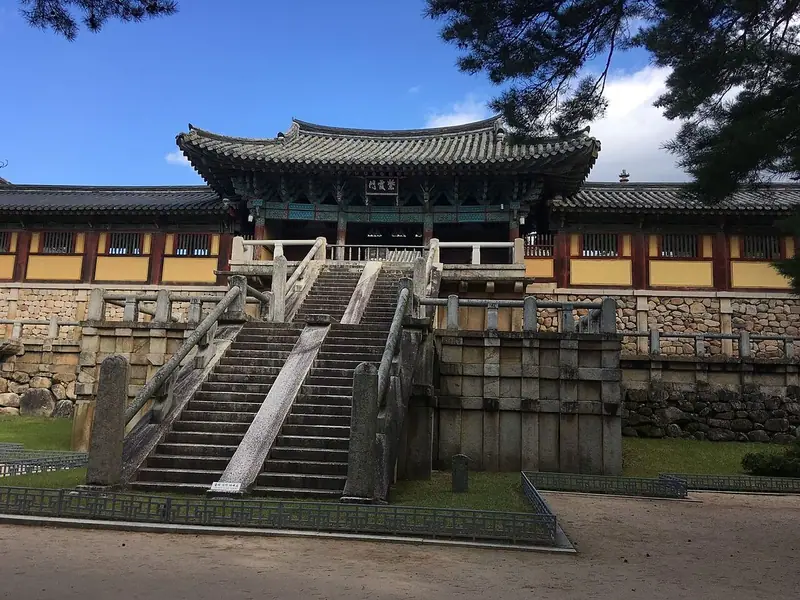 Silla8 stops · 751–774 CE
Bulguksa and Seokguram audio guide
Stone stairways and twin pagodas at the Temple of the Buddha Land, then up the mountain to the Buddha of Seokguram.
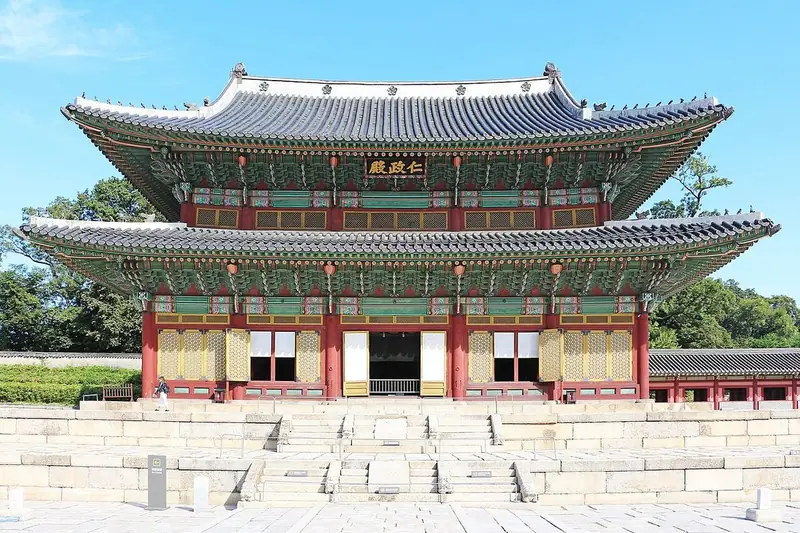 Joseon8 stops · from 1405
Changdeokgung audio guide
A Joseon palace whose halls are tucked into the slopes, with garden ponds and pavilions behind.
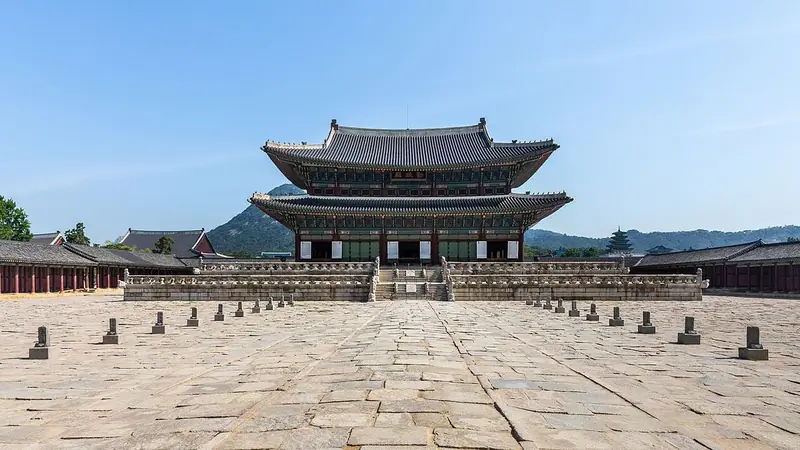 Joseon8 stops · 1395; rebuilt 1867
Gyeongbokgung audio guide
Through Gwanghwamun to the throne hall and the Gyeonghoeru pavilion on its lake, in Joseon’s grandest palace.
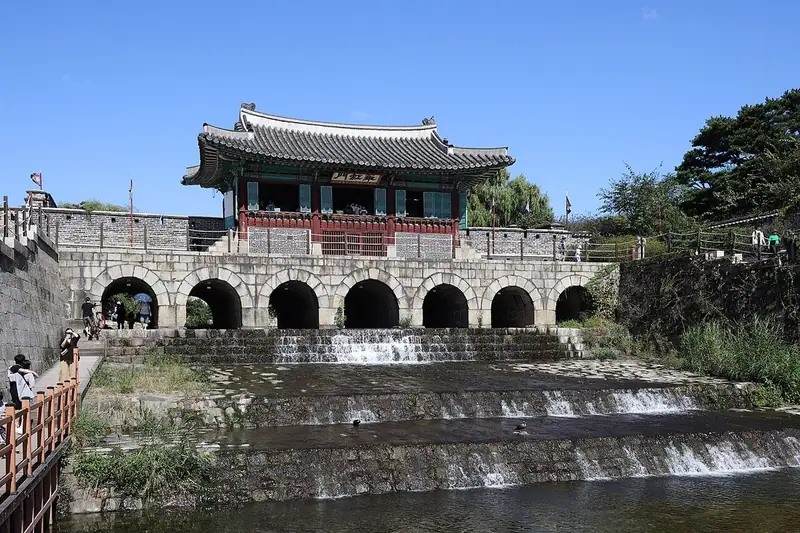 Joseon8 stops · 1794–1796
Hwaseong Fortress audio guide
The walls of King Jeongjo’s fortress over Paldalsan, past great gates, command posts and the beacon tower.
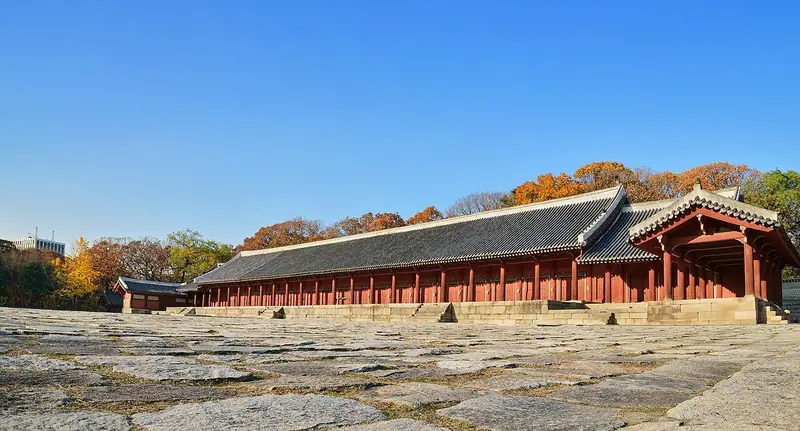 Joseon7 stops · 1395; rebuilt 1608
Jongmyo Shrine audio guide
Along the spirit path to the long hall of Jeongjeon, where the tablets of Joseon’s kings and queens still receive their rites.
Every guide, in every country
Gyeongju Historic Areas and every other guide we publish, including future ones. One payment, no subscription.