Before you start
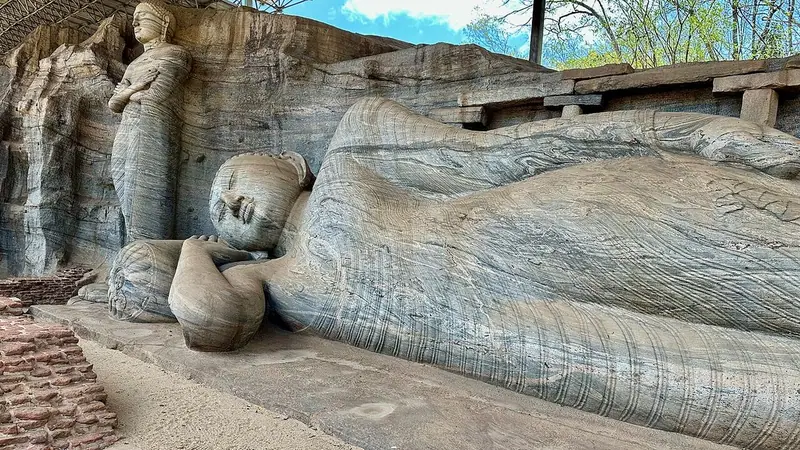
Polonnaruwa, on the shore of a great man-made lake in north central Sri Lanka, was the island’s royal capital in the eleventh to thirteenth centuries. Its ruins, more compact and better preserved than those of Anuradhapura, include a royal palace, a sacred quadrangle crowded with shrines, and some of the finest rock-cut Buddha images in Asia. This guide begins with the great stone statue by the lake, then follows the main road north through the palace, the sacred quadrangle and the Lankatilaka to the Gal Vihara. The distances are long, so most visitors cycle or drive between the groups and walk within them. Several shrines are still revered, so dress modestly, remove shoes and hats where asked, and never pose with your back to a Buddha image.
Use it as a self-guided tour of Polonnaruwa: 8 stops in visit order, each played when you’re ready, at your own pace.
 Free preview · Stop 1
Statue of Parakramabahu
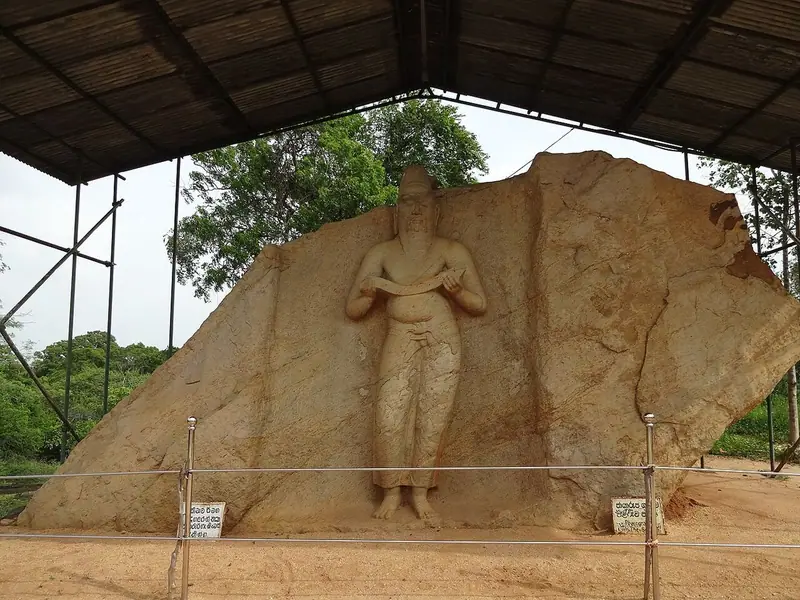
Begin beside the Parakrama Samudra, the great reservoir, at a stone statue carved in high relief on a large boulder. It is about three and a half metres tall and shows a dignified bearded figure, bare to the waist, holding a long object in his hands, which has been interpreted as a book, a palm-leaf manuscript or a yoke. The figure is popularly believed to be King Parakramabahu I, but its identity is not certain, and some scholars think it shows a sage or teacher. Look at the grave face, the half-closed eyes and the long beard and moustache. The reservoir behind you, which Parakramabahu enlarged, was so vast that it was called a sea, and it still waters the rice fields around the city. Its building reflects the king’s saying that no drop of rain should reach the sea unused.
Photo: Z thomas · CC BY-SA 4.0 · Wikimedia Commons
What to see at Polonnaruwa: 8 stops, in visit order
- 01
 Statue of ParakramabahuThe Sage by the LakeFree preview
- 02
 The Royal PalaceSeven Storeys of BrickIn the guide
- 03
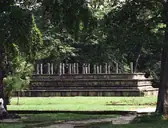 The Council ChamberThe King’s Audience HallIn the guide
- 04
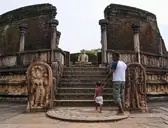 The VatadageThe Circular Relic HouseIn the guide
- 05
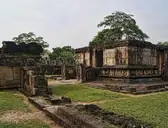 Hatadage and Gal PotaRelic Shrine and Stone BookIn the guide
- 06
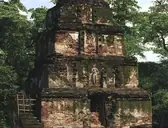 Satmahal PrasadaThe Seven-Storey TowerIn the guide
- 07
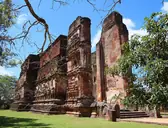 LankatilakaThe Headless GiantIn the guide
- 08
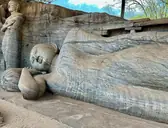 Gal ViharaBuddhas in the RockIn the guide
Site map of Polonnaruwa
History of Polonnaruwa
Polonnaruwa was the capital of the Kingdom of Polonnaruwa, the Sinhalese kingdom that ruled from 1070 until 1232. The town had first been a military post and then the seat of the Chola rulers from South India, who conquered Anuradhapura in the early eleventh century. In 1070 King Vijayabahu I drove out the Cholas and made Polonnaruwa his capital. The city reached its height under Parakramabahu I, who reigned from 1153 to 1186, built reservoirs, palaces and monasteries, and united the island. His successor Nissanka Malla, who reigned from 1187 to 1196, added shrines and many inscriptions. After his death the kingdom was weakened by quarrels over the throne and by invasion, and in the thirteenth century the capital moved away and the city was abandoned to the forest.
Polonnaruwa guide: questions
How many stops does the Polonnaruwa guide have?
8 stops, in visit order: 1. Statue of Parakramabahu; 2. The Royal Palace; 3. The Council Chamber; 4. The Vatadage; 5. Hatadage and Gal Pota; 6. Satmahal Prasada; 7. Lankatilaka; 8. Gal Vihara.
Can I do a self-guided tour of Polonnaruwa with this guide?
Yes. The guide is made for a self-guided tour: 8 stops in visit order, each with a photo, a story and a voice, so you can explore Polonnaruwa at your own pace, without joining a group. Download it before you go and it works offline.
How long is each guide?
The 8 stops add up to about 6 minutes of listening in total. You play each stop when you’re ready, so you can go at your own pace.
Does the guide work offline?
Yes, once it’s downloaded. The guide is a single self-contained web page (about 8.2 MB) with the photos, text and audio built in. Download it to your phone before you go (Wi-Fi is best); after that it opens in any modern browser on iPhone or Android, with no app, account or mobile signal needed.
Does it use GPS or need my location?
No. The guide doesn’t use GPS and doesn’t know where you are: you play each stop when you reach it. It works on iPhone and Android in any modern browser, and it’s in English.
What’s included?
One self-contained HTML guide: 8 stops in visit order, each with a photo, text and a voice, plus the story of who built the site.
Who built Polonnaruwa?
Polonnaruwa was the capital of the Kingdom of Polonnaruwa, the Sinhalese kingdom that ruled from 1070 until 1232. The town had first been a military post and then the seat of the Chola rulers from South India, who conquered Anuradhapura in the early eleventh century.
Where is Polonnaruwa?
Polonnaruwa, on the shore of a great man-made lake in north central Sri Lanka, was the island’s royal capital in the eleventh to thirteenth centuries.
Is there a free audio guide to Polonnaruwa?
The first stop, Statue of Parakramabahu, is free to read and hear on this page, so you can try the Polonnaruwa audio tour before you buy. The full guide, with all 8 stops, is a one-off purchase: download it once and it’s yours to keep, working offline.
Is the Polonnaruwa guide worth it?
If you’d like to know what you’re looking at, yes. For $10 you get 8 stops in visit order, each with a photo, a short history and a voice you play when you’re ready, plus a site map of the stops, and about 6 minutes of listening in all. It’s short on purpose, so you spend your time looking, not listening. It’s yours to keep, works offline and needs no app. The first stop is free on this page, so you can try it before you buy. If you’d like hours of detail, a guided tour will go deeper.
Audio guide or guided tour?
It depends how you like to visit. This guide lets you explore Polonnaruwa at your own pace, at any time, for a one-off price. A guided tour gives you a live expert you can ask questions, but at fixed times and usually for a higher price. Many people use both: a tour for the big picture, and the guide to read beforehand or to revisit the stops in their own time.
Is this the official Polonnaruwa guide?
No. It’s an independent guide by The Historian Guide, not affiliated with or endorsed by the operator of Polonnaruwa. For tickets and opening hours, check the official site operator before you go.
Does the guide include entry tickets or opening hours?
No. The guide is a digital companion only. Admission to Polonnaruwa is separate, so check the official site operator for current tickets and opening hours before you go.
- Stop 1 · Statue of Parakramabahu: Z thomas · CC BY-SA 4.0 · Wikimedia Commons · resized
- Stop 2 · The Royal Palace: Cherubino · CC BY-SA 3.0 · Wikimedia Commons · resized
- Stop 3 · The Council Chamber: Jerzy Strzelecki · CC BY 3.0 · Wikimedia Commons · resized
- Stop 4 · The Vatadage: Philip Nalangan · CC BY-SA 4.0 · Wikimedia Commons · resized
- Stop 5 · Hatadage and Gal Pota: Philip Nalangan · CC BY 4.0 · Wikimedia Commons · resized
- Stop 6 · Satmahal Prasada: Jerzy Strzelecki · CC BY 3.0 · Wikimedia Commons · resized
- Stop 7 · Lankatilaka: Bergentroll · CC0 · Wikimedia Commons · resized
- Stop 8 · Gal Vihara (also the cover): Josep Renalias Lohen11 · CC BY 4.0 · Wikimedia Commons · resized


All photographs from Wikimedia Commons under the licences shown.
More guides in Sri Lanka
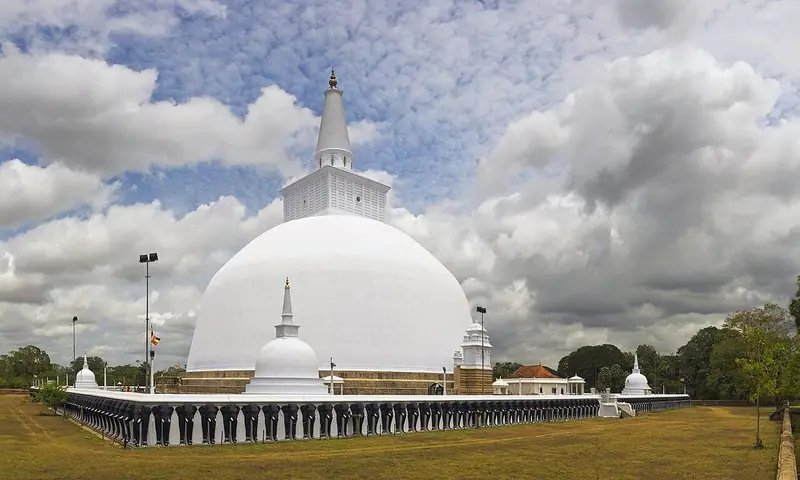 Sinhalese9 stops · 437 BCE – 1017 CE
Anuradhapura audio guide
Follow pilgrims in white to the sacred Bo tree and the great white and brick dagobas of Sri Lanka’s ancient capital, one of the holiest places of Buddhism.
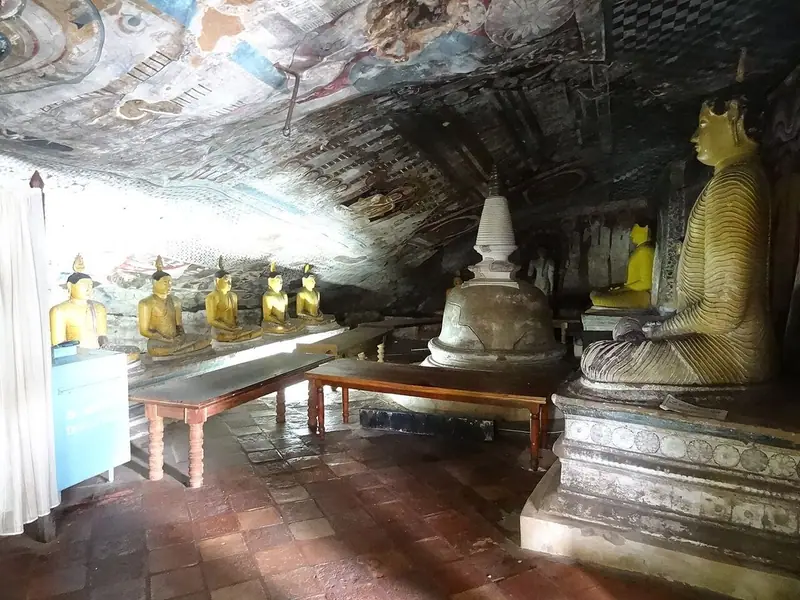 Sinhalese7 stops · 1st century BCE – 18th century CE
Dambulla Cave Temple audio guide
Climb a granite rock to five caves crowded with statues of the Buddha beneath brilliantly painted ceilings.
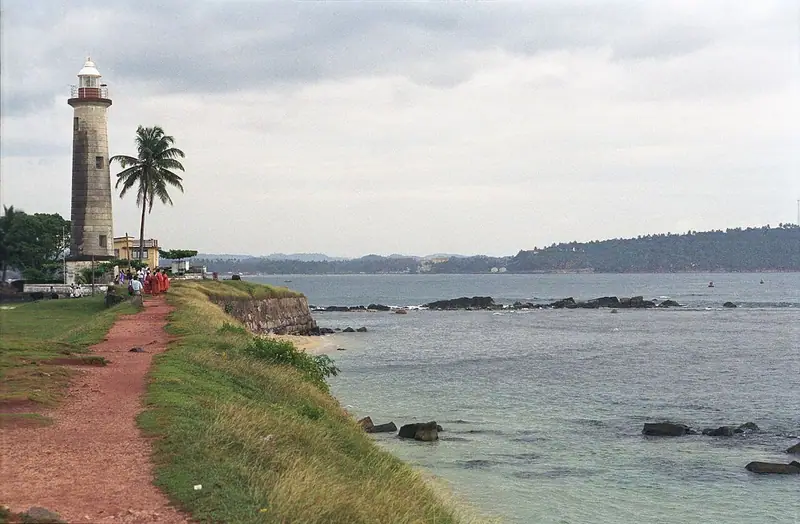 Dutch Colonial8 stops · 1640–1796 CE
Galle Fort audio guide
The ramparts and street grid of the Dutch-built fort on its rocky peninsula, from the Main Gate to the lighthouse and Flag Rock.
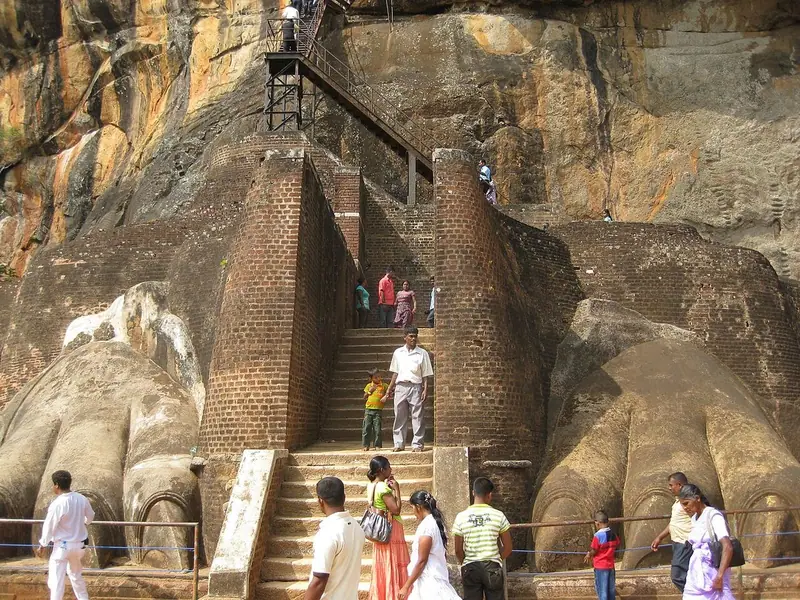 Sinhalese8 stops · 477–495 CE
Sigiriya audio guide
Climb from the water gardens past the painted maidens and the Mirror Wall, through the Lion Gate to the ruined palace on top of the rock.
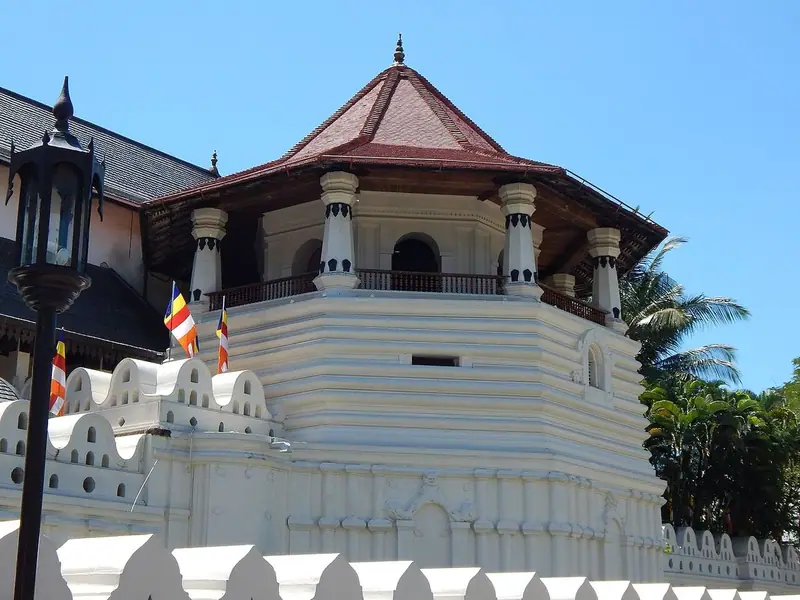 Sinhalese8 stops · early 18th century – 1815 CE
Temple of the Tooth audio guide
Join the pilgrims bringing flowers to the tooth of the Buddha in the lakeside temple and palace of Sri Lanka’s last kings at Kandy.
Every guide, in every country
Polonnaruwa and every other guide we publish, including future ones. One payment, no subscription.