Before you start
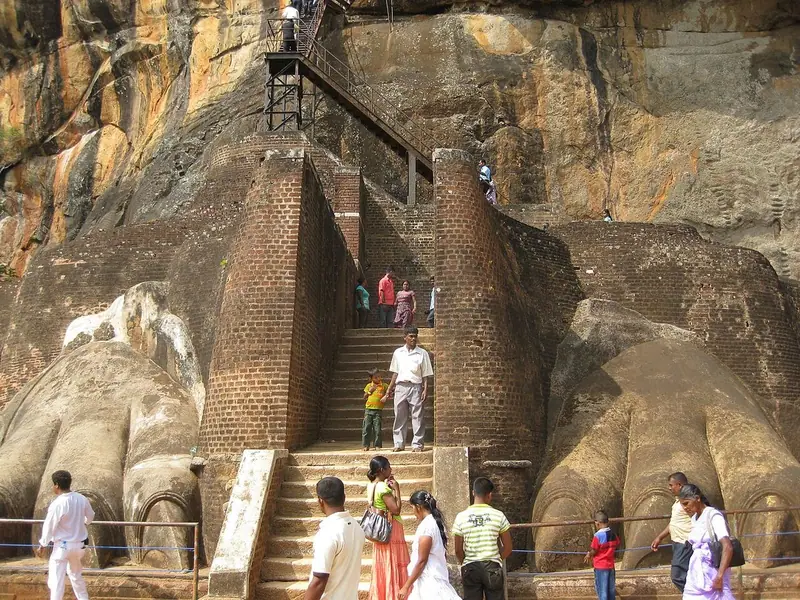
Sigiriya, the Lion Rock, is a great column of granite rising about 180 metres above the forest and farmland of central Sri Lanka, near the town of Dambulla. Around its foot lie royal gardens, pools and moats, and on its summit the ruins of a palace, reached by a long climb of stairways and iron walkways clinging to the rock. This guide follows the path from the western entrance through the water gardens and boulder gardens, up past the painted ladies and the Mirror Wall to the lion’s paws, and on to the summit. The climb is steep and exposed in places, and it is hard work in the heat, so start as early as you can, take plenty of water, and go at your own pace.
Use it as a self-guided tour of Sigiriya: 8 stops in visit order, each played when you’re ready, at your own pace.
 Free preview · Stop 1
The Water Gardens
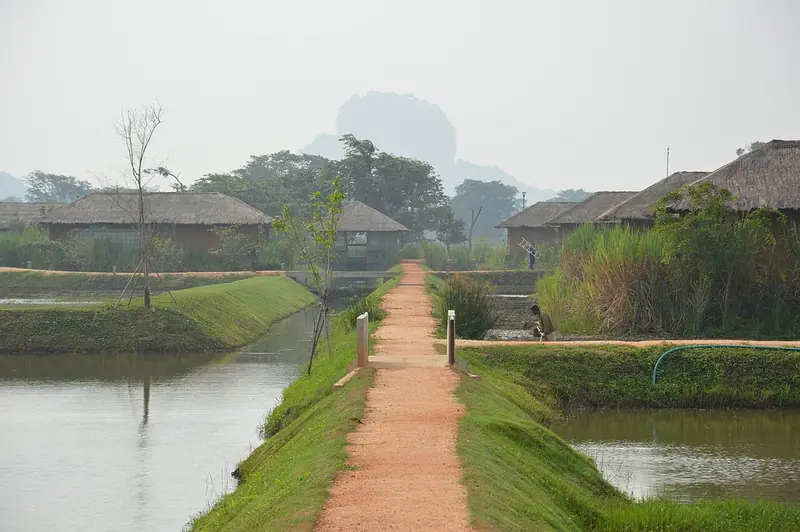
Enter from the west, across the outer moat, and walk along the straight path that leads towards the rock. On either side lie the water gardens, laid out symmetrically along an east to west axis and counted among the oldest landscaped gardens in the world. The first garden is a square of ground surrounded by water and joined to the path by four causeways, each once closed by a gateway. Pools, channels and moats were all linked by underground conduits fed from the large artificial lake to the south of the rock. Look ahead as you walk, and notice how the path draws the eye straight to the rock itself. The whole western precinct was planned to frame the hill, combining the geometry of the gardens with the natural shapes of the landscape around them.
Photo: VINUKR86 · CC BY-SA 4.0 · Wikimedia Commons
What to see at Sigiriya: 8 stops, in visit order
- 01
 The Water GardensSymmetry by the MoatFree preview
- 02
 The Fountain GardenFountains That Still PlayIn the guide
- 03
 The Boulder GardensPavilions on the RocksIn the guide
- 04
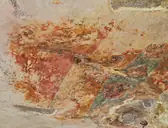 Cobra Hood CaveAn Ancient Rock ShelterIn the guide
- 05
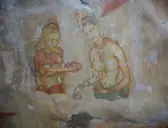 The FrescoesThe Painted LadiesIn the guide
- 06
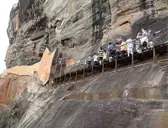 The Mirror WallPoems of Old VisitorsIn the guide
- 07
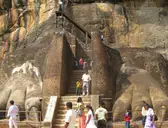 The Lion GateBetween the PawsIn the guide
- 08
 The Summit PalaceA Palace in the SkyIn the guide
Site map of Sigiriya
History of Sigiriya
Sigiriya was built in the Anuradhapura Kingdom, the long-lived Sinhalese kingdom of ancient Sri Lanka, which by tradition was founded in 437 BCE and lasted until the Chola conquest of 1017. Buddhist monks lived in rock shelters around the hill from the third century BCE. According to the chronicle known as the Culavamsa, King Kashyapa, who seized the throne by killing his father Dhatusena, moved his capital here and reigned from 477 to 495. He built a palace on the summit and a fortified city with gardens around its base. After his defeat by his half-brother Moggallana, the capital returned to Anuradhapura and Sigiriya became a Buddhist monastery, which lasted until the thirteenth or fourteenth century. Some scholars question parts of this story and see the site mainly as a monastic one.
Sigiriya guide: questions
How many stops does the Sigiriya guide have?
8 stops, in visit order: 1. The Water Gardens; 2. The Fountain Garden; 3. The Boulder Gardens; 4. Cobra Hood Cave; 5. The Frescoes; 6. The Mirror Wall; 7. The Lion Gate; 8. The Summit Palace.
Can I do a self-guided tour of Sigiriya with this guide?
Yes. The guide is made for a self-guided tour: 8 stops in visit order, each with a photo, a story and a voice, so you can explore Sigiriya at your own pace, without joining a group. Download it before you go and it works offline.
How long is each guide?
The 8 stops add up to about 5 minutes of listening in total. You play each stop when you’re ready, so you can go at your own pace.
Does the guide work offline?
Yes, once it’s downloaded. The guide is a single self-contained web page (about 7.7 MB) with the photos, text and audio built in. Download it to your phone before you go (Wi-Fi is best); after that it opens in any modern browser on iPhone or Android, with no app, account or mobile signal needed.
Does it use GPS or need my location?
No. The guide doesn’t use GPS and doesn’t know where you are: you play each stop when you reach it. It works on iPhone and Android in any modern browser, and it’s in English.
What’s included?
One self-contained HTML guide: 8 stops in visit order, each with a photo, text and a voice, plus the story of who built the site.
Who built Sigiriya?
Sigiriya was built in the Anuradhapura Kingdom, the long-lived Sinhalese kingdom of ancient Sri Lanka, which by tradition was founded in 437 BCE and lasted until the Chola conquest of 1017. Buddhist monks lived in rock shelters around the hill from the third century BCE.
Where is Sigiriya?
Sigiriya, the Lion Rock, is a great column of granite rising about 180 metres above the forest and farmland of central Sri Lanka, near the town of Dambulla.
Is there a free audio guide to Sigiriya?
The first stop, The Water Gardens, is free to read and hear on this page, so you can try the Sigiriya audio tour before you buy. The full guide, with all 8 stops, is a one-off purchase: download it once and it’s yours to keep, working offline.
Is the Sigiriya guide worth it?
If you’d like to know what you’re looking at, yes. For $10 you get 8 stops in visit order, each with a photo, a short history and a voice you play when you’re ready, plus a site map of the stops, and about 5 minutes of listening in all. It’s short on purpose, so you spend your time looking, not listening. It’s yours to keep, works offline and needs no app. The first stop is free on this page, so you can try it before you buy. If you’d like hours of detail, a guided tour will go deeper.
Audio guide or guided tour?
It depends how you like to visit. This guide lets you explore Sigiriya at your own pace, at any time, for a one-off price. A guided tour gives you a live expert you can ask questions, but at fixed times and usually for a higher price. Many people use both: a tour for the big picture, and the guide to read beforehand or to revisit the stops in their own time.
Is this the official Sigiriya guide?
No. It’s an independent guide by The Historian Guide, not affiliated with or endorsed by the operator of Sigiriya. For tickets and opening hours, check the official site operator before you go.
Does the guide include entry tickets or opening hours?
No. The guide is a digital companion only. Admission to Sigiriya is separate, so check the official site operator for current tickets and opening hours before you go.
- Stop 1 · The Water Gardens: VINUKR86 · CC BY-SA 4.0 · Wikimedia Commons · resized
- Stop 2 · The Fountain Garden: Michael Gunther · CC BY-SA 4.0 · Wikimedia Commons · resized
- Stop 3 · The Boulder Gardens: Cherubino · CC BY-SA 3.0 · Wikimedia Commons · resized
- Stop 4 · Cobra Hood Cave: Prof Ranga Sai · CC BY-SA 4.0 · Wikimedia Commons · resized
- Stop 5 · The Frescoes: Rudolph.A.furtado · CC0 · Wikimedia Commons · resized
- Stop 6 · The Mirror Wall: Cherubino · CC BY-SA 3.0 · Wikimedia Commons · resized
- Stop 7 · The Lion Gate (also the cover): shankar s. from Dubai, united arab emirates · CC BY 2.0 · Wikimedia Commons · resized
- Stop 8 · The Summit Palace: Shoka at the English-language Wikipedia · CC BY-SA 3.0 · Wikimedia Commons · resized


All photographs from Wikimedia Commons under the licences shown.
More guides in Sri Lanka
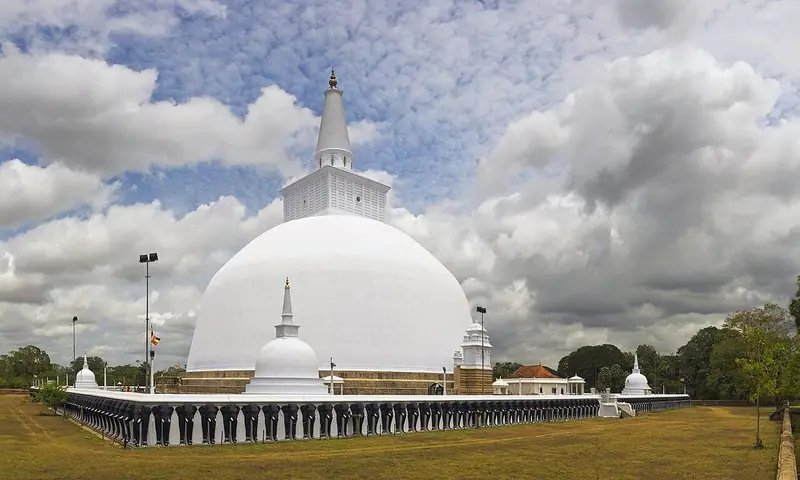 Sinhalese9 stops · 437 BCE – 1017 CE
Anuradhapura audio guide
Follow pilgrims in white to the sacred Bo tree and the great white and brick dagobas of Sri Lanka’s ancient capital, one of the holiest places of Buddhism.
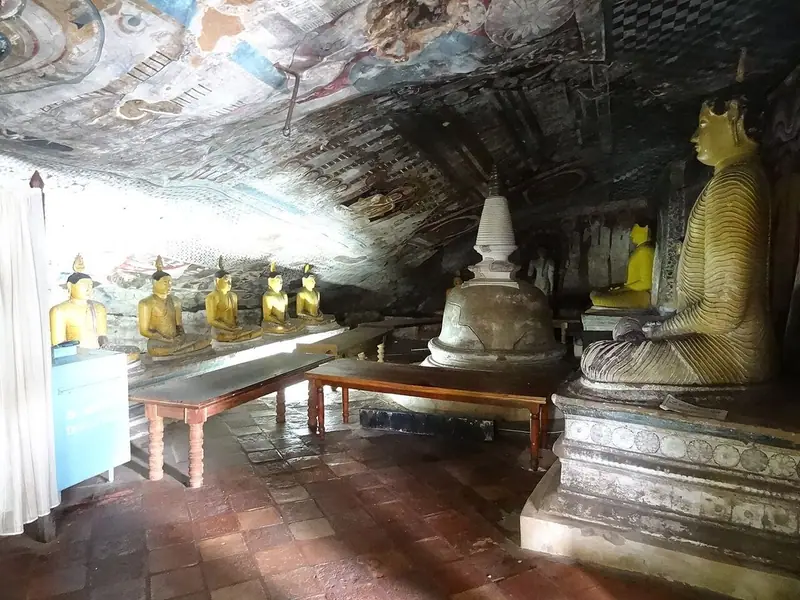 Sinhalese7 stops · 1st century BCE – 18th century CE
Dambulla Cave Temple audio guide
Climb a granite rock to five caves crowded with statues of the Buddha beneath brilliantly painted ceilings.
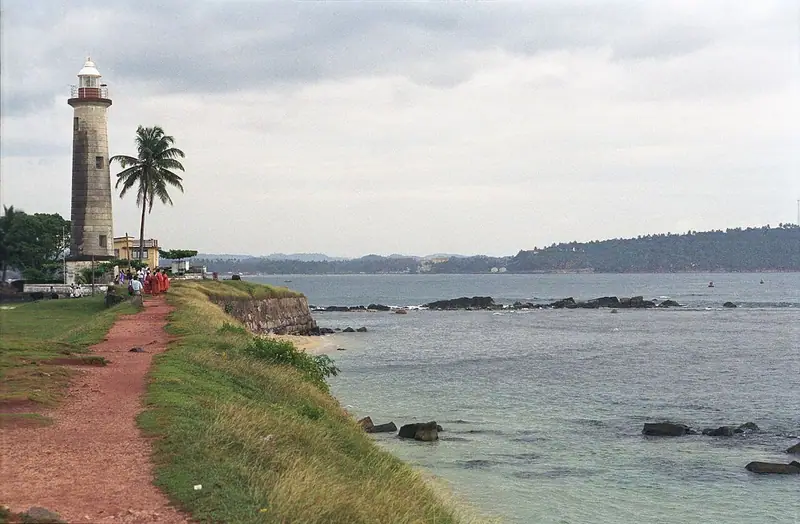 Dutch Colonial8 stops · 1640–1796 CE
Galle Fort audio guide
The ramparts and street grid of the Dutch-built fort on its rocky peninsula, from the Main Gate to the lighthouse and Flag Rock.
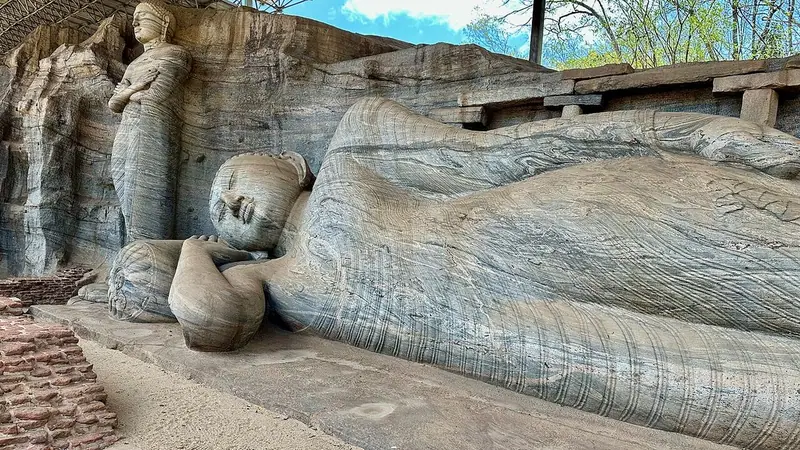 Sinhalese8 stops · 1070–1232 CE
Polonnaruwa audio guide
Explore Sri Lanka’s royal capital of the eleventh to thirteenth centuries, from Parakramabahu’s palace to the sacred quadrangle and the rock-cut Buddhas of Gal Vihara.
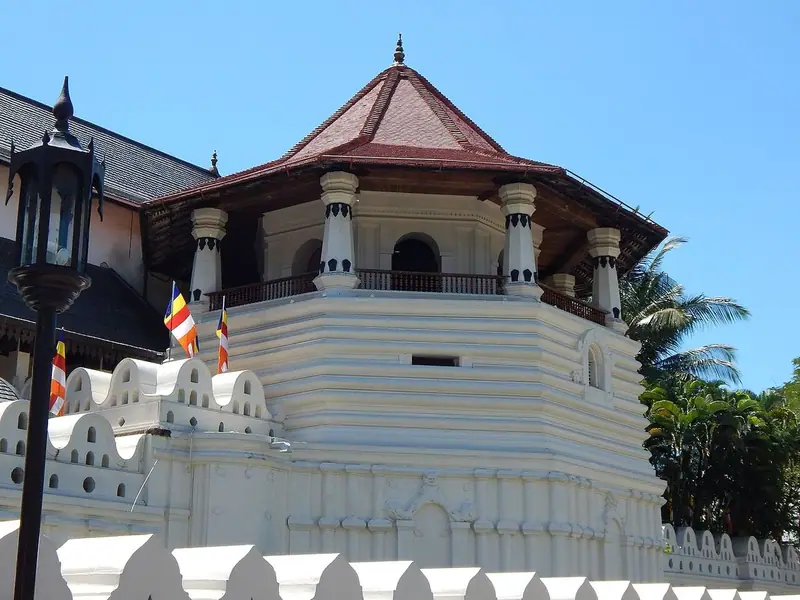 Sinhalese8 stops · early 18th century – 1815 CE
Temple of the Tooth audio guide
Join the pilgrims bringing flowers to the tooth of the Buddha in the lakeside temple and palace of Sri Lanka’s last kings at Kandy.
Every guide, in every country
Sigiriya and every other guide we publish, including future ones. One payment, no subscription.