Before you start
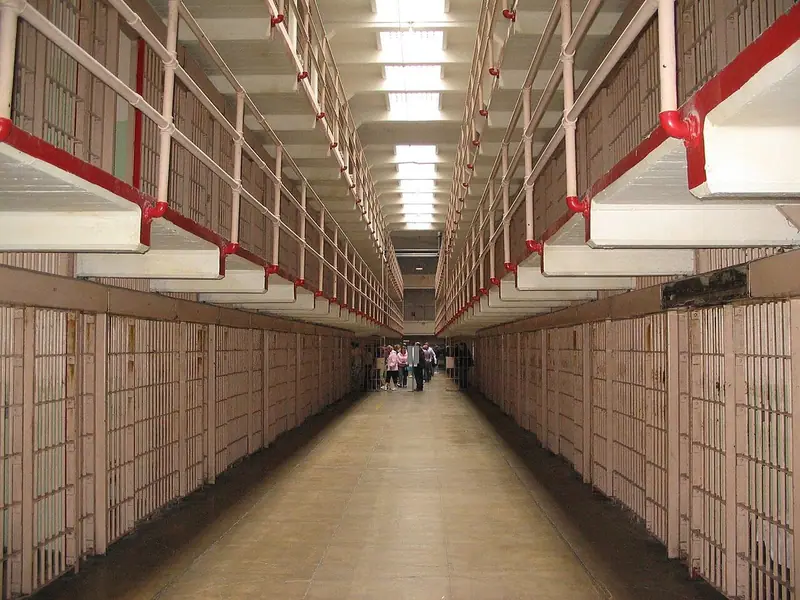
Alcatraz is a small, rocky island in San Francisco Bay, about two kilometres off the city’s northern waterfront. Once a fort, a military prison and the most famous federal penitentiary in the United States, it is now part of Golden Gate National Recreation Area, cared for by the US National Park Service. The only way to visit is on the official ferry from Pier 33 on the Embarcadero, and tickets often sell out days or weeks ahead, so book well in advance. The island is steep: the road from the dock to the cellhouse at the top climbs the equivalent of a thirteen-storey building, and a small tram can help visitors with limited mobility. This guide follows the route from the dock up through the Sally Port and past the lighthouse to the cellhouse, then through its blocks, dining hall and yard.
Use it as a self-guided tour of Alcatraz: 8 stops in visit order, each played when you’re ready, at your own pace.
 Free preview · Stop 1
The Dock
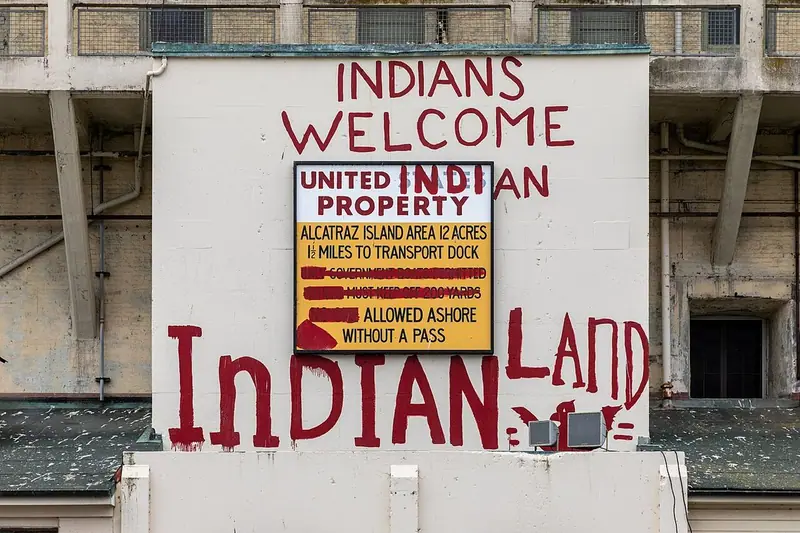
Step off the ferry on to the dock, where every prisoner, guard and supply once arrived. Facing you is Building 64, a large barracks built by the Army in the early twentieth century, which later housed the families of prison officers; around sixty families lived on the island, and their children took the boat to school in the city. Look up at the sign announcing the United States Penitentiary, and you will see the words ‘Indians Welcome’ painted over it, left by the Native American activists who occupied the island from November 1969 to June 1971, demanding the return of federal land. Their protest helped change national policy towards Native Americans. Before you start the climb, visit the small theatre and exhibits near the dock for an introduction to the island’s long history.
Photo: Dietmar Rabich · CC BY-SA 4.0 · Wikimedia Commons
What to see at Alcatraz: 8 stops, in visit order
- 01
 The DockBuilding 64Free preview
- 02
 Sally PortThe guardhouseIn the guide
- 03
 LighthouseWarden’s House ruinsIn the guide
- 04
 The CellhouseBroadwayIn the guide
- 05
 The 1962 EscapeFrank Morris and the Anglin brothersIn the guide
- 06
 D BlockSolitary and segregationIn the guide
- 07
 Dining HallThe most dangerous roomIn the guide
- 08
 Recreation YardSky and cityIn the guide
Site map of Alcatraz
History of Alcatraz
Alcatraz was built by the United States, first by the US Army and later by the federal prison service. The Ohlone and other Indigenous peoples lived around San Francisco Bay for thousands of years before Europeans arrived, and in 1775 the Spanish explorer Juan Manuel de Ayala named the island La Isla de los Alcatraces, after its seabirds. California passed from Spain to Mexico in 1821 and to the United States after the war of 1846 to 1848, just as the Gold Rush made San Francisco a boom town. The Army began fortifying the island in the 1850s, and it became a military prison during the Civil War. Military prisoners built the great cellhouse between 1909 and 1912. From 1934 to 1963 Alcatraz was a maximum-security federal penitentiary, and from 1969 to 1971 it was occupied by Native American activists.
Alcatraz guide: questions
How many stops does the Alcatraz guide have?
8 stops, in visit order: 1. The Dock; 2. Sally Port; 3. Lighthouse; 4. The Cellhouse; 5. The 1962 Escape; 6. D Block; 7. Dining Hall; 8. Recreation Yard.
Can I do a self-guided tour of Alcatraz with this guide?
Yes. The guide is made for a self-guided tour: 8 stops in visit order, each with a photo, a story and a voice, so you can explore Alcatraz at your own pace, without joining a group. Download it before you go and it works offline.
How long is each guide?
The 8 stops add up to about 5 minutes of listening in total. You play each stop when you’re ready, so you can go at your own pace.
Does the guide work offline?
Yes, once it’s downloaded. The guide is a single self-contained web page (about 7.0 MB) with the photos, text and audio built in. Download it to your phone before you go (Wi-Fi is best); after that it opens in any modern browser on iPhone or Android, with no app, account or mobile signal needed.
Does it use GPS or need my location?
No. The guide doesn’t use GPS and doesn’t know where you are: you play each stop when you reach it. It works on iPhone and Android in any modern browser, and it’s in English.
What’s included?
One self-contained HTML guide: 8 stops in visit order, each with a photo, text and a voice, plus the story of who built the site.
Who built Alcatraz?
Alcatraz was built by the United States, first by the US Army and later by the federal prison service. The Ohlone and other Indigenous peoples lived around San Francisco Bay for thousands of years before Europeans arrived, and in 1775 the Spanish explorer Juan Manuel de Ayala named the island La Isla de los Alcatraces, after its seabirds.
Where is Alcatraz?
Alcatraz is a small, rocky island in San Francisco Bay, about two kilometres off the city’s northern waterfront.
Is there a free audio guide to Alcatraz?
The first stop, The Dock, is free to read and hear on this page, so you can try the Alcatraz audio tour before you buy. The full guide, with all 8 stops, is a one-off purchase: download it once and it’s yours to keep, working offline.
Is the Alcatraz guide worth it?
If you’d like to know what you’re looking at, yes. For $10 you get 8 stops in visit order, each with a photo, a short history and a voice you play when you’re ready, plus a site map of the stops, and about 5 minutes of listening in all. It’s short on purpose, so you spend your time looking, not listening. It’s yours to keep, works offline and needs no app. The first stop is free on this page, so you can try it before you buy. If you’d like hours of detail, a guided tour will go deeper.
Audio guide or guided tour?
It depends how you like to visit. This guide lets you explore Alcatraz at your own pace, at any time, for a one-off price. A guided tour gives you a live expert you can ask questions, but at fixed times and usually for a higher price. Many people use both: a tour for the big picture, and the guide to read beforehand or to revisit the stops in their own time.
Is this the official Alcatraz guide?
No. It’s an independent guide by The Historian Guide, not affiliated with or endorsed by the operator of Alcatraz. For tickets and opening hours, check the official site operator before you go.
Does the guide include entry tickets or opening hours?
No. The guide is a digital companion only. Admission to Alcatraz is separate, so check the official site operator for current tickets and opening hours before you go.
- Stop 1 · The Dock: Dietmar Rabich · CC BY-SA 4.0 · Wikimedia Commons · resized
- Stop 2 · Sally Port: Dietmar Rabich · CC BY-SA 4.0 · Wikimedia Commons · resized
- Stop 3 · Lighthouse: Stan Fong · CC BY-SA 3.0 · Wikimedia Commons · resized
- Stop 4 · The Cellhouse (also the cover): Jester7777 · Public domain · Wikimedia Commons · resized
- Stop 5 · The 1962 Escape: Benlechlitner · Public domain · Wikimedia Commons · resized
- Stop 6 · D Block: Missvain · CC0 · Wikimedia Commons · resized
- Stop 7 · Dining Hall: Missvain · CC0 · Wikimedia Commons · resized
- Stop 8 · Recreation Yard: Steven Lek · CC BY-SA 4.0 · Wikimedia Commons · resized


All photographs from Wikimedia Commons under the licences shown.
More guides in United States
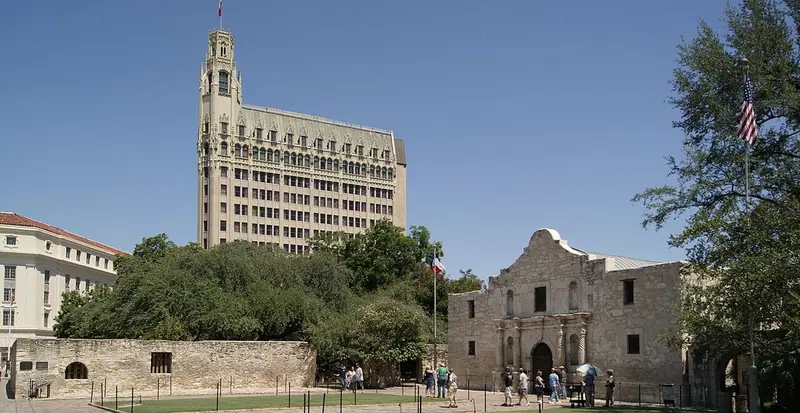 Spanish Colonial7 stops · 1718–1782
Alamo and San Antonio Missions audio guide
From the battle-scarred Alamo to Mission San José and the Espada Aqueduct, the five missions that made San Antonio.
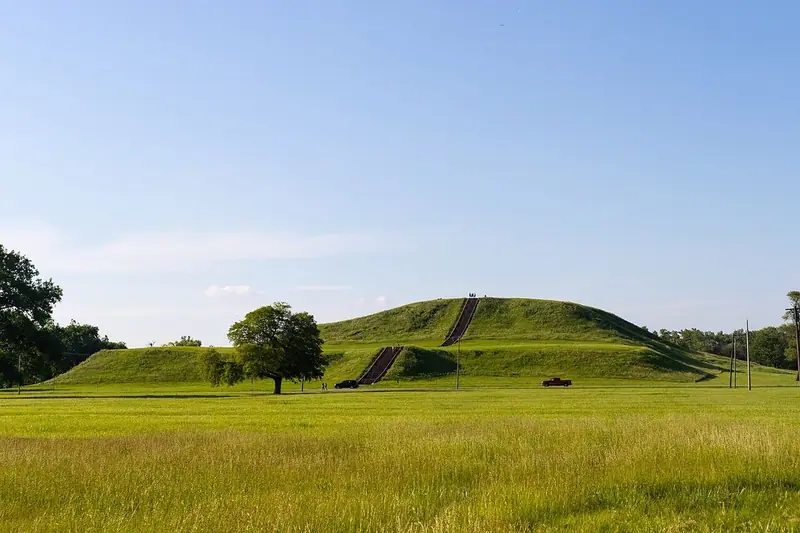 Mississippian8 stops · c. 1050 – 1350 CE
Cahokia Mounds audio guide
The largest pre-Columbian city north of Mexico, with Monks Mound, the Grand Plaza and the remains of its solar calendar posts.
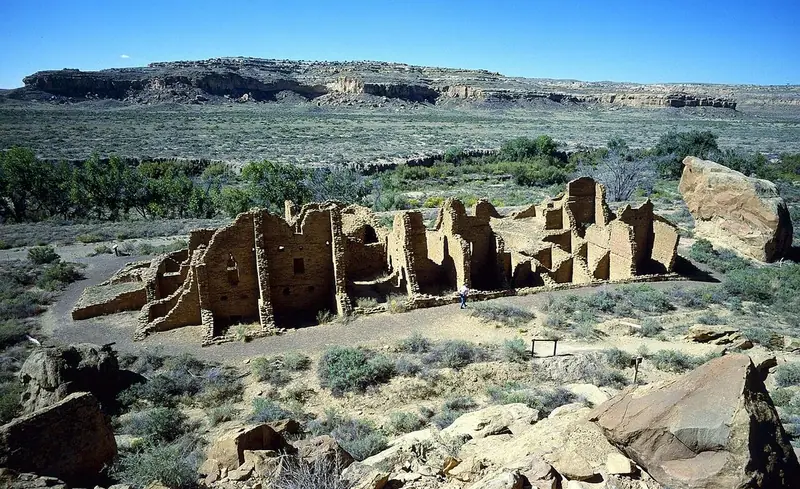 Ancestral Puebloan8 stops · c. 850–1150 CE
Chaco Canyon audio guide
The great houses of Pueblo Bonito and Chetro Ketl, planned buildings of stone that rose several storeys high.
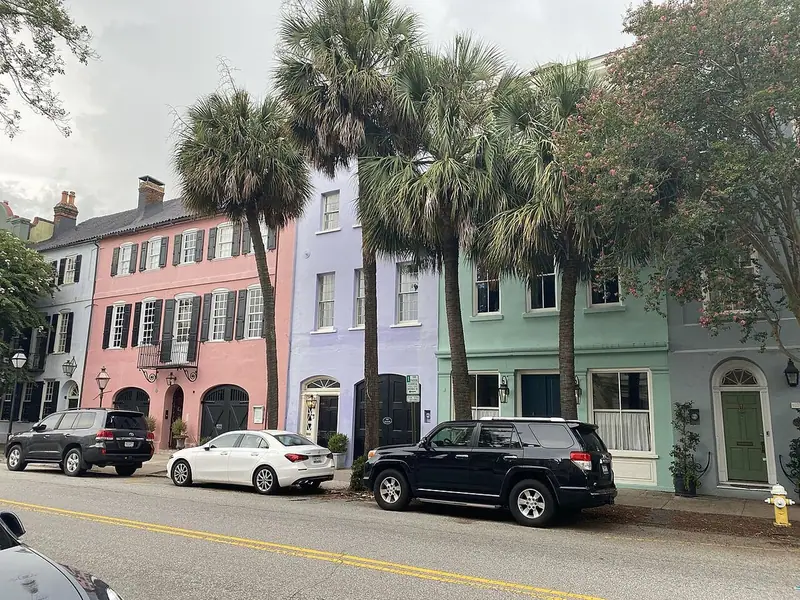 Colonial American12 stops · 17th–20th century CE
Charleston audio guide
Mother Emanuel and Beth Elohim, St Philip’s and the Huguenot Church, the Old Slave Mart, the Four Corners of Law, Rainbow Row and the Battery.
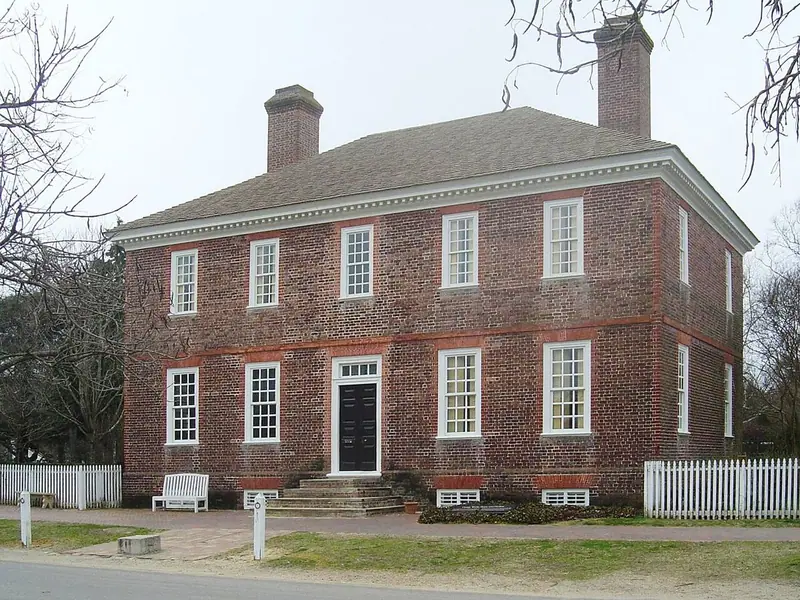 Colonial American8 stops · 1699–1780
Colonial Williamsburg audio guide
Duke of Gloucester Street, from the Capitol to the Governor’s Palace, in the restored capital of colonial Virginia.
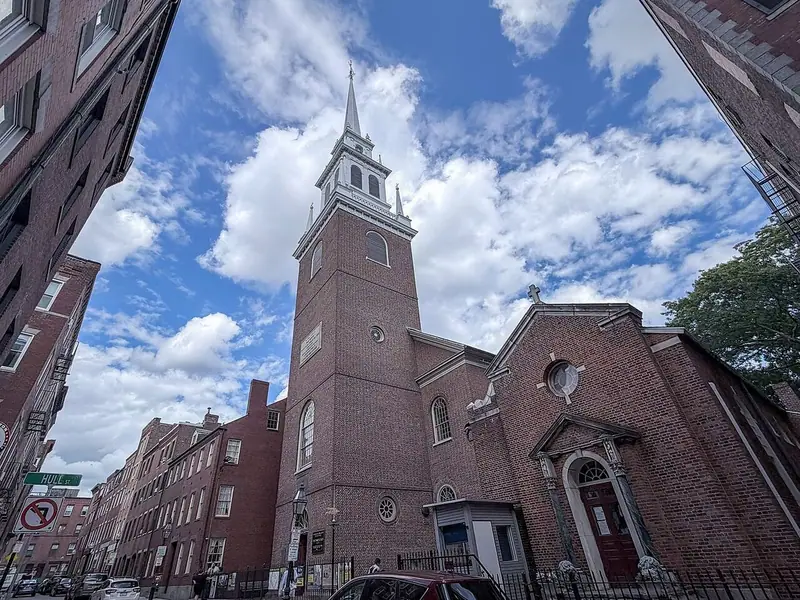 Colonial American9 stops · 1660s–1790s
Freedom Trail audio guide
Follow the red line from Boston Common past Faneuil Hall and Paul Revere’s house to the USS Constitution.
Every guide, in every country
Alcatraz and every other guide we publish, including future ones. One payment, no subscription.