Before you start
The Freedom Trail is a walking route of about four kilometres through the heart of Boston, linking sixteen historic sites connected with the American Revolution. It was created in 1951, and today it is marked on the pavement by a line of red brick or paint, so you can simply follow it through the streets. The trail is free to walk, but some of the buildings along it charge for entry, and several are part of Boston National Historical Park, run by the US National Park Service. This guide picks nine of the most important stops, in the order of the trail: from Boston Common through the old town centre and the North End, and across the river to Charlestown. The route itself takes a couple of hours, but allow most of a day if you want to go inside the buildings.
Use it as a self-guided tour of the Freedom Trail: 9 stops in visit order, each played when you’re ready, at your own pace.
 Free preview · Stop 1
Boston Common
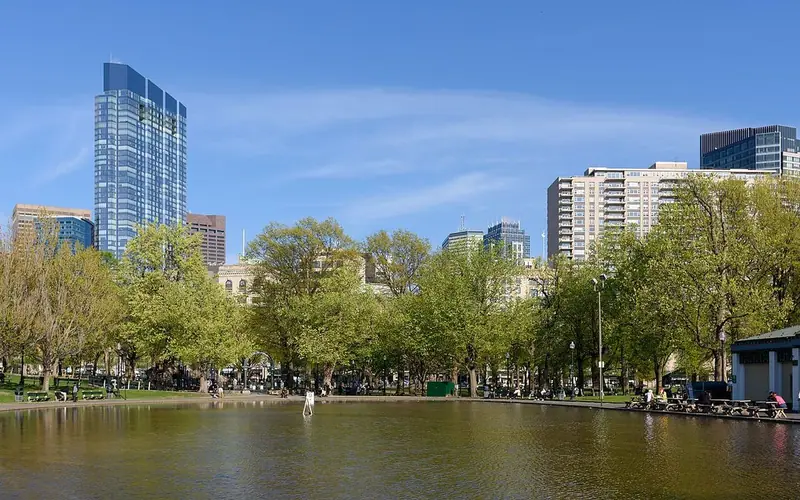
Begin on Boston Common, where the red line starts beside the visitor information centre. Set aside in 1634, it is the oldest public park in the United States. For two centuries it was common land where townspeople grazed their cows, and it was also a place of public punishments and hangings. In the years before the Revolution, British soldiers camped here, and in April 1775 troops gathered on the Common before marching out towards Lexington and Concord, where the first shots of the war were fired. Look around at the open lawns, the old trees and the Frog Pond, and across Tremont Street to the busy city. Before you set off, look up the hill to the golden dome of the State House, your next stop, on the northern edge of the Common.
Photo: King of Hearts · CC BY-SA 4.0 · Wikimedia Commons
What to see at the Freedom Trail: 9 stops, in visit order
- 01
 Boston CommonThe oldest public parkFree preview
- 02
 Massachusetts State HouseThe golden domeIn the guide
- 03
 Granary Burying GroundGraves of patriotsIn the guide
- 04
 Old South Meeting HousePrelude to the Tea PartyIn the guide
- 05
 Old State HouseBalcony and massacre siteIn the guide
- 06
 Faneuil HallThe Cradle of LibertyIn the guide
- 07
 Paul Revere HouseHome of the midnight riderIn the guide
- 08
 Old North ChurchOne if by land, two if by seaIn the guide
- 09
 USS ConstitutionOld IronsidesIn the guide
Site map of the Freedom Trail
History of the Freedom Trail
Boston was founded in 1630 by English Puritans of the Massachusetts Bay Colony, led by John Winthrop, on a peninsula the Massachusett people called Shawmut. It grew into one of the largest towns and busiest ports of British North America, whose colonial era lasted from the first settlements in the early seventeenth century until independence. In the 1760s and 1770s Boston was at the centre of protests against taxes imposed by the British Parliament, from the Boston Massacre of 1770 to the Boston Tea Party of 1773. The fighting of the War of Independence began at Lexington and Concord, west of the town, in April 1775, and the British army left Boston in March 1776. The buildings on the trail were built by Bostonians from the 1680s to the 1840s, and they remain at the heart of the modern city.
Freedom Trail guide: questions
How many stops does the Freedom Trail guide have?
9 stops, in visit order: 1. Boston Common; 2. Massachusetts State House; 3. Granary Burying Ground; 4. Old South Meeting House; 5. Old State House; 6. Faneuil Hall; 7. Paul Revere House; 8. Old North Church; 9. USS Constitution.
Can I do a self-guided tour of the Freedom Trail with this guide?
Yes. The guide is made for a self-guided tour: 9 stops in visit order, each with a photo, a story and a voice, so you can explore the Freedom Trail at your own pace, without joining a group. Download it before you go and it works offline.
How long is each guide?
The 9 stops add up to about 6 minutes of listening in total. You play each stop when you’re ready, so you can go at your own pace.
Does the guide work offline?
Yes, once it’s downloaded. The guide is a single self-contained web page (about 8.6 MB) with the photos, text and audio built in. Download it to your phone before you go (Wi-Fi is best); after that it opens in any modern browser on iPhone or Android, with no app, account or mobile signal needed.
Does it use GPS or need my location?
No. The guide doesn’t use GPS and doesn’t know where you are: you play each stop when you reach it. It works on iPhone and Android in any modern browser, and it’s in English.
What’s included?
One self-contained HTML guide: 9 stops in visit order, each with a photo, text and a voice, plus the story of who built the site.
Who built the Freedom Trail?
Boston was founded in 1630 by English Puritans of the Massachusetts Bay Colony, led by John Winthrop, on a peninsula the Massachusett people called Shawmut. It grew into one of the largest towns and busiest ports of British North America, whose colonial era lasted from the first settlements in the early seventeenth century until independence.
Where is the Freedom Trail?
The Freedom Trail is a walking route of about four kilometres through the heart of Boston, linking sixteen historic sites connected with the American Revolution.
Is there a free audio guide to the Freedom Trail?
The first stop, Boston Common, is free to read and hear on this page, so you can try the Freedom Trail audio tour before you buy. The full guide, with all 9 stops, is a one-off purchase: download it once and it’s yours to keep, working offline.
Is the Freedom Trail guide worth it?
If you’d like to know what you’re looking at, yes. For $10 you get 9 stops in visit order, each with a photo, a short history and a voice you play when you’re ready, plus a site map of the stops, and about 6 minutes of listening in all. It’s short on purpose, so you spend your time looking, not listening. It’s yours to keep, works offline and needs no app. The first stop is free on this page, so you can try it before you buy. If you’d like hours of detail, a guided tour will go deeper.
Audio guide or guided tour?
It depends how you like to visit. This guide lets you explore the Freedom Trail at your own pace, at any time, for a one-off price. A guided tour gives you a live expert you can ask questions, but at fixed times and usually for a higher price. Many people use both: a tour for the big picture, and the guide to read beforehand or to revisit the stops in their own time.
Is this the official Freedom Trail guide?
No. It’s an independent guide by The Historian Guide, not affiliated with or endorsed by the operator of the Freedom Trail. For tickets and opening hours, check the official site operator before you go.
Does the guide include entry tickets or opening hours?
No. The guide is a digital companion only. Admission to the Freedom Trail is separate, so check the official site operator for current tickets and opening hours before you go.
- Stop 1 · Boston Common: King of Hearts · CC BY-SA 4.0 · Wikimedia Commons · resized
- Stop 2 · Massachusetts State House: King of Hearts · CC BY-SA 4.0 · Wikimedia Commons · resized
- Stop 3 · Granary Burying Ground: Rhododendrites · CC BY-SA 4.0 · Wikimedia Commons · resized
- Stop 4 · Old South Meeting House: Daderot · CC0 · Wikimedia Commons · resized
- Stop 5 · Old State House: Marco Almbauer · Public domain · Wikimedia Commons · resized
- Stop 6 · Faneuil Hall: Kevin Rutherford · CC BY-SA 2.0 · Wikimedia Commons · resized
- Stop 7 · Paul Revere House: Beyond My Ken · CC BY-SA 4.0 · Wikimedia Commons · resized
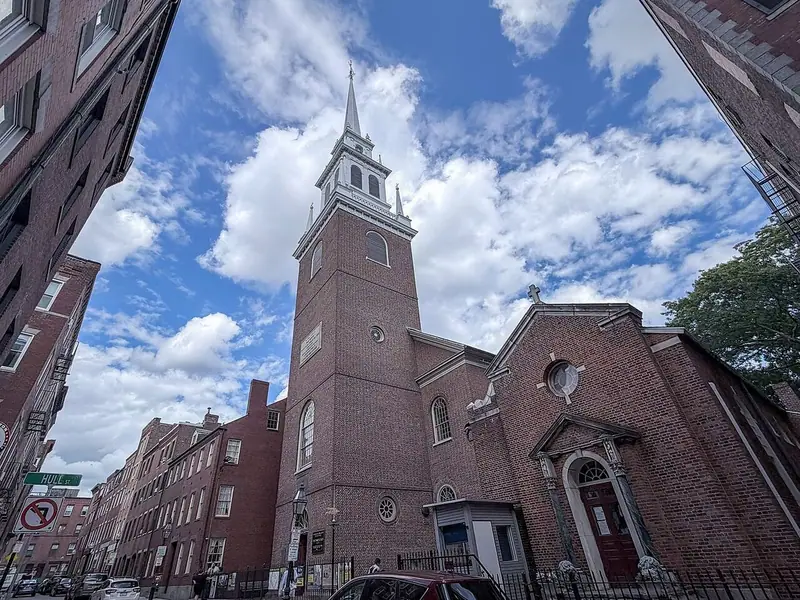
- Stop 8 · Old North Church (also the cover): LEvalyn · CC BY 4.0 · Wikimedia Commons · resized
- Stop 9 · USS Constitution: Crisco 1492 · CC BY-SA 4.0 · Wikimedia Commons · resized


All photographs from Wikimedia Commons under the licences shown.
More guides in United States
 Spanish Colonial7 stops · 1718–1782
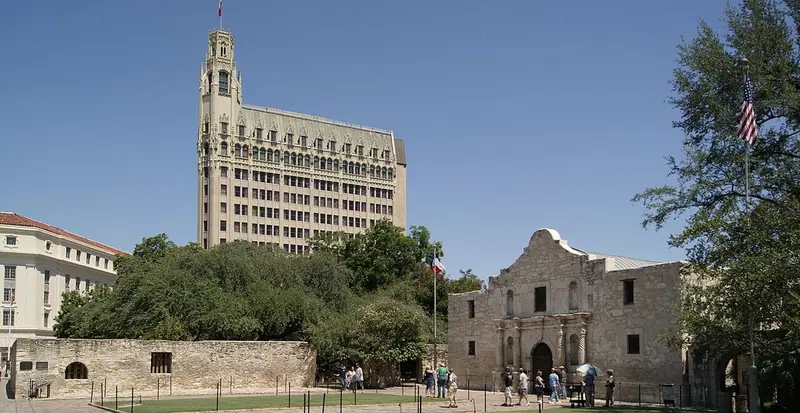
Alamo and San Antonio Missions audio guide
From the battle-scarred Alamo to Mission San José and the Espada Aqueduct, the five missions that made San Antonio.
 Modern8 stops · 1853–1963
Alcatraz audio guide
Step off the boat into the cellhouse, walk D Block and the yard, and hear the story of the 1962 escape.
 Mississippian8 stops · c. 1050 – 1350 CE
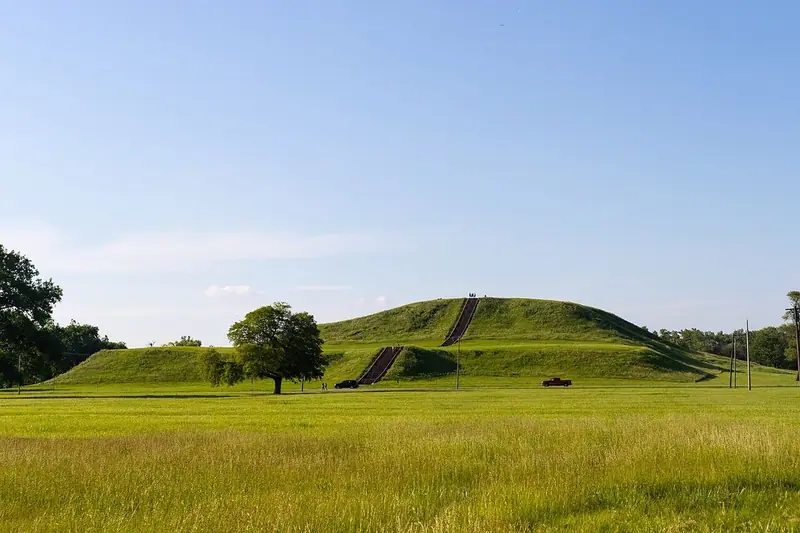
Cahokia Mounds audio guide
The largest pre-Columbian city north of Mexico, with Monks Mound, the Grand Plaza and the remains of its solar calendar posts.
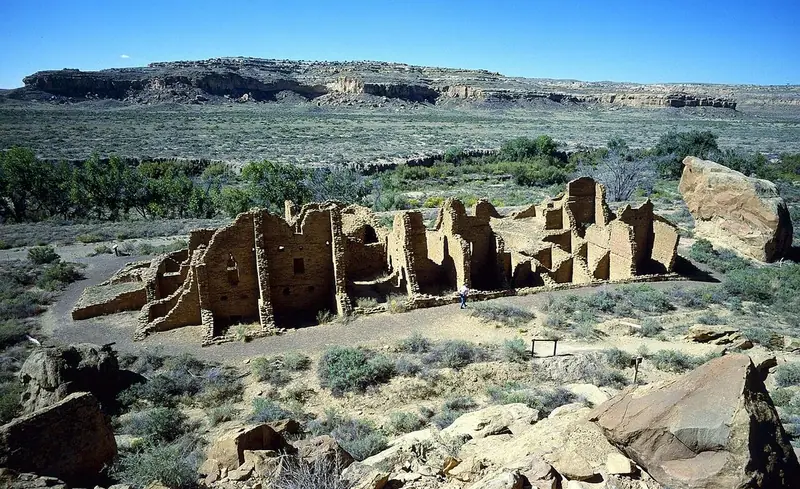 Ancestral Puebloan8 stops · c. 850–1150 CE
Chaco Canyon audio guide
The great houses of Pueblo Bonito and Chetro Ketl, planned buildings of stone that rose several storeys high.
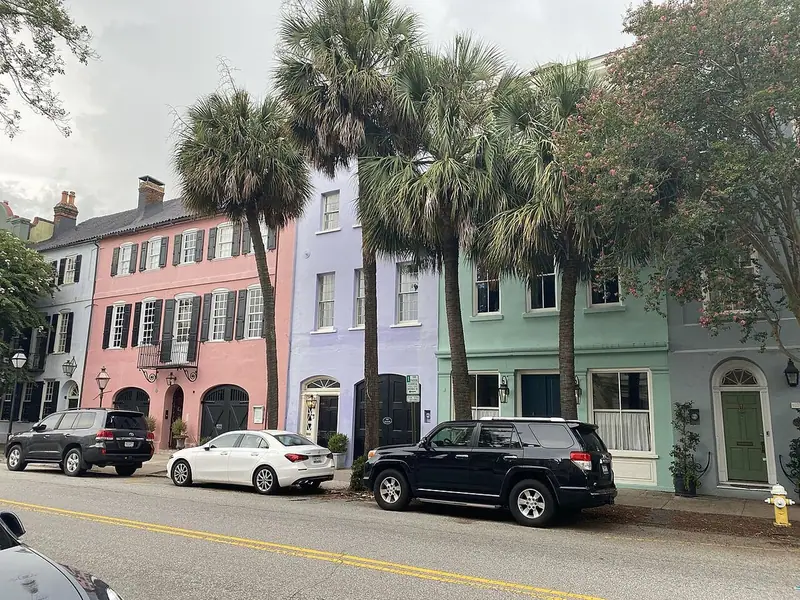 Colonial American12 stops · 17th–20th century CE
Charleston audio guide
Mother Emanuel and Beth Elohim, St Philip’s and the Huguenot Church, the Old Slave Mart, the Four Corners of Law, Rainbow Row and the Battery.
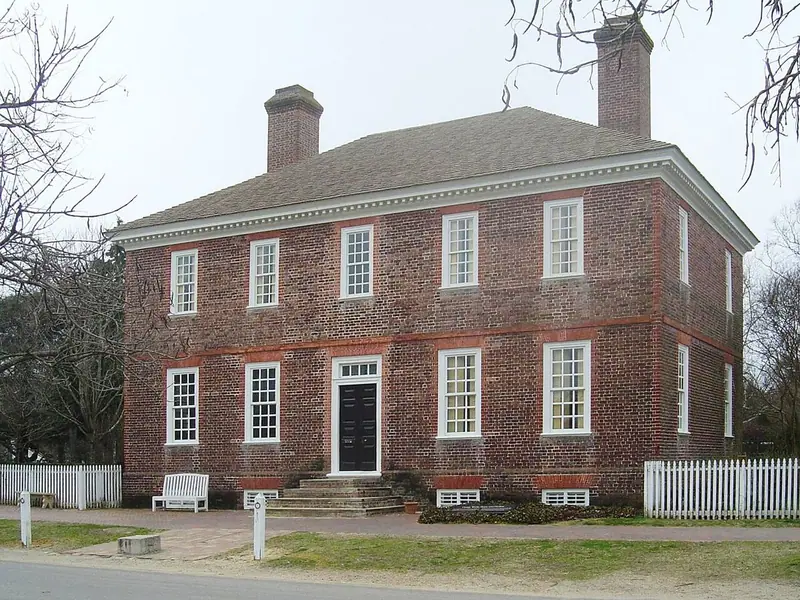 Colonial American8 stops · 1699–1780
Colonial Williamsburg audio guide
Duke of Gloucester Street, from the Capitol to the Governor’s Palace, in the restored capital of colonial Virginia.
Every guide, in every country
Freedom Trail and every other guide we publish, including future ones. One payment, no subscription.