Before you start
The French Quarter, or Vieux Carré, the old square, is the original city of New Orleans, laid out by French engineers on a bend of the Mississippi in the early eighteenth century. In less than a century it was ruled by France, Spain and finally the United States, and its people, of French, Spanish, African, Caribbean and American descent, created one of the most distinctive cultures in North America, the birthplace of jazz. This guide begins at the old United States Mint, at the downriver edge of the Quarter, passes the Ursuline Convent and the French Market to the river, and then visits Jackson Square, the Cabildo and Royal Street, ending at Congo Square, just outside the old city walls.
Use it as a self-guided tour of the French Quarter: 8 stops in visit order, each played when you’re ready, at your own pace.
 Free preview · Stop 1
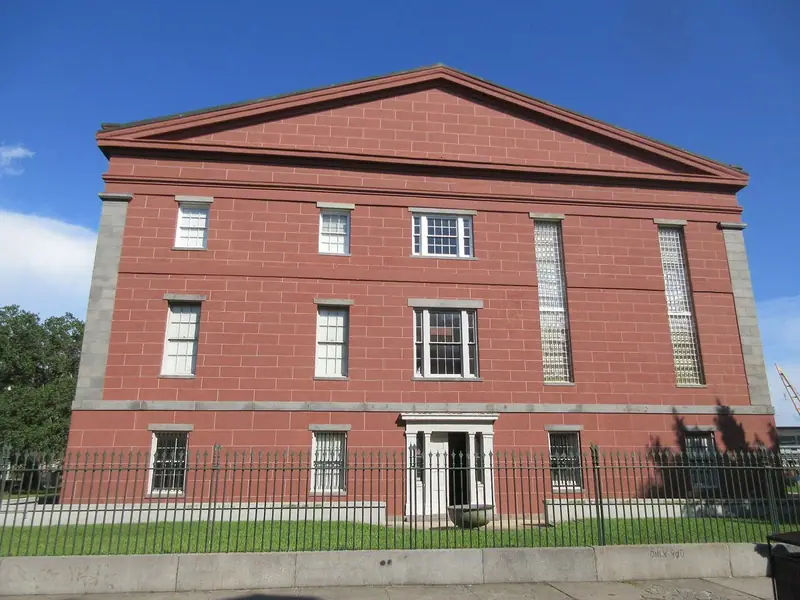
The Old Mint
Begin at the downriver end of the Quarter, at the corner of Esplanade Avenue and Decatur Street, outside the large building of the old United States Mint. It was designed by the architect William Strickland in the Greek Revival style and begun in 1835, when the federal government decided to open branch mints to supply the growing West and South with coins. From 1838 it struck gold and silver coins from the bullion that flowed down the Mississippi. When Louisiana left the Union in 1861, at the start of the Civil War, the mint was seized, and for a short time it struck coins for the Confederacy, making it the only mint to produce coins for both the United States and the Confederate States. It reopened after the war and finally closed in 1909. It is now part of the Louisiana State Museum, with collections on the history of jazz. Walk up Chartres Street to the convent.
Photo: Infrogmation of New Orleans · CC BY-SA 4.0 · Wikimedia Commons
What to see at the French Quarter: 8 stops, in visit order
- 01
 The Old MintCoins for two nationsFree preview
- 02
 The Old Ursuline ConventThe oldest building in the QuarterIn the guide
- 03
 The French MarketThe old meat market by the riverIn the guide
- 04
 The RiverfrontThe bend in the riverIn the guide
- 05
 Jackson SquareThe old parade groundIn the guide
- 06
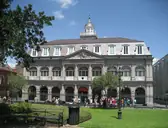 The CabildoThe house of the city councilIn the guide
- 07
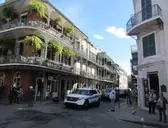 Royal StreetBalconies and courtyardsIn the guide
- 08
 Congo SquareThe roots of jazzIn the guide
Site map of the French Quarter
History of the French Quarter
New Orleans was founded in 1718 by Jean-Baptiste Le Moyne de Bienville, the governor of the French colony of Louisiana, on a stretch of high ground beside the Mississippi, close to a portage to Lake Pontchartrain. In 1721 the royal engineer Adrien de Pauger laid out the grid of streets that still forms the Quarter, naming them after the royal family of France and Catholic saints. After the Seven Years’ War, France ceded Louisiana to Spain, and under Spanish rule two great fires, in 1788 and 1794, destroyed most of the city. It was rebuilt in brick and stucco, with courtyards, tiled roofs and balconies, so that much of the so-called French Quarter is in fact Spanish in style. In 1800 Spain returned Louisiana to France, and in 1803 Napoleon sold it to the United States in the Louisiana Purchase. In 1815 Andrew Jackson defeated a British army just outside the city in the Battle of New Orleans.
The full history continues in the guide.
The French Quarter guide: questions
How many stops does the French Quarter guide have?
8 stops, in visit order: 1. The Old Mint; 2. The Old Ursuline Convent; 3. The French Market; 4. The Riverfront; 5. Jackson Square; 6. The Cabildo; 7. Royal Street; 8. Congo Square.
Can I do a self-guided tour of the French Quarter with this guide?
Yes. The guide is made for a self-guided tour: 8 stops in visit order, each with a photo, a story and a voice, so you can explore the French Quarter at your own pace, without joining a group. Download it before you go and it works offline.
How long is each guide?
The 8 stops add up to about 6 minutes of listening in total. You play each stop when you’re ready, so you can go at your own pace.
Does the guide work offline?
Yes, once it’s downloaded. The guide is a single self-contained web page (about 7.4 MB) with the photos, text and audio built in. Download it to your phone before you go (Wi-Fi is best); after that it opens in any modern browser on iPhone or Android, with no app, account or mobile signal needed.
Does it use GPS or need my location?
No. The guide doesn’t use GPS and doesn’t know where you are: you play each stop when you reach it. It works on iPhone and Android in any modern browser, and it’s in English.
What’s included?
One self-contained HTML guide: 8 stops in visit order, each with a photo, text and a voice, plus the story of who built the site.
Who built the French Quarter?
New Orleans was founded in 1718 by Jean-Baptiste Le Moyne de Bienville, the governor of the French colony of Louisiana, on a stretch of high ground beside the Mississippi, close to a portage to Lake Pontchartrain. In 1721 the royal engineer Adrien de Pauger laid out the grid of streets that still forms the Quarter, naming them after the royal family of France and Catholic saints.
Where is the French Quarter?
The French Quarter, or Vieux Carré, the old square, is the original city of New Orleans, laid out by French engineers on a bend of the Mississippi in the early eighteenth century.
Is there a free audio guide to the French Quarter?
The first stop, The Old Mint, is free to read and hear on this page, so you can try the French Quarter audio tour before you buy. The full guide, with all 8 stops, is a one-off purchase: download it once and it’s yours to keep, working offline.
Is the French Quarter guide worth it?
If you’d like to know what you’re looking at, yes. For $10 you get 8 stops in visit order, each with a photo, a short history and a voice you play when you’re ready, plus a site map of the stops, and about 6 minutes of listening in all. It’s short on purpose, so you spend your time looking, not listening. It’s yours to keep, works offline and needs no app. The first stop is free on this page, so you can try it before you buy. If you’d like hours of detail, a guided tour will go deeper.
Audio guide or guided tour?
It depends how you like to visit. This guide lets you explore the French Quarter at your own pace, at any time, for a one-off price. A guided tour gives you a live expert you can ask questions, but at fixed times and usually for a higher price. Many people use both: a tour for the big picture, and the guide to read beforehand or to revisit the stops in their own time.
Is this the official French Quarter guide?
No. It’s an independent guide by The Historian Guide, not affiliated with or endorsed by the operator of the French Quarter. For tickets and opening hours, check the official site operator before you go.
Does the guide include entry tickets or opening hours?
No. The guide is a digital companion only. Admission to the French Quarter is separate, so check the official site operator for current tickets and opening hours before you go.
- Stop 1 · The Old Mint: Infrogmation of New Orleans · CC BY-SA 4.0 · Wikimedia Commons · resized
- Stop 2 · The Old Ursuline Convent: TexasExplorer98 · CC BY 2.0 · Wikimedia Commons · resized
- Stop 3 · The French Market: Chris Waits · CC BY 2.0 · Wikimedia Commons · resized
- Stop 4 · The Riverfront: Infrogmation of New Orleans · CC BY-SA 4.0 · Wikimedia Commons · resized
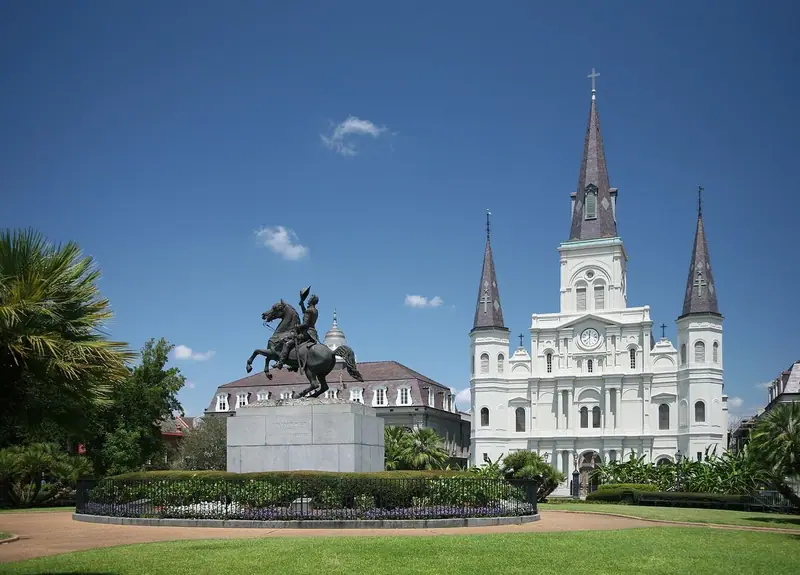
- Stop 5 · Jackson Square (also the cover): Daniel Schwen · CC BY-SA 4.0 · Wikimedia Commons · resized
- Stop 6 · The Cabildo: Infrogmation of New Orleans · CC BY-SA 3.0 · Wikimedia Commons · resized
- Stop 7 · Royal Street: Infrogmation of New Orleans · CC BY-SA 4.0 · Wikimedia Commons · resized
- Stop 8 · Congo Square: Jeff Hitchcock · CC BY 2.0 · Wikimedia Commons · resized


All photographs from Wikimedia Commons under the licences shown.
More guides in United States
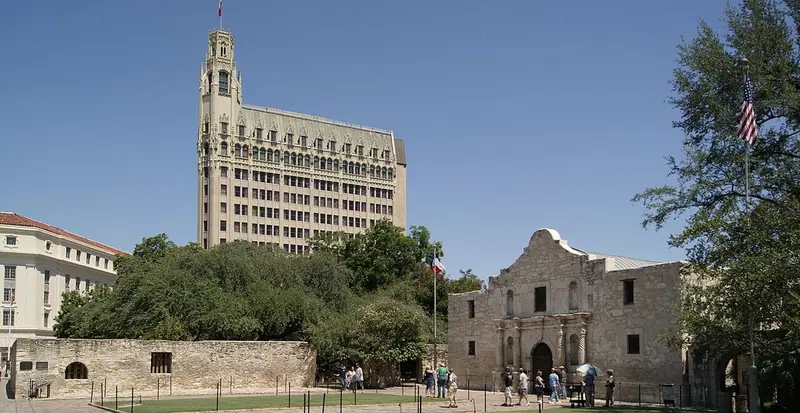 Spanish Colonial7 stops · 1718–1782
Alamo and San Antonio Missions audio guide
From the battle-scarred Alamo to Mission San José and the Espada Aqueduct, the five missions that made San Antonio.
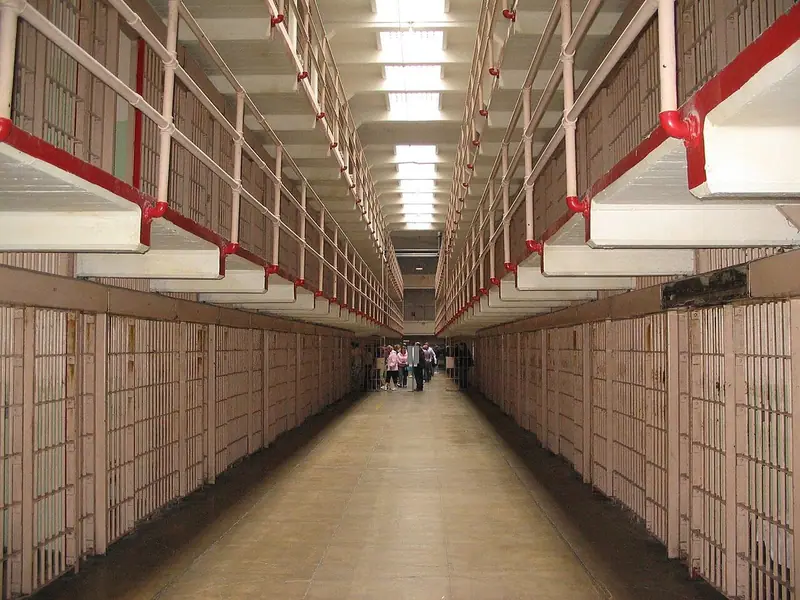 Modern8 stops · 1853–1963
Alcatraz audio guide
Step off the boat into the cellhouse, walk D Block and the yard, and hear the story of the 1962 escape.
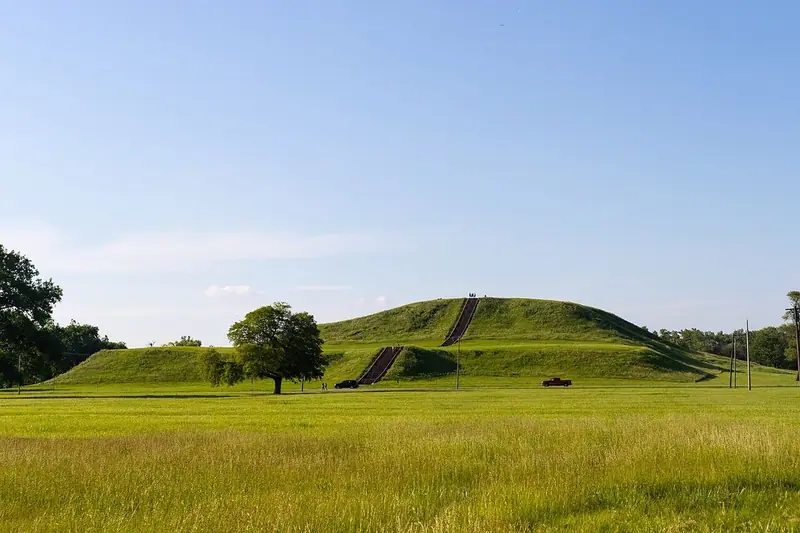 Mississippian8 stops · c. 1050 – 1350 CE
Cahokia Mounds audio guide
The largest pre-Columbian city north of Mexico, with Monks Mound, the Grand Plaza and the remains of its solar calendar posts.
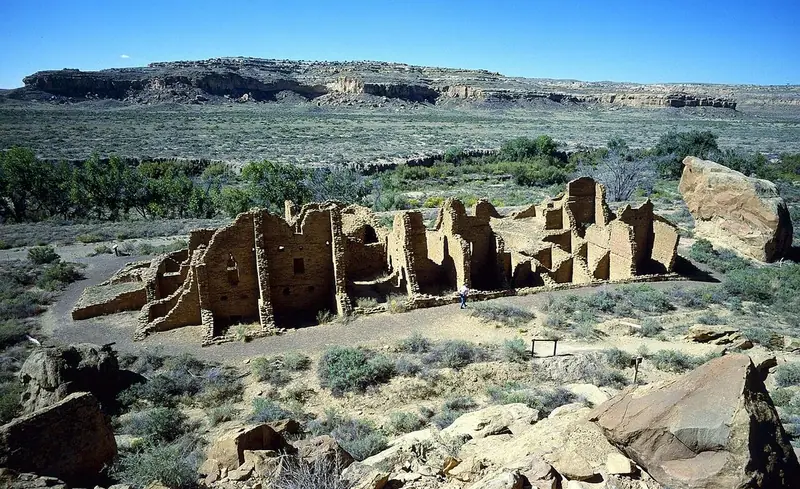 Ancestral Puebloan8 stops · c. 850–1150 CE
Chaco Canyon audio guide
The great houses of Pueblo Bonito and Chetro Ketl, planned buildings of stone that rose several storeys high.
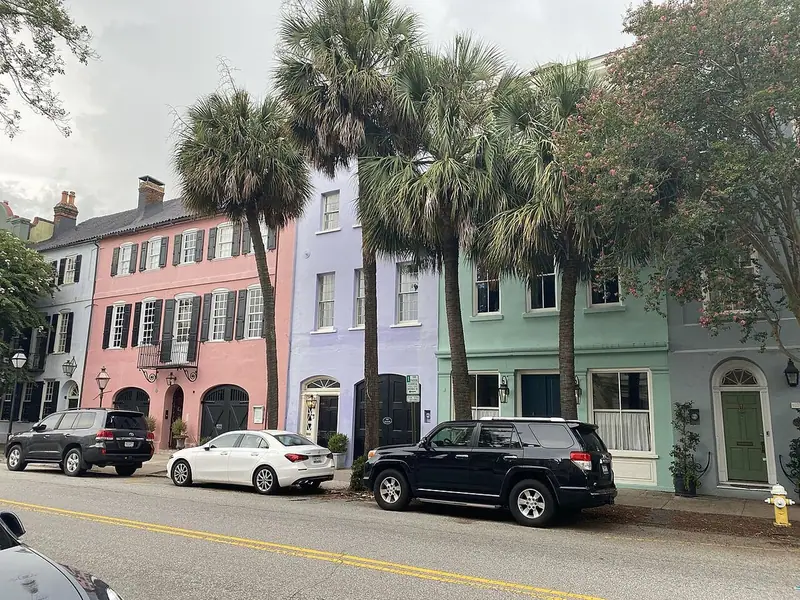 Colonial American12 stops · 17th–20th century CE
Charleston audio guide
Mother Emanuel and Beth Elohim, St Philip’s and the Huguenot Church, the Old Slave Mart, the Four Corners of Law, Rainbow Row and the Battery.
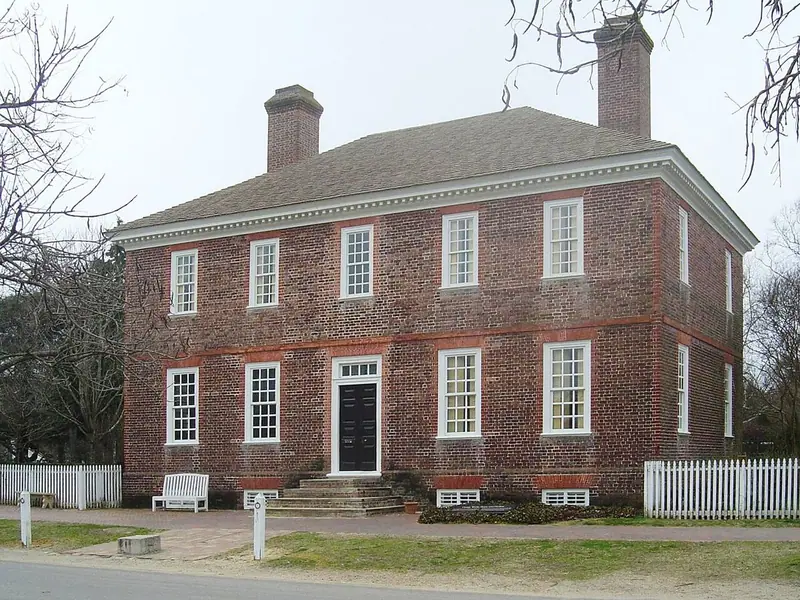 Colonial American8 stops · 1699–1780
Colonial Williamsburg audio guide
Duke of Gloucester Street, from the Capitol to the Governor’s Palace, in the restored capital of colonial Virginia.
Every guide, in every country
The French Quarter and every other guide we publish, including future ones. One payment, no subscription.