Before you start
Ho Chi Minh City, still widely called Saigon, grew from a Khmer trading post into the capital of French Cochinchina and then of South Vietnam, and in 1975 it saw the end of the Vietnam War. Its centre keeps the grand public buildings of the French colonial city along tree-lined boulevards, and the palace and museums that tell the story of the war. This guide starts at the Opera House and the old Hôtel de Ville, goes to the Central Post Office and the cathedral, then to the Independence Palace and the War Remnants Museum. It ends outside the city at the Củ Chi Tunnels, the underground network dug by Vietnamese fighters during the wars against the French and the Americans.
Use it as a self-guided tour of Ho Chi Minh City and the Củ Chi Tunnels: 7 stops in visit order, each played when you’re ready, at your own pace.
 Free preview · Stop 1
The Opera House
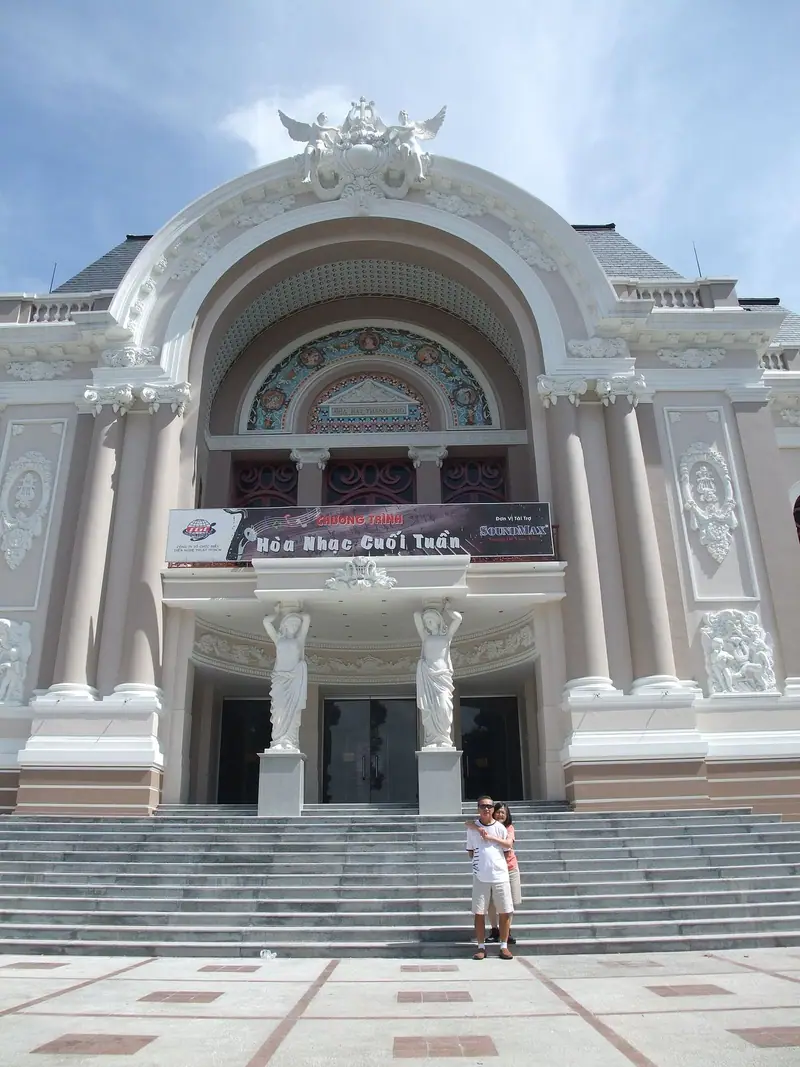
Start at the Opera House, at the head of Đồng Khởi Street, the old Rue Catinat, which was the elegant shopping street of colonial Saigon. It was built as the Municipal Theatre by the French and completed in 1900, in the ornate style of the French Third Republic, with an arched front like that of the Petit Palais in Paris, built in the same year. French theatre and opera companies came out to perform for the colonists. From 1956 it housed the National Assembly of South Vietnam, and it was not used as a theatre again until 1976. Its front, stripped of some of its decoration in 1943, was restored in 1998 for the city’s three-hundredth anniversary. The theatre still stages concerts, dance and traditional performances. On the square in front of it stand two famous hotels of the colonial period, where journalists gathered during the war. Walk west along Lê Thánh Tôn Street to the old city hall.
Photo: Yun Huang Yong from Harbord, Australia · CC BY 2.0 · Wikimedia Commons
What to see at Ho Chi Minh City and the Củ Chi Tunnels: 7 stops, in visit order
- 01
 The Opera HouseThe Municipal TheatreFree preview
- 02
 The Hôtel de VilleSaigon’s old city hallIn the guide
- 03
 The Central Post OfficeA post office from the age of the railwayIn the guide
- 04
 The Notre-Dame CathedralRed bricks from FranceIn the guide
- 05
 The Independence PalaceWhere the war endedIn the guide
- 06
 The War Remnants MuseumThe war seen from VietnamIn the guide
- 07
 The Củ Chi TunnelsA war fought undergroundIn the guide
Site map of Ho Chi Minh City and the Củ Chi Tunnels
History of Ho Chi Minh City and the Củ Chi Tunnels
In the seventeenth century Vietnamese settlers moved south into the Mekong delta, and the Khmer port of Prey Nokor became the Vietnamese town of Gia Định, later known as Saigon. The French captured it in 1859 and made it the capital of their colony of Cochinchina, part of French Indochina. They laid out a European city of boulevards, squares and public buildings, many built with materials brought from France. After the French defeat in 1954 Vietnam was divided, and Saigon became the capital of the Republic of Vietnam, South Vietnam. During the long war that followed, the communist North and the National Liberation Front, known to the Americans as the Viet Cong, fought the South and its American allies. American combat troops arrived in 1965 and left in 1973.
The full history continues in the guide.
Ho Chi Minh City and the Củ Chi Tunnels guide: questions
How many stops does the Ho Chi Minh City and the Củ Chi Tunnels guide have?
7 stops, in visit order: 1. The Opera House; 2. The Hôtel de Ville; 3. The Central Post Office; 4. The Notre-Dame Cathedral; 5. The Independence Palace; 6. The War Remnants Museum; 7. The Củ Chi Tunnels.
Can I do a self-guided tour of Ho Chi Minh City and the Củ Chi Tunnels with this guide?
Yes. The guide is made for a self-guided tour: 7 stops in visit order, each with a photo, a story and a voice, so you can explore Ho Chi Minh City and the Củ Chi Tunnels at your own pace, without joining a group. Download it before you go and it works offline.
How long is each guide?
The 7 stops add up to about 6 minutes of listening in total. You play each stop when you’re ready, so you can go at your own pace.
Does the guide work offline?
Yes, once it’s downloaded. The guide is a single self-contained web page (about 8.5 MB) with the photos, text and audio built in. Download it to your phone before you go (Wi-Fi is best); after that it opens in any modern browser on iPhone or Android, with no app, account or mobile signal needed.
Does it use GPS or need my location?
No. The guide doesn’t use GPS and doesn’t know where you are: you play each stop when you reach it. It works on iPhone and Android in any modern browser, and it’s in English.
What’s included?
One self-contained HTML guide: 7 stops in visit order, each with a photo, text and a voice, plus the story of who built the site.
Who built Ho Chi Minh City and the Củ Chi Tunnels?
In the seventeenth century Vietnamese settlers moved south into the Mekong delta, and the Khmer port of Prey Nokor became the Vietnamese town of Gia Định, later known as Saigon. The French captured it in 1859 and made it the capital of their colony of Cochinchina, part of French Indochina.
Where is Ho Chi Minh City and the Củ Chi Tunnels?
Ho Chi Minh City, still widely called Saigon, grew from a Khmer trading post into the capital of French Cochinchina and then of South Vietnam, and in 1975 it saw the end of the Vietnam War.
Is there a free audio guide to Ho Chi Minh City and the Củ Chi Tunnels?
The first stop, The Opera House, is free to read and hear on this page, so you can try the Ho Chi Minh City and the Củ Chi Tunnels audio tour before you buy. The full guide, with all 7 stops, is a one-off purchase: download it once and it’s yours to keep, working offline.
Is the Ho Chi Minh City and the Củ Chi Tunnels guide worth it?
If you’d like to know what you’re looking at, yes. For $10 you get 7 stops in visit order, each with a photo, a short history and a voice you play when you’re ready, plus a site map of the stops, and about 6 minutes of listening in all. It’s short on purpose, so you spend your time looking, not listening. It’s yours to keep, works offline and needs no app. The first stop is free on this page, so you can try it before you buy. If you’d like hours of detail, a guided tour will go deeper.
Audio guide or guided tour?
It depends how you like to visit. This guide lets you explore Ho Chi Minh City and the Củ Chi Tunnels at your own pace, at any time, for a one-off price. A guided tour gives you a live expert you can ask questions, but at fixed times and usually for a higher price. Many people use both: a tour for the big picture, and the guide to read beforehand or to revisit the stops in their own time.
Is this the official Ho Chi Minh City and the Củ Chi Tunnels guide?
No. It’s an independent guide by The Historian Guide, not affiliated with or endorsed by the operator of Ho Chi Minh City and the Củ Chi Tunnels. For tickets and opening hours, check the official site operator before you go.
Does the guide include entry tickets or opening hours?
No. The guide is a digital companion only. Admission to Ho Chi Minh City and the Củ Chi Tunnels is separate, so check the official site operator for current tickets and opening hours before you go.
- Stop 1 · The Opera House: Yun Huang Yong from Harbord, Australia · CC BY 2.0 · Wikimedia Commons · resized
- Stop 2 · The Hôtel de Ville: Steffen Schmitz · CC BY-SA 4.0 · Wikimedia Commons · resized
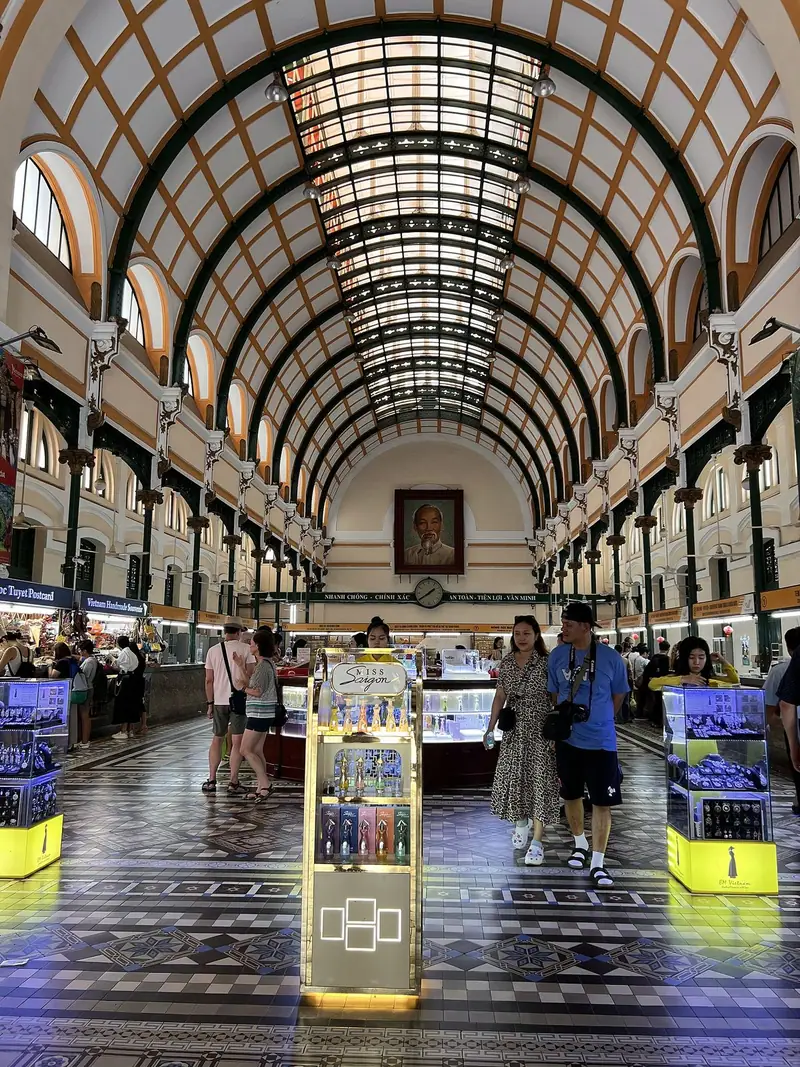
- Stop 3 · The Central Post Office (also the cover): Ewong17 · CC BY-SA 4.0 · Wikimedia Commons · resized
- Stop 4 · The Notre-Dame Cathedral: Steffen Schmitz · CC BY-SA 4.0 · Wikimedia Commons · resized
- Stop 5 · The Independence Palace: Balon Greyjoy · CC0 · Wikimedia Commons · resized
- Stop 6 · The War Remnants Museum: Prenn · CC BY-SA 3.0 · Wikimedia Commons · resized
- Stop 7 · The Củ Chi Tunnels: Andre Hospers · CC BY-SA 4.0 · Wikimedia Commons · resized


All photographs from Wikimedia Commons under the licences shown.
More guides in Vietnam
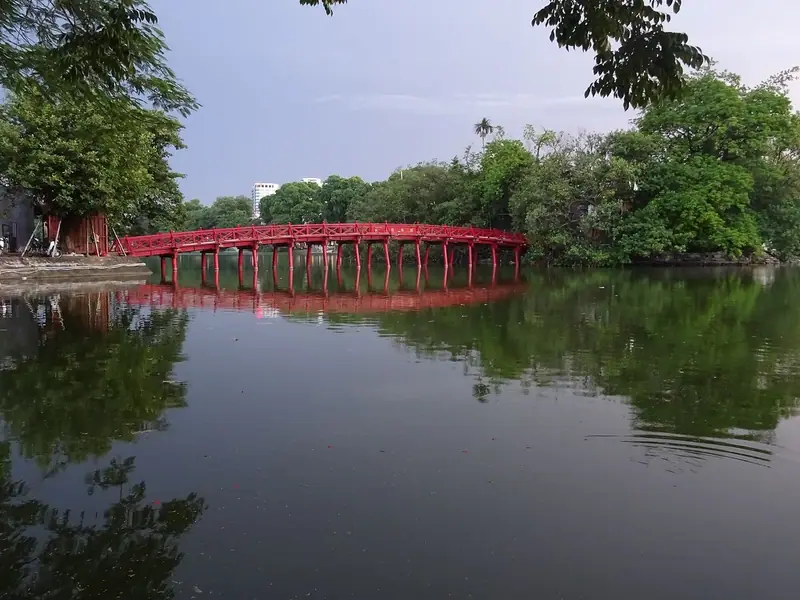 Imperial and merchant Vietnam6 stops · 1010–1889
The Hanoi Old Quarter audio guide
From Hoan Kiem Lake and the Ngoc Son Temple through the Old Quarter’s ancient house, Bach Ma Temple, Dong Xuan market and O Quan Chuong gate, then west to the Imperial Citadel and the Temple of Literature.
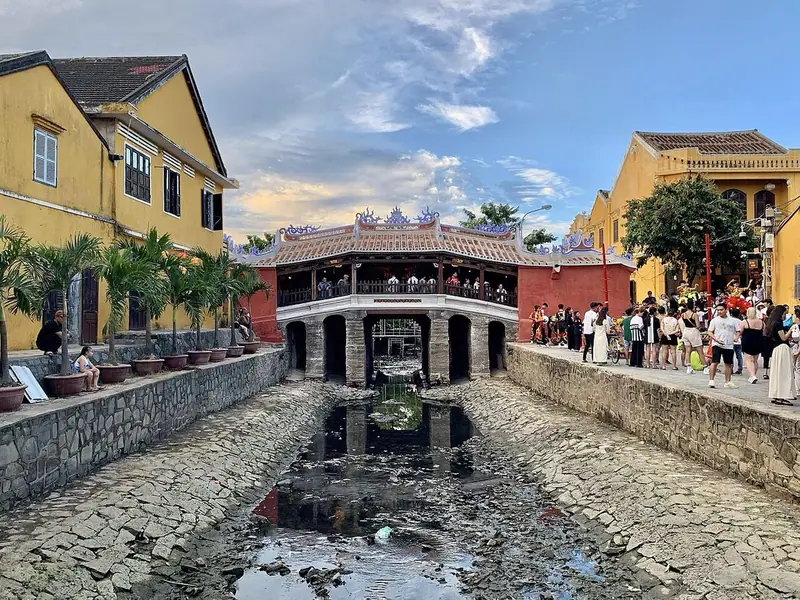 Vietnamese6 stops · 16th–19th century CE
Hội An Ancient Town audio guide
A riverside trading port of merchant houses and assembly halls, from the Japanese Covered Bridge to the Fujian Assembly Hall.
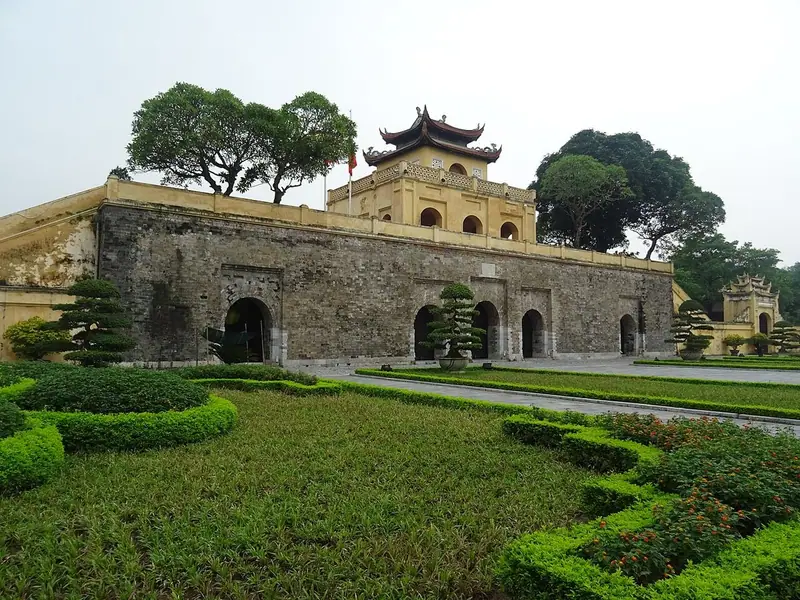 Vietnamese7 stops · 1010–1802 CE
Imperial Citadel of Thăng Long audio guide
Explore the seat of Vietnamese kings for almost eight centuries in central Hà Nội, from the Flag Tower and Đoan Môn to the Dragon Steps.
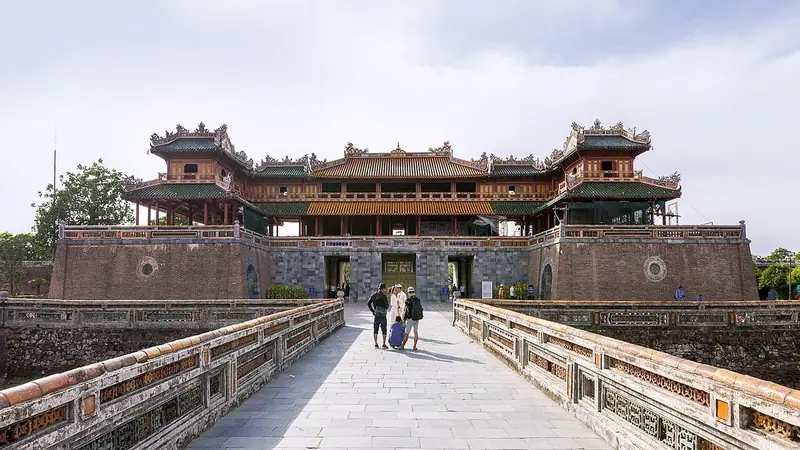 Nguyễn7 stops · 1802–1945 CE
Imperial City of Huế audio guide
Pass the Meridian Gate into the walled palace of Vietnam’s last emperors, to the Hall of Supreme Harmony and the Purple Forbidden City.
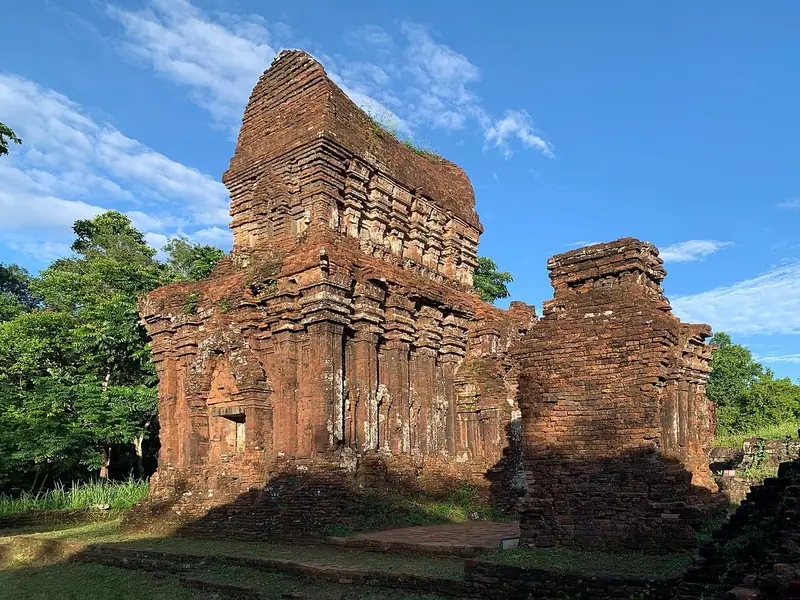 Champa7 stops · c. 400–1243 CE
Mỹ Sơn Sanctuary audio guide
Explore the ruined brick Hindu temples of Champa’s holiest valley, ringed by mountains in central Vietnam.
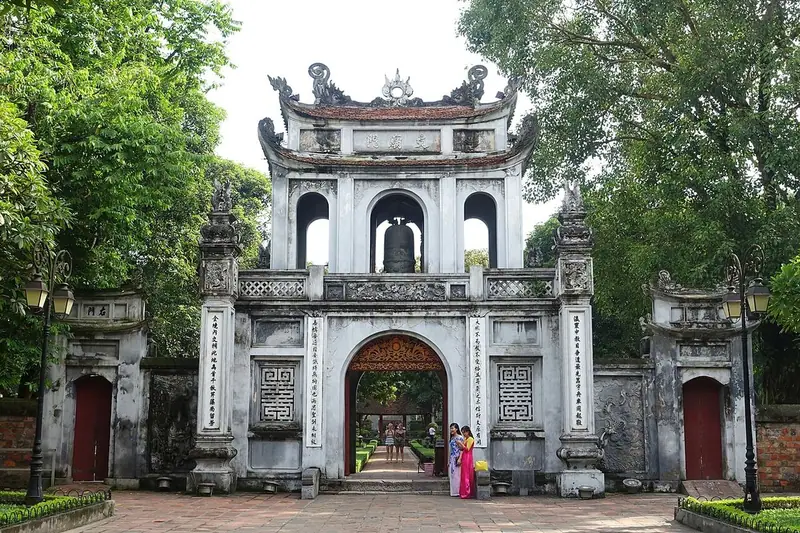 Vietnamese6 stops · 1070–1779 CE
Temple of Literature audio guide
Pass through the courtyards of Vietnam’s first university to the Constellation of Literature Pavilion and the stelae of the doctors.
Every guide, in every country
Ho Chi Minh City and the Củ Chi Tunnels and every other guide we publish, including future ones. One payment, no subscription.