Before you start
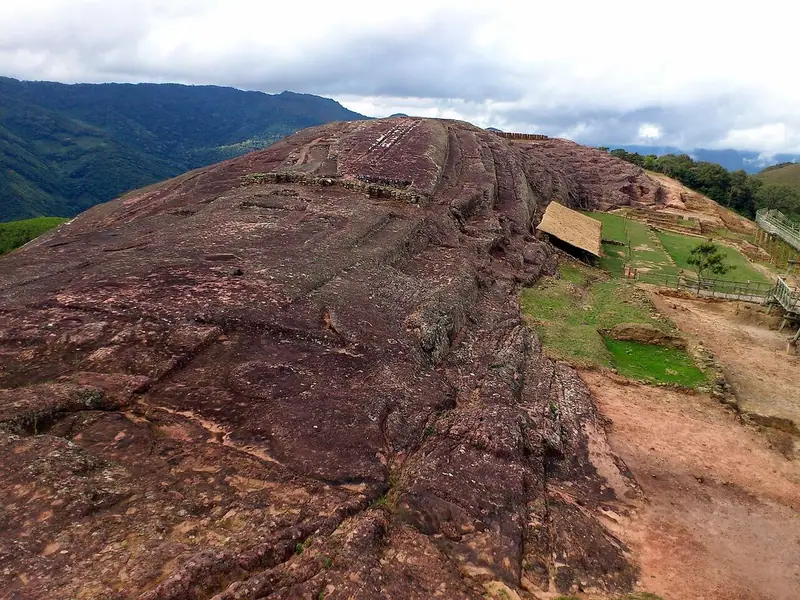
El Fuerte de Samaipata is an ancient ceremonial site in the eastern foothills of the Bolivian Andes, near the town of Samaipata, in the department of Santa Cruz. At its heart is a great sandstone hill, carved all over with channels, niches and figures, often described as one of the largest carved rocks in the world. It is a UNESCO World Heritage Site, and it holds the remains of three cultures: the Chané, the Inca and the Spanish. This guide follows the paths and viewing platforms around the carved rock, and then visits the Inca plaza and buildings below. Wear sturdy shoes, bring water and sun protection, and stay on the marked paths, as the carved rock itself is closed to walkers.
Use it as a self-guided tour of El Fuerte de Samaipata: 7 stops in visit order, each played when you’re ready, at your own pace.
 Free preview · Stop 1
The Viewpoint
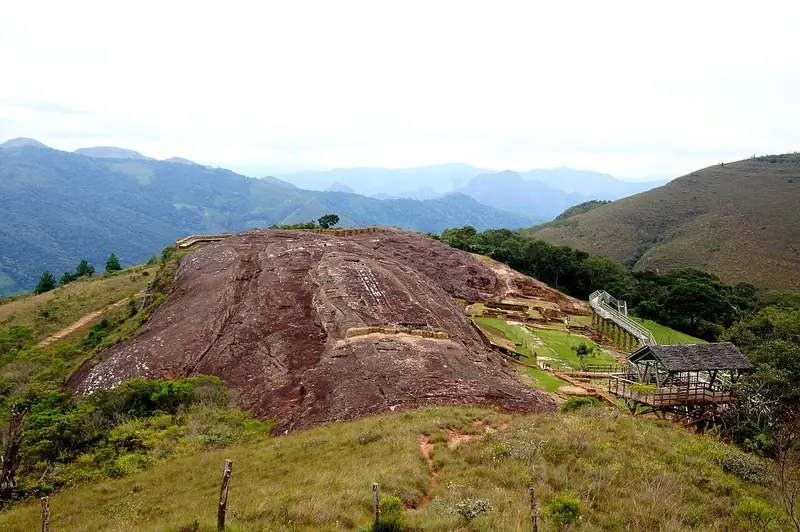
Begin at the viewing platform, from which you can see the whole of the great carved rock, a long, reddish hill of sandstone rising out of the green landscape. Look at its shape: it is about two hundred and twenty metres long and sixty metres wide, and almost its entire surface is covered with carvings. Around it, the land falls away into valleys, with the forested hills of the eastern Andes beyond, and the lowlands of Santa Cruz in the distance. The site stands at an altitude of around one thousand nine hundred metres. Although it is called El Fuerte, the fort, it was above all a religious and ceremonial centre, as well as a place where people lived and governed. Notice how the rock dominates the landscape, as it must have done for those who carved it.
Photo: Madereugeneandrew · CC BY-SA 4.0 · Wikimedia Commons
What to see at El Fuerte de Samaipata: 7 stops, in visit order
- 01
 The ViewpointA Carved MountainFree preview
- 02
 The Great RockThe Ceremonial SectorIn the guide
- 03
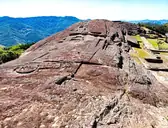 The Serpents and FiguresCarvings in the StoneIn the guide
- 04
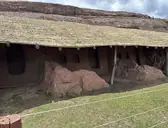 The NichesAt the Foot of the RockIn the guide
- 05
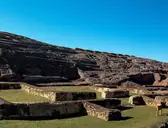 The Inca PlazaThe Seat of PowerIn the guide
- 06
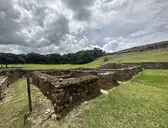 The HousesChané, Inca and SpanishIn the guide
- 07
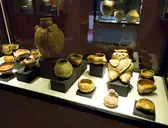 The Town MuseumFinds from the SiteIn the guide
Site map of El Fuerte de Samaipata
History of El Fuerte de Samaipata
The site was first occupied as a ritual and residential centre around 300 CE by the Chané, a people of Arawak origin, who began shaping the great rock. Late in the fifteenth century, the Inca extended their empire into this region, and made Samaipata an important administrative and religious centre on their eastern frontier. According to a Spanish chronicler, the Inca leader here was later killed in an attack by Guaraní-speaking warriors, known to the Spanish as Chiriguanos, who settled in the area. The Spanish also used the site, and they founded the town of Samaipata nearby in the early seventeenth century. The name Samaipata is usually translated from Quechua as the heights of rest.
El Fuerte de Samaipata guide: questions
How many stops does the El Fuerte de Samaipata guide have?
7 stops, in visit order: 1. The Viewpoint; 2. The Great Rock; 3. The Serpents and Figures; 4. The Niches; 5. The Inca Plaza; 6. The Houses; 7. The Town Museum.
Can I do a self-guided tour of El Fuerte de Samaipata with this guide?
Yes. The guide is made for a self-guided tour: 7 stops in visit order, each with a photo, a story and a voice, so you can explore El Fuerte de Samaipata at your own pace, without joining a group. Download it before you go and it works offline.
How long is each guide?
The 7 stops add up to about 5 minutes of listening in total. You play each stop when you’re ready, so you can go at your own pace.
Does the guide work offline?
Yes, once it’s downloaded. The guide is a single self-contained web page (about 7.0 MB) with the photos, text and audio built in. Download it to your phone before you go (Wi-Fi is best); after that it opens in any modern browser on iPhone or Android, with no app, account or mobile signal needed.
Does it use GPS or need my location?
No. The guide doesn’t use GPS and doesn’t know where you are: you play each stop when you reach it. It works on iPhone and Android in any modern browser, and it’s in English.
What’s included?
One self-contained HTML guide: 7 stops in visit order, each with a photo, text and a voice, plus the story of who built the site.
Who built El Fuerte de Samaipata?
The site was first occupied as a ritual and residential centre around 300 CE by the Chané, a people of Arawak origin, who began shaping the great rock. Late in the fifteenth century, the Inca extended their empire into this region, and made Samaipata an important administrative and religious centre on their eastern frontier.
Where is El Fuerte de Samaipata?
El Fuerte de Samaipata is an ancient ceremonial site in the eastern foothills of the Bolivian Andes, near the town of Samaipata, in the department of Santa Cruz.
Is there a free audio guide to El Fuerte de Samaipata?
The first stop, The Viewpoint, is free to read and hear on this page, so you can try the El Fuerte de Samaipata audio tour before you buy. The full guide, with all 7 stops, is a one-off purchase: download it once and it’s yours to keep, working offline.
Is the El Fuerte de Samaipata guide worth it?
If you’d like to know what you’re looking at, yes. For $10 you get 7 stops in visit order, each with a photo, a short history and a voice you play when you’re ready, plus a site map of the stops, and about 5 minutes of listening in all. It’s short on purpose, so you spend your time looking, not listening. It’s yours to keep, works offline and needs no app. The first stop is free on this page, so you can try it before you buy. If you’d like hours of detail, a guided tour will go deeper.
Audio guide or guided tour?
It depends how you like to visit. This guide lets you explore El Fuerte de Samaipata at your own pace, at any time, for a one-off price. A guided tour gives you a live expert you can ask questions, but at fixed times and usually for a higher price. Many people use both: a tour for the big picture, and the guide to read beforehand or to revisit the stops in their own time.
Is this the official El Fuerte de Samaipata guide?
No. It’s an independent guide by The Historian Guide, not affiliated with or endorsed by the operator of El Fuerte de Samaipata. For tickets and opening hours, check the official site operator before you go.
Does the guide include entry tickets or opening hours?
No. The guide is a digital companion only. Admission to El Fuerte de Samaipata is separate, so check the official site operator for current tickets and opening hours before you go.
- Stop 1 · The Viewpoint: Madereugeneandrew · CC BY-SA 4.0 · Wikimedia Commons · resized
- Stop 2 · The Great Rock (also the cover): Fernando J. Balderrama · CC BY-SA 3.0 · Wikimedia Commons · resized
- Stop 3 · The Serpents and Figures: Dan Lundberg · CC BY-SA 2.0 · Wikimedia Commons · resized
- Stop 4 · The Niches: Dpasten · CC BY-SA 4.0 · Wikimedia Commons · resized
- Stop 5 · The Inca Plaza: Marek Grote · CC BY-SA 3.0 · Wikimedia Commons · resized
- Stop 6 · The Houses: Dpasten · CC BY-SA 4.0 · Wikimedia Commons · resized
- Stop 7 · The Town Museum: Dan Lundberg · CC BY-SA 2.0 · Wikimedia Commons · resized


All photographs from Wikimedia Commons under the licences shown.
More guides in Bolivia
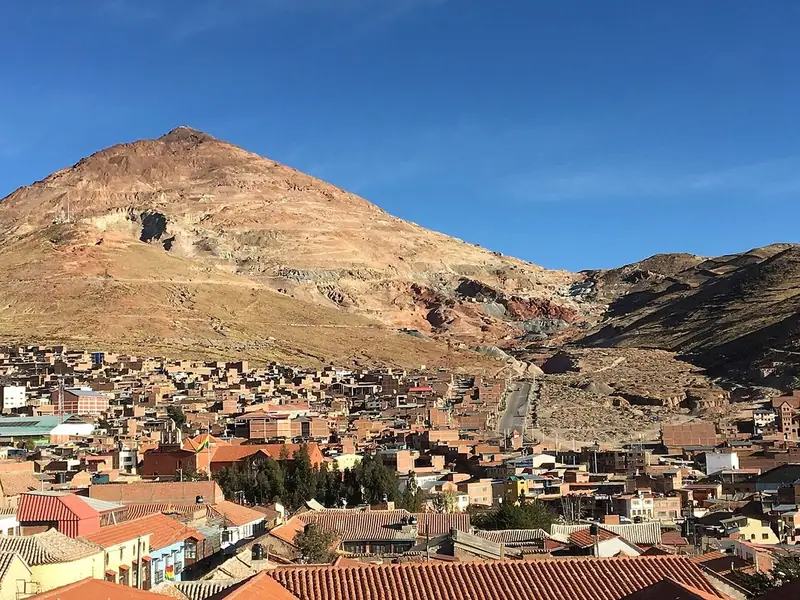 Spanish Colonial8 stops · from 1545 CE
Potosí audio guide
Explore the silver city beneath the Cerro Rico, one of the highest cities in the world, from the Royal Mint to the carved portal of San Lorenzo.
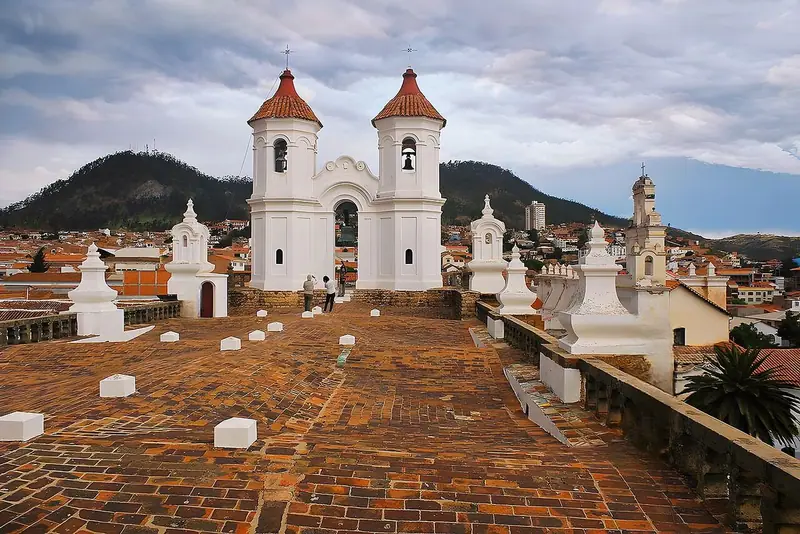 Spanish Colonial7 stops · 1538–1825 CE
Sucre audio guide
The white colonial streets of Bolivia’s constitutional capital, from the Plaza 25 de Mayo to the House of Liberty, where independence was declared.
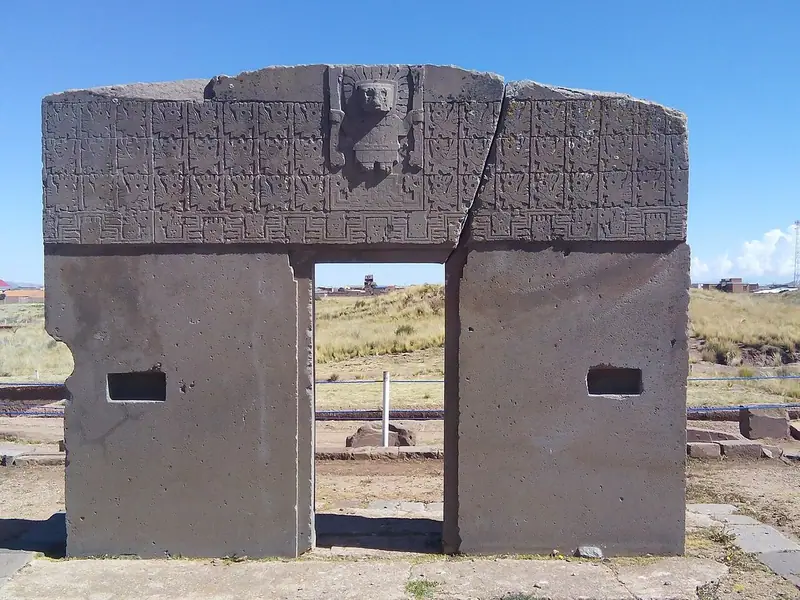 Tiwanaku8 stops · c. 200–1000 CE
Tiwanaku audio guide
Explore the stone platforms and temples of a great Andean civilisation near Lake Titicaca, from the Akapana to the Gateway of the Sun.
Every guide, in every country
El Fuerte de Samaipata and every other guide we publish, including future ones. One payment, no subscription.