Before you start
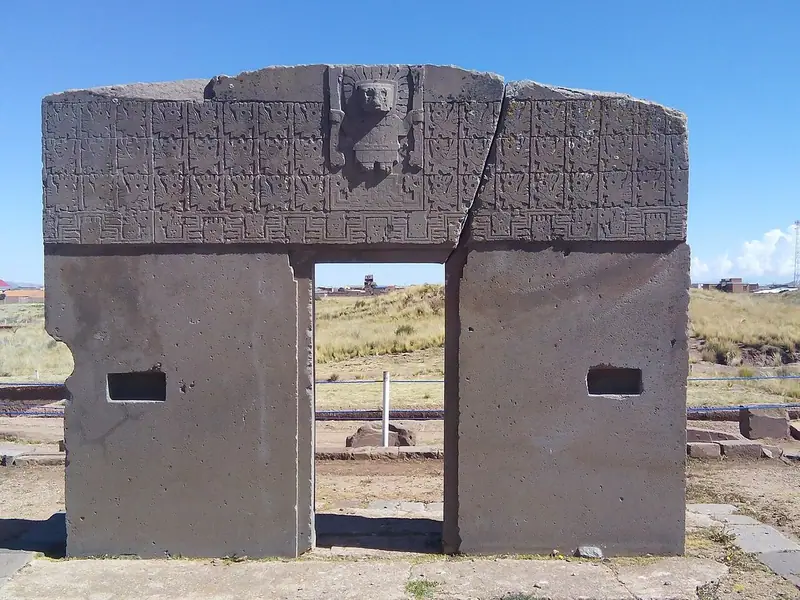
Tiwanaku is one of the great archaeological sites of South America, the centre of a civilisation that flourished on the high plateau near Lake Titicaca. It lies about seventy kilometres from La Paz, at an altitude of more than three thousand eight hundred metres, and it was declared a UNESCO World Heritage Site in 2000. This guide takes you from the Akapana platform to the Semi-Subterranean Temple, the Kalasasaya and the Gateway of the Sun, and then to Pumapunku. The altitude is very high, so walk slowly, drink plenty of water and stop if you feel unwell. The sun is fierce and the wind can be cold, so bring a hat, sun cream and warm layers.
Use it as a self-guided tour of Tiwanaku: 8 stops in visit order, each played when you’re ready, at your own pace.
 Free preview · Stop 1
The Akapana
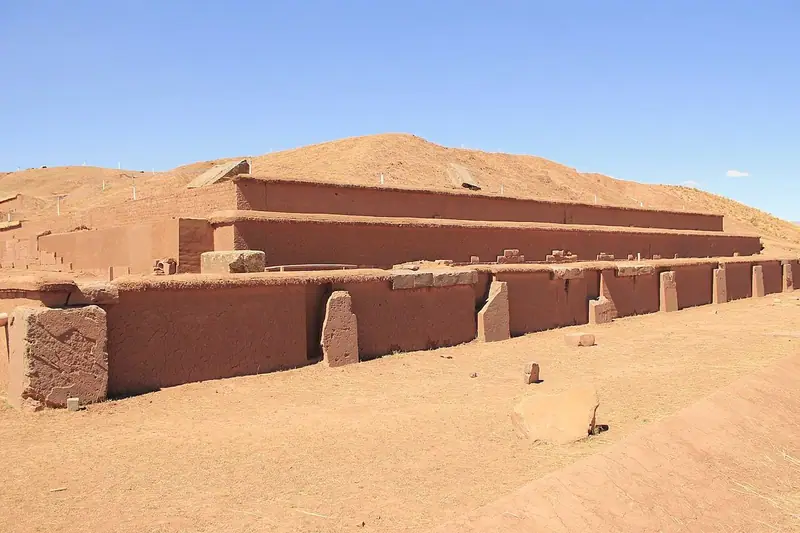
Begin at the Akapana, the largest structure at Tiwanaku, a vast terraced platform about two hundred and fifty-seven metres long and sixteen and a half metres high. Its outline is shaped like half of an Andean cross. At its centre there seems to have been a sunken court, which was nearly destroyed by a deep pit dug by treasure hunters. Look at the stone walls of its lower terraces, made of finely cut blocks. Excavations here found remains of sacrificial offerings of humans and camelids, such as llamas. Some researchers think it was aligned with the mountains around, and may have been used to observe the sky. In 2009, restoration work that had faced the platform with adobe was halted after UNESCO complained that it was not based on evidence. Look across to the mountains, and the plateau stretching towards Lake Titicaca.
Photo: Christian Bermudez · CC BY-SA 3.0 · Wikimedia Commons
What to see at Tiwanaku: 8 stops, in visit order
- 01
 The AkapanaThe Great PlatformFree preview
- 02
 The Semi-Subterranean TempleA Sunken CourtIn the guide
- 03
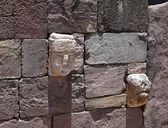 The Stone HeadsFaces in the WallsIn the guide
- 04
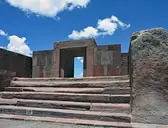 The KalasasayaThe Great EnclosureIn the guide
- 05
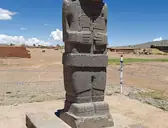 The Ponce MonolithThe Statue with a CrossIn the guide
- 06
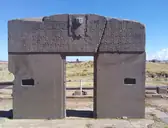 The Gateway of the SunA Doorway Cut from One StoneIn the guide
- 07
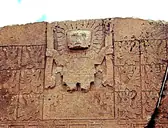 The Staff GodThe Figure Above the DoorIn the guide
- 08
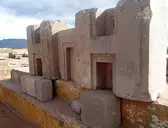 PumapunkuThe Precise StonesIn the guide
Site map of Tiwanaku
History of Tiwanaku
The Tiwanaku culture grew in power around Lake Titicaca between about 200 and 500 CE, and reached its peak around 500 to 600 CE. Its city may have been home to between ten and twenty thousand people, and its influence spread across the southern Andes. Its builders were masters of stone, cutting and fitting huge blocks of sandstone and andesite with great precision. The society collapsed around 1000 CE, perhaps partly because of drought. Much later, the Aymara people of the region placed Tiwanaku at the centre of the universe in their legends.
Tiwanaku guide: questions
How many stops does the Tiwanaku guide have?
8 stops, in visit order: 1. The Akapana; 2. The Semi-Subterranean Temple; 3. The Stone Heads; 4. The Kalasasaya; 5. The Ponce Monolith; 6. The Gateway of the Sun; 7. The Staff God; 8. Pumapunku.
Can I do a self-guided tour of Tiwanaku with this guide?
Yes. The guide is made for a self-guided tour: 8 stops in visit order, each with a photo, a story and a voice, so you can explore Tiwanaku at your own pace, without joining a group. Download it before you go and it works offline.
How long is each guide?
The 8 stops add up to about 6 minutes of listening in total. You play each stop when you’re ready, so you can go at your own pace.
Does the guide work offline?
Yes, once it’s downloaded. The guide is a single self-contained web page (about 8.7 MB) with the photos, text and audio built in. Download it to your phone before you go (Wi-Fi is best); after that it opens in any modern browser on iPhone or Android, with no app, account or mobile signal needed.
Does it use GPS or need my location?
No. The guide doesn’t use GPS and doesn’t know where you are: you play each stop when you reach it. It works on iPhone and Android in any modern browser, and it’s in English.
What’s included?
One self-contained HTML guide: 8 stops in visit order, each with a photo, text and a voice, plus the story of who built the site.
Who built Tiwanaku?
The Tiwanaku culture grew in power around Lake Titicaca between about 200 and 500 CE, and reached its peak around 500 to 600 CE. Its city may have been home to between ten and twenty thousand people, and its influence spread across the southern Andes.
Is there a free audio guide to Tiwanaku?
The first stop, The Akapana, is free to read and hear on this page, so you can try the Tiwanaku audio tour before you buy. The full guide, with all 8 stops, is a one-off purchase: download it once and it’s yours to keep, working offline.
Is the Tiwanaku guide worth it?
If you’d like to know what you’re looking at, yes. For $10 you get 8 stops in visit order, each with a photo, a short history and a voice you play when you’re ready, plus a site map of the stops, and about 6 minutes of listening in all. It’s short on purpose, so you spend your time looking, not listening. It’s yours to keep, works offline and needs no app. The first stop is free on this page, so you can try it before you buy. If you’d like hours of detail, a guided tour will go deeper.
Audio guide or guided tour?
It depends how you like to visit. This guide lets you explore Tiwanaku at your own pace, at any time, for a one-off price. A guided tour gives you a live expert you can ask questions, but at fixed times and usually for a higher price. Many people use both: a tour for the big picture, and the guide to read beforehand or to revisit the stops in their own time.
Is this the official Tiwanaku guide?
No. It’s an independent guide by The Historian Guide, not affiliated with or endorsed by the operator of Tiwanaku. For tickets and opening hours, check the official site operator before you go.
Does the guide include entry tickets or opening hours?
No. The guide is a digital companion only. Admission to Tiwanaku is separate, so check the official site operator for current tickets and opening hours before you go.
- Stop 1 · The Akapana: Christian Bermudez · CC BY-SA 3.0 · Wikimedia Commons · resized
- Stop 2 · The Semi-Subterranean Temple: P. Hughes · CC BY 4.0 · Wikimedia Commons · resized
- Stop 3 · The Stone Heads: P. Hughes · CC BY 4.0 · Wikimedia Commons · resized
- Stop 4 · The Kalasasaya: P. Hughes · CC BY 4.0 · Wikimedia Commons · resized
- Stop 5 · The Ponce Monolith: P. Hughes · CC BY 4.0 · Wikimedia Commons · resized
- Stop 6 · The Gateway of the Sun (also the cover): Sasha India · CC BY 2.0 · Wikimedia Commons · resized
- Stop 7 · The Staff God: Dennis G. Jarvis · CC BY-SA 2.0 · Wikimedia Commons · resized
- Stop 8 · Pumapunku: Janikorpi · CC BY-SA 3.0 · Wikimedia Commons · resized


All photographs from Wikimedia Commons under the licences shown.
More guides in Bolivia
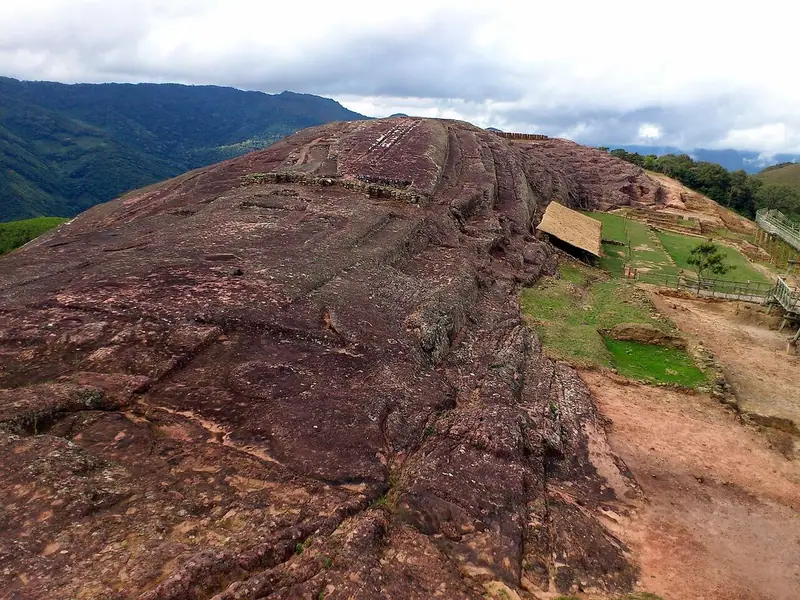 Inca7 stops · c. 300 CE – 17th century
El Fuerte de Samaipata audio guide
Look out over a great sandstone hill carved all over with channels, niches and figures, a ceremonial site of the Chané and later the Inca.
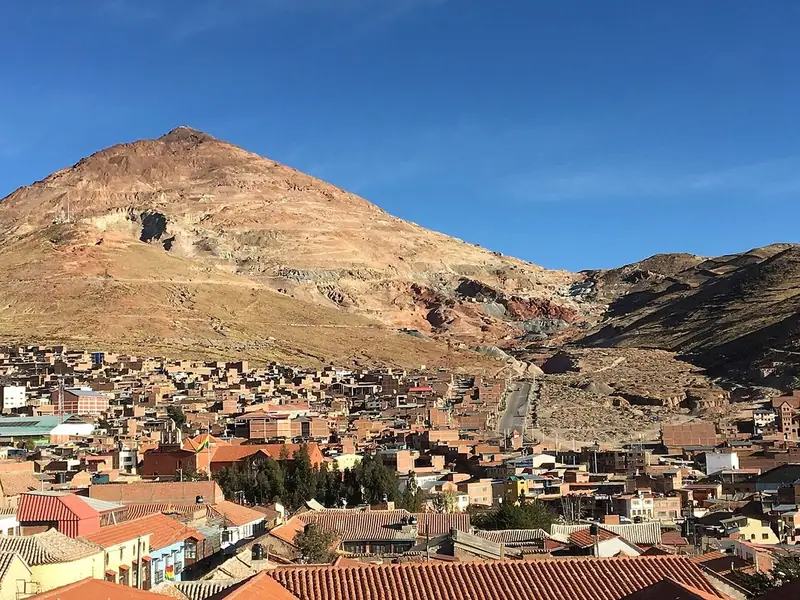 Spanish Colonial8 stops · from 1545 CE
Potosí audio guide
Explore the silver city beneath the Cerro Rico, one of the highest cities in the world, from the Royal Mint to the carved portal of San Lorenzo.
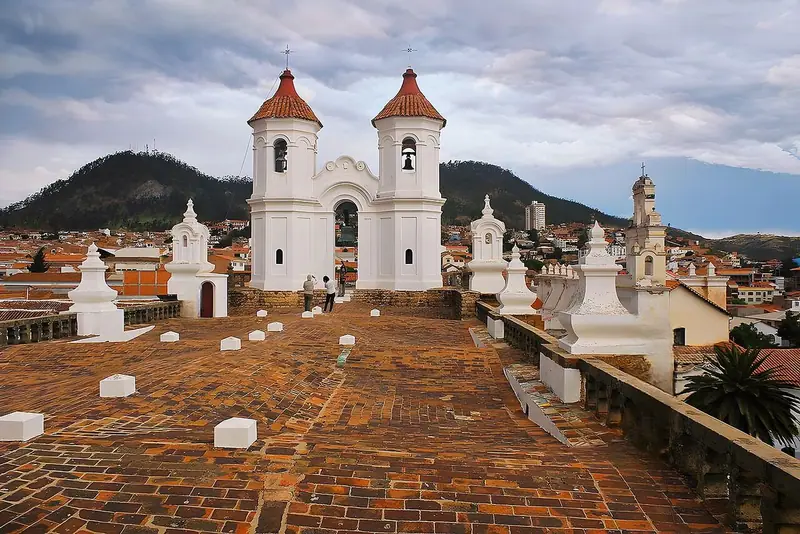 Spanish Colonial7 stops · 1538–1825 CE
Sucre audio guide
The white colonial streets of Bolivia’s constitutional capital, from the Plaza 25 de Mayo to the House of Liberty, where independence was declared.
Every guide, in every country
Tiwanaku and every other guide we publish, including future ones. One payment, no subscription.