Before you start
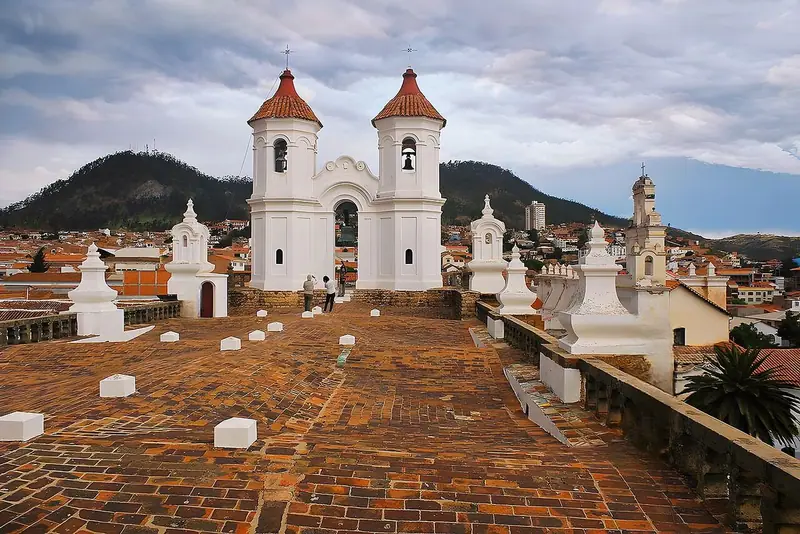
Sucre is the constitutional capital of Bolivia, a city of white colonial buildings and red-tiled roofs, set in a valley at an altitude of about two thousand eight hundred metres. It was here that Bolivia declared its independence, and its historic centre is a UNESCO World Heritage Site. This guide begins in the main square, the Plaza 25 de Mayo, visits the House of Liberty, the cathedral, the church of San Francisco and the rooftops of San Felipe Neri, and ends at the monastery of La Recoleta, above the city. The altitude is high, so walk slowly and drink water, especially on the climb to La Recoleta. The sun is strong, so bring a hat and sun cream.
Use it as a self-guided tour of Sucre: 7 stops in visit order, each played when you’re ready, at your own pace.
 Free preview · Stop 1
Plaza 25 de Mayo
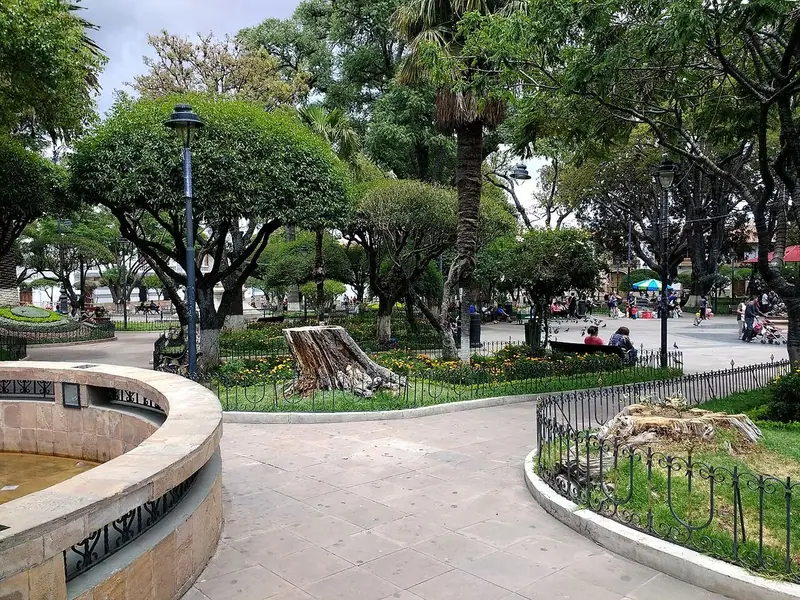
Begin in the Plaza 25 de Mayo, the main square of Sucre, named after the date of the uprising of 1809. Look around at the trees, gardens and fountains, and the monuments to the heroes of independence, including Simón Bolívar and Antonio José de Sucre. Around the square stand the House of Liberty, the cathedral, and the buildings of the city and regional governments. Notice the white walls of the colonial buildings, with their arcades and wooden balconies, which have given Sucre its nickname, the White City. Sit for a while on a bench and watch the life of the square: students, families, shoeshine boys and people in traditional dress. On 25 May 1809, a revolt broke out in this city against the Spanish authorities, one of the first cries for independence in Spanish America.
Photo: Mx._Granger · CC0 · Wikimedia Commons
What to see at Sucre: 7 stops, in visit order
- 01
 Plaza 25 de MayoThe Main SquareFree preview
- 02
 The House of LibertyThe Birthplace of BoliviaIn the guide
- 03
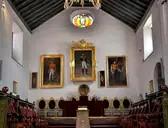 The Hall of IndependenceWhere the Act Was SignedIn the guide
- 04
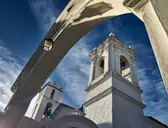 San FranciscoThe Bell of LibertyIn the guide
- 05
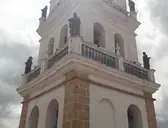 The CathedralThe Seat of the ChurchIn the guide
- 06
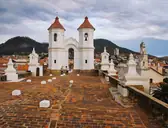 San Felipe NeriRooftops of the White CityIn the guide
- 07
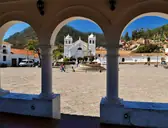 La RecoletaThe Monastery on the HillIn the guide
Site map of Sucre
History of Sucre
The Spanish founded the city on 30 November 1538, as La Plata, the City of Silver. In 1559, King Philip II made it the seat of the Audiencia of Charcas, a royal court with authority over a vast region, and it grew rich on the silver of nearby Potosí. Its university was founded in 1624, and it became a centre of revolutionary ideas. In 1825, the independence of Bolivia was declared here, and in 1839 the city was named capital and renamed Sucre, in honour of Antonio José de Sucre, hero of independence. The seat of government later moved to La Paz, but Sucre remains the constitutional capital, and the seat of the Supreme Court.
Sucre guide: questions
How many stops does the Sucre guide have?
7 stops, in visit order: 1. Plaza 25 de Mayo; 2. The House of Liberty; 3. The Hall of Independence; 4. San Francisco; 5. The Cathedral; 6. San Felipe Neri; 7. La Recoleta.
Can I do a self-guided tour of Sucre with this guide?
Yes. The guide is made for a self-guided tour: 7 stops in visit order, each with a photo, a story and a voice, so you can explore Sucre at your own pace, without joining a group. Download it before you go and it works offline.
How long is each guide?
The 7 stops add up to about 5 minutes of listening in total. You play each stop when you’re ready, so you can go at your own pace.
Does the guide work offline?
Yes, once it’s downloaded. The guide is a single self-contained web page (about 7.0 MB) with the photos, text and audio built in. Download it to your phone before you go (Wi-Fi is best); after that it opens in any modern browser on iPhone or Android, with no app, account or mobile signal needed.
Does it use GPS or need my location?
No. The guide doesn’t use GPS and doesn’t know where you are: you play each stop when you reach it. It works on iPhone and Android in any modern browser, and it’s in English.
What’s included?
One self-contained HTML guide: 7 stops in visit order, each with a photo, text and a voice, plus the story of who built the site.
Who built Sucre?
The Spanish founded the city on 30 November 1538, as La Plata, the City of Silver. In 1559, King Philip II made it the seat of the Audiencia of Charcas, a royal court with authority over a vast region, and it grew rich on the silver of nearby Potosí.
Where is Sucre?
Sucre is the constitutional capital of Bolivia, a city of white colonial buildings and red-tiled roofs, set in a valley at an altitude of about two thousand eight hundred metres.
Is there a free audio guide to Sucre?
The first stop, Plaza 25 de Mayo, is free to read and hear on this page, so you can try the Sucre audio tour before you buy. The full guide, with all 7 stops, is a one-off purchase: download it once and it’s yours to keep, working offline.
Is the Sucre guide worth it?
If you’d like to know what you’re looking at, yes. For $10 you get 7 stops in visit order, each with a photo, a short history and a voice you play when you’re ready, plus a site map of the stops, and about 5 minutes of listening in all. It’s short on purpose, so you spend your time looking, not listening. It’s yours to keep, works offline and needs no app. The first stop is free on this page, so you can try it before you buy. If you’d like hours of detail, a guided tour will go deeper.
Audio guide or guided tour?
It depends how you like to visit. This guide lets you explore Sucre at your own pace, at any time, for a one-off price. A guided tour gives you a live expert you can ask questions, but at fixed times and usually for a higher price. Many people use both: a tour for the big picture, and the guide to read beforehand or to revisit the stops in their own time.
Is this the official Sucre guide?
No. It’s an independent guide by The Historian Guide, not affiliated with or endorsed by the operator of Sucre. For tickets and opening hours, check the official site operator before you go.
Does the guide include entry tickets or opening hours?
No. The guide is a digital companion only. Admission to Sucre is separate, so check the official site operator for current tickets and opening hours before you go.
- Stop 1 · Plaza 25 de Mayo: Mx._Granger · CC0 · Wikimedia Commons · resized
- Stop 2 · The House of Liberty: Henry Ponce Barco · CC BY-SA 4.0 · Wikimedia Commons · resized
- Stop 3 · The Hall of Independence: Henry Ponce Barco · CC BY-SA 4.0 · Wikimedia Commons · resized
- Stop 4 · San Francisco: Pablo Torrez · CC BY-SA 4.0 · Wikimedia Commons · resized
- Stop 5 · The Cathedral: Fremau Camps · CC BY-SA 4.0 · Wikimedia Commons · resized
- Stop 6 · San Felipe Neri (also the cover): Parallelepiped09 · CC BY-SA 4.0 · Wikimedia Commons · resized
- Stop 7 · La Recoleta: Mario Falcetti · CC BY 4.0 · Wikimedia Commons · resized


All photographs from Wikimedia Commons under the licences shown.
More guides in Bolivia
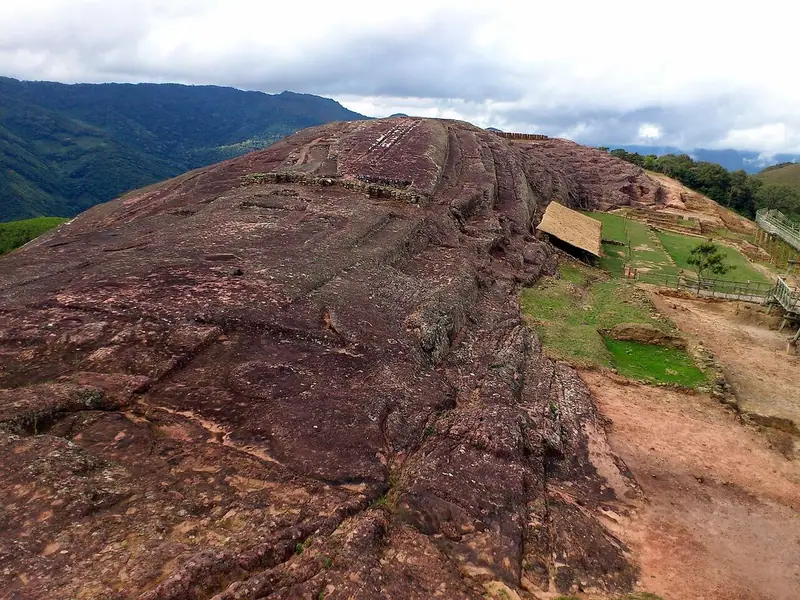 Inca7 stops · c. 300 CE – 17th century
El Fuerte de Samaipata audio guide
Look out over a great sandstone hill carved all over with channels, niches and figures, a ceremonial site of the Chané and later the Inca.
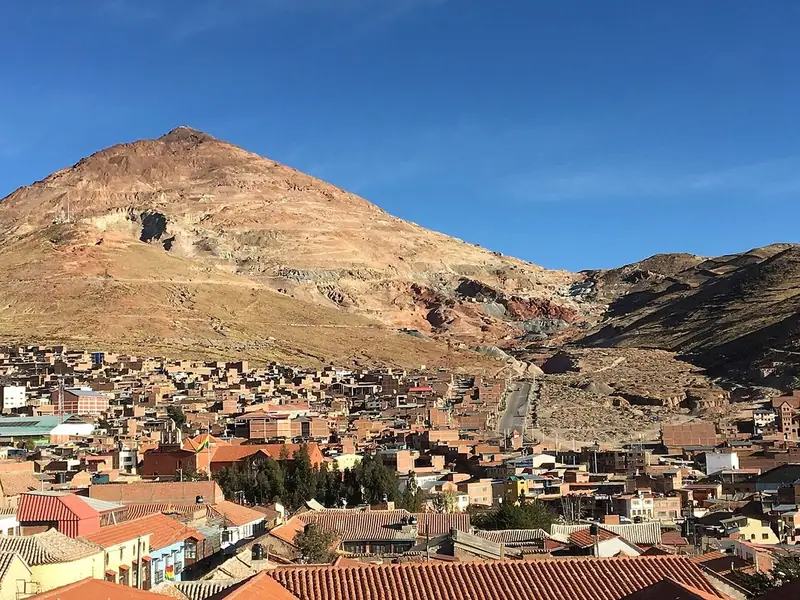 Spanish Colonial8 stops · from 1545 CE
Potosí audio guide
Explore the silver city beneath the Cerro Rico, one of the highest cities in the world, from the Royal Mint to the carved portal of San Lorenzo.
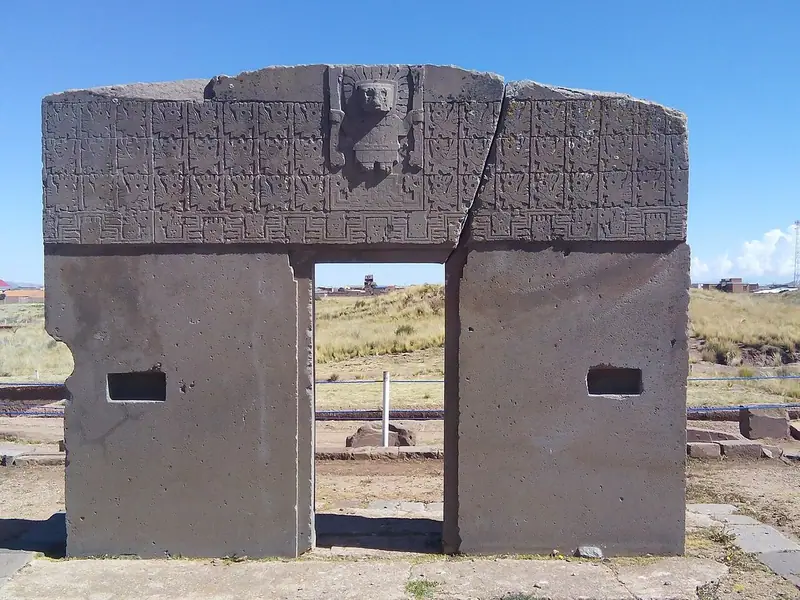 Tiwanaku8 stops · c. 200–1000 CE
Tiwanaku audio guide
Explore the stone platforms and temples of a great Andean civilisation near Lake Titicaca, from the Akapana to the Gateway of the Sun.
Every guide, in every country
Sucre and every other guide we publish, including future ones. One payment, no subscription.