Before you start
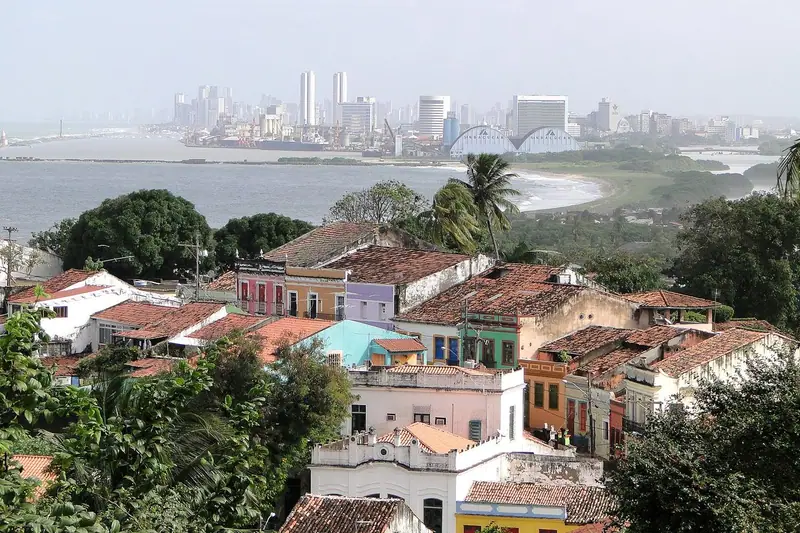
Olinda is a hill town of brightly painted houses and Baroque churches, looking over the Atlantic and, to the south, the towers of Recife. Founded in 1535, it was the first capital of Pernambuco, grown rich on sugar, then burned in the Dutch war and slowly rebuilt. This guide begins on the Alto da Sé, the hill of the cathedral, and descends through the Franciscan convent, the Monastery of São Bento, the Carmelite church and the Church of the Misericórdia, to the old market quarter and the Rua do Amparo. The route is about two kilometres, almost all downhill, and takes two to three hours with visits. The historic centre was declared a World Heritage Site in 1982.
Use it as a self-guided tour of Olinda: 6 stops in visit order, each played when you’re ready, at your own pace.
 Free preview · Stop 1
The Alto da Sé and the Cathedral
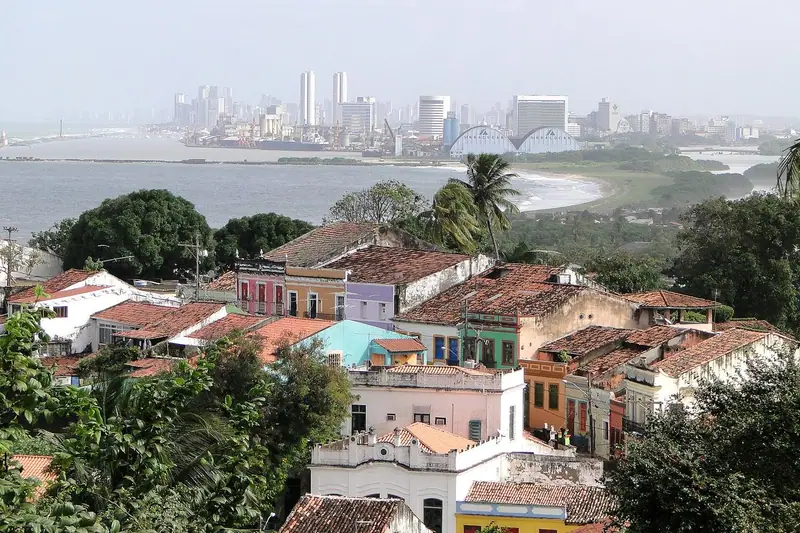
The Alto da Sé is the highest of Olinda’s hills and the natural place to begin. From the terrace in front of the cathedral you look south across the roofs to Recife and east to the sea, the view that explains why Duarte Coelho chose this ridge. A parish church stood here in the sixteenth century; it became the cathedral when the diocese of Olinda was created in 1676, and the building has been altered and restored many times since. Beside it a high cross marks the square, and the slope falls away in a jumble of towers, palms and painted façades. Spend a moment on the terrace before you go down. Walk downhill from the Sé towards the Church of Our Lady of the Conception, one of the first churches you reach on the descent.
Photo: Adam Jones, Ph.D. · CC BY-SA 3.0 · Wikimedia Commons
What to see at Olinda: 6 stops, in visit order
- 01
 The Alto da Sé and the CathedralThe hill of the seeFree preview
- 02
 The Convent of São FranciscoThe Franciscans on the hillIn the guide
- 03
 The Monastery of São BentoThe first Benedictine house in BrazilIn the guide
- 04
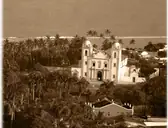 The Church of Nossa Senhora do CarmoThe CarmelitesIn the guide
- 05
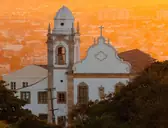 The Church of the MisericórdiaThe church of mercyIn the guide
- 06
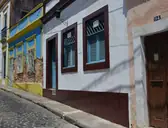 The Mercado da Ribeira and the Rua do AmparoThe lower townIn the guide
Site map of Olinda
History of Olinda
In 1535 Duarte Coelho, first donatary of the Captaincy of Pernambuco, founded a settlement on these hills, and in 1537 it was raised to the rank of a town. Sugar made it wealthy, and convents of the Benedictines, the Carmelites and other orders followed the parish churches up the slopes. In 1630 the Dutch West India Company seized Pernambuco; they found Olinda hard to defend and, in 1631, the town was burned. The Dutch made their capital at Recife, down on the water. After the Portuguese recovered the captaincy in 1654, Olinda was rebuilt in the sober colonial Baroque you still walk through, but Recife kept the trade, and in 1827 the provincial government moved there for good. What Olinda lost in power it kept in fabric: a complete hill town of churches, monasteries and houses, inscribed by UNESCO in 1982.
Olinda guide: questions
How many stops does the Olinda guide have?
6 stops, in visit order: 1. The Alto da Sé and the Cathedral; 2. The Convent of São Francisco; 3. The Monastery of São Bento; 4. The Church of Nossa Senhora do Carmo; 5. The Church of the Misericórdia; 6. The Mercado da Ribeira and the Rua do Amparo.
Can I do a self-guided tour of Olinda with this guide?
Yes. The guide is made for a self-guided tour: 6 stops in visit order, each with a photo, a story and a voice, so you can explore Olinda at your own pace, without joining a group. Download it before you go and it works offline.
How long is each guide?
The 6 stops add up to about 4 minutes of listening in total. You play each stop when you’re ready, so you can go at your own pace.
Does the guide work offline?
Yes, once it’s downloaded. The guide is a single self-contained web page (about 6.0 MB) with the photos, text and audio built in. Download it to your phone before you go (Wi-Fi is best); after that it opens in any modern browser on iPhone or Android, with no app, account or mobile signal needed.
Does it use GPS or need my location?
No. The guide doesn’t use GPS and doesn’t know where you are: you play each stop when you reach it. It works on iPhone and Android in any modern browser, and it’s in English.
What’s included?
One self-contained HTML guide: 6 stops in visit order, each with a photo, text and a voice, plus the story of who built the site.
Who built Olinda?
In 1535 Duarte Coelho, first donatary of the Captaincy of Pernambuco, founded a settlement on these hills, and in 1537 it was raised to the rank of a town. Sugar made it wealthy, and convents of the Benedictines, the Carmelites and other orders followed the parish churches up the slopes.
Where is Olinda?
Olinda is a hill town of brightly painted houses and Baroque churches, looking over the Atlantic and, to the south, the towers of Recife.
Is there a free audio guide to Olinda?
The first stop, The Alto da Sé and the Cathedral, is free to read and hear on this page, so you can try the Olinda audio tour before you buy. The full guide, with all 6 stops, is a one-off purchase: download it once and it’s yours to keep, working offline.
Is the Olinda guide worth it?
If you’d like to know what you’re looking at, yes. For $10 you get 6 stops in visit order, each with a photo, a short history and a voice you play when you’re ready, plus a site map of the stops, and about 4 minutes of listening in all. It’s short on purpose, so you spend your time looking, not listening. It’s yours to keep, works offline and needs no app. The first stop is free on this page, so you can try it before you buy. If you’d like hours of detail, a guided tour will go deeper.
Audio guide or guided tour?
It depends how you like to visit. This guide lets you explore Olinda at your own pace, at any time, for a one-off price. A guided tour gives you a live expert you can ask questions, but at fixed times and usually for a higher price. Many people use both: a tour for the big picture, and the guide to read beforehand or to revisit the stops in their own time.
Is this the official Olinda guide?
No. It’s an independent guide by The Historian Guide, not affiliated with or endorsed by the operator of Olinda. For tickets and opening hours, check the official site operator before you go.
Does the guide include entry tickets or opening hours?
No. The guide is a digital companion only. Admission to Olinda is separate, so check the official site operator for current tickets and opening hours before you go.
- Stop 1 · The Alto da Sé and the Cathedral (also the cover): Adam Jones, Ph.D. · CC BY-SA 3.0 · Wikimedia Commons · resized
- Stop 2 · The Convent of São Francisco: Valdiney Pimenta · CC BY 2.0 · Wikimedia Commons · resized
- Stop 3 · The Monastery of São Bento: Prefeitura de Olinda · CC BY 2.0 · Wikimedia Commons · resized
- Stop 4 · The Church of Nossa Senhora do Carmo: Joedison Rocha · CC BY-SA 4.0 · Wikimedia Commons · resized
- Stop 5 · The Church of the Misericórdia: Prefeitura de Olinda · CC BY 2.0 · Wikimedia Commons · resized
- Stop 6 · The Mercado da Ribeira and the Rua do Amparo: Elvis Boaventura · CC BY 3.0 · Wikimedia Commons · resized


All photographs from Wikimedia Commons under the licences shown.
More guides in Brazil
 Modern7 stops · 1922–1931 CE
Christ the Redeemer audio guide
Ride up through the Tijuca Forest to the soapstone-clad statue on Corcovado, with Sugarloaf and Guanabara Bay spread out below.
 Natural wonder7 stops
Iguaçu Falls audio guide
Forest trails and walkways to the Devil’s Throat, where the Iguaçu River plunges over a curving cliff in hundreds of separate falls.
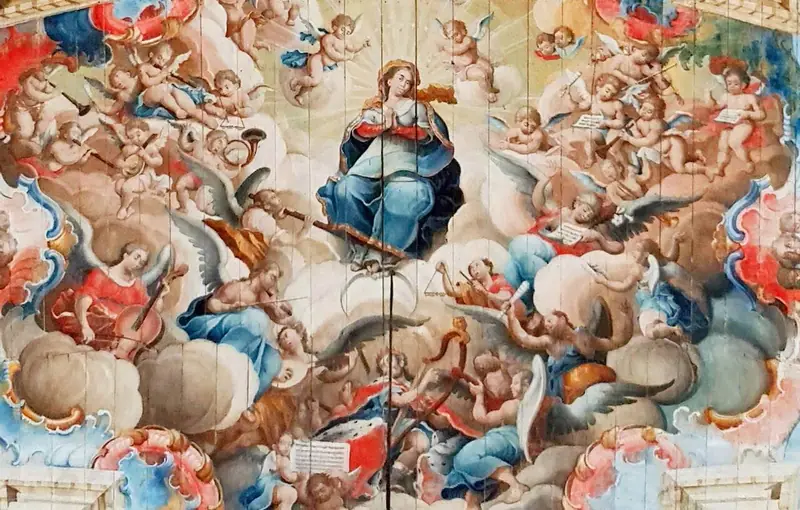 Portuguese Colonial9 stops · 1698 – 1897
Ouro Preto audio guide
Brazil’s gold-rush capital: Praça Tiradentes, the Inconfidência museum, Aleijadinho’s São Francisco, Ataíde’s painted ceiling and the gilded churches of the Pilar and Rosário.
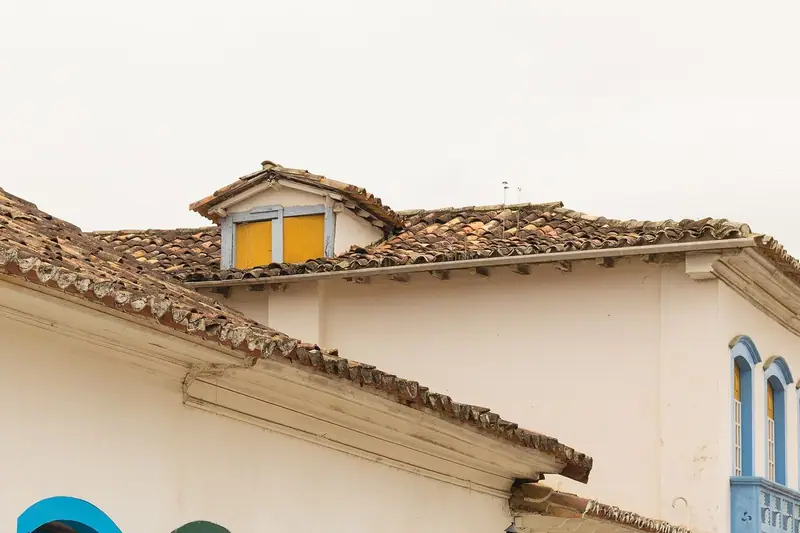 Colonial Brazil6 stops · 1667–1873
Paraty audio guide
The colonial port of Paraty: the church of Santa Rita, the parish church of the Remedies, the Rua do Comércio, the chapel of Sorrows, the old pier and the Fort Defensor Perpétuo.
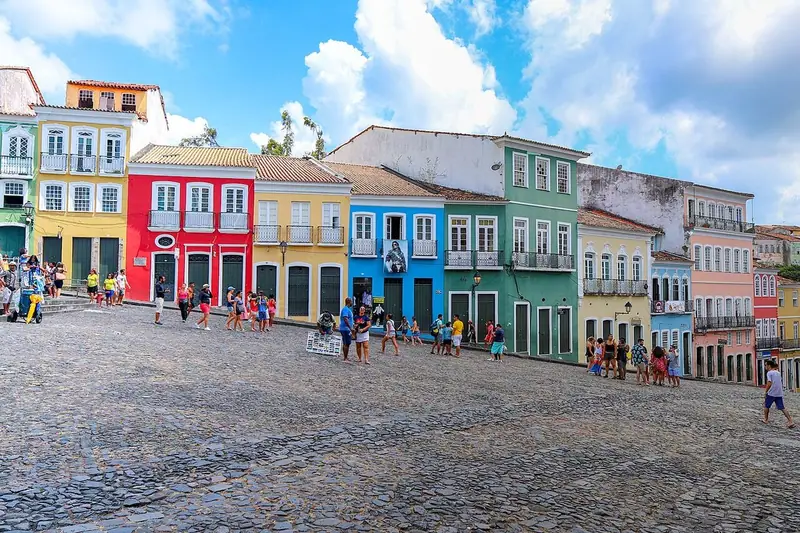 Portuguese Colonial8 stops · 1549–1763 CE
Pelourinho, Salvador audio guide
Ride the Lacerda Elevator up to Salvador’s cobbled old town, with its painted houses and some of the richest Baroque churches in the Americas.
 Natural wonder7 stops
Sugarloaf Mountain audio guide
Ride Brazil’s first cable car from Praia Vermelha via Morro da Urca to the granite summit above the mouth of Guanabara Bay.
Every guide, in every country
Olinda and every other guide we publish, including future ones. One payment, no subscription.