Before you start
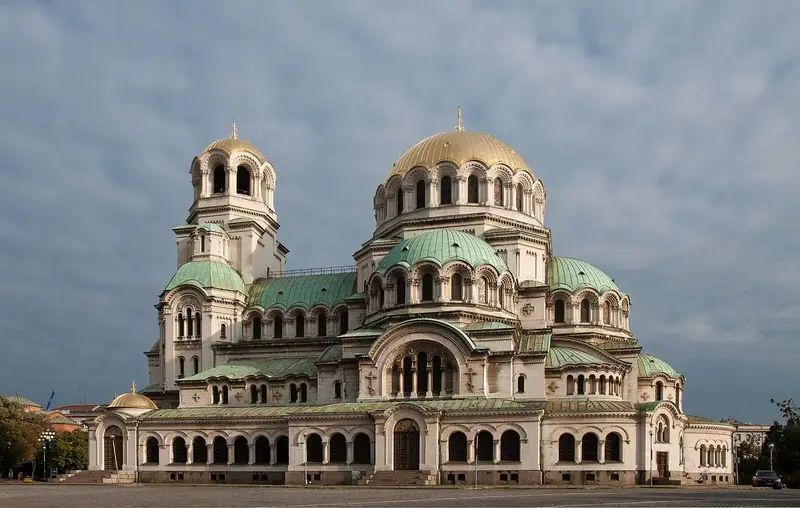
Beneath the streets of Sofia lies Serdica, the Roman city that the emperor Constantine is said to have called his Rome. Over the following centuries it became a Byzantine, a Bulgarian and an Ottoman city, and after 1878 the capital of a newly independent Bulgaria, and every age has left its mark in the few streets of its centre. This guide begins at the cathedral of Saint Nedelya, visits the Roman rotunda of Saint George and the ruins of Serdica, the Ottoman mosque of Banya Bashi and the mineral baths, then follows the boulevard east to the Russian Church, the ancient church of Saint Sofia and the great Alexander Nevsky Cathedral.
Use it as a self-guided tour of Sofia: 7 stops in visit order, each played when you’re ready, at your own pace.
 Free preview · Stop 1
Saint Nedelya Cathedral
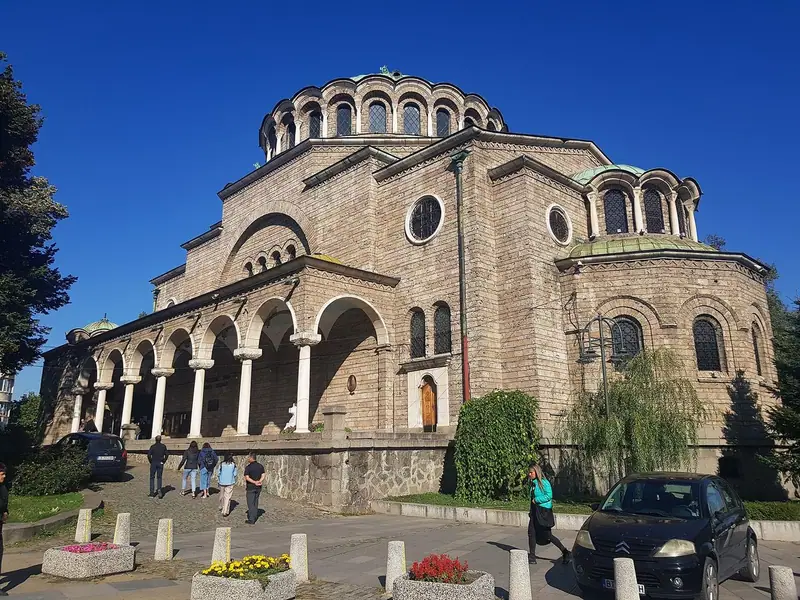
Begin at the domed cathedral of Saint Nedelya, which stands in the middle of a square at the crossing of the old city’s main streets. A church has stood here since around the tenth century, and from the eighteenth century it was the city’s cathedral. It also holds the relics of the medieval Serbian king Stefan Milutin, brought to Bulgaria in the fifteenth century. The present building is the result of a terrible event. On 16 April 1925, during the funeral of a murdered general, members of the military organisation of the Bulgarian Communist Party set off a huge bomb hidden in the roof, hoping to kill the tsar and the government. The tsar was not present, but the dome collapsed and well over a hundred people were killed, the deadliest terrorist attack in Bulgaria’s history. The church was rebuilt in its present form in the following years. From the square, walk north-east to the courtyard behind the Presidency.
Photo: Јакша · CC BY-SA 4.0 · Wikimedia Commons
What to see at Sofia: 7 stops, in visit order
- 01
 Saint Nedelya CathedralThe city’s cathedralFree preview
- 02
 The Rotunda of Saint GeorgeThe oldest building in SofiaIn the guide
- 03
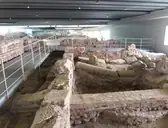 The Ruins of SerdicaThe Roman city under the streetsIn the guide
- 04
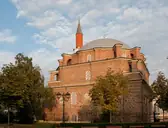 Banya Bashi MosqueThe mosque of the springsIn the guide
- 05
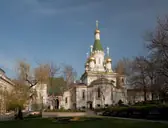 The Russian ChurchA church for the tsar’s embassyIn the guide
- 06
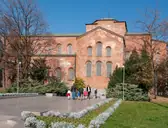 The Church of Saint SofiaThe church that named the cityIn the guide
- 07
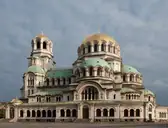 The Alexander Nevsky CathedralA memorial to liberationIn the guide
Site map of Sofia
History of Sofia
Sofia grew around hot mineral springs at the foot of Mount Vitosha. A Thracian tribe, the Serdi, gave the first city its name, Serdica, and after the Roman conquest it became an important city of the empire, the birthplace of the emperors Aurelian and Galerius. In 311 CE the Edict of Serdica, issued here by Galerius, ended the persecution of Christians, and Constantine the Great stayed in the city often. Destroyed by the Huns in the fifth century, it was rebuilt by the Byzantines, and from the ninth century it belonged for long periods to the Bulgarian empires, which knew it as Sredets. By the fourteenth century it had taken the name of its great church, Saint Sofia, meaning holy wisdom. In 1382 the Ottomans captured the city, and ruled it for nearly five centuries.
The full history continues in the guide.
Sofia guide: questions
How many stops does the Sofia guide have?
7 stops, in visit order: 1. Saint Nedelya Cathedral; 2. The Rotunda of Saint George; 3. The Ruins of Serdica; 4. Banya Bashi Mosque; 5. The Russian Church; 6. The Church of Saint Sofia; 7. The Alexander Nevsky Cathedral.
Can I do a self-guided tour of Sofia with this guide?
Yes. The guide is made for a self-guided tour: 7 stops in visit order, each with a photo, a story and a voice, so you can explore Sofia at your own pace, without joining a group. Download it before you go and it works offline.
How long is each guide?
The 7 stops add up to about 5 minutes of listening in total. You play each stop when you’re ready, so you can go at your own pace.
Does the guide work offline?
Yes, once it’s downloaded. The guide is a single self-contained web page (about 6.9 MB) with the photos, text and audio built in. Download it to your phone before you go (Wi-Fi is best); after that it opens in any modern browser on iPhone or Android, with no app, account or mobile signal needed.
Does it use GPS or need my location?
No. The guide doesn’t use GPS and doesn’t know where you are: you play each stop when you reach it. It works on iPhone and Android in any modern browser, and it’s in English.
What’s included?
One self-contained HTML guide: 7 stops in visit order, each with a photo, text and a voice, plus the story of who built the site.
Who built Sofia?
Sofia grew around hot mineral springs at the foot of Mount Vitosha. A Thracian tribe, the Serdi, gave the first city its name, Serdica, and after the Roman conquest it became an important city of the empire, the birthplace of the emperors Aurelian and Galerius.
Where is Sofia?
Beneath the streets of Sofia lies Serdica, the Roman city that the emperor Constantine is said to have called his Rome.
Is there a free audio guide to Sofia?
The first stop, Saint Nedelya Cathedral, is free to read and hear on this page, so you can try the Sofia audio tour before you buy. The full guide, with all 7 stops, is a one-off purchase: download it once and it’s yours to keep, working offline.
Is the Sofia guide worth it?
If you’d like to know what you’re looking at, yes. For $10 you get 7 stops in visit order, each with a photo, a short history and a voice you play when you’re ready, plus a site map of the stops, and about 5 minutes of listening in all. It’s short on purpose, so you spend your time looking, not listening. It’s yours to keep, works offline and needs no app. The first stop is free on this page, so you can try it before you buy. If you’d like hours of detail, a guided tour will go deeper.
Audio guide or guided tour?
It depends how you like to visit. This guide lets you explore Sofia at your own pace, at any time, for a one-off price. A guided tour gives you a live expert you can ask questions, but at fixed times and usually for a higher price. Many people use both: a tour for the big picture, and the guide to read beforehand or to revisit the stops in their own time.
Is this the official Sofia guide?
No. It’s an independent guide by The Historian Guide, not affiliated with or endorsed by the operator of Sofia. For tickets and opening hours, check the official site operator before you go.
Does the guide include entry tickets or opening hours?
No. The guide is a digital companion only. Admission to Sofia is separate, so check the official site operator for current tickets and opening hours before you go.
- Stop 1 · Saint Nedelya Cathedral: Јакша · CC BY-SA 4.0 · Wikimedia Commons · resized
- Stop 2 · The Rotunda of Saint George: Sharon Hahn Darlin · CC BY 2.0 · Wikimedia Commons · resized
- Stop 3 · The Ruins of Serdica: TodorBelomorski · CC BY-SA 4.0 · Wikimedia Commons · resized
- Stop 4 · Banya Bashi Mosque: MrPanyGoff · CC BY-SA 3.0 · Wikimedia Commons · resized
- Stop 5 · The Russian Church: MrPanyGoff · CC BY-SA 3.0 · Wikimedia Commons · resized
- Stop 6 · The Church of Saint Sofia: Matti Blume · CC BY-SA 4.0 · Wikimedia Commons · resized
- Stop 7 · The Alexander Nevsky Cathedral (also the cover): Plamen Agov (user:MrPanyGoff) · CC BY-SA 4.0 · Wikimedia Commons · resized


All photographs from Wikimedia Commons under the licences shown.
More guides in Bulgaria
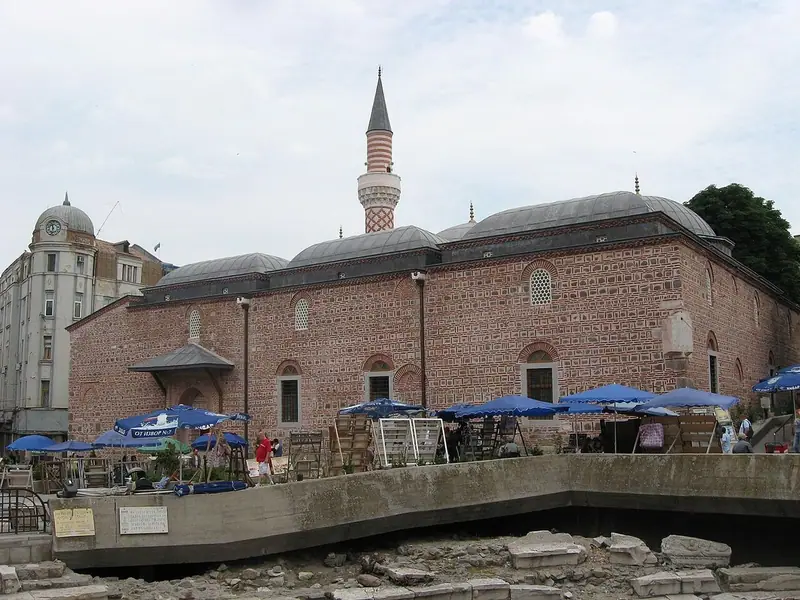 Roman8 stops · 1st–2nd century CE; 18th–19th century
Old Plovdiv audio guide
Find a Roman stadium beneath the main square, a Roman theatre still used for concerts and the colourful merchants’ houses of the old town.
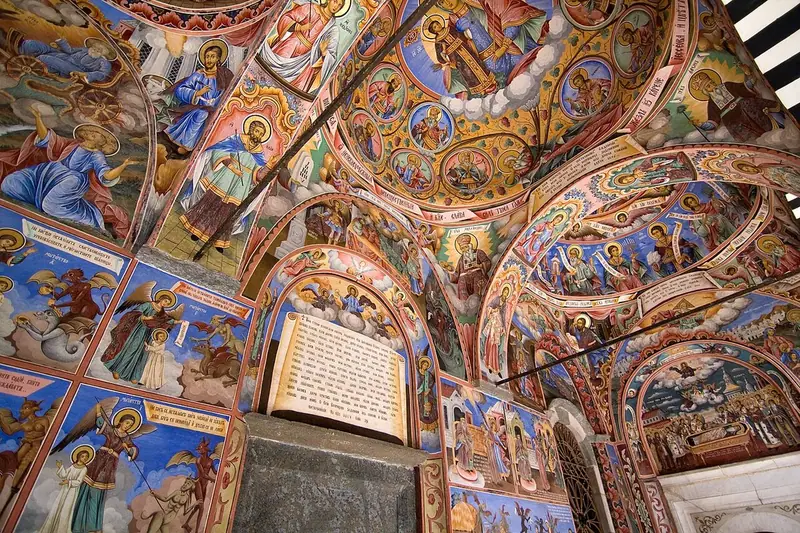 Bulgarian Empire7 stops · 10th–19th century
Rila Monastery audio guide
Pass through the gates of Bulgaria’s great monastery in the Rila Mountains to its striped arcades, painted church and Hrelyo’s Tower.
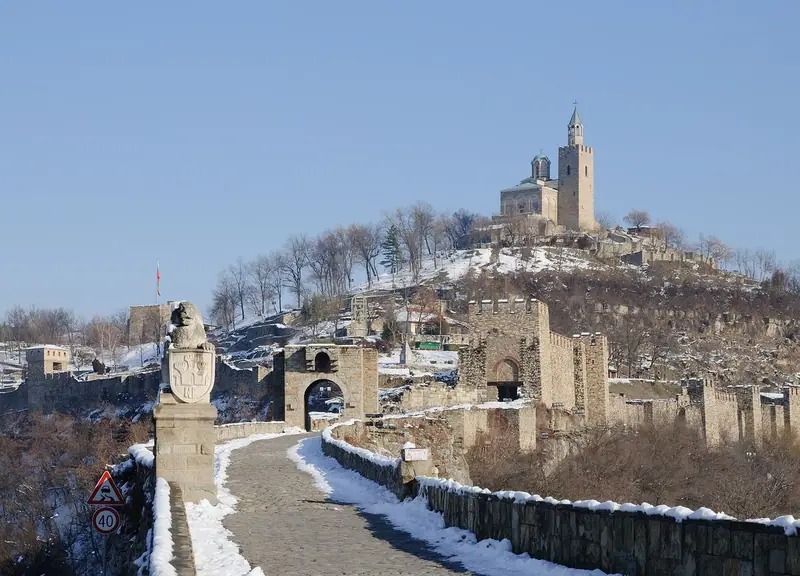 Second Bulgarian Empire7 stops · 1185–1908
Veliko Tarnovo audio guide
The capital of the Second Bulgarian Empire: the Asen monument, the craftsmen’s street, and the fortress of Tsarevets with Baldwin’s Tower, the Patriarchal Cathedral, the palace and the Forty Martyrs.
Every guide, in every country
Sofia and every other guide we publish, including future ones. One payment, no subscription.