Before you start
On a hillside above the valley of the Maroni River, a few kilometres from the south coast of Cyprus, lie the remains of Choirokoitia, a Neolithic village founded around nine thousand years ago. It is one of the most important and best preserved prehistoric sites in the eastern Mediterranean, and a World Heritage Site. Its people lived in round houses of stone and mud, grouped around courtyards, inside a great defensive wall, long before the use of pottery or metal on the island. This guide begins at the reconstructed houses near the entrance, then climbs the path up the hill through the excavated village. The path is steep and rocky in places, so wear sturdy shoes, and bring water and a hat.
Use it as a self-guided tour of Choirokoitia: 7 stops in visit order, each played when you’re ready, at your own pace.
 Free preview · Stop 1
The Reconstructed Village
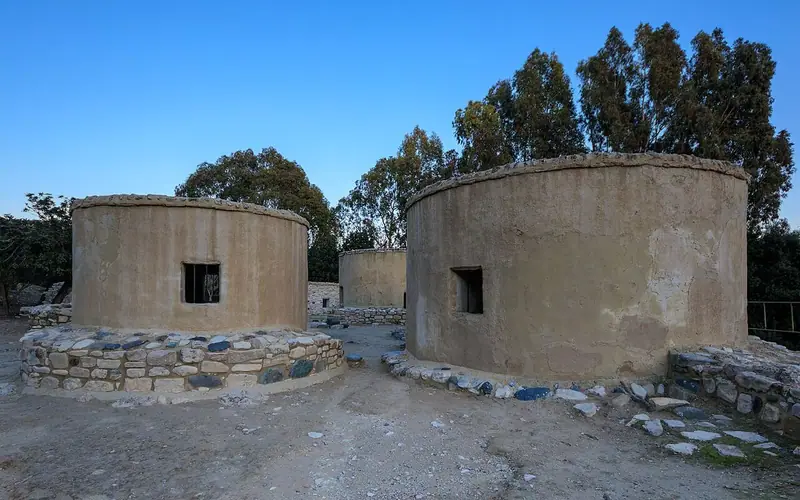
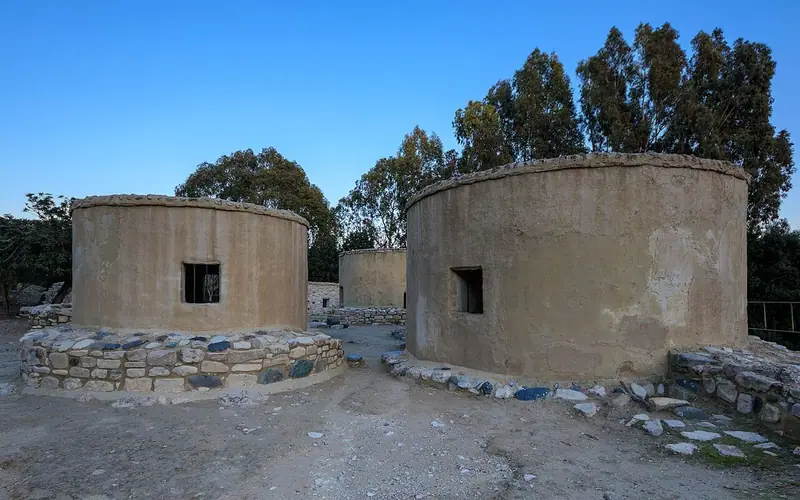
Begin at the group of reconstructed houses near the entrance, built in modern times to show how the village may have looked. They were based on the remains found by archaeologists on the hillside above, and made with materials and methods like those of the original builders: stone, mud brick, timber and plaster. Look at the round houses, with thick walls, flat roofs and small doorways, set close together. Notice the low stone foundations, on which walls of mud and stone were raised. Archaeologists once believed that the roofs were domed, like beehives, but the remains of a collapsed flat roof showed that at least some were flat. The houses were small, but each family probably used several of them, grouped around a shared courtyard, as the reconstruction shows.
Photo: A.Savin · FAL · Wikimedia Commons
What to see at Choirokoitia: 7 stops, in visit order
- 01
 The Reconstructed VillageHouses of the Stone AgeFree preview
- 02
 Inside a HouseDaily LifeIn the guide
- 03
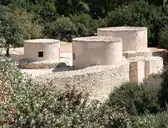 The CourtyardA Family HomeIn the guide
- 04
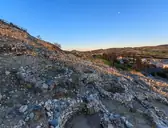 The WallDefending the VillageIn the guide
- 05
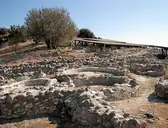 The Excavated HousesThe Original VillageIn the guide
- 06
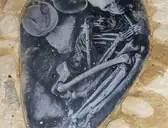 Beneath the FloorsThe BurialsIn the guide
- 07
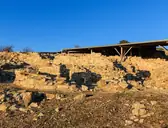 The HilltopLooking Over the ValleyIn the guide
Site map of Choirokoitia
History of Choirokoitia
The village was founded around 7000 BCE by farmers of the aceramic Neolithic, the late Stone Age before pottery was made in Cyprus. They grew wheat, barley and lentils, gathered figs, olives and pistachios, kept sheep, goats and pigs, and hunted deer. The village was home to perhaps three to six hundred people at any one time, and was abandoned, for reasons unknown, around 6000 BCE. It was discovered in 1934 by the Cypriot archaeologist Porphyrios Dikaios, and since 1977 a French mission has continued the excavations.
Choirokoitia guide: questions
How many stops does the Choirokoitia guide have?
7 stops, in visit order: 1. The Reconstructed Village; 2. Inside a House; 3. The Courtyard; 4. The Wall; 5. The Excavated Houses; 6. Beneath the Floors; 7. The Hilltop.
Can I do a self-guided tour of Choirokoitia with this guide?
Yes. The guide is made for a self-guided tour: 7 stops in visit order, each with a photo, a story and a voice, so you can explore Choirokoitia at your own pace, without joining a group. Download it before you go and it works offline.
How long is each guide?
The 7 stops add up to about 4 minutes of listening in total. You play each stop when you’re ready, so you can go at your own pace.
Does the guide work offline?
Yes, once it’s downloaded. The guide is a single self-contained web page (about 6.6 MB) with the photos, text and audio built in. Download it to your phone before you go (Wi-Fi is best); after that it opens in any modern browser on iPhone or Android, with no app, account or mobile signal needed.
Does it use GPS or need my location?
No. The guide doesn’t use GPS and doesn’t know where you are: you play each stop when you reach it. It works on iPhone and Android in any modern browser, and it’s in English.
What’s included?
One self-contained HTML guide: 7 stops in visit order, each with a photo, text and a voice, plus the story of who built the site.
Who built Choirokoitia?
The village was founded around 7000 BCE by farmers of the aceramic Neolithic, the late Stone Age before pottery was made in Cyprus. They grew wheat, barley and lentils, gathered figs, olives and pistachios, kept sheep, goats and pigs, and hunted deer.
Where is Choirokoitia?
On a hillside above the valley of the Maroni River, a few kilometres from the south coast of Cyprus, lie the remains of Choirokoitia, a Neolithic village founded around nine thousand years ago.
Is there a free audio guide to Choirokoitia?
The first stop, The Reconstructed Village, is free to read and hear on this page, so you can try the Choirokoitia audio tour before you buy. The full guide, with all 7 stops, is a one-off purchase: download it once and it’s yours to keep, working offline.
Is the Choirokoitia guide worth it?
If you’d like to know what you’re looking at, yes. For $10 you get 7 stops in visit order, each with a photo, a short history and a voice you play when you’re ready, plus a site map of the stops, and about 4 minutes of listening in all. It’s short on purpose, so you spend your time looking, not listening. It’s yours to keep, works offline and needs no app. The first stop is free on this page, so you can try it before you buy. If you’d like hours of detail, a guided tour will go deeper.
Audio guide or guided tour?
It depends how you like to visit. This guide lets you explore Choirokoitia at your own pace, at any time, for a one-off price. A guided tour gives you a live expert you can ask questions, but at fixed times and usually for a higher price. Many people use both: a tour for the big picture, and the guide to read beforehand or to revisit the stops in their own time.
Is this the official Choirokoitia guide?
No. It’s an independent guide by The Historian Guide, not affiliated with or endorsed by the operator of Choirokoitia. For tickets and opening hours, check the official site operator before you go.
Does the guide include entry tickets or opening hours?
No. The guide is a digital companion only. Admission to Choirokoitia is separate, so check the official site operator for current tickets and opening hours before you go.
- Stop 1 · The Reconstructed Village (also the cover): A.Savin · FAL · Wikimedia Commons · resized
- Stop 2 · Inside a House: Kritzolina · CC BY-SA 3.0 · Wikimedia Commons · resized
- Stop 3 · The Courtyard: Ophelia2 · CC BY-SA 3.0 · Wikimedia Commons · resized
- Stop 4 · The Wall: A.Savin · FAL · Wikimedia Commons · resized
- Stop 5 · The Excavated Houses: Mboesch · CC BY-SA 4.0 · Wikimedia Commons · resized
- Stop 6 · Beneath the Floors: A.Savin · FAL · Wikimedia Commons · resized
- Stop 7 · The Hilltop: A.Savin · FAL · Wikimedia Commons · resized


All photographs from Wikimedia Commons under the licences shown.
More guides in Cyprus
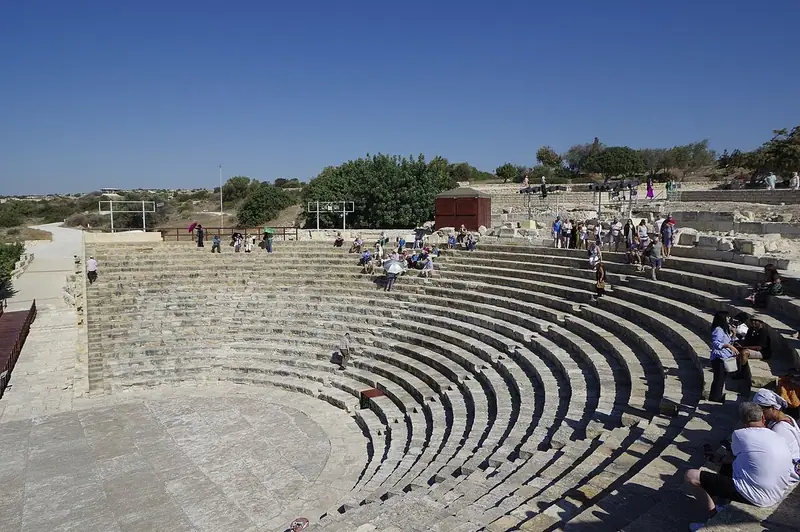 Greek8 stops · 12th century BCE – 7th century CE
Kourion audio guide
Cross a limestone bluff above the sea through Roman houses rich in mosaics to a theatre with one of the finest views in Cyprus.
 Byzantine9 stops · 11th – 16th century CE
Painted Churches of the Troodos audio guide
Nine of the ten painted churches of the Troodos, from Asinou and St Nicholas of the Roof to Panagia tou Araka and the Holy Cross of Agiasmati, with five centuries of Byzantine wall painting.
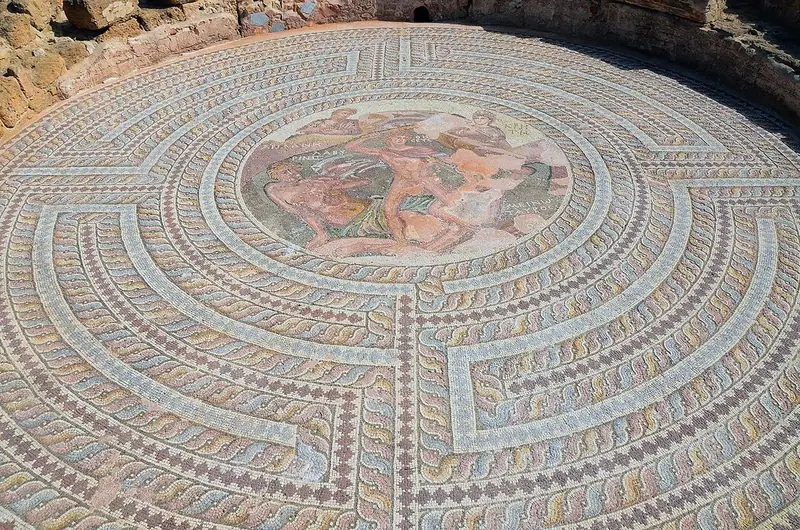 Roman8 stops · late 4th century BCE – 4th century CE
Paphos Archaeological Park audio guide
The floor mosaics of Nea Paphos, among the finest in the Mediterranean, from the House of Dionysus to the Villa of Theseus.
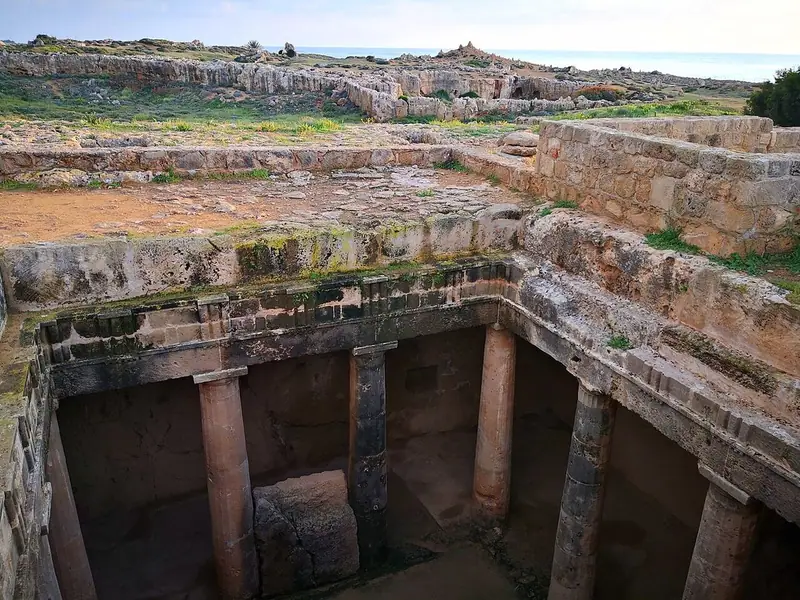 Hellenistic7 stops · late 4th century BCE – 3rd century CE
Tombs of the Kings audio guide
Descend into rock-cut tombs by the sea, some built like houses with courtyards surrounded by columns, where the leading families of Nea Paphos were buried.
Every guide, in every country
Choirokoitia and every other guide we publish, including future ones. One payment, no subscription.