Before you start
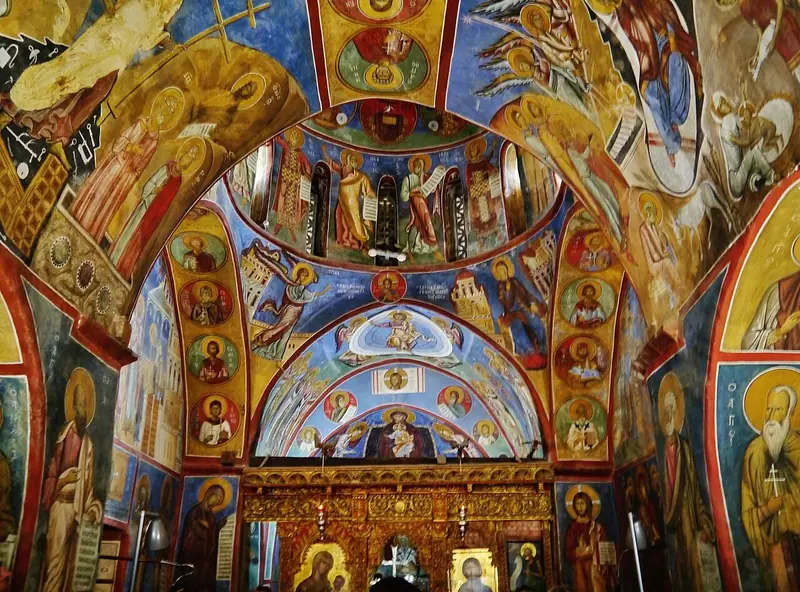
Few places in the old Byzantine world have as many churches and monasteries gathered together as the Troodos Mountains of central Cyprus. Ten of them, all richly decorated with wall paintings, are inscribed together by UNESCO as the Painted Churches in the Troodos Region; nine were listed in 1985 and a tenth, at Palaichori, in 2001. Seen from outside, most look like simple rural barns, with steep wooden roofs, but inside they are covered from floor to ceiling in paintings that span five centuries. The churches are scattered among mountain villages and valleys, so a car is essential, and visiting them all takes more than a day. This guide visits nine of the ten, beginning at Asinou in the north, crossing the Solea and Marathasa valleys, and ending in the Pitsilia region to the east.
Use it as a self-guided tour of the Painted Churches of the Troodos: 9 stops in visit order, each played when you’re ready, at your own pace.
 Free preview · Stop 1
Panagia Phorbiotissa, Asinou
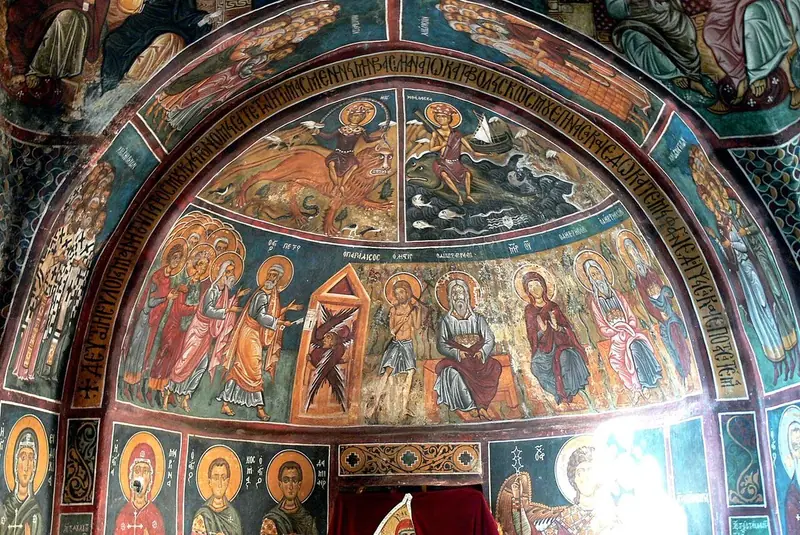
Begin at the church of the Virgin Phorbiotissa, standing alone about five kilometres south of the village of Nikitari. It belonged to a monastery that was abandoned in the eighteenth century. Its name may come from the spurge plants that once grew here in abundance. The vaulted nave dates from the early twelfth century and the domed narthex at its west end from the late twelfth century. An inscription in a niche of the south wall records that the church was painted at the expense of the official Nikolaos Ischyrios in the reign of the emperor Alexios Komnenos, in 1105 or 1106. Look in the apse for the Communion of the Apostles, where Judas turns away from Christ. In the narthex a Last Judgement shows the torments of the damned, alongside a vision of Paradise. Later paintings date from the fourteenth century.
Photo: Xenophon · CC BY-SA 3.0 · Wikimedia Commons
What to see at the Painted Churches of the Troodos: 9 stops, in visit order
- 01
 Panagia Phorbiotissa, AsinouThe church in the hills above NikitariFree preview
- 02
 Panagia PodithouThe Italian manner at GalataIn the guide
- 03
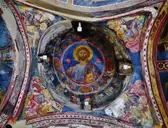 Agios Nikolaos tis StegisSt Nicholas of the Roof, KakopetriaIn the guide
- 04
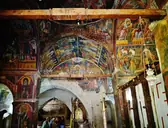 Agios Ioannis LampadistisThe monastery at KalopanagiotisIn the guide
- 05
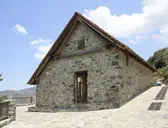 Panagia tou MoutoullaThe earliest timber roofIn the guide
- 06
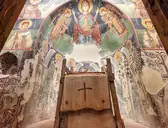 Archangelos Michael, PedoulasA village church of 1474In the guide
- 07
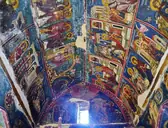 Timios Stavros, PelendriThe Holy Cross and its rare detailsIn the guide
- 08
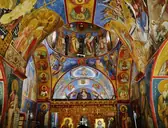 Panagia tou ArakaThe masterpiece of LagouderaIn the guide
- 09
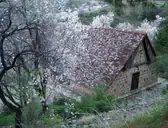 Stavros tou AgiasmatiThe Holy Cross near PlatanistasaIn the guide
Site map of the Painted Churches of the Troodos
History of the Painted Churches of the Troodos
Cyprus was retaken by the Byzantine Empire in 965, and over the following five centuries the Troodos filled with churches and monasteries. In 1191 Richard the Lionheart seized the island, and soon afterwards it passed to the Lusignans, a Frankish dynasty who ruled it as a Latin kingdom; in 1489 it came under the rule of Venice. Through these changes the mountain churches remained Orthodox, and their painters drew on the art of Constantinople, on local traditions and, increasingly, on the art of the West. Their steep timber roofs, covered with flat hooked tiles, are a feature found only in the Troodos, and in some churches they shelter older stone domes and vaults. Many of the paintings carry dated inscriptions, rare in the medieval eastern Mediterranean, which makes these churches especially important for the history of Byzantine painting. All ten are still places of worship.
Painted Churches of the Troodos guide: questions
How many stops does the Painted Churches of the Troodos guide have?
9 stops, in visit order: 1. Panagia Phorbiotissa, Asinou; 2. Panagia Podithou; 3. Agios Nikolaos tis Stegis; 4. Agios Ioannis Lampadistis; 5. Panagia tou Moutoulla; 6. Archangelos Michael, Pedoulas; 7. Timios Stavros, Pelendri; 8. Panagia tou Araka; 9. Stavros tou Agiasmati.
Can I do a self-guided tour of the Painted Churches of the Troodos with this guide?
Yes. The guide is made for a self-guided tour: 9 stops in visit order, each with a photo, a story and a voice, so you can explore the Painted Churches of the Troodos at your own pace, without joining a group. Download it before you go and it works offline.
How long do you need at the Painted Churches of the Troodos?
We suggest allowing two days by car. The 9 stops add up to about 7 minutes of listening, and you play each one when you’re ready, so you can linger wherever you like.
How long is each guide?
The 9 stops add up to about 7 minutes of listening in total. You play each stop when you’re ready, so you can go at your own pace.
Does the guide work offline?
Yes, once it’s downloaded. The guide is a single self-contained web page (about 9.2 MB) with the photos, text and audio built in. Download it to your phone before you go (Wi-Fi is best); after that it opens in any modern browser on iPhone or Android, with no app, account or mobile signal needed.
Does it use GPS or need my location?
No. The guide doesn’t use GPS and doesn’t know where you are: you play each stop when you reach it. It works on iPhone and Android in any modern browser, and it’s in English.
What’s included?
One self-contained HTML guide: 9 stops in visit order, each with a photo, text and a voice, plus the story of who built the site.
Who built the Painted Churches of the Troodos?
Cyprus was retaken by the Byzantine Empire in 965, and over the following five centuries the Troodos filled with churches and monasteries. In 1191 Richard the Lionheart seized the island, and soon afterwards it passed to the Lusignans, a Frankish dynasty who ruled it as a Latin kingdom; in 1489 it came under the rule of Venice.
Where is the Painted Churches of the Troodos?
Few places in the old Byzantine world have as many churches and monasteries gathered together as the Troodos Mountains of central Cyprus.
Is there a free audio guide to the Painted Churches of the Troodos?
The first stop, Panagia Phorbiotissa, Asinou, is free to read and hear on this page, so you can try the Painted Churches of the Troodos audio tour before you buy. The full guide, with all 9 stops, is a one-off purchase: download it once and it’s yours to keep, working offline.
Is the Painted Churches of the Troodos guide worth it?
If you’d like to know what you’re looking at, yes. For $10 you get 9 stops in visit order, each with a photo, a short history and a voice you play when you’re ready, plus a site map of the stops, and about 7 minutes of listening in all. It’s short on purpose, so you spend your time looking, not listening. It’s yours to keep, works offline and needs no app. The first stop is free on this page, so you can try it before you buy. If you’d like hours of detail, a guided tour will go deeper.
Audio guide or guided tour?
It depends how you like to visit. This guide lets you explore the Painted Churches of the Troodos at your own pace, at any time, for a one-off price. A guided tour gives you a live expert you can ask questions, but at fixed times and usually for a higher price. Many people use both: a tour for the big picture, and the guide to read beforehand or to revisit the stops in their own time.
Is this the official Painted Churches of the Troodos guide?
No. It’s an independent guide by The Historian Guide, not affiliated with or endorsed by the operator of the Painted Churches of the Troodos. For tickets and opening hours, check the official site operator before you go.
Does the guide include entry tickets or opening hours?
No. The guide is a digital companion only. Admission to the Painted Churches of the Troodos is separate, so check the official site operator for current tickets and opening hours before you go.
- Stop 1 · Panagia Phorbiotissa, Asinou: Xenophon · CC BY-SA 3.0 · Wikimedia Commons · resized
- Stop 2 · Panagia Podithou: Croquemort Nestor · CC0 · Wikimedia Commons · resized
- Stop 3 · Agios Nikolaos tis Stegis: Zairon · CC BY-SA 4.0 · Wikimedia Commons · resized
- Stop 4 · Agios Ioannis Lampadistis: Zairon · CC BY-SA 4.0 · Wikimedia Commons · resized
- Stop 5 · Panagia tou Moutoulla: Mercy · CC BY-SA 4.0 · Wikimedia Commons · resized
- Stop 6 · Archangelos Michael, Pedoulas: Diego Delso · CC BY-SA 4.0 · Wikimedia Commons · resized
- Stop 7 · Timios Stavros, Pelendri: Zairon · CC BY-SA 4.0 · Wikimedia Commons · resized
- Stop 8 · Panagia tou Araka (also the cover): Zairon · CC BY-SA 4.0 · Wikimedia Commons · resized
- Stop 9 · Stavros tou Agiasmati: Chneophytou at Greek Wikipedia · CC BY-SA 3.0 · Wikimedia Commons · resized


All photographs from Wikimedia Commons under the licences shown.
More guides in Cyprus
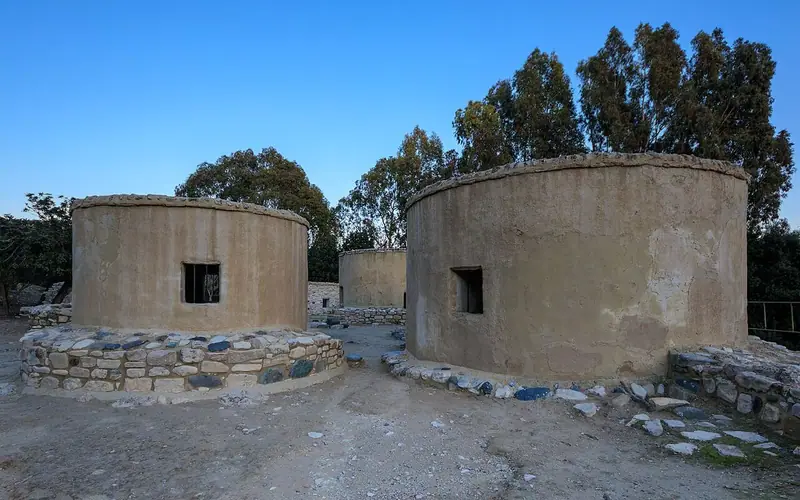 Neolithic7 stops · c. 7000–6000 BCE
Choirokoitia audio guide
Step inside the round stone houses of a Neolithic village founded around nine thousand years ago on a hillside above the Maroni valley.
 Greek8 stops · 12th century BCE – 7th century CE
Kourion audio guide
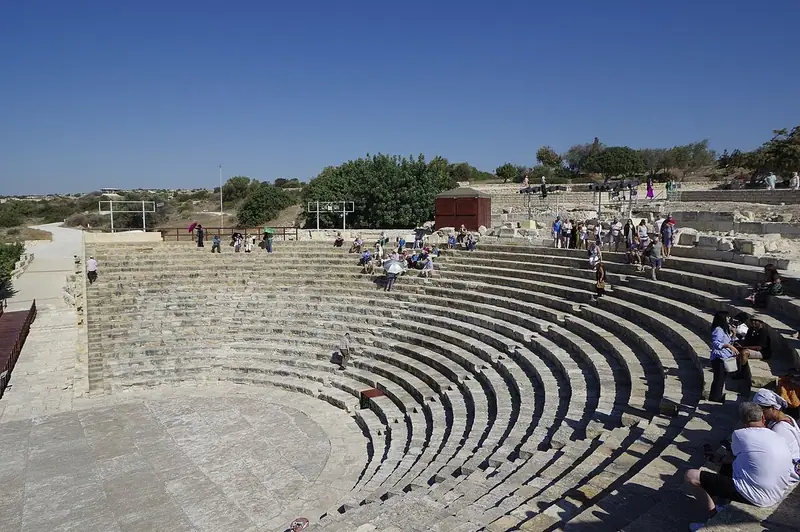
Cross a limestone bluff above the sea through Roman houses rich in mosaics to a theatre with one of the finest views in Cyprus.
 Roman8 stops · late 4th century BCE – 4th century CE
Paphos Archaeological Park audio guide
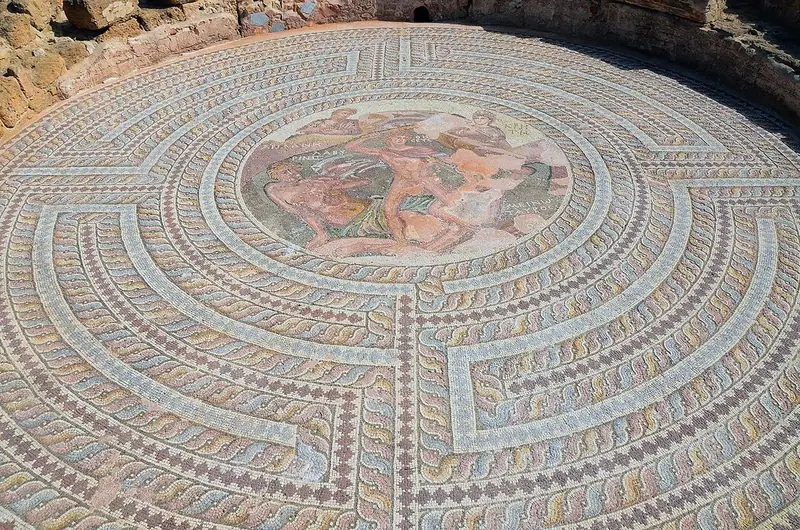
The floor mosaics of Nea Paphos, among the finest in the Mediterranean, from the House of Dionysus to the Villa of Theseus.
 Hellenistic7 stops · late 4th century BCE – 3rd century CE
Tombs of the Kings audio guide
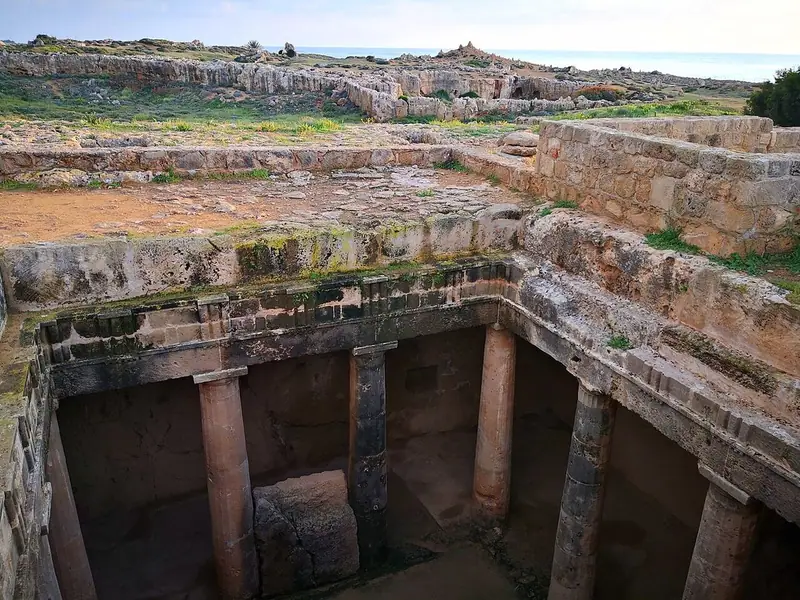
Descend into rock-cut tombs by the sea, some built like houses with courtyards surrounded by columns, where the leading families of Nea Paphos were buried.
Every guide, in every country
Painted Churches of the Troodos and every other guide we publish, including future ones. One payment, no subscription.