Before you start
By the harbour of Paphos, on the south-west coast of Cyprus, lie the ruins of Nea Paphos, the ancient capital of the island under the Ptolemies and the Romans. Its great houses are famous for their floor mosaics, among the finest in the Mediterranean world, showing gods, heroes and myths in brilliant colour. With the Tombs of the Kings and the sanctuary of Aphrodite at Kouklia, the park is part of a World Heritage Site. This guide leads from the House of Dionysus past the lighthouse to the agora and the odeon and a ruined Byzantine castle, back to the houses of the mosaics, and ends at the medieval fort on the harbour. The park is large and open, with little shade, so bring water and a hat.
Use it as a self-guided tour of Paphos Archaeological Park: 8 stops in visit order, each played when you’re ready, at your own pace.
 Free preview · Stop 1
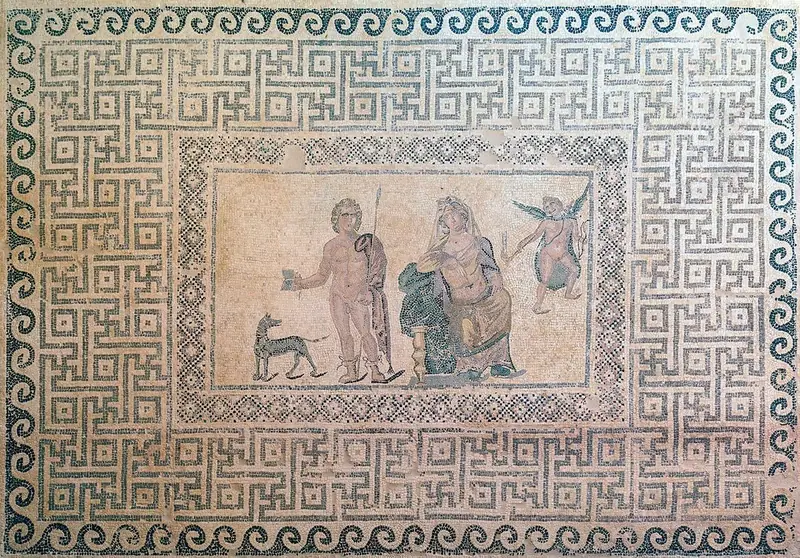
The House of Dionysus
Begin at the House of Dionysus, a great Roman villa of the late second and early third centuries CE, discovered in 1962 by a farmer ploughing his field. Walk along the raised walkways under the protective roof and look down at the mosaic floors that covered its rooms, made of tiny cubes of coloured stone. Look for the scenes from Greek mythology: Phaedra and Hippolytus, shown in the photograph, the tragic tale of a queen who fell in love with her stepson; Apollo pursuing the nymph Daphne, who turns into a laurel tree; Pyramus and Thisbe, the doomed lovers whose tale Shakespeare later retold; and Ganymede, the Trojan prince carried off by an eagle to serve the gods. Notice the rich geometric borders and patterns around them, and the lively hunting scenes in the courtyard.
Photo: Diego Delso · CC BY-SA 4.0 · Wikimedia Commons
What to see at Paphos Archaeological Park: 8 stops, in visit order
- 01
 The House of DionysusMyths in StoneFree preview
- 02
 The First Wine DrinkersIcarius and DionysusIn the guide
- 03
 The LighthousePaphos PointIn the guide
- 04
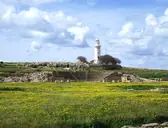 The Agora and OdeonThe Heart of the CityIn the guide
- 05
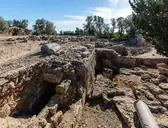 Saranta KolonesThe Castle of Forty ColumnsIn the guide
- 06
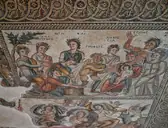 The House of AionThe Contest of BeautyIn the guide
- 07
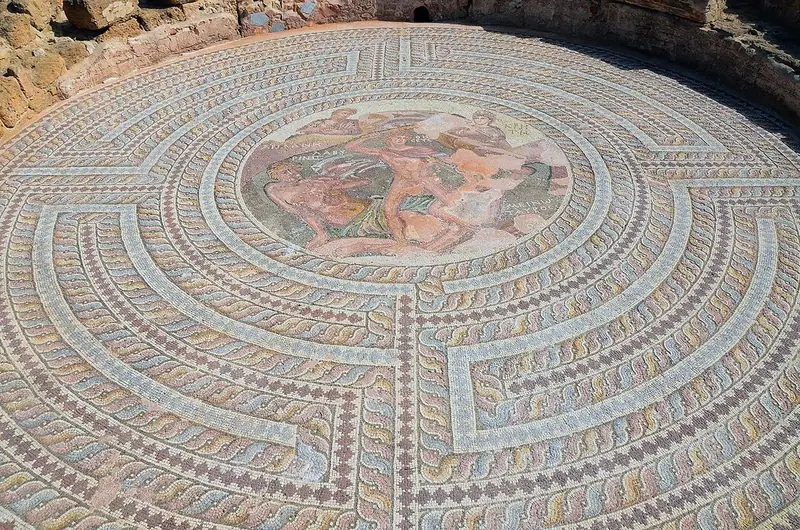
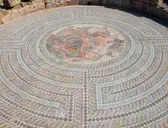 The Villa of TheseusThe LabyrinthIn the guide
- 08
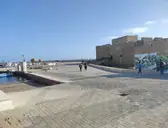 Paphos CastleThe Harbour FortIn the guide
Site map of Paphos Archaeological Park
History of Paphos Archaeological Park
Nea Paphos, New Paphos, was founded in the late fourth century BCE by Nicocles, the last king of Paphos, as a new harbour city to replace the old city at Palaepaphos, now Kouklia. Under the Ptolemies of Egypt, and then the Romans, who took Cyprus in 58 BCE, it became the capital of the island and a rich trading port. Wealthy citizens built great houses with mosaic floors, mostly in the third and fourth centuries CE. Earthquakes in the fourth century damaged the city, and the capital moved to Salamis, but Paphos survived as a Christian bishopric. Excavations began in the 1960s and still continue, carried out by Cypriot and foreign archaeologists, including a long-running Polish mission.
Paphos Archaeological Park guide: questions
How many stops does the Paphos Archaeological Park guide have?
8 stops, in visit order: 1. The House of Dionysus; 2. The First Wine Drinkers; 3. The Lighthouse; 4. The Agora and Odeon; 5. Saranta Kolones; 6. The House of Aion; 7. The Villa of Theseus; 8. Paphos Castle.
Can I do a self-guided tour of Paphos Archaeological Park with this guide?
Yes. The guide is made for a self-guided tour: 8 stops in visit order, each with a photo, a story and a voice, so you can explore Paphos Archaeological Park at your own pace, without joining a group. Download it before you go and it works offline.
How long is each guide?
The 8 stops add up to about 6 minutes of listening in total. You play each stop when you’re ready, so you can go at your own pace.
Does the guide work offline?
Yes, once it’s downloaded. The guide is a single self-contained web page (about 8.3 MB) with the photos, text and audio built in. Download it to your phone before you go (Wi-Fi is best); after that it opens in any modern browser on iPhone or Android, with no app, account or mobile signal needed.
Does it use GPS or need my location?
No. The guide doesn’t use GPS and doesn’t know where you are: you play each stop when you reach it. It works on iPhone and Android in any modern browser, and it’s in English.
What’s included?
One self-contained HTML guide: 8 stops in visit order, each with a photo, text and a voice, plus the story of who built the site.
Who built Paphos Archaeological Park?
Nea Paphos, New Paphos, was founded in the late fourth century BCE by Nicocles, the last king of Paphos, as a new harbour city to replace the old city at Palaepaphos, now Kouklia. Under the Ptolemies of Egypt, and then the Romans, who took Cyprus in 58 BCE, it became the capital of the island and a rich trading port.
Where is Paphos Archaeological Park?
By the harbour of Paphos, on the south-west coast of Cyprus, lie the ruins of Nea Paphos, the ancient capital of the island under the Ptolemies and the Romans.
Is there a free audio guide to Paphos Archaeological Park?
The first stop, The House of Dionysus, is free to read and hear on this page, so you can try the Paphos Archaeological Park audio tour before you buy. The full guide, with all 8 stops, is a one-off purchase: download it once and it’s yours to keep, working offline.
Is the Paphos Archaeological Park guide worth it?
If you’d like to know what you’re looking at, yes. For $10 you get 8 stops in visit order, each with a photo, a short history and a voice you play when you’re ready, plus a site map of the stops, and about 6 minutes of listening in all. It’s short on purpose, so you spend your time looking, not listening. It’s yours to keep, works offline and needs no app. The first stop is free on this page, so you can try it before you buy. If you’d like hours of detail, a guided tour will go deeper.
Audio guide or guided tour?
It depends how you like to visit. This guide lets you explore Paphos Archaeological Park at your own pace, at any time, for a one-off price. A guided tour gives you a live expert you can ask questions, but at fixed times and usually for a higher price. Many people use both: a tour for the big picture, and the guide to read beforehand or to revisit the stops in their own time.
Is this the official Paphos Archaeological Park guide?
No. It’s an independent guide by The Historian Guide, not affiliated with or endorsed by the operator of Paphos Archaeological Park. For tickets and opening hours, check the official site operator before you go.
Does the guide include entry tickets or opening hours?
No. The guide is a digital companion only. Admission to Paphos Archaeological Park is separate, so check the official site operator for current tickets and opening hours before you go.
- Stop 1 · The House of Dionysus: Diego Delso · CC BY-SA 4.0 · Wikimedia Commons · resized
- Stop 2 · The First Wine Drinkers: Pueri · CC BY-SA 3.0 · Wikimedia Commons · resized
- Stop 3 · The Lighthouse: Jules Verne Times Two / www.julesvernex2.com · CC BY-SA 4.0 · Wikimedia Commons · resized
- Stop 4 · The Agora and Odeon: Arjuno3 · CC BY 4.0 · Wikimedia Commons · resized
- Stop 5 · Saranta Kolones: Diego Delso · CC BY-SA 4.0 · Wikimedia Commons · resized
- Stop 6 · The House of Aion: George M. Groutas from Dali, Nicosia, Cyprus · CC BY 2.0 · Wikimedia Commons · resized
- Stop 7 · The Villa of Theseus (also the cover): Carole Raddato from FRANKFURT, Germany · CC BY-SA 2.0 · Wikimedia Commons · resized
- Stop 8 · Paphos Castle: Fry72, Karel Frydrýšek · CC BY-SA 4.0 · Wikimedia Commons · resized


All photographs from Wikimedia Commons under the licences shown.
More guides in Cyprus
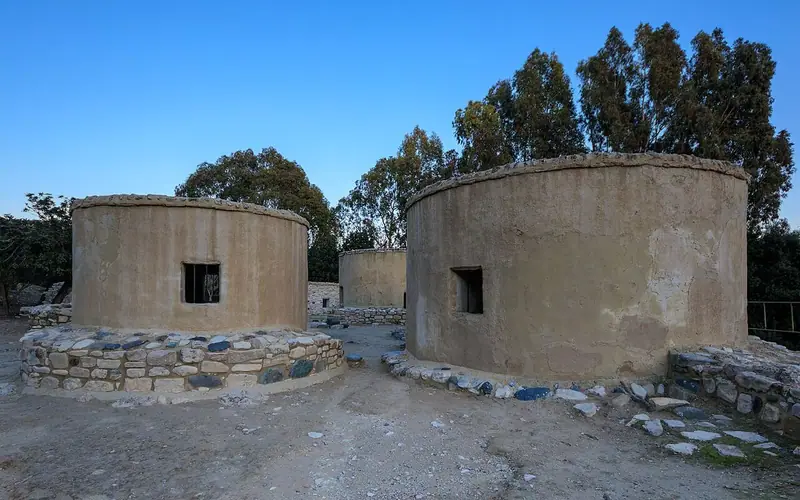 Neolithic7 stops · c. 7000–6000 BCE
Choirokoitia audio guide
Step inside the round stone houses of a Neolithic village founded around nine thousand years ago on a hillside above the Maroni valley.
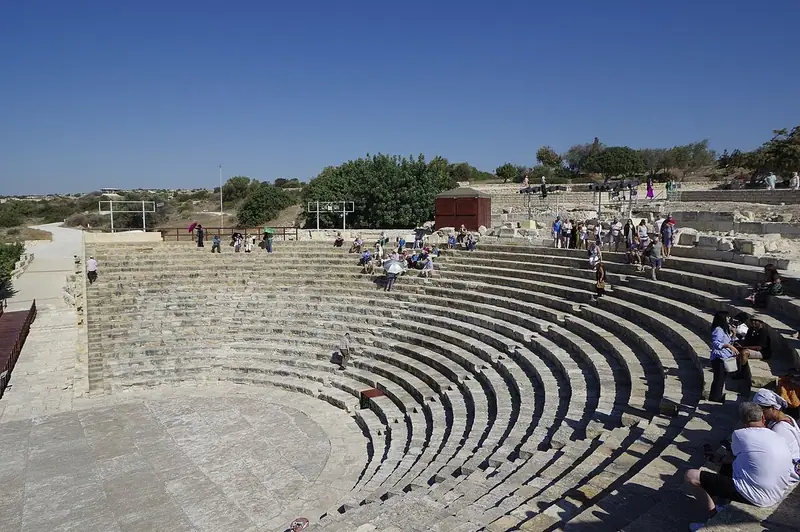 Greek8 stops · 12th century BCE – 7th century CE
Kourion audio guide
Cross a limestone bluff above the sea through Roman houses rich in mosaics to a theatre with one of the finest views in Cyprus.
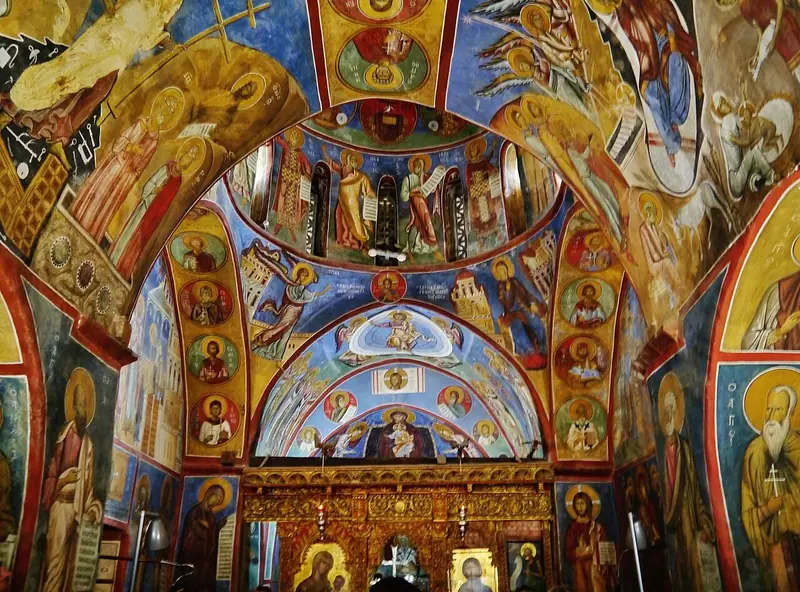 Byzantine9 stops · 11th – 16th century CE
Painted Churches of the Troodos audio guide
Nine of the ten painted churches of the Troodos, from Asinou and St Nicholas of the Roof to Panagia tou Araka and the Holy Cross of Agiasmati, with five centuries of Byzantine wall painting.
 Hellenistic7 stops · late 4th century BCE – 3rd century CE
Tombs of the Kings audio guide
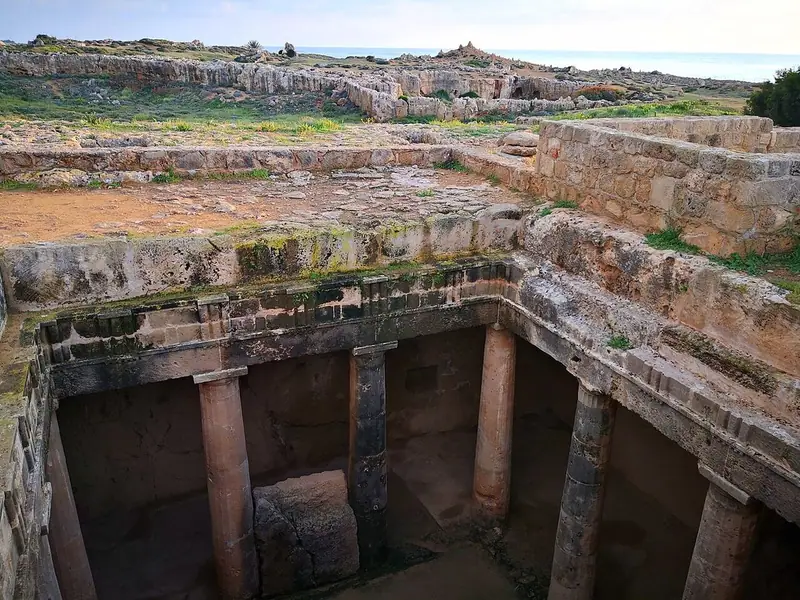
Descend into rock-cut tombs by the sea, some built like houses with courtyards surrounded by columns, where the leading families of Nea Paphos were buried.
Every guide, in every country
Paphos Archaeological Park and every other guide we publish, including future ones. One payment, no subscription.