Before you start
The Eiffel Tower was built as a temporary showpiece for the World’s Fair of 1889. For forty years it was the tallest structure on earth, and it has become the symbol of Paris. Around seven million people climb it each year, more than any other monument where visitors pay to enter. The route begins with the classic view from the Trocadéro, crosses the river to the tower’s feet, and then climbs level by level to the top, where Gustave Eiffel kept a private apartment. Allow three hours, including queues. Book ahead, and bring a jacket, as the top can be cold and windy.
Use it as a self-guided tour of the Eiffel Tower: 8 stops in visit order, each played when you’re ready, at your own pace.
 Free preview · Stop 1
The Trocadéro
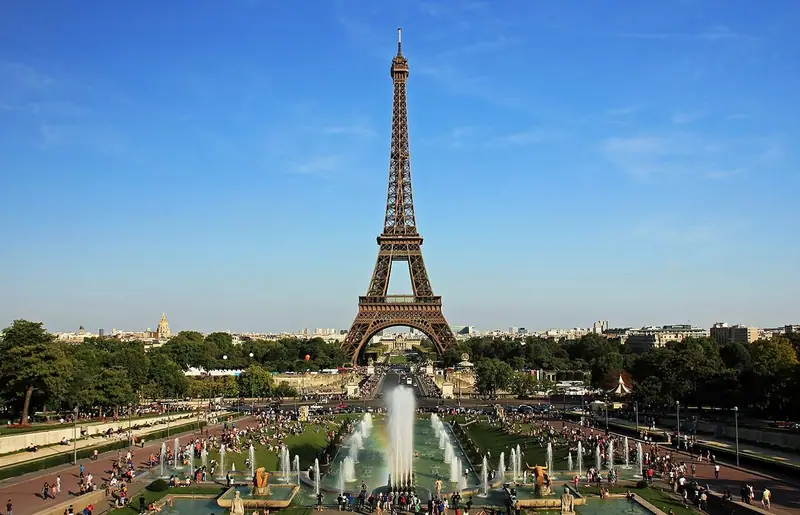
Begin on the terrace of the Palais de Chaillot, at the Trocadéro, across the river from the tower. This is the classic view, with the tower rising beyond the fountains and the Seine. The palace behind you was built for another World’s Fair, in 1937. From here you can see the tower’s shape clearly. It stands about three hundred and thirty metres tall, including its aerials, on a square base a hundred and twenty-five metres wide. Notice the graceful curve of the legs. Eiffel said it followed the forces of the wind, and was designed for strength as much as beauty. When it was finished, it was almost twice as high as the Washington Monument, the previous record holder. It stayed the tallest structure in the world until 1929. Walk down through the gardens and cross the Pont d’Iéna to the tower.
Photo: NonOmnisMoriar · CC BY-SA 3.0 · Wikimedia Commons
What to see at the Eiffel Tower: 8 stops, in visit order
- 01
 The TrocadéroThe view everyone knowsFree preview
- 02
 The Artists' ProtestMonstrous and uselessIn the guide
- 03
 The Feet of the TowerIron, rivets and a bustIn the guide
- 04
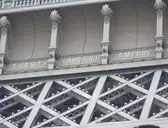 The Seventy-Two NamesA tribute to scienceIn the guide
- 05
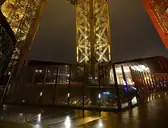 The First FloorRestaurants and a glass floorIn the guide
- 06
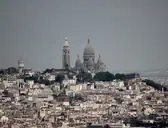 The Second FloorThe best view of ParisIn the guide
- 07
 The SummitEiffel’s private apartmentIn the guide
- 08
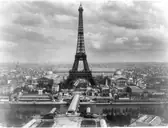 Saved by RadioWars, signals and lightsIn the guide
History of the Eiffel Tower
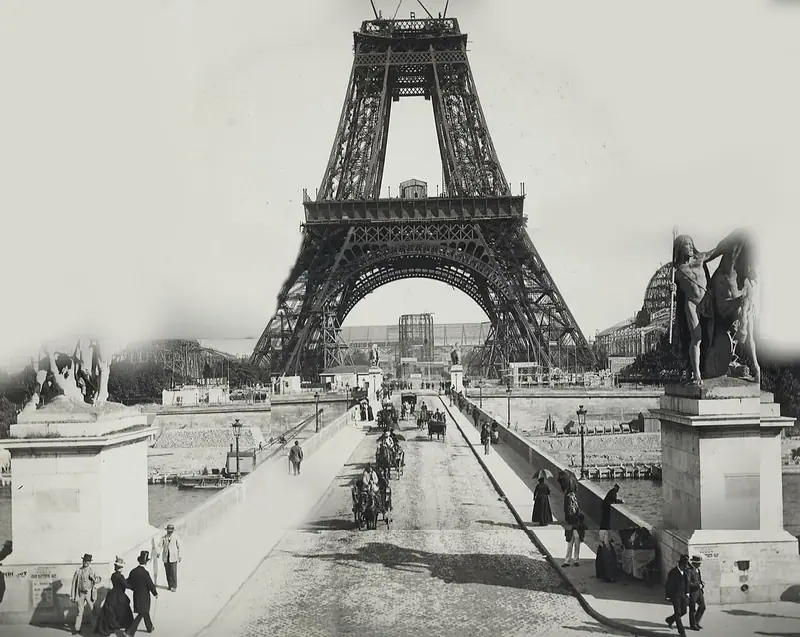
In 1889 France celebrated the hundredth anniversary of the Revolution with a great international exhibition on the Champ de Mars, the old military parade ground. Two engineers in Gustave Eiffel’s company, Maurice Koechlin and Émile Nouguier, sketched a tower three hundred metres high, and the architect Stephen Sauvestre refined the design. Eiffel was already famous for iron bridges and viaducts, and he had built the internal frame of the Statue of Liberty. He bought the rights to the design and won the contest. Work began in January 1887 and the tower was finished in just over two years. It was meant to stand for only twenty years.
The full history continues in the guide.
The Eiffel Tower guide: questions
How many stops does the Eiffel Tower guide have?
8 stops, in visit order: 1. The Trocadéro; 2. The Artists' Protest; 3. The Feet of the Tower; 4. The Seventy-Two Names; 5. The First Floor; 6. The Second Floor; 7. The Summit; 8. Saved by Radio.
Can I do a self-guided tour of the Eiffel Tower with this guide?
Yes. The guide is made for a self-guided tour: 8 stops in visit order, each with a photo, a story and a voice, so you can explore the Eiffel Tower at your own pace, without joining a group. Download it before you go and it works offline.
How long is each guide?
The 8 stops add up to about 6 minutes of listening in total. You play each stop when you’re ready, so you can go at your own pace.
Does the guide work offline?
Yes, once it’s downloaded. The guide is a single self-contained web page (about 6.8 MB) with the photos, text and audio built in. Download it to your phone before you go (Wi-Fi is best); after that it opens in any modern browser on iPhone or Android, with no app, account or mobile signal needed.
Does it use GPS or need my location?
No. The guide doesn’t use GPS and doesn’t know where you are: you play each stop when you reach it. It works on iPhone and Android in any modern browser, and it’s in English.
What’s included?
One self-contained HTML guide: 8 stops in visit order, each with a photo, text and a voice, plus the story of who built the site.
Who built the Eiffel Tower?
In 1889 France celebrated the hundredth anniversary of the Revolution with a great international exhibition on the Champ de Mars, the old military parade ground. Two engineers in Gustave Eiffel’s company, Maurice Koechlin and Émile Nouguier, sketched a tower three hundred metres high, and the architect Stephen Sauvestre refined the design.
Is there a free audio guide to the Eiffel Tower?
The first stop, The Trocadéro, is free to read and hear on this page, so you can try the Eiffel Tower audio tour before you buy. The full guide, with all 8 stops, is a one-off purchase: download it once and it’s yours to keep, working offline.
Is the Eiffel Tower guide worth it?
If you’d like to know what you’re looking at, yes. For $10 you get 8 stops in visit order, each with a photo, a short history and a voice you play when you’re ready, about 6 minutes of listening in all. It’s short on purpose, so you spend your time looking, not listening. It’s yours to keep, works offline and needs no app. The first stop is free on this page, so you can try it before you buy. If you’d like hours of detail, a guided tour will go deeper.
Audio guide or guided tour?
It depends how you like to visit. This guide lets you explore the Eiffel Tower at your own pace, at any time, for a one-off price. A guided tour gives you a live expert you can ask questions, but at fixed times and usually for a higher price. Many people use both: a tour for the big picture, and the guide to read beforehand or to revisit the stops in their own time.
Is this the official Eiffel Tower guide?
No. It’s an independent guide by The Historian Guide, not affiliated with or endorsed by the operator of the Eiffel Tower. For tickets and opening hours, check the official site operator before you go.
Does the guide include entry tickets or opening hours?
No. The guide is a digital companion only. Admission to the Eiffel Tower is separate, so check the official site operator for current tickets and opening hours before you go.
- Stop 1 · The Trocadéro: NonOmnisMoriar · CC BY-SA 3.0 · Wikimedia Commons · resized
- Stop 2 · The Artists' Protest (also the cover): Unknown photographer · Public domain · Wikimedia Commons · resized
- Stop 3 · The Feet of the Tower: DeveshT · CC0 · Wikimedia Commons · resized
- Stop 4 · The Seventy-Two Names: Fernando Losada Rodríguez · CC BY-SA 4.0 · Wikimedia Commons · resized
- Stop 5 · The First Floor: Jorge Láscar from Melbourne, Australia · CC BY 2.0 · Wikimedia Commons · resized
- Stop 6 · The Second Floor: Skytouch · CC BY-SA 3.0 · Wikimedia Commons · resized
- Stop 7 · The Summit: Sayz · CC BY-SA 3.0 · Wikimedia Commons · resized
- Stop 8 · Saved by Radio: Neurdein · Public domain · Wikimedia Commons · resized


All photographs from Wikimedia Commons under the licences shown.
More guides in France
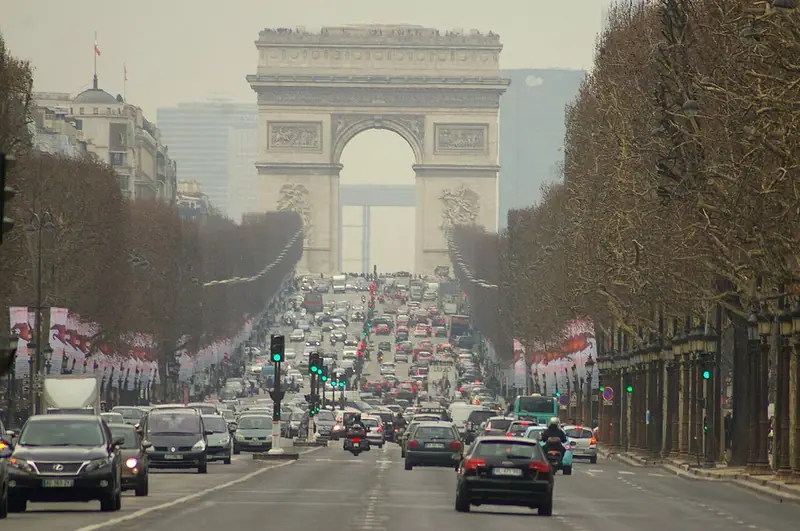 Napoleonic France8 stops · Napoleonic era
Arc de Triomphe audio guide
Cross beneath the traffic to Napoleon’s arch, read its carved victories and the names of its generals, then climb to the rooftop terrace.
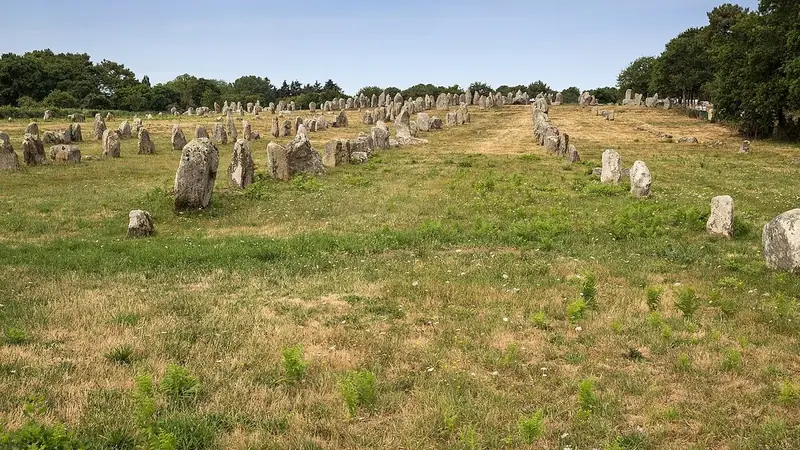 Neolithic10 stops · c. 5000 – 2300 BCE (megalith building)
Carnac Megaliths audio guide
Thousands of standing stones in rows, giant mounds and decorated tombs: the alignments of Carnac, the broken menhir of Locmariaquer and the carved cairn of Gavrinis.
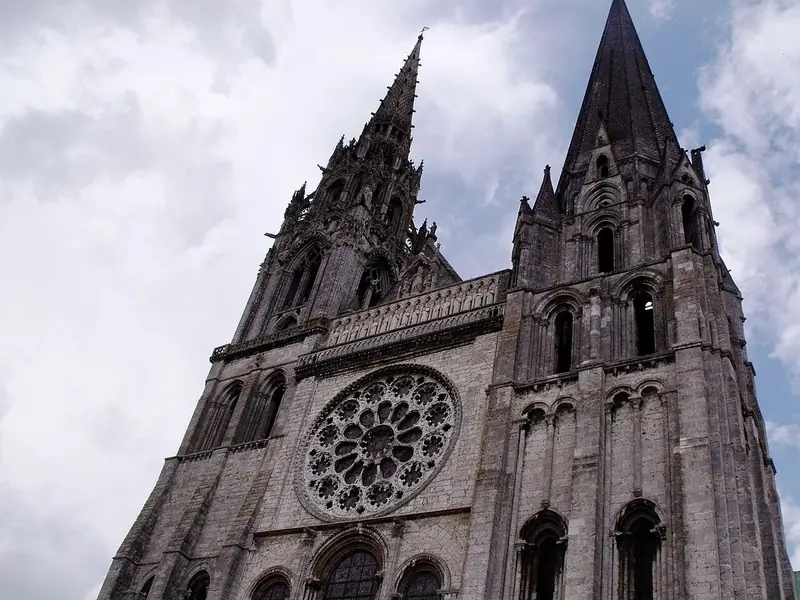 Gothic8 stops · 12th–13th century CE
Chartres Cathedral audio guide
Step through the Royal Portal into a Gothic cathedral rebuilt after the fire of 1194, with its labyrinth and the deep Chartres blue of its glass.
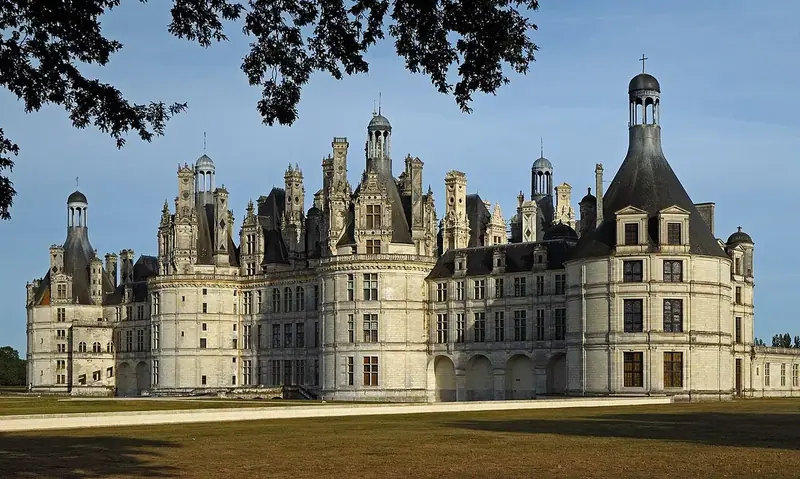 Renaissance8 stops · from 1519 CE
Château de Chambord audio guide
Climb the double-helix staircase of François I’s great hunting château to roof terraces crowded with chimneys and turrets, above a vast walled forest park.
 Renaissance8 stops · 1513–1521 CE
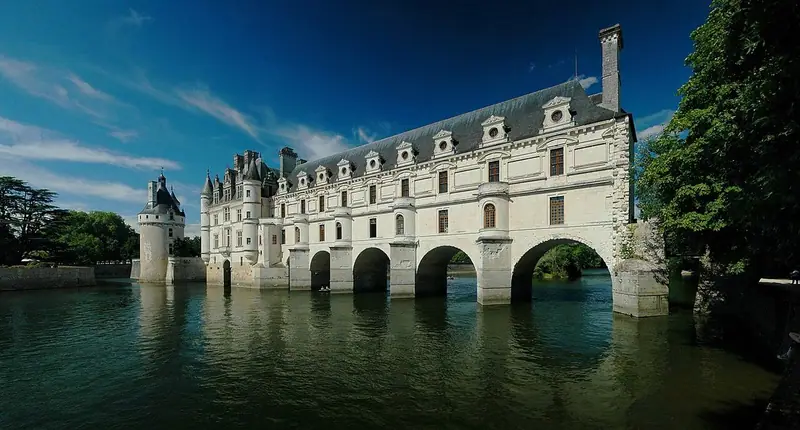
Château de Chenonceau audio guide
Cross the River Cher on the long gallery of the château built under Katherine Briçonnet’s eye and later home to Diane de Poitiers.
 Renaissance8 stops · from 1528 CE
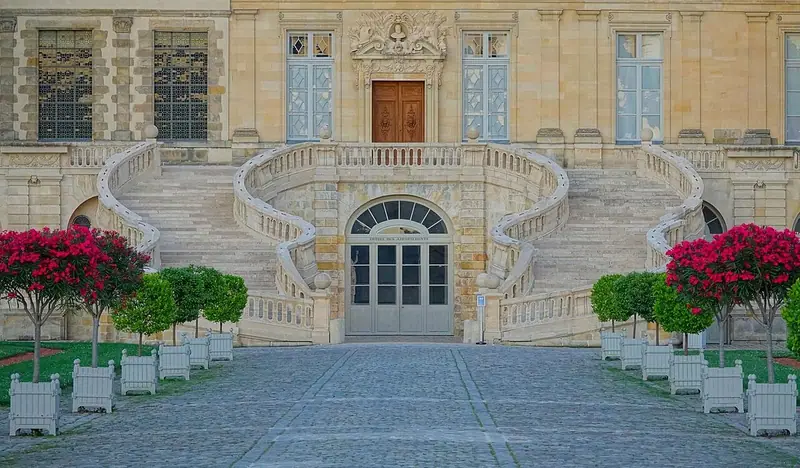
Château de Fontainebleau audio guide
From the Courtyard of Farewells through François I’s Renaissance gallery to the throne room and Napoleon’s apartments.
Every guide, in every country
The Eiffel Tower and every other guide we publish, including future ones. One payment, no subscription.