Before you start
The Musée d’Orsay holds the world’s greatest collection of Impressionist and Post-Impressionist art, in a grand railway station on the banks of the Seine. It covers French art from 1848 to 1914, the years when painting broke free of the old rules. The guide opens outside by the river, enters the great hall of the old station, and visits the paintings that shocked Paris, by Courbet and Manet, then Monet, Renoir and Van Gogh. It ends with Rodin’s sculpture. Allow three hours.
Use it as a self-guided tour of the Musée d’Orsay: 8 stops in visit order, each played when you’re ready, at your own pace.
 Free preview · Stop 1
The Riverside
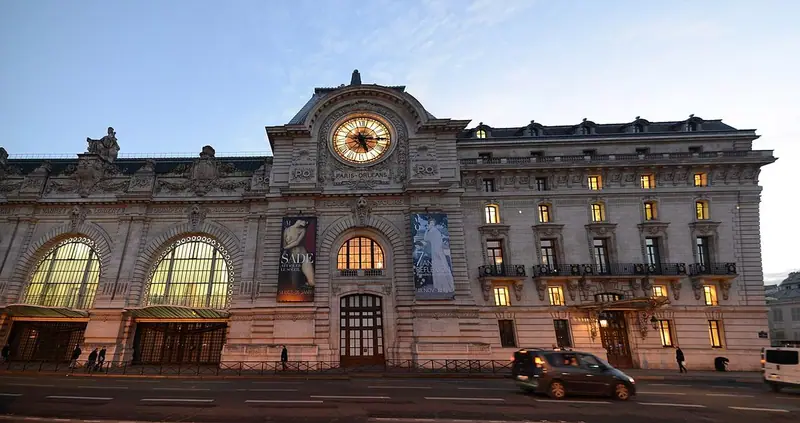
Begin on the forecourt beside the museum, facing its long stone front. From the Seine side, the building looks like a palace, not a station. That was the point. It stood opposite the Louvre and the Tuileries, and the railway company wanted it to fit in. Look up at the two great clocks on the façade, and at the large stone statues that represent cities served by the railway. In the square, look for the six bronze figures of the continents, made for an earlier World’s Fair. During the Second World War the station handled parcels for prisoners of war. In 1945 it welcomed French prisoners coming home, and a plaque on the riverside wall remembers them. Now join the queue at the entrance.
Photo: Jorge Láscar from Melbourne, Australia · CC BY 2.0 · Wikimedia Commons
What to see at the Musée d’Orsay: 8 stops, in visit order
- 01
 The RiversideA palace for trainsFree preview
- 02
 The Great HallUnder the station roofIn the guide
- 03
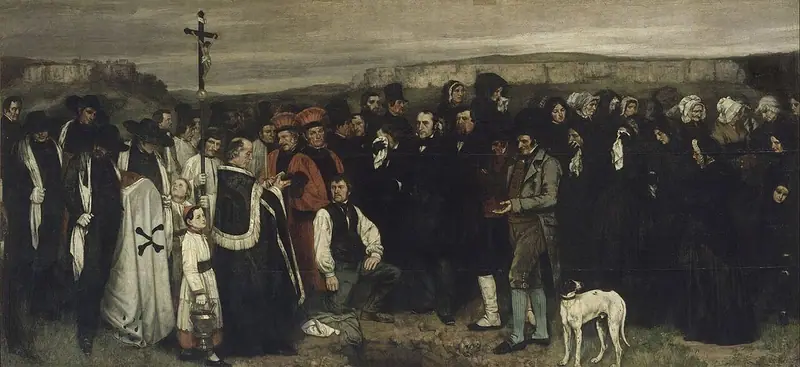
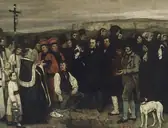 CourbetA funeral that caused a stormIn the guide
- 04
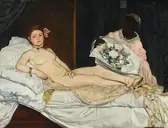 ManetThe painting that stared backIn the guide
- 05
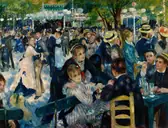 The ImpressionistsLight, colour and modern lifeIn the guide
- 06
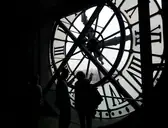 The Great ClockLooking out across ParisIn the guide
- 07
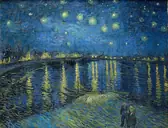 Van Gogh and GauguinAfter ImpressionismIn the guide
- 08
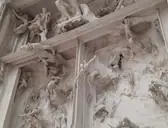 RodinThe Gates of HellIn the guide
History of the Musée d’Orsay
In 1871, during the Paris Commune, the Palais d’Orsay, a government building on this site, was burned. Its ruins stood for almost thirty years, until the Paris to Orléans railway company built a new terminus here, in time for the World’s Fair of 1900. The architect Victor Laloux hid its iron and glass behind a stone palace, with a hotel attached. By 1939 its platforms were too short for modern trains, and the main lines moved away. The empty station was nearly demolished, but was saved and turned into a museum. The Italian architect Gae Aulenti designed the interior, and President François Mitterrand opened the Musée d’Orsay in December 1986.
The Musée d’Orsay guide: questions
How many stops does the Musée d’Orsay guide have?
8 stops, in visit order: 1. The Riverside; 2. The Great Hall; 3. Courbet; 4. Manet; 5. The Impressionists; 6. The Great Clock; 7. Van Gogh and Gauguin; 8. Rodin.
Can I do a self-guided tour of the Musée d’Orsay with this guide?
Yes. The guide is made for a self-guided tour: 8 stops in visit order, each with a photo, a story and a voice, so you can explore the Musée d’Orsay at your own pace, without joining a group. Download it before you go and it works offline.
How long is each guide?
The 8 stops add up to about 5 minutes of listening in total. You play each stop when you’re ready, so you can go at your own pace.
Does the guide work offline?
Yes, once it’s downloaded. The guide is a single self-contained web page (about 6.9 MB) with the photos, text and audio built in. Download it to your phone before you go (Wi-Fi is best); after that it opens in any modern browser on iPhone or Android, with no app, account or mobile signal needed.
Does it use GPS or need my location?
No. The guide doesn’t use GPS and doesn’t know where you are: you play each stop when you reach it. It works on iPhone and Android in any modern browser, and it’s in English.
What’s included?
One self-contained HTML guide: 8 stops in visit order, each with a photo, text and a voice, plus the story of who built the site.
Who built the Musée d’Orsay?
In 1871, during the Paris Commune, the Palais d’Orsay, a government building on this site, was burned. Its ruins stood for almost thirty years, until the Paris to Orléans railway company built a new terminus here, in time for the World’s Fair of 1900.
Is there a free audio guide to the Musée d’Orsay?
The first stop, The Riverside, is free to read and hear on this page, so you can try the Musée d’Orsay audio tour before you buy. The full guide, with all 8 stops, is a one-off purchase: download it once and it’s yours to keep, working offline.
Is the Musée d’Orsay guide worth it?
If you’d like to know what you’re looking at, yes. For $10 you get 8 stops in visit order, each with a photo, a short history and a voice you play when you’re ready, about 5 minutes of listening in all. It’s short on purpose, so you spend your time looking, not listening. It’s yours to keep, works offline and needs no app. The first stop is free on this page, so you can try it before you buy. If you’d like hours of detail, a guided tour will go deeper.
Audio guide or guided tour?
It depends how you like to visit. This guide lets you explore the Musée d’Orsay at your own pace, at any time, for a one-off price. A guided tour gives you a live expert you can ask questions, but at fixed times and usually for a higher price. Many people use both: a tour for the big picture, and the guide to read beforehand or to revisit the stops in their own time.
Is this the official Musée d’Orsay guide?
No. It’s an independent guide by The Historian Guide, not affiliated with or endorsed by the operator of the Musée d’Orsay. For tickets and opening hours, check the official site operator before you go.
Does the guide include entry tickets or opening hours?
No. The guide is a digital companion only. Admission to the Musée d’Orsay is separate, so check the official site operator for current tickets and opening hours before you go.
- Stop 1 · The Riverside: Jorge Láscar from Melbourne, Australia · CC BY 2.0 · Wikimedia Commons · resized
- Stop 2 · The Great Hall: Daniel Lu (User:dllu) · CC BY-SA 4.0 · Wikimedia Commons · resized
- Stop 3 · Courbet (also the cover): Gustave Courbet · Public domain · Wikimedia Commons · resized
- Stop 4 · Manet: Édouard Manet · Public domain · Wikimedia Commons · resized
- Stop 5 · The Impressionists: Pierre-Auguste Renoir · Public domain · Wikimedia Commons · resized
- Stop 6 · The Great Clock: Oliver H · CC BY-SA 3.0 · Wikimedia Commons · resized
- Stop 7 · Van Gogh and Gauguin: Vincent van Gogh · Public domain · Wikimedia Commons · resized
- Stop 8 · Rodin: Auguste Rodin (1840 - 1917) · Public domain · Wikimedia Commons · resized


All photographs from Wikimedia Commons under the licences shown.
More guides in France
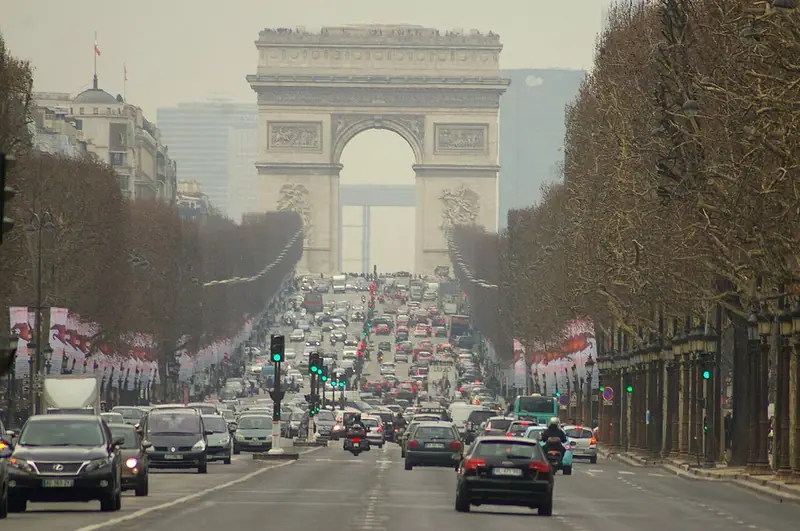 Napoleonic France8 stops · Napoleonic era
Arc de Triomphe audio guide
Cross beneath the traffic to Napoleon’s arch, read its carved victories and the names of its generals, then climb to the rooftop terrace.
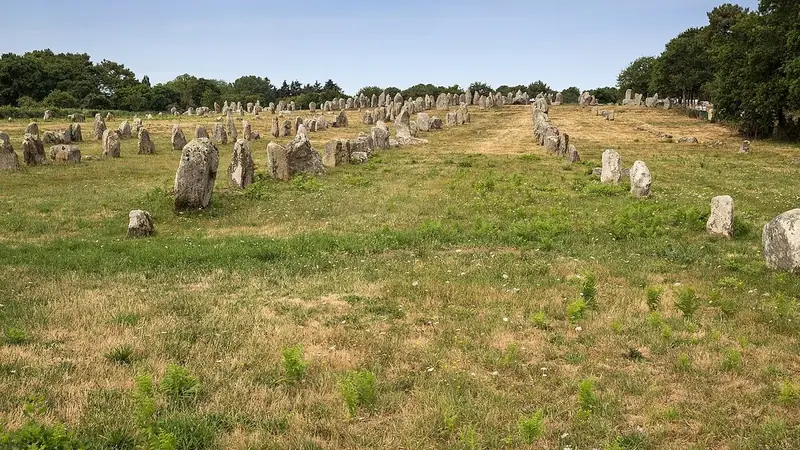 Neolithic10 stops · c. 5000 – 2300 BCE (megalith building)
Carnac Megaliths audio guide
Thousands of standing stones in rows, giant mounds and decorated tombs: the alignments of Carnac, the broken menhir of Locmariaquer and the carved cairn of Gavrinis.
 Gothic8 stops · 12th–13th century CE
Chartres Cathedral audio guide
Step through the Royal Portal into a Gothic cathedral rebuilt after the fire of 1194, with its labyrinth and the deep Chartres blue of its glass.
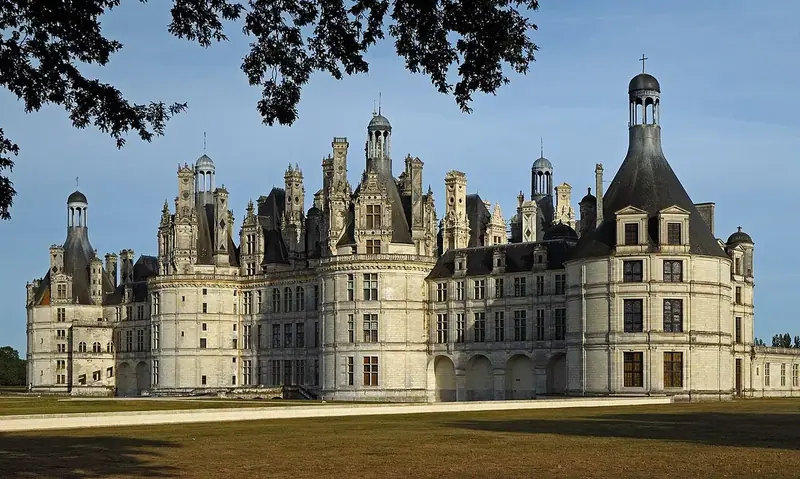 Renaissance8 stops · from 1519 CE
Château de Chambord audio guide
Climb the double-helix staircase of François I’s great hunting château to roof terraces crowded with chimneys and turrets, above a vast walled forest park.
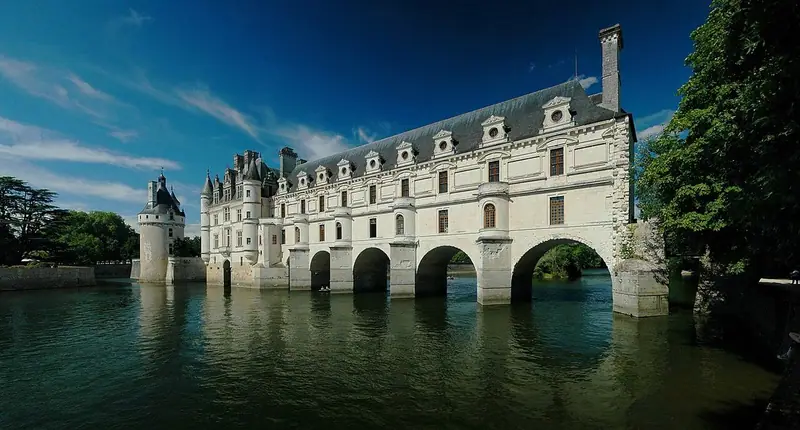 Renaissance8 stops · 1513–1521 CE
Château de Chenonceau audio guide
Cross the River Cher on the long gallery of the château built under Katherine Briçonnet’s eye and later home to Diane de Poitiers.
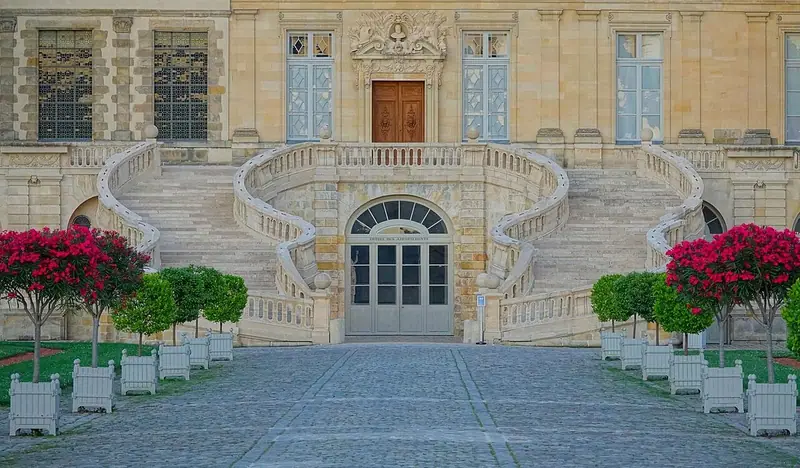 Renaissance8 stops · from 1528 CE
Château de Fontainebleau audio guide
From the Courtyard of Farewells through François I’s Renaissance gallery to the throne room and Napoleon’s apartments.
Every guide, in every country
The Musée d’Orsay and every other guide we publish, including future ones. One payment, no subscription.