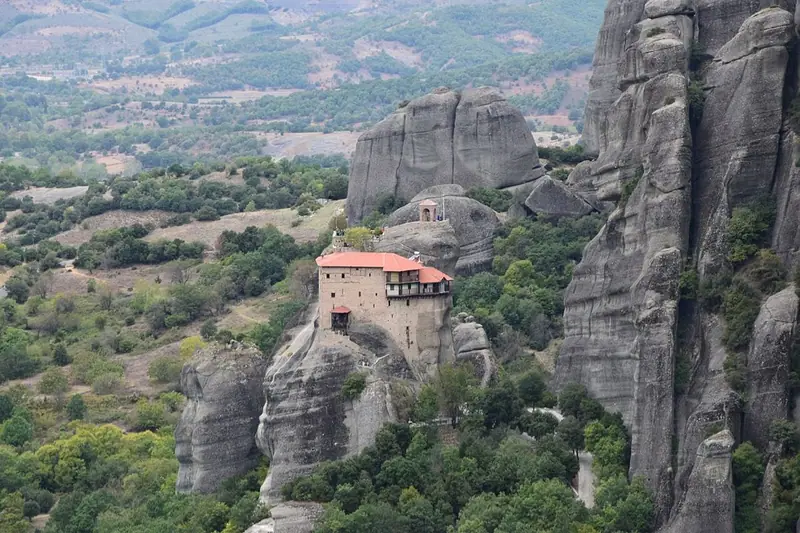
Before you start
Meteora rises above the town of Kalambaka and the village of Kastraki, on the north-western edge of the Thessalian plain in central Greece. Here huge pillars of sandstone and conglomerate tower hundreds of metres into the air, and on their summits Orthodox monks built monasteries that seem to hang in the sky; the name means ‘suspended in the air’. Meteora has been a UNESCO World Heritage Site since 1988, listed for both its culture and its natural beauty. Six monasteries are still active, and this guide visits them in the order the road reaches them from Kastraki: St Nicholas Anapafsas, the Great Meteoron, Varlaam, Rousanou, the Holy Trinity and, last, St Stephen. Distances between them are short by car, longer on foot, and old footpaths link several of them.
Use it as a self-guided tour of Meteora: 6 stops in visit order, each played when you’re ready, at your own pace.
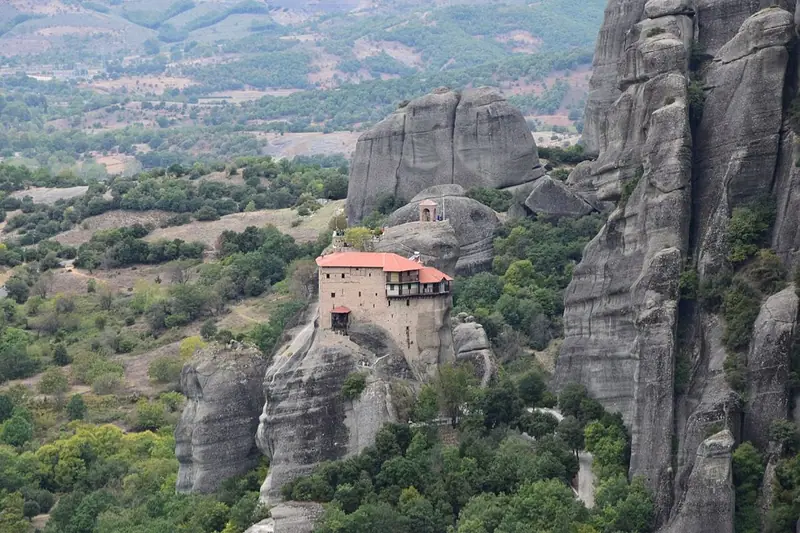 Free preview · Stop 1
St Nicholas Anapafsas
Begin just above Kastraki at the small monastery of St Nicholas Anapafsas, perched on a narrow rock and reached by a steep stair. Because the summit is so cramped, the monks built upwards rather than outwards, stacking the buildings in several storeys. Its treasure is the little church, or katholikon, painted in 1527 by Theophanes Strelitzas, known as Theophanes the Cretan, one of the great artists of the post-Byzantine age. Look for the vivid scenes of the saints, and for Adam naming the animals, a rare and charming subject. The name Anapafsas may come from a founder or simply mean ‘rest’, and climbing up you will understand why. From the terrace there is a fine first view across the valley to the other rocks you are about to visit.
Photo: Patryk Morawiec · CC BY-SA 4.0 · Wikimedia Commons
What to see at Meteora: 6 stops, in visit order
- 01
 St Nicholas AnapafsasÁgios Nikólaos AnapavsásFree preview
- 02
 Great MeteoronMegálo MetéoroIn the guide
- 03
 VarlaamMoní VarlaámIn the guide
- 04
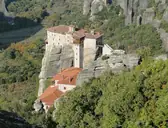 RousanouMoní RousánouIn the guide
- 05
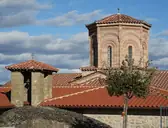 Holy TrinityAgía TriádaIn the guide
- 06
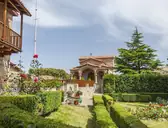 St StephenÁgios StéfanosIn the guide
Site map of Meteora
History of Meteora
The monasteries of Meteora were built by Orthodox Christian monks of the Byzantine world, the eastern Roman Empire that grew out of Constantinople’s foundation in 330 CE and lasted until the city fell to the Ottomans in 1453. Hermits were already living in caves among these rocks by the eleventh century, but the first great community came in the fourteenth, when a monk from Mount Athos named Athanasios founded the Great Meteoron, around 1340, at a time of civil war and invasion. Thessaly fell under Serbian rule and then, from 1393, under the Ottomans, yet the monasteries kept growing, and by the sixteenth century there were more than twenty. Their golden age passed, many were abandoned, and steps cut in the 1920s finally replaced ladders and nets. The story is not over: monks and nuns still live and pray here, and Greek Orthodox Christians continue the tradition today.
Meteora guide: questions
How many stops does the Meteora guide have?
6 stops, in visit order: 1. St Nicholas Anapafsas; 2. Great Meteoron; 3. Varlaam; 4. Rousanou; 5. Holy Trinity; 6. St Stephen.
Can I do a self-guided tour of Meteora with this guide?
Yes. The guide is made for a self-guided tour: 6 stops in visit order, each with a photo, a story and a voice, so you can explore Meteora at your own pace, without joining a group. Download it before you go and it works offline.
How long is each guide?
The 6 stops add up to about 6 minutes of listening in total. You play each stop when you’re ready, so you can go at your own pace.
Does the guide work offline?
Yes, once it’s downloaded. The guide is a single self-contained web page (about 7.0 MB) with the photos, text and audio built in. Download it to your phone before you go (Wi-Fi is best); after that it opens in any modern browser on iPhone or Android, with no app, account or mobile signal needed.
Does it use GPS or need my location?
No. The guide doesn’t use GPS and doesn’t know where you are: you play each stop when you reach it. It works on iPhone and Android in any modern browser, and it’s in English.
What’s included?
One self-contained HTML guide: 6 stops in visit order, each with a photo, text and a voice, plus the story of who built the site.
Who built Meteora?
The monasteries of Meteora were built by Orthodox Christian monks of the Byzantine world, the eastern Roman Empire that grew out of Constantinople’s foundation in 330 CE and lasted until the city fell to the Ottomans in 1453. Hermits were already living in caves among these rocks by the eleventh century, but the first great community came in the fourteenth, when a monk from Mount Athos named Athanasios founded the Great Meteoron, around 1340, at a time of civil war and invasion.
Where is Meteora?
Meteora rises above the town of Kalambaka and the village of Kastraki, on the north-western edge of the Thessalian plain in central Greece.
Is there a free audio guide to Meteora?
The first stop, St Nicholas Anapafsas, is free to read and hear on this page, so you can try the Meteora audio tour before you buy. The full guide, with all 6 stops, is a one-off purchase: download it once and it’s yours to keep, working offline.
Is the Meteora guide worth it?
If you’d like to know what you’re looking at, yes. For $10 you get 6 stops in visit order, each with a photo, a short history and a voice you play when you’re ready, plus a site map of the stops, and about 6 minutes of listening in all. It’s short on purpose, so you spend your time looking, not listening. It’s yours to keep, works offline and needs no app. The first stop is free on this page, so you can try it before you buy. If you’d like hours of detail, a guided tour will go deeper.
Audio guide or guided tour?
It depends how you like to visit. This guide lets you explore Meteora at your own pace, at any time, for a one-off price. A guided tour gives you a live expert you can ask questions, but at fixed times and usually for a higher price. Many people use both: a tour for the big picture, and the guide to read beforehand or to revisit the stops in their own time.
Is this the official Meteora guide?
No. It’s an independent guide by The Historian Guide, not affiliated with or endorsed by the operator of Meteora. For tickets and opening hours, check the official site operator before you go.
Does the guide include entry tickets or opening hours?
No. The guide is a digital companion only. Admission to Meteora is separate, so check the official site operator for current tickets and opening hours before you go.
- Stop 1 · St Nicholas Anapafsas (also the cover): Patryk Morawiec · CC BY-SA 4.0 · Wikimedia Commons · resized
- Stop 2 · Great Meteoron: DimitrisP67 · CC BY-SA 4.0 · Wikimedia Commons · resized
- Stop 3 · Varlaam: Giles Laurent · CC BY-SA 4.0 · Wikimedia Commons · resized
- Stop 4 · Rousanou: Bernard Gagnon · CC BY-SA 4.0 · Wikimedia Commons · resized
- Stop 5 · Holy Trinity: Sadopaul · CC BY-SA 4.0 · Wikimedia Commons · resized
- Stop 6 · St Stephen: Ava Babili · CC BY-SA 4.0 · Wikimedia Commons · resized


All photographs from Wikimedia Commons under the licences shown.
More guides in Greece
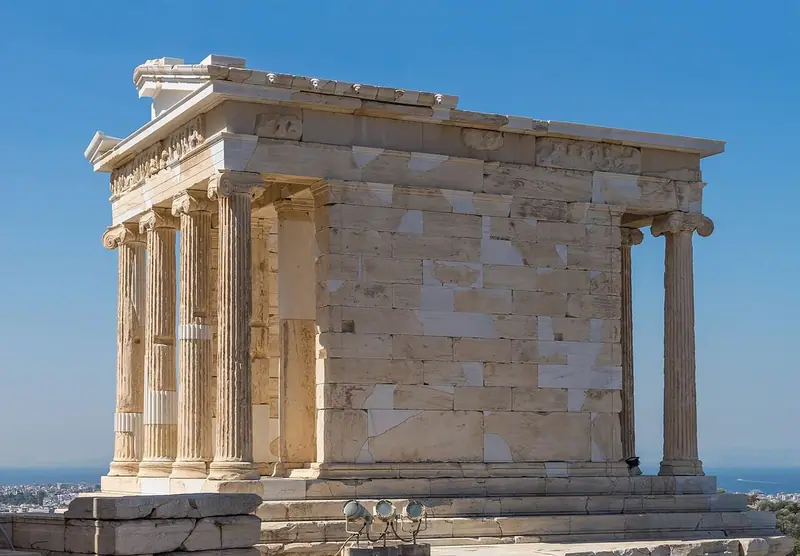 Greek7 stops · 5th century BCE
Acropolis of Athens audio guide
Climb through the Propylaia to the Parthenon and the Erechtheion, on the rock that has crowned Athens for three thousand years.
 Minoan7 stops · c. 2000–1600 BCE
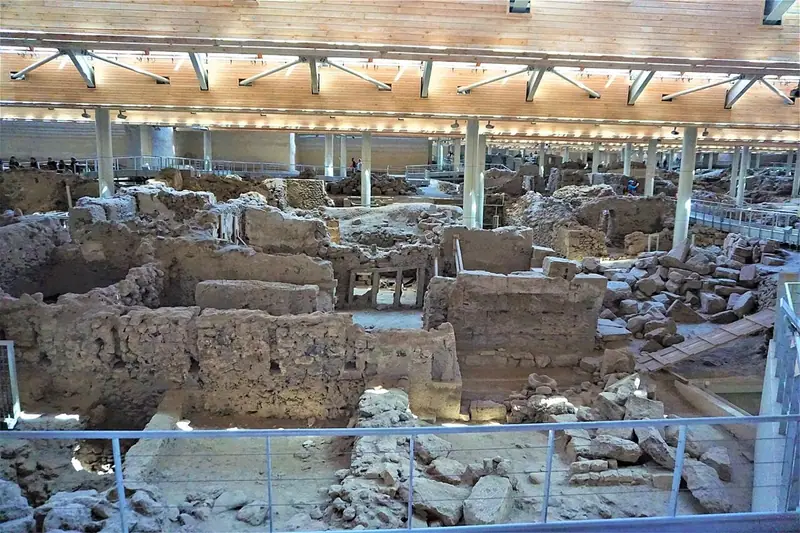
Akrotiri audio guide
The streets of a Bronze Age town buried by Santorini’s volcano, preserved beneath a great modern roof.
 Greek7 stops · 6th century BCE – 2nd century CE
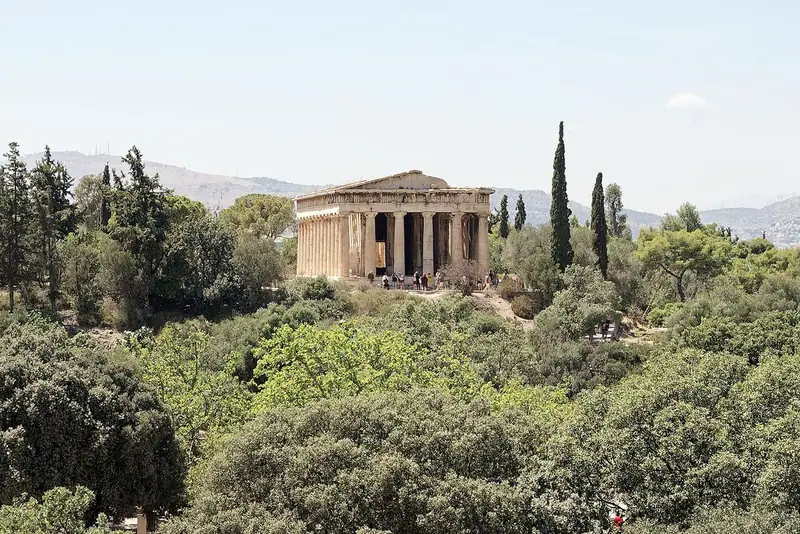
Ancient Agora of Athens audio guide
The market square where Athenians shopped, voted and argued, overlooked by the Temple of Hephaestus.
 Roman7 stops · 6th century BCE – 4th century CE
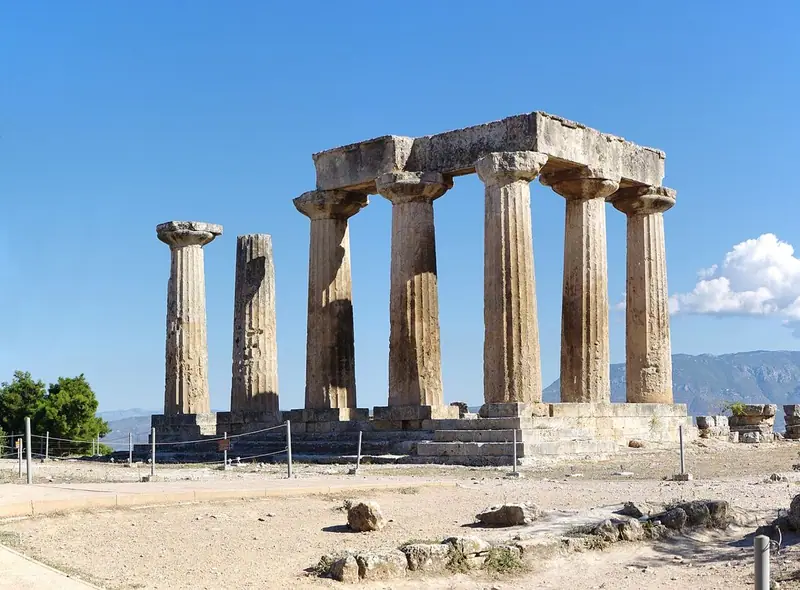
Ancient Corinth audio guide
The Temple of Apollo, the Roman forum and the Bema, with the great rock of Acrocorinth above.
 Greek7 stops · c. 800 BCE – 1st century BCE
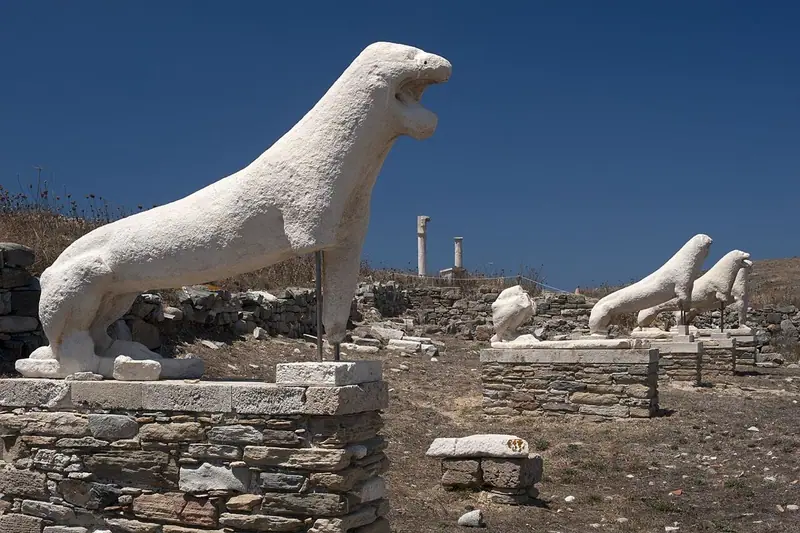
Delos audio guide
The sacred island of Apollo: the Terrace of the Lions, mosaic-floored houses and the climb up Mount Kynthos.
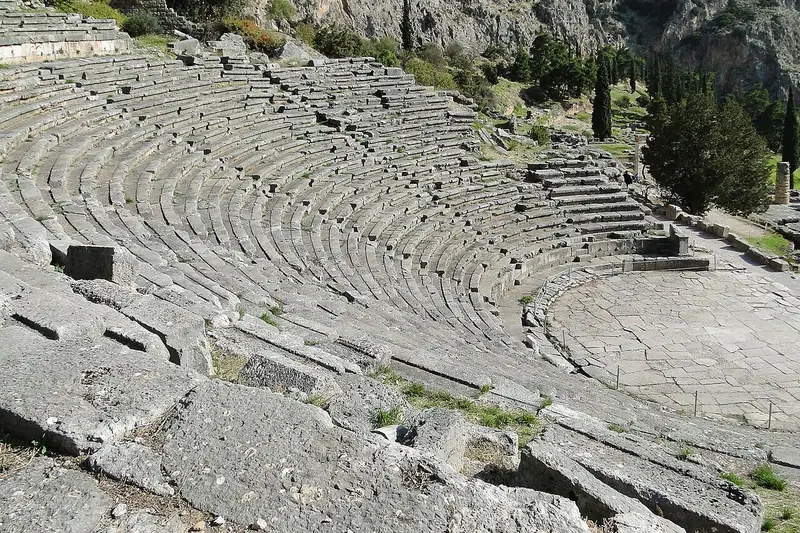 Greek8 stops · 8th century BCE – 4th century CE
Delphi audio guide
Up the Sacred Way past the treasuries to Apollo’s temple, the theatre and the stadium, high on the slopes of Parnassus.
Every guide, in every country
Meteora and every other guide we publish, including future ones. One payment, no subscription.