Before you start
Ancient Olympia lies in a green, wooded valley in Elis, in the western Peloponnese, where the Kladeos stream meets the river Alpheios beneath the pine-covered Hill of Kronos. It was the sanctuary of Zeus and the home of the Olympic Games, held here every four years for more than a thousand years, and the Olympic flame is still lit here today. Olympia has been a UNESCO World Heritage Site since 1989 and is cared for by the Hellenic Ministry of Culture. This guide follows the natural visiting order from the entrance: through the gymnasium and palaestra, past the Workshop of Pheidias, into the sacred grove, the Altis, with the Temple of Zeus, the Philippeion and the Temple of Hera, along the treasuries to the stadium, and finally to the Archaeological Museum.
Use it as a self-guided tour of Olympia: 8 stops in visit order, each played when you’re ready, at your own pace.
 Free preview · Stop 1
Gymnasium and Palaestra
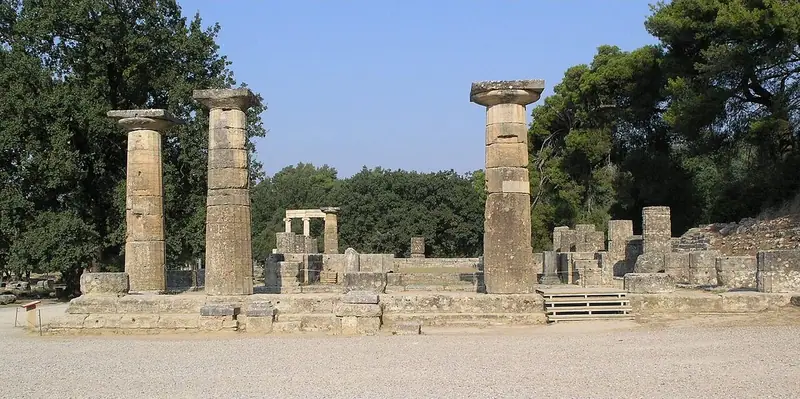
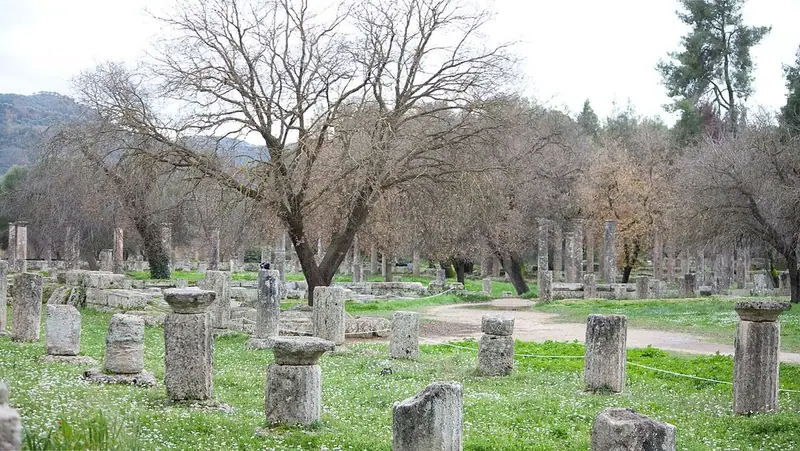
Your walk begins where the athletes did, in the training grounds just inside the entrance. On the right lie the remains of the gymnasium, a huge open courtyard of the second century BCE, surrounded by colonnades, where runners and javelin and discus throwers practised; one of its covered tracks was the length of the stadium. Next to it is the palaestra, the wrestling school, built in the third century BCE. Its square courtyard, now lined with many re-erected Doric columns, was used for wrestling, boxing and jumping, while the rooms around it served as changing rooms, oil stores for anointing the body and lecture halls. Athletes had to train for a month before the Games under the eyes of the judges, at nearby Elis. Walk among the columns and imagine the sounds of sweating, oiled wrestlers at work.
Photo: Wknight94 · CC BY-SA 3.0 · Wikimedia Commons
What to see at Olympia: 8 stops, in visit order
- 01
 Gymnasium and PalaestraGymnásio kai PalaístraFree preview
- 02
 Workshop of PheidiasErgastírio tou FeidíaIn the guide
- 03
 Temple of ZeusNaós tou DiósIn the guide
- 04
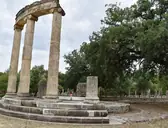 PhilippeionFilíppeioIn the guide
- 05
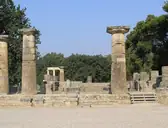 Temple of HeraIraíoIn the guide
- 06
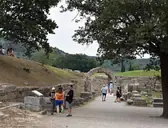 Treasuries and the ZanesThisavroí kai ZánesIn the guide
- 07
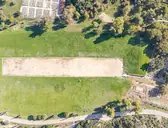 StadiumStádioIn the guide
- 08
 Archaeological MuseumArchaiologikó MouseíoIn the guide
Site map of Olympia
History of Olympia
Olympia was built by the ancient Greeks. People lived here in the Early Bronze Age, and the area was settled in Mycenaean times, a civilisation of about 1600 to 1100 BCE, but the sanctuary of Zeus took shape in the early Archaic period: tradition dates the first Games to 776 BCE. Through the Archaic and Classical eras, when the great Temple of Zeus was raised, and on through the Hellenistic age, Greek cities and rulers crowded the sacred grove with temples, treasuries and statues, until the Roman conquest of Greece in 146 BCE. The Romans kept the Games going and added baths and guest houses; the last Games are usually dated to 393 CE, and the temples were destroyed in the fifth and sixth centuries by decree, fire and earthquake, before floods buried the site. German archaeologists began systematic excavation in 1875, and they still dig here with their Greek colleagues today.
Olympia guide: questions
How many stops does the Olympia guide have?
8 stops, in visit order: 1. Gymnasium and Palaestra; 2. Workshop of Pheidias; 3. Temple of Zeus; 4. Philippeion; 5. Temple of Hera; 6. Treasuries and the Zanes; 7. Stadium; 8. Archaeological Museum.
Can I do a self-guided tour of Olympia with this guide?
Yes. The guide is made for a self-guided tour: 8 stops in visit order, each with a photo, a story and a voice, so you can explore Olympia at your own pace, without joining a group. Download it before you go and it works offline.
How long is each guide?
The 8 stops add up to about 8 minutes of listening in total. You play each stop when you’re ready, so you can go at your own pace.
Does the guide work offline?
Yes, once it’s downloaded. The guide is a single self-contained web page (about 9.2 MB) with the photos, text and audio built in. Download it to your phone before you go (Wi-Fi is best); after that it opens in any modern browser on iPhone or Android, with no app, account or mobile signal needed.
Does it use GPS or need my location?
No. The guide doesn’t use GPS and doesn’t know where you are: you play each stop when you reach it. It works on iPhone and Android in any modern browser, and it’s in English.
What’s included?
One self-contained HTML guide: 8 stops in visit order, each with a photo, text and a voice, plus the story of who built the site.
Who built Olympia?
Olympia was built by the ancient Greeks. People lived here in the Early Bronze Age, and the area was settled in Mycenaean times, a civilisation of about 1600 to 1100 BCE, but the sanctuary of Zeus took shape in the early Archaic period: tradition dates the first Games to 776 BCE.
Where is Olympia?
Ancient Olympia lies in a green, wooded valley in Elis, in the western Peloponnese, where the Kladeos stream meets the river Alpheios beneath the pine-covered Hill of Kronos.
Is there a free audio guide to Olympia?
The first stop, Gymnasium and Palaestra, is free to read and hear on this page, so you can try the Olympia audio tour before you buy. The full guide, with all 8 stops, is a one-off purchase: download it once and it’s yours to keep, working offline.
Is the Olympia guide worth it?
If you’d like to know what you’re looking at, yes. For $10 you get 8 stops in visit order, each with a photo, a short history and a voice you play when you’re ready, plus a site map of the stops, and about 8 minutes of listening in all. It’s short on purpose, so you spend your time looking, not listening. It’s yours to keep, works offline and needs no app. The first stop is free on this page, so you can try it before you buy. If you’d like hours of detail, a guided tour will go deeper.
Audio guide or guided tour?
It depends how you like to visit. This guide lets you explore Olympia at your own pace, at any time, for a one-off price. A guided tour gives you a live expert you can ask questions, but at fixed times and usually for a higher price. Many people use both: a tour for the big picture, and the guide to read beforehand or to revisit the stops in their own time.
Is this the official Olympia guide?
No. It’s an independent guide by The Historian Guide, not affiliated with or endorsed by the operator of Olympia. For tickets and opening hours, check the official site operator before you go.
Does the guide include entry tickets or opening hours?
No. The guide is a digital companion only. Admission to Olympia is separate, so check the official site operator for current tickets and opening hours before you go.
- Stop 1 · Gymnasium and Palaestra: Wknight94 talk · CC BY-SA 3.0 · Wikimedia Commons · resized
- Stop 2 · Workshop of Pheidias: George E. Koronaios · CC BY-SA 4.0 · Wikimedia Commons · resized
- Stop 3 · Temple of Zeus: Michael Nicht · CC BY-SA 4.0 · Wikimedia Commons · resized
- Stop 4 · Philippeion: Annatsach · CC BY-SA 4.0 · Wikimedia Commons · resized
- Stop 5 · Temple of Hera (also the cover): Matěj Baťha · CC BY-SA 2.5 · Wikimedia Commons · resized
- Stop 6 · Treasuries and the Zanes: Annatsach · CC BY-SA 4.0 · Wikimedia Commons · resized
- Stop 7 · Stadium: dronepicr · CC BY 2.0 · Wikimedia Commons · resized
- Stop 8 · Archaeological Museum: Joyofmuseums · CC BY-SA 4.0 · Wikimedia Commons · resized


All photographs from Wikimedia Commons under the licences shown.
More guides in Greece
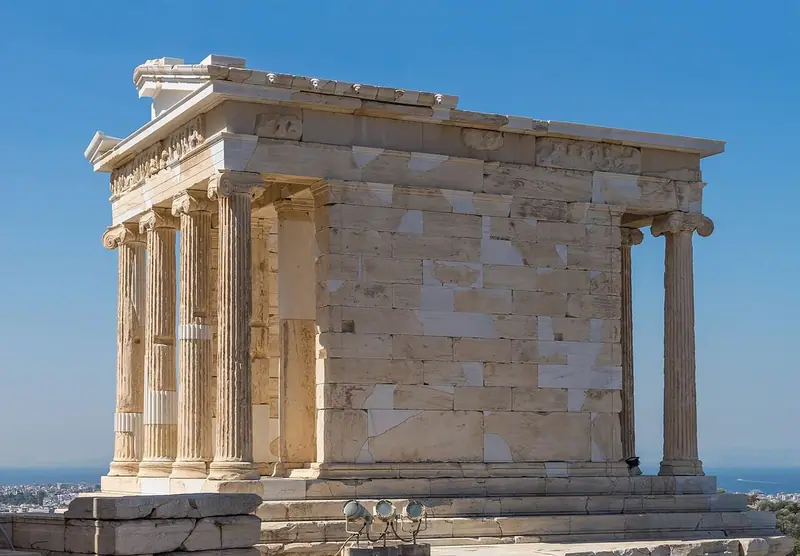 Greek7 stops · 5th century BCE
Acropolis of Athens audio guide
Climb through the Propylaia to the Parthenon and the Erechtheion, on the rock that has crowned Athens for three thousand years.
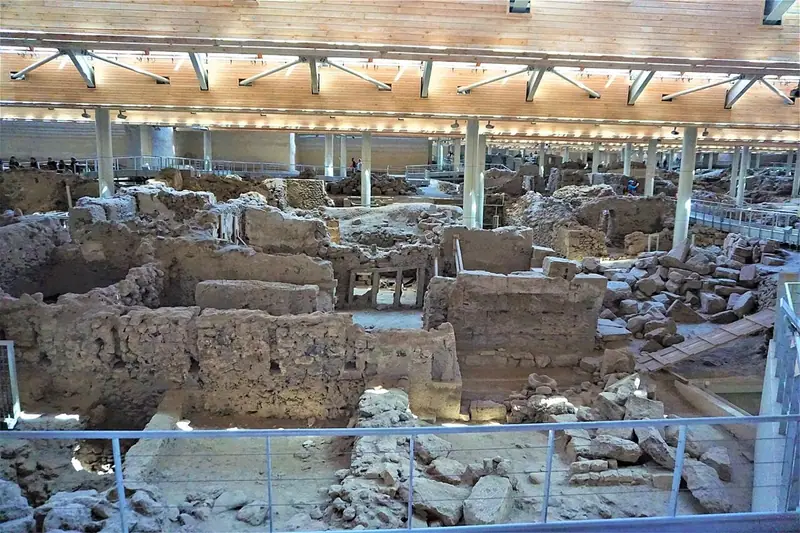 Minoan7 stops · c. 2000–1600 BCE
Akrotiri audio guide
The streets of a Bronze Age town buried by Santorini’s volcano, preserved beneath a great modern roof.
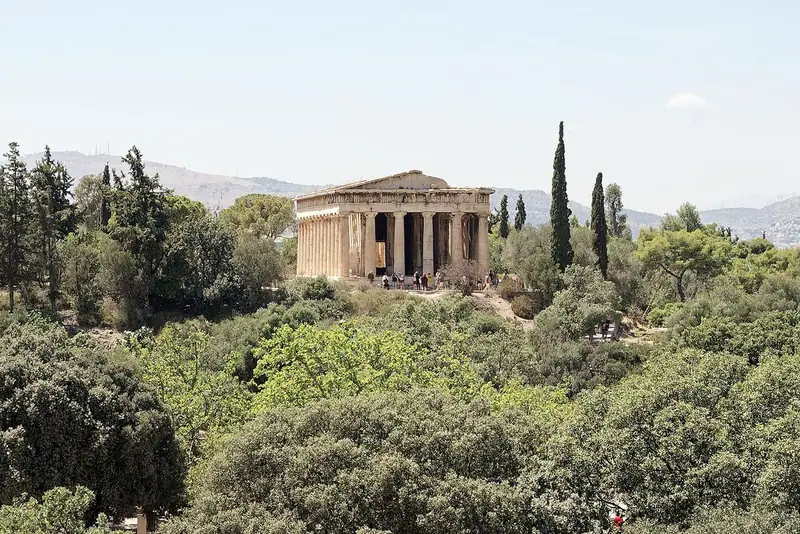 Greek7 stops · 6th century BCE – 2nd century CE
Ancient Agora of Athens audio guide
The market square where Athenians shopped, voted and argued, overlooked by the Temple of Hephaestus.
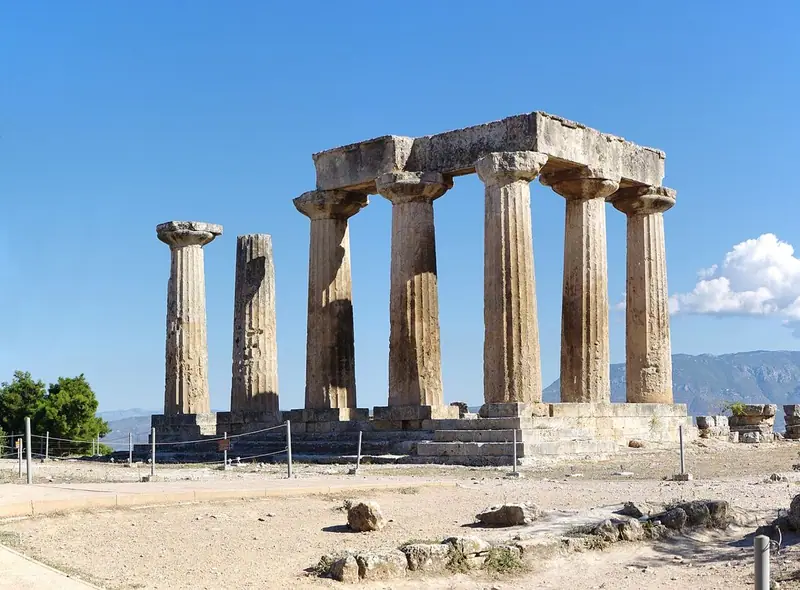 Roman7 stops · 6th century BCE – 4th century CE
Ancient Corinth audio guide
The Temple of Apollo, the Roman forum and the Bema, with the great rock of Acrocorinth above.
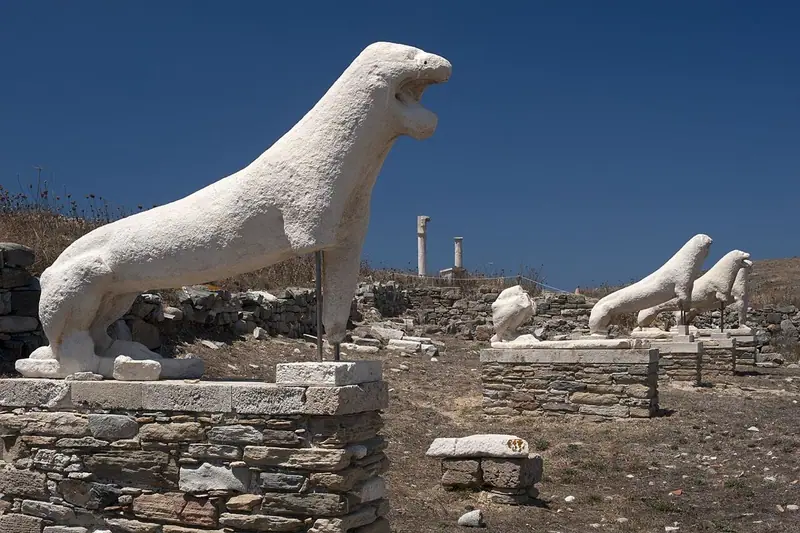 Greek7 stops · c. 800 BCE – 1st century BCE
Delos audio guide
The sacred island of Apollo: the Terrace of the Lions, mosaic-floored houses and the climb up Mount Kynthos.
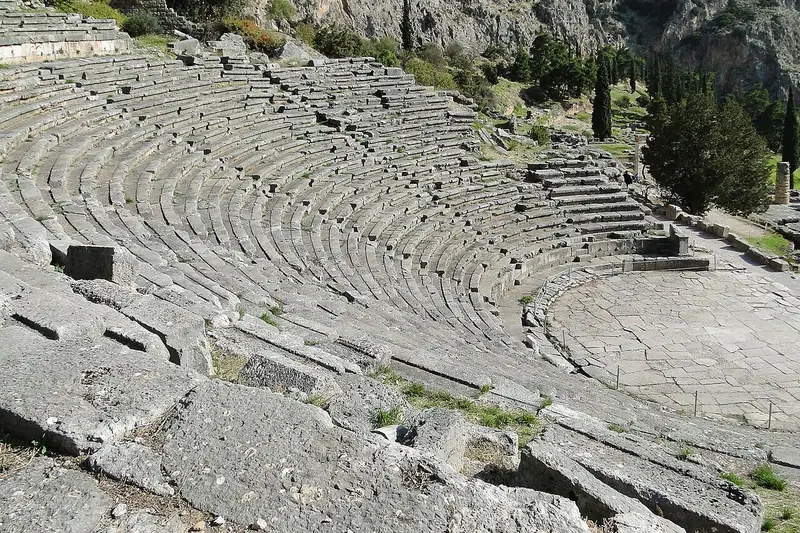 Greek8 stops · 8th century BCE – 4th century CE
Delphi audio guide
Up the Sacred Way past the treasuries to Apollo’s temple, the theatre and the stadium, high on the slopes of Parnassus.
Every guide, in every country
Olympia and every other guide we publish, including future ones. One payment, no subscription.