Before you start
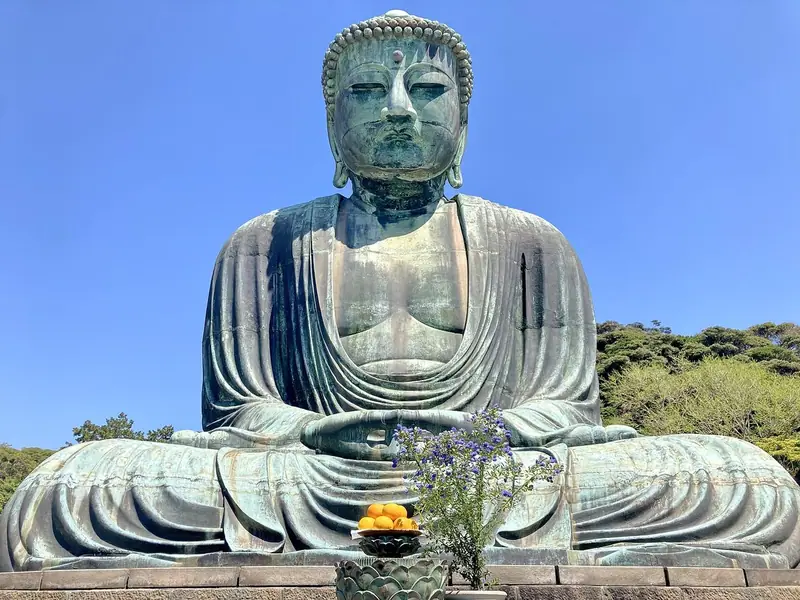
Kamakura, on the coast south of Tokyo, was the seat of Japan’s first military government, the shogunate founded by Minamoto no Yoritomo at the end of the twelfth century. For a century and a half the warrior rulers of Japan governed from this small town between wooded hills and the sea, and they filled its valleys with Zen monasteries, shrines and temples. This guide begins in the north at Engaku-ji and Kenchō-ji, the great Zen temples founded by the Hōjō regents, goes on to the Tsurugaoka Hachimangū shrine and down the raised avenue that Yoritomo built to the sea, then west to Hase-dera and the Great Buddha. The route is about five kilometres and makes a full day; the last part can be done on the little Enoden railway.
Use it as a self-guided tour of Kamakura: 6 stops in visit order, each played when you’re ready, at your own pace.
 Free preview · Stop 1
Engaku-ji
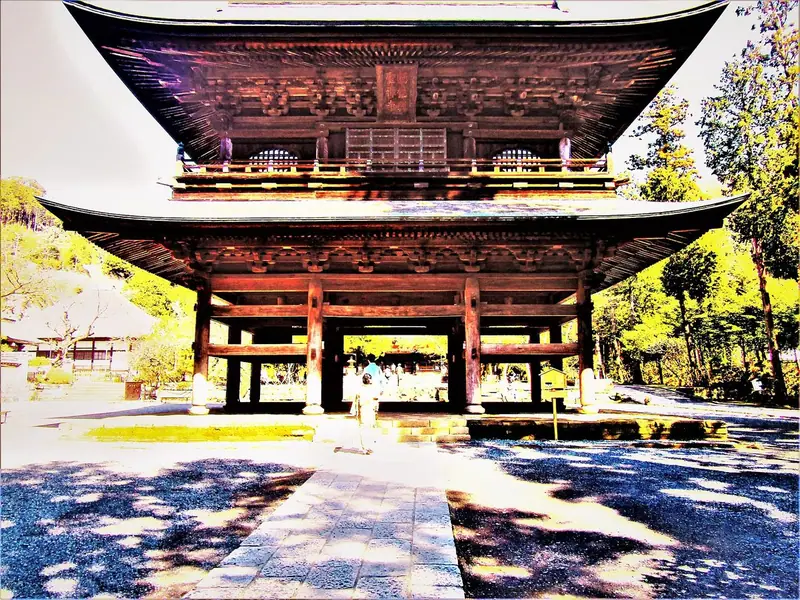
Start at Engaku-ji, just across the tracks from Kita-Kamakura station. It was founded in 1282 by the regent Hōjō Tokimune, the ruler who had driven off the Mongol invasions, and its first abbot was the Chinese Zen master Mugaku Sōgen. The temple was intended to honour the dead of both sides in those wars. It ranks second among the Five Mountains, the great official Zen temples of Kamakura. Climb through the great Sanmon gate to the main hall, and on to the Shariden, the relic hall, said to hold a tooth of the Buddha. Built in the Chinese Zen style of the Song dynasty, with its steep thatched roof, it is a National Treasure, though it is usually seen only from its gate. On the hill to the south hangs the Great Bell, cast in 1301, the largest temple bell in Kamakura and also a National Treasure. Walk south along the road through the valley to Kenchō-ji.
Photo: Dandy1022 · CC BY-SA 4.0 · Wikimedia Commons
What to see at Kamakura: 6 stops, in visit order
- 01
 Engaku-jiA temple for the dead of both sidesFree preview
- 02
 Kenchō-jiThe oldest Zen monasteryIn the guide
- 03
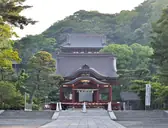 Tsurugaoka HachimangūThe shrine of the shōgunsIn the guide
- 04
 DankazuraYoritomo’s road to the seaIn the guide
- 05
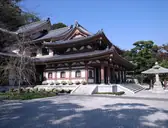 Hase-deraThe eleven-headed KannonIn the guide
- 06
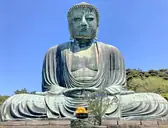 The Great BuddhaA bronze Buddha in the open airIn the guide
Site map of Kamakura
History of Kamakura
In 1180, during the war between the Minamoto and Taira clans, Minamoto no Yoritomo made Kamakura his base, because it was easy to defend, with hills on three sides and the sea on the fourth. After his victory in 1185 he was named shōgun in 1192, and the emperor’s court in Kyoto was left with little real power. After Yoritomo’s death, real power passed to the family of his widow, Hōjō Masako, whose relatives ruled as regents for the shōguns. The Hōjō welcomed Chinese Zen masters fleeing the Mongol conquest of China and founded great Zen monasteries for them, and in 1274 and 1281 they beat off two Mongol invasions of Japan. In 1333 the shogunate fell when an army stormed Kamakura and the Hōjō took their own lives, and power moved back to Kyoto. Kamakura declined to a fishing town until the railway arrived in 1889 and it became a seaside resort and a home for writers and artists.
Kamakura guide: questions
How many stops does the Kamakura guide have?
6 stops, in visit order: 1. Engaku-ji; 2. Kenchō-ji; 3. Tsurugaoka Hachimangū; 4. Dankazura; 5. Hase-dera; 6. The Great Buddha.
Can I do a self-guided tour of Kamakura with this guide?
Yes. The guide is made for a self-guided tour: 6 stops in visit order, each with a photo, a story and a voice, so you can explore Kamakura at your own pace, without joining a group. Download it before you go and it works offline.
How long is each guide?
The 6 stops add up to about 5 minutes of listening in total. You play each stop when you’re ready, so you can go at your own pace.
Does the guide work offline?
Yes, once it’s downloaded. The guide is a single self-contained web page (about 6.8 MB) with the photos, text and audio built in. Download it to your phone before you go (Wi-Fi is best); after that it opens in any modern browser on iPhone or Android, with no app, account or mobile signal needed.
Does it use GPS or need my location?
No. The guide doesn’t use GPS and doesn’t know where you are: you play each stop when you reach it. It works on iPhone and Android in any modern browser, and it’s in English.
What’s included?
One self-contained HTML guide: 6 stops in visit order, each with a photo, text and a voice, plus the story of who built the site.
Who built Kamakura?
In 1180, during the war between the Minamoto and Taira clans, Minamoto no Yoritomo made Kamakura his base, because it was easy to defend, with hills on three sides and the sea on the fourth. After his victory in 1185 he was named shōgun in 1192, and the emperor’s court in Kyoto was left with little real power.
Where is Kamakura?
Kamakura, on the coast south of Tokyo, was the seat of Japan’s first military government, the shogunate founded by Minamoto no Yoritomo at the end of the twelfth century.
Is there a free audio guide to Kamakura?
The first stop, Engaku-ji, is free to read and hear on this page, so you can try the Kamakura audio tour before you buy. The full guide, with all 6 stops, is a one-off purchase: download it once and it’s yours to keep, working offline.
Is the Kamakura guide worth it?
If you’d like to know what you’re looking at, yes. For $10 you get 6 stops in visit order, each with a photo, a short history and a voice you play when you’re ready, plus a site map of the stops, and about 5 minutes of listening in all. It’s short on purpose, so you spend your time looking, not listening. It’s yours to keep, works offline and needs no app. The first stop is free on this page, so you can try it before you buy. If you’d like hours of detail, a guided tour will go deeper.
Audio guide or guided tour?
It depends how you like to visit. This guide lets you explore Kamakura at your own pace, at any time, for a one-off price. A guided tour gives you a live expert you can ask questions, but at fixed times and usually for a higher price. Many people use both: a tour for the big picture, and the guide to read beforehand or to revisit the stops in their own time.
Is this the official Kamakura guide?
No. It’s an independent guide by The Historian Guide, not affiliated with or endorsed by the operator of Kamakura. For tickets and opening hours, check the official site operator before you go.
Does the guide include entry tickets or opening hours?
No. The guide is a digital companion only. Admission to Kamakura is separate, so check the official site operator for current tickets and opening hours before you go.
- Stop 1 · Engaku-ji: Dandy1022 · CC BY-SA 4.0 · Wikimedia Commons · resized
- Stop 2 · Kenchō-ji: Zairon · CC BY-SA 4.0 · Wikimedia Commons · resized
- Stop 3 · Tsurugaoka Hachimangū: Ocdp · CC0 · Wikimedia Commons · resized
- Stop 4 · Dankazura: Guilhem Vellut from Annecy, France · CC BY 2.0 · Wikimedia Commons · resized
- Stop 5 · Hase-dera: U-Kane · CC BY-SA 4.0 · Wikimedia Commons · resized
- Stop 6 · The Great Buddha (also the cover): Dudva · CC BY-SA 4.0 · Wikimedia Commons · resized


All photographs from Wikimedia Commons under the licences shown.
More guides in Japan
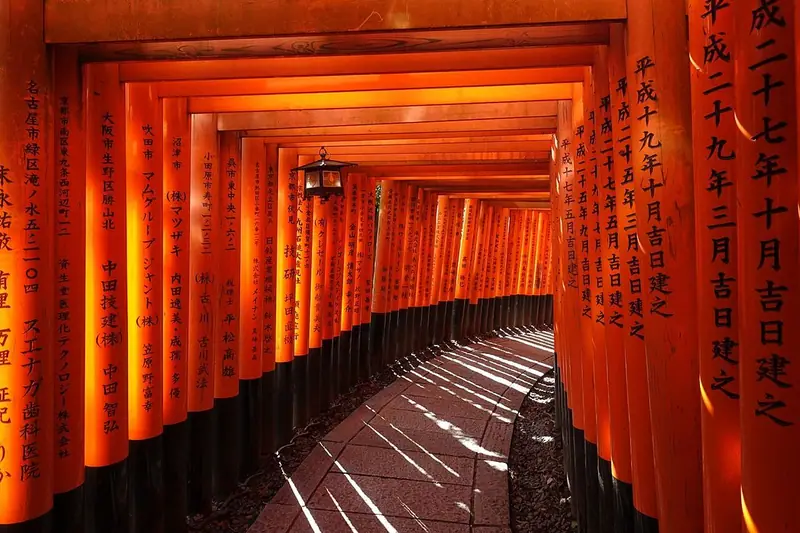 Shinto7 stops · founded 711; main hall 1499
Fushimi Inari Taisha audio guide
Pass through the Senbon Torii, the 'thousand gates', on the trail that winds up Mount Inari to the summit.
 Edo7 stops · keep 1601–1609
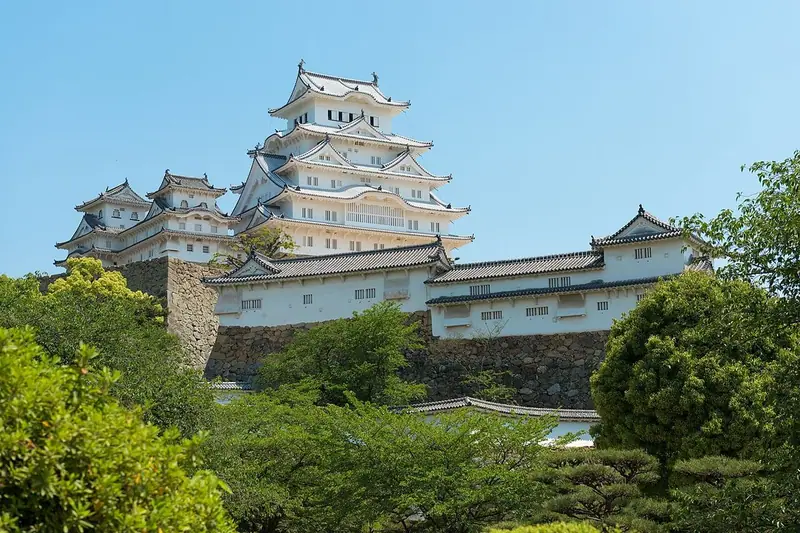
Himeji Castle audio guide
Through the gates of the maze and the baileys to the main keep of Himeji, the great castle of the samurai lords.
 Shōwa Japan8 stops · Post-war Shōwa
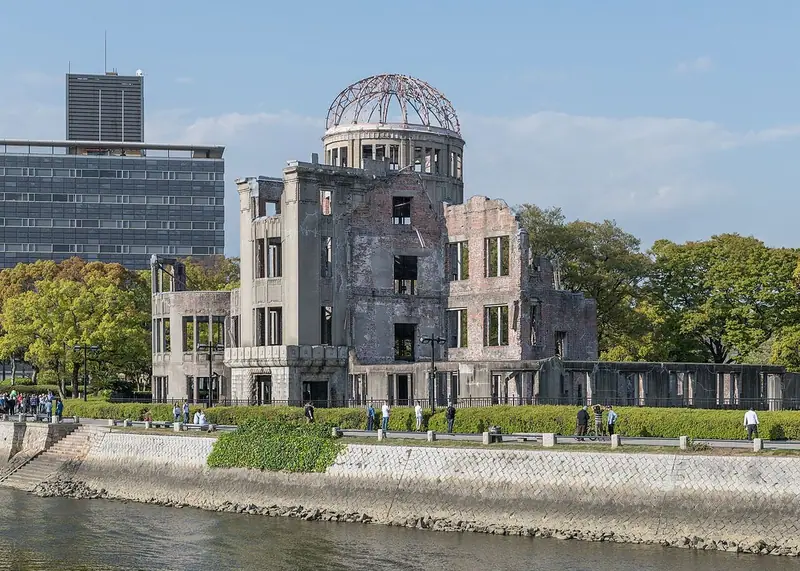
Hiroshima Peace Memorial Park audio guide
The Peace Memorial Park, from the museum and the cenotaph to the Children’s Peace Monument and the Atomic Bomb Dome.
 Heian7 stops · plan of 1168
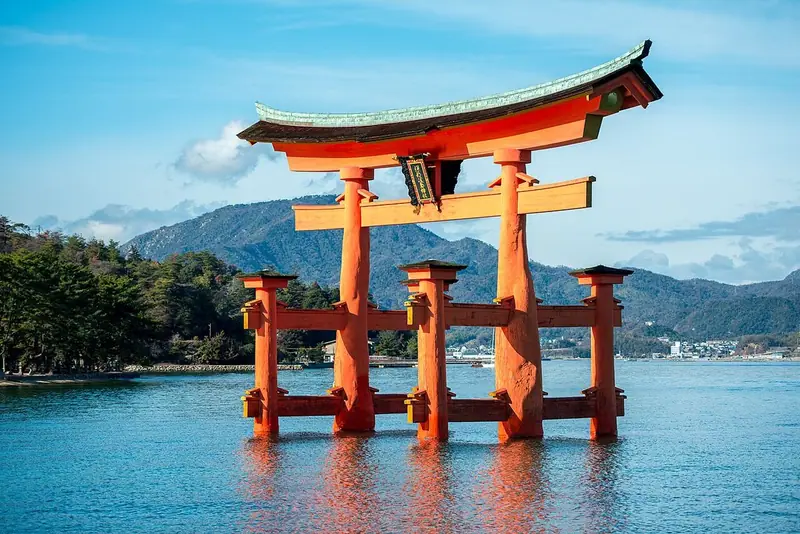
Itsukushima Shrine audio guide
Past the Great Torii to the shrine’s corridors, stages and Noh stage on the shore of Miyajima.
 Muromachi7 stops · 1397 (rebuilt 1955)
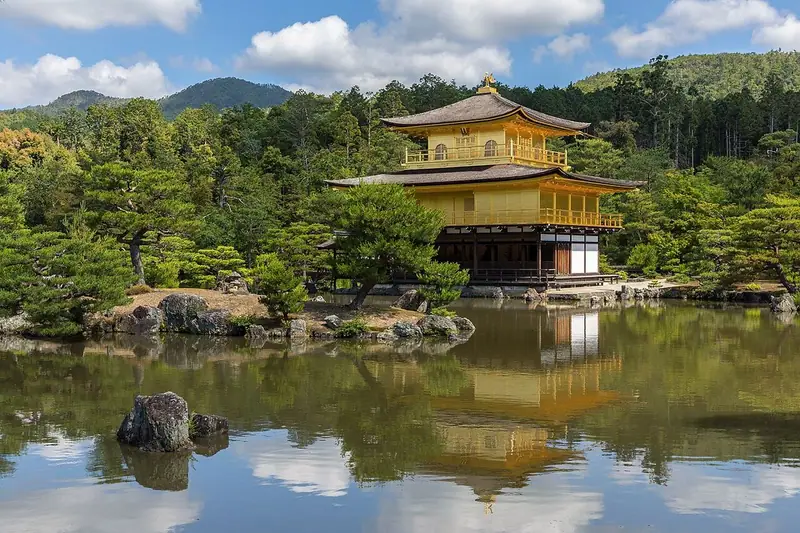
Kinkaku-ji audio guide
The Golden Pavilion mirrored in its pond, then a garden path past the Ryumon Falls to an old teahouse.
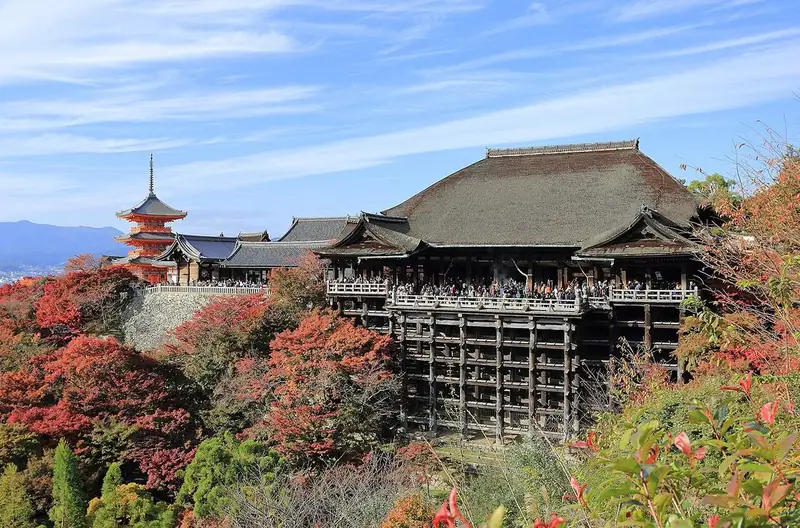 Japanese Buddhist7 stops · founded 778; main hall 1633
Kiyomizu-dera audio guide
Out onto the great wooden stage of the Main Hall, then down to the Otowa Waterfall below.
Every guide, in every country
Kamakura and every other guide we publish, including future ones. One payment, no subscription.