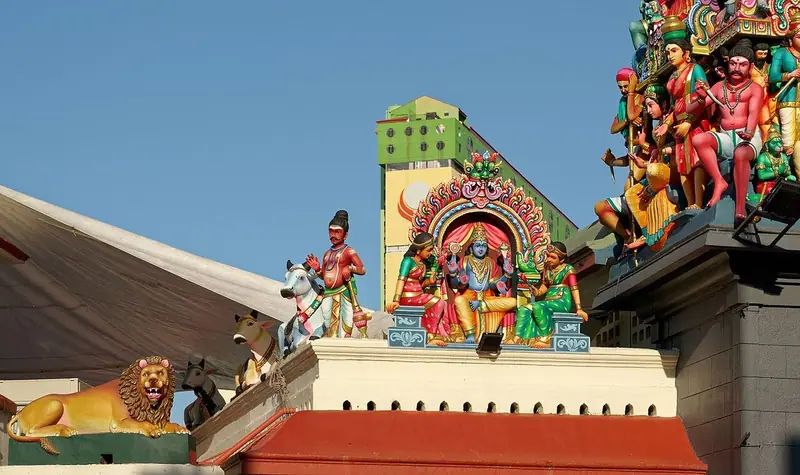
Before you start
Singapore’s Chinatown grew up in the 1820s, on the shore where Chinese immigrants landed, and it is still a district of shophouses, temples, markets and food stalls. Despite its name, it has always been shared: the oldest Hindu temple and one of the oldest mosques in Singapore stand on its main road. The tour starts among the shophouses of Pagoda Street, visits the Jamae Mosque and the Sri Mariamman Temple, the hawker centre and the Buddha Tooth Relic Temple, climbs Ann Siang Hill, and ends at the old seafront temple of Thian Hock Keng. It is hot, so walk early or late, and dress modestly for places of worship.
Use it as a self-guided tour of Chinatown: 7 stops in visit order, each played when you’re ready, at your own pace.
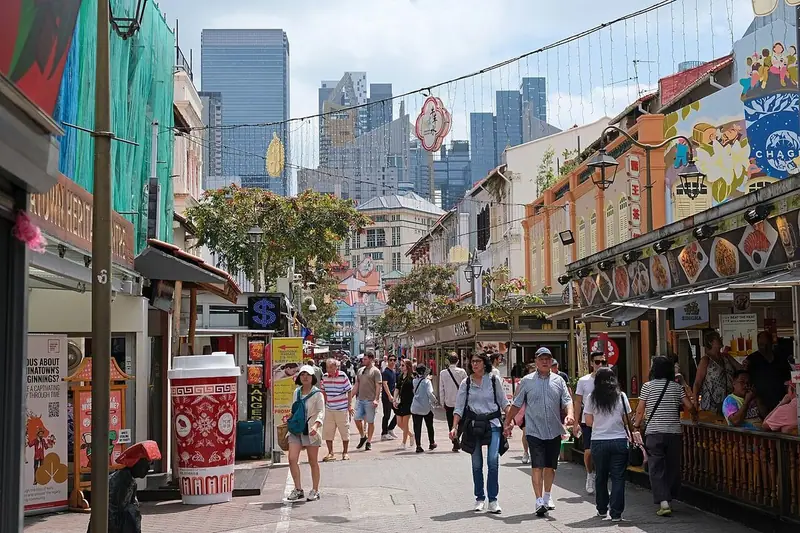 Free preview · Stop 1
Pagoda Street
Begin on Pagoda Street, near Chinatown MRT station, among rows of shophouses, two or three storeys high, with shops below and homes above, and covered walkways in front called five-foot ways. Most of the area’s shophouses were built from the late nineteenth century to the early twentieth, and they are decorated with painted shutters, plaster mouldings and coloured tiles. In the early days they were desperately overcrowded. Labourers newly arrived from China, often called coolies, slept in tiny cubicles, many families shared one floor, and some streets had brothels, opium dens and death houses, where the dying were taken. Look for the Chinatown Heritage Centre, which recreates the cramped rooms of the shophouses as they once were. The Malay name for Chinatown, Kreta Ayer, means water cart, because water was once brought here by bullock carts.
Photo: kallerna · CC BY-SA 4.0 · Wikimedia Commons
What to see at Chinatown: 7 stops, in visit order
- 01
 Pagoda StreetShophouses and storiesFree preview
- 02
 Jamae MosqueThe Chulia mosqueIn the guide
- 03
 Sri Mariamman TempleThe oldest Hindu templeIn the guide
- 04
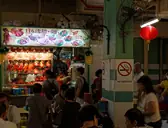 Chinatown ComplexFood for everyoneIn the guide
- 05
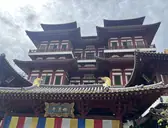 The Buddha Tooth Relic TempleA modern templeIn the guide
- 06
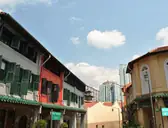 Ann Siang HillClan houses on the hillIn the guide
- 07
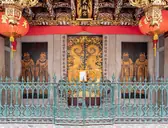 Thian Hock KengThe temple by the seaIn the guide
Site map of Chinatown
History of Chinatown
In 1819 Sir Stamford Raffles of the East India Company founded a British trading post on the island of Singapore, then part of the lands of the Sultan of Johor. Under the town plan of 1822, the area south-west of the Singapore River was set aside for the Chinese community, while other districts were given to European, Malay, Arab and Indian settlers. Immigrants poured in from southern China and India to work as traders, labourers and craftsmen. Singapore became a British colony, was occupied by Japan from 1942 to 1945, and became an independent republic in 1965. Much of Chinatown was rebuilt, but many shophouses have since been restored.
Chinatown guide: questions
How many stops does the Chinatown guide have?
7 stops, in visit order: 1. Pagoda Street; 2. Jamae Mosque; 3. Sri Mariamman Temple; 4. Chinatown Complex; 5. The Buddha Tooth Relic Temple; 6. Ann Siang Hill; 7. Thian Hock Keng.
Can I do a self-guided tour of Chinatown with this guide?
Yes. The guide is made for a self-guided tour: 7 stops in visit order, each with a photo, a story and a voice, so you can explore Chinatown at your own pace, without joining a group. Download it before you go and it works offline.
How long is each guide?
The 7 stops add up to about 5 minutes of listening in total. You play each stop when you’re ready, so you can go at your own pace.
Does the guide work offline?
Yes, once it’s downloaded. The guide is a single self-contained web page (about 6.4 MB) with the photos, text and audio built in. Download it to your phone before you go (Wi-Fi is best); after that it opens in any modern browser on iPhone or Android, with no app, account or mobile signal needed.
Does it use GPS or need my location?
No. The guide doesn’t use GPS and doesn’t know where you are: you play each stop when you reach it. It works on iPhone and Android in any modern browser, and it’s in English.
What’s included?
One self-contained HTML guide: 7 stops in visit order, each with a photo, text and a voice, plus the story of who built the site.
Who built Chinatown?
In 1819 Sir Stamford Raffles of the East India Company founded a British trading post on the island of Singapore, then part of the lands of the Sultan of Johor. Under the town plan of 1822, the area south-west of the Singapore River was set aside for the Chinese community, while other districts were given to European, Malay, Arab and Indian settlers.
Where is Chinatown?
Singapore’s Chinatown grew up in the 1820s, on the shore where Chinese immigrants landed, and it is still a district of shophouses, temples, markets and food stalls.
Is there a free audio guide to Chinatown?
The first stop, Pagoda Street, is free to read and hear on this page, so you can try the Chinatown audio tour before you buy. The full guide, with all 7 stops, is a one-off purchase: download it once and it’s yours to keep, working offline.
Is the Chinatown guide worth it?
If you’d like to know what you’re looking at, yes. For $10 you get 7 stops in visit order, each with a photo, a short history and a voice you play when you’re ready, plus a site map of the stops, and about 5 minutes of listening in all. It’s short on purpose, so you spend your time looking, not listening. It’s yours to keep, works offline and needs no app. The first stop is free on this page, so you can try it before you buy. If you’d like hours of detail, a guided tour will go deeper.
Audio guide or guided tour?
It depends how you like to visit. This guide lets you explore Chinatown at your own pace, at any time, for a one-off price. A guided tour gives you a live expert you can ask questions, but at fixed times and usually for a higher price. Many people use both: a tour for the big picture, and the guide to read beforehand or to revisit the stops in their own time.
Is this the official Chinatown guide?
No. It’s an independent guide by The Historian Guide, not affiliated with or endorsed by the operator of Chinatown. For tickets and opening hours, check the official site operator before you go.
Does the guide include entry tickets or opening hours?
No. The guide is a digital companion only. Admission to Chinatown is separate, so check the official site operator for current tickets and opening hours before you go.
- Stop 1 · Pagoda Street: kallerna · CC BY-SA 4.0 · Wikimedia Commons · resized
- Stop 2 · Jamae Mosque: M. Adrian Jurhami · CC BY 4.0 · Wikimedia Commons · resized
- Stop 3 · Sri Mariamman Temple (also the cover): Jakub Hałun · CC BY 4.0 · Wikimedia Commons · resized
- Stop 4 · Chinatown Complex: KimonBerlin · CC BY-SA 2.0 · Wikimedia Commons · resized
- Stop 5 · The Buddha Tooth Relic Temple: Cbogsin · CC BY-SA 4.0 · Wikimedia Commons · resized
- Stop 6 · Ann Siang Hill: Elisa.rolle · CC BY-SA 4.0 · Wikimedia Commons · resized
- Stop 7 · Thian Hock Keng: Dietmar Rabich · CC BY-SA 4.0 · Wikimedia Commons · resized


All photographs from Wikimedia Commons under the licences shown.
More guides in Singapore
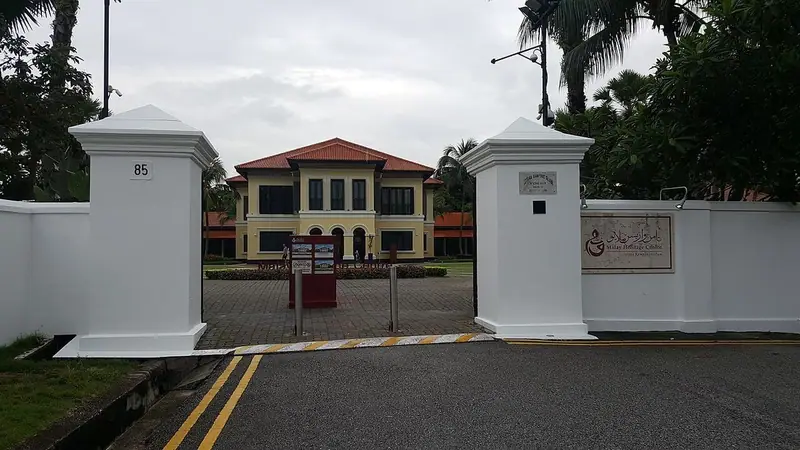 Malay7 stops · 1819–1932
Kampong Glam audio guide
From Bussorah Street to the Sultan Mosque and the old sultan’s palace, then Arab Street and Haji Lane.
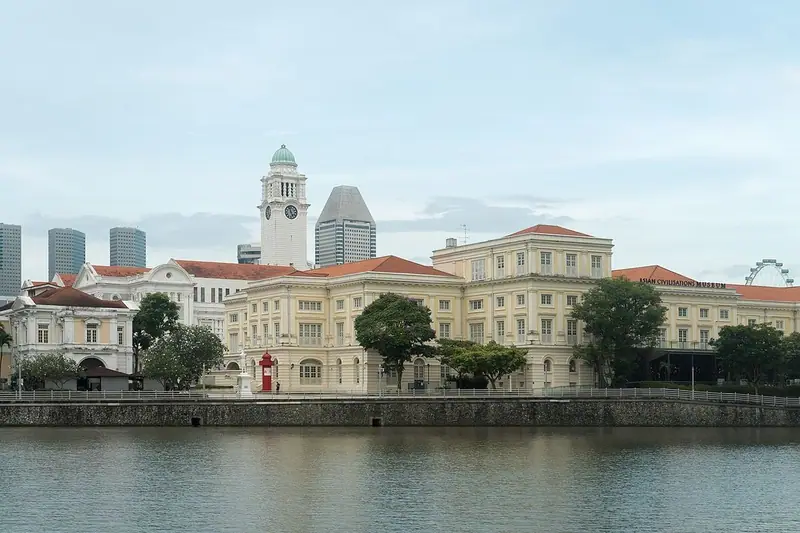 British Colonial9 stops · 1819 – 20th century
Singapore’s Civic District audio guide
From Fort Canning Hill down to Raffles’ Landing Site, round the Padang and past St Andrew’s Cathedral to the Raffles Hotel.
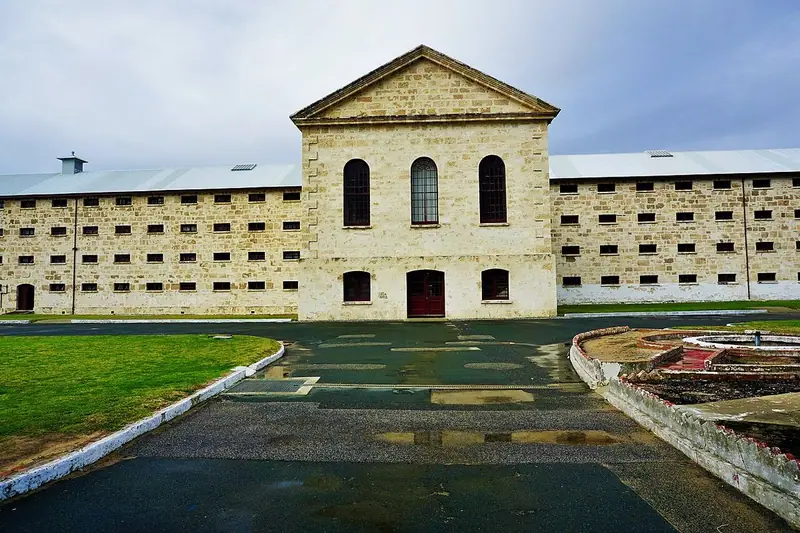 British Colonial7 stops · 1850–1991
Fremantle Prison audio guide
Pass through the gatehouse of the convict-built prison above Fremantle, from the main cell block and the gallows to the tunnels beneath.
Every guide, in every country
Chinatown and every other guide we publish, including future ones. One payment, no subscription.