Before you start
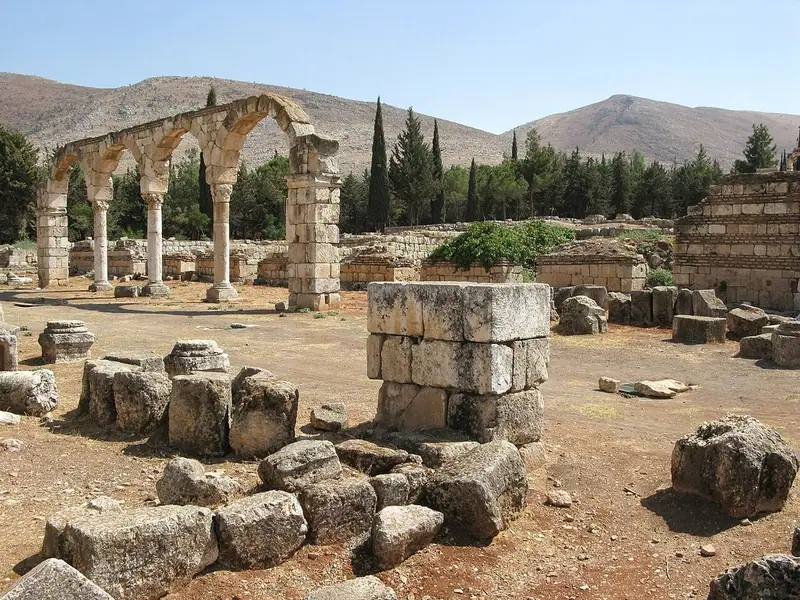
Anjar lies in the Beqaa Valley, about 58 kilometres east of Beirut and close to the Syrian border, at the foot of the Anti-Lebanon mountains. It is a UNESCO World Heritage Site, inscribed in 1984, and unlike Lebanon’s other ancient cities it was occupied for only a short time, so what you see is a single, unusually clear town plan from the early eighth century. The ruins lie in open fields and orchards beside the modern town, whose people are mostly Armenians who settled here in 1939. This guide enters through the north gate, follows the main colonnaded street and its shops to the central crossing, then explores the Great Palace, its walls and carvings, before finishing at the mosque and the Small Palace.
Use it as a self-guided tour of Anjar: 8 stops in visit order, each played when you’re ready, at your own pace.
 Free preview · Stop 1
North Gate and Cardo
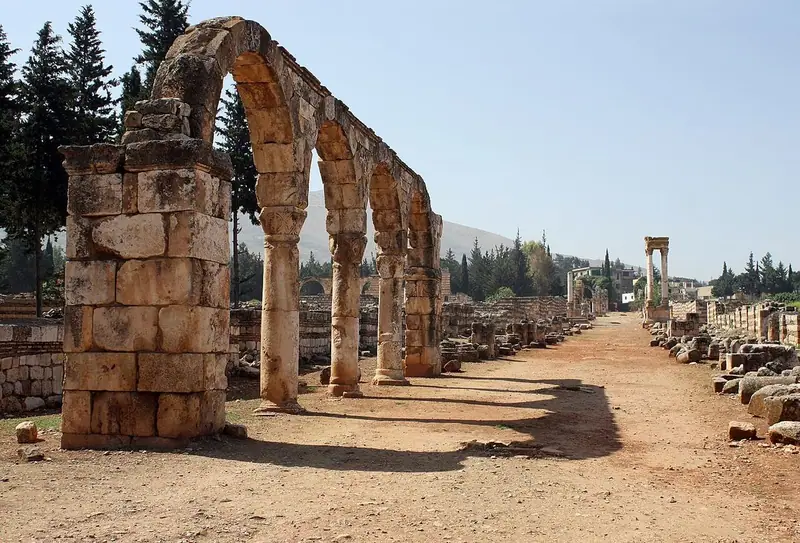
Enter through the north gate, one of four entrances set in the middle of each side of the walled city. Anjar was laid out as a near-perfect rectangle, about 370 by 310 metres, enclosed by stone walls more than two metres thick and around seven metres high, with many round towers projecting from them. Ahead runs the cardo maximus, the main street from north to south. It was lined with colonnades, and some of their arches have been rebuilt, so you can walk beneath them as townspeople did. Just inside the gate, in the north-eastern quarter, are the remains of public baths built on the Roman model, with changing rooms followed by cool, warm and hot rooms heated from below. The whole plan follows the pattern of a Roman fortress town, a sign of how much the Umayyads borrowed from the world they inherited.
Photo: Eusebius · CC BY 3.0 · Wikimedia Commons
What to see at Anjar: 8 stops, in visit order
- 01
 North Gate and CardoAl-Shari‘ al-Ra’isiFree preview
- 02
 Shops of the CardoAl-DakakinIn the guide
- 03
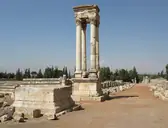 TetrapylonAl-TetrapylonIn the guide
- 04
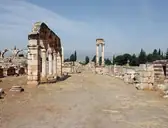 DecumanusAl-Shari‘ al-‘ArdiIn the guide
- 05
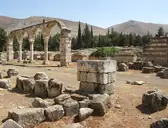 Great PalaceAl-Qasr al-KabirIn the guide
- 06
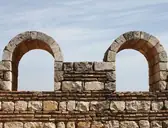 Brick and Stone WallsAl-JidranIn the guide
- 07
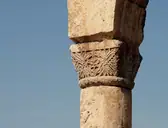 Reused CapitalsAl-TijanIn the guide
- 08
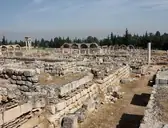 Mosque and Small PalaceAl-Jami‘ wa al-Qasr al-SaghirIn the guide
Site map of Anjar
History of Anjar
Anjar was built by the Umayyads, the first great dynasty of the Islamic caliphate, who ruled from Damascus between 661 and 750. Their empire stretched from Spain to Central Asia at its height, and Umayyad rulers built palaces, mosques and new towns that mixed Arab traditions with the Roman and Byzantine building skills of the lands they had conquered. Sources credit the city to the caliph al-Walid I, who reigned from 705 to 715; the Byzantine chronicler Theophanes says his son al-Abbas began it in 709 or 710, and graffiti in the quarry give the year 714. Masons and craftsmen from the region did the work, re-using columns and carvings from older Roman and Byzantine buildings. After civil war among Umayyad princes in the 740s and the fall of the dynasty to the Abbasids in 750, Anjar was largely abandoned. Archaeologists uncovered it from the late 1940s onwards.
Anjar guide: questions
How many stops does the Anjar guide have?
8 stops, in visit order: 1. North Gate and Cardo; 2. Shops of the Cardo; 3. Tetrapylon; 4. Decumanus; 5. Great Palace; 6. Brick and Stone Walls; 7. Reused Capitals; 8. Mosque and Small Palace.
Can I do a self-guided tour of Anjar with this guide?
Yes. The guide is made for a self-guided tour: 8 stops in visit order, each with a photo, a story and a voice, so you can explore Anjar at your own pace, without joining a group. Download it before you go and it works offline.
How long is each guide?
The 8 stops add up to about 6 minutes of listening in total. You play each stop when you’re ready, so you can go at your own pace.
Does the guide work offline?
Yes, once it’s downloaded. The guide is a single self-contained web page (about 7.5 MB) with the photos, text and audio built in. Download it to your phone before you go (Wi-Fi is best); after that it opens in any modern browser on iPhone or Android, with no app, account or mobile signal needed.
Does it use GPS or need my location?
No. The guide doesn’t use GPS and doesn’t know where you are: you play each stop when you reach it. It works on iPhone and Android in any modern browser, and it’s in English.
What’s included?
One self-contained HTML guide: 8 stops in visit order, each with a photo, text and a voice, plus the story of who built the site.
Who built Anjar?
Anjar was built by the Umayyads, the first great dynasty of the Islamic caliphate, who ruled from Damascus between 661 and 750. Their empire stretched from Spain to Central Asia at its height, and Umayyad rulers built palaces, mosques and new towns that mixed Arab traditions with the Roman and Byzantine building skills of the lands they had conquered.
Where is Anjar?
Anjar lies in the Beqaa Valley, about 58 kilometres east of Beirut and close to the Syrian border, at the foot of the Anti-Lebanon mountains.
Is there a free audio guide to Anjar?
The first stop, North Gate and Cardo, is free to read and hear on this page, so you can try the Anjar audio tour before you buy. The full guide, with all 8 stops, is a one-off purchase: download it once and it’s yours to keep, working offline.
Is the Anjar guide worth it?
If you’d like to know what you’re looking at, yes. For $10 you get 8 stops in visit order, each with a photo, a short history and a voice you play when you’re ready, plus a site map of the stops, and about 6 minutes of listening in all. It’s short on purpose, so you spend your time looking, not listening. It’s yours to keep, works offline and needs no app. The first stop is free on this page, so you can try it before you buy. If you’d like hours of detail, a guided tour will go deeper.
Audio guide or guided tour?
It depends how you like to visit. This guide lets you explore Anjar at your own pace, at any time, for a one-off price. A guided tour gives you a live expert you can ask questions, but at fixed times and usually for a higher price. Many people use both: a tour for the big picture, and the guide to read beforehand or to revisit the stops in their own time.
Is this the official Anjar guide?
No. It’s an independent guide by The Historian Guide, not affiliated with or endorsed by the operator of Anjar. For tickets and opening hours, check the official site operator before you go.
Does the guide include entry tickets or opening hours?
No. The guide is a digital companion only. Admission to Anjar is separate, so check the official site operator for current tickets and opening hours before you go.
- Stop 1 · North Gate and Cardo: Eusebius · CC BY 3.0 · Wikimedia Commons · resized
- Stop 2 · Shops of the Cardo: Frank Kidner · CC BY-SA 4.0 · Wikimedia Commons · resized
- Stop 3 · Tetrapylon: © Vyacheslav Argenberg / http://www.vascoplanet.com/ · CC BY 4.0 · Wikimedia Commons · resized
- Stop 4 · Decumanus: Eusebius · CC BY 3.0 · Wikimedia Commons · resized
- Stop 5 · Great Palace (also the cover): © Vyacheslav Argenberg / http://www.vascoplanet.com/ · CC BY 4.0 · Wikimedia Commons · resized
- Stop 6 · Brick and Stone Walls: Eusebius · CC BY 3.0 · Wikimedia Commons · resized
- Stop 7 · Reused Capitals: Eusebius · CC BY 3.0 · Wikimedia Commons · resized
- Stop 8 · Mosque and Small Palace: Eusebius · CC BY 3.0 · Wikimedia Commons · resized


All photographs from Wikimedia Commons under the licences shown.
More guides in Lebanon
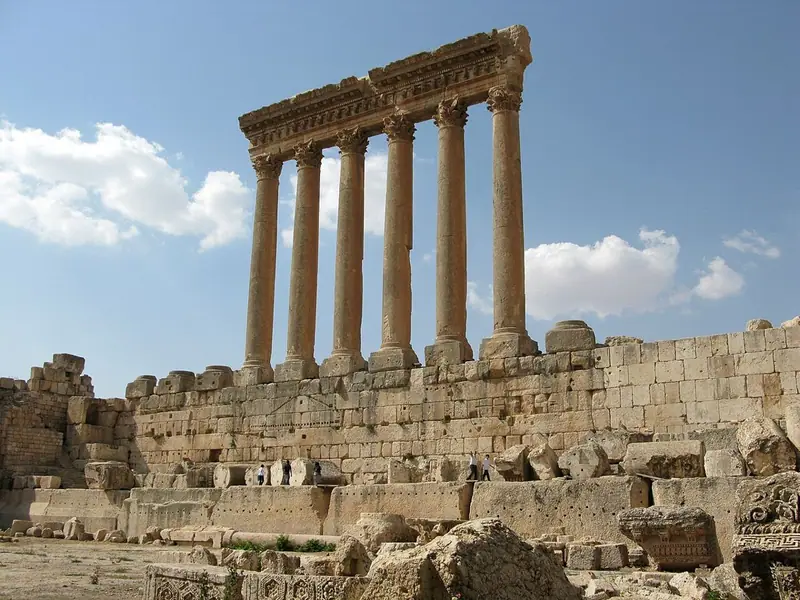 Roman9 stops · 1st c. BCE – 3rd c. CE
Baalbek audio guide
Heliopolis, City of the Sun: the largest temples Rome ever raised, and the thousand-tonne stones that went into them.
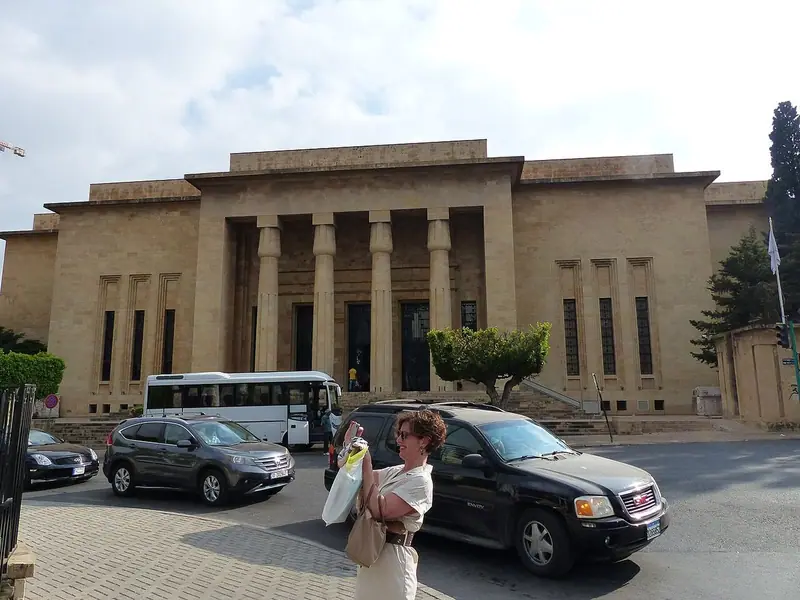 Phoenician8 stops · collection c. 3200 BCE – 19th century CE
Beirut National Museum audio guide
The Sarcophagus of Ahiram, Phoenician sarcophagi and Roman mosaics: Lebanon’s long story in one building.
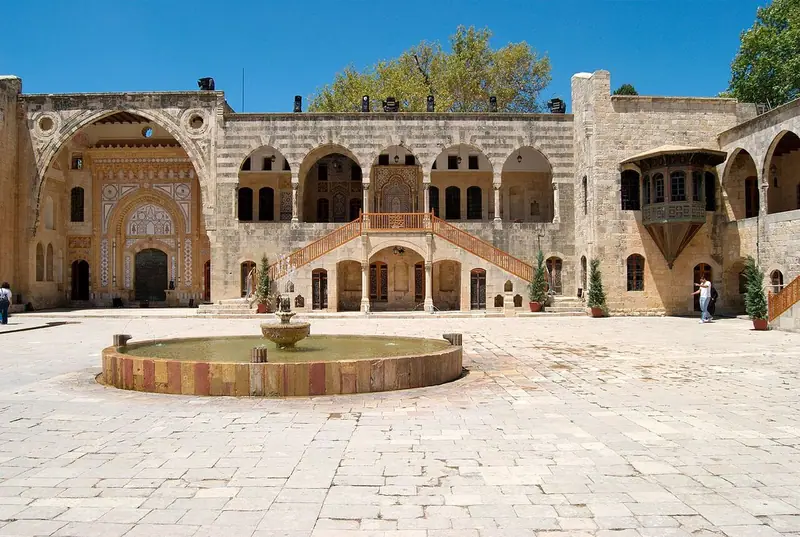 Ottoman8 stops · 1788–1818
Beiteddine Palace audio guide
Emir Bashir’s palace of arcaded courtyards, painted reception rooms and a marble hammam, high in the Chouf.
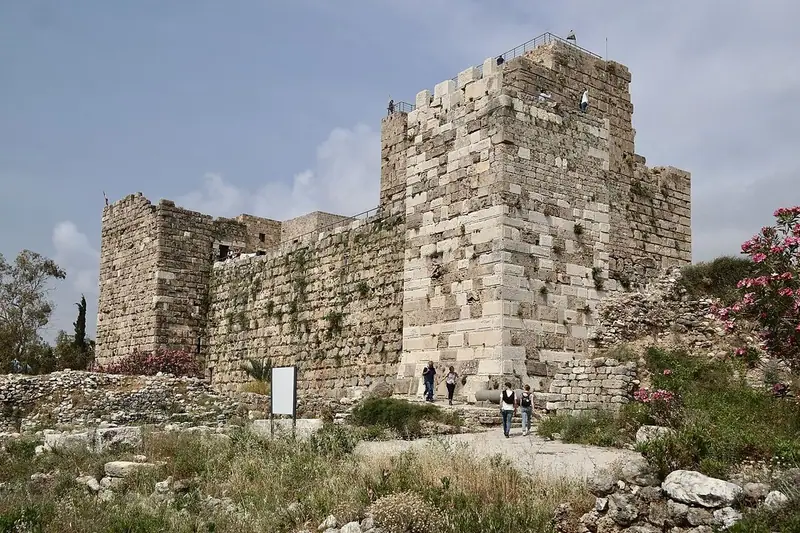 Phoenician8 stops · c. 3000 BCE onwards
Byblos audio guide
Bronze Age ramparts, the Temple of the Obelisks and a Crusader castle on one of the oldest inhabited headlands in the world.
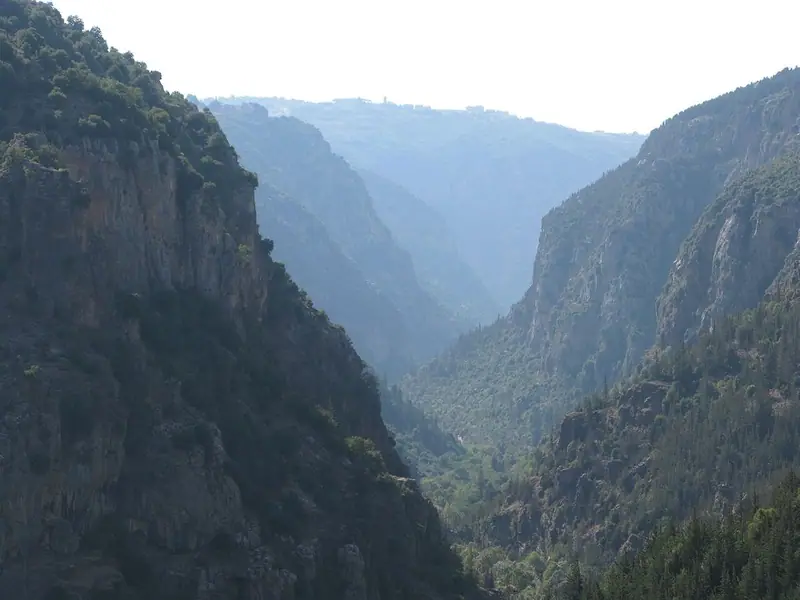 Maronite6 stops · c. 6th–19th century
Qadisha Valley audio guide
Down from the Cedars of God into the Holy Valley, where hermitages and monasteries cling to the cliffs.
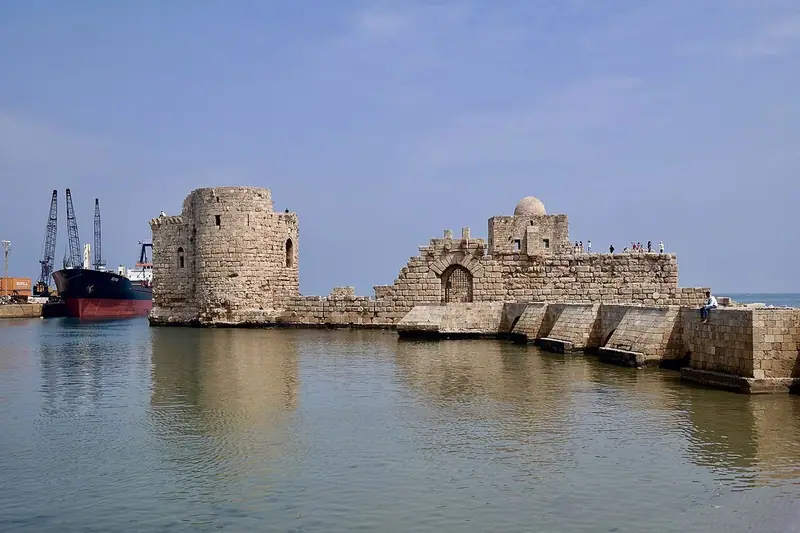 Crusader7 stops · from 1228 CE
Sidon Sea Castle audio guide
A Crusader castle on an island joined to the shore, then the old souks, the Khan al-Franj and a soap museum.
Every guide, in every country
Anjar and every other guide we publish, including future ones. One payment, no subscription.