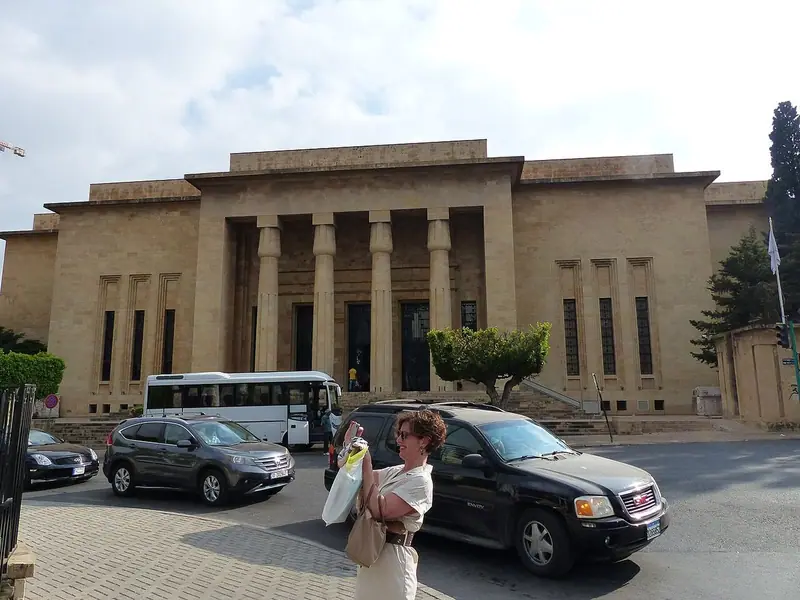
Before you start
The National Museum of Beirut is Lebanon’s principal museum of archaeology, standing at a busy crossroads on Damascus Road, close to the old Beirut racecourse. It holds about 100,000 objects, of which some 1,300 are on display, and together they tell the story of Lebanon from prehistory to the Ottoman era. Many of the treasures you will read about in our guides to Byblos, Tyre, Sidon and Baalbek are here. The building is compact and easy to navigate: large sarcophagi, mosaics and statues fill the ground floor, smaller objects are arranged in chronological order upstairs, and the basement is devoted to funerary art. This guide follows that circuit, from the building itself and the ground-floor masterpieces up to the Bronze Age treasures of Byblos and down to the tombs in the basement.
Use it as a self-guided tour of the Beirut National Museum: 8 stops in visit order, each played when you’re ready, at your own pace.
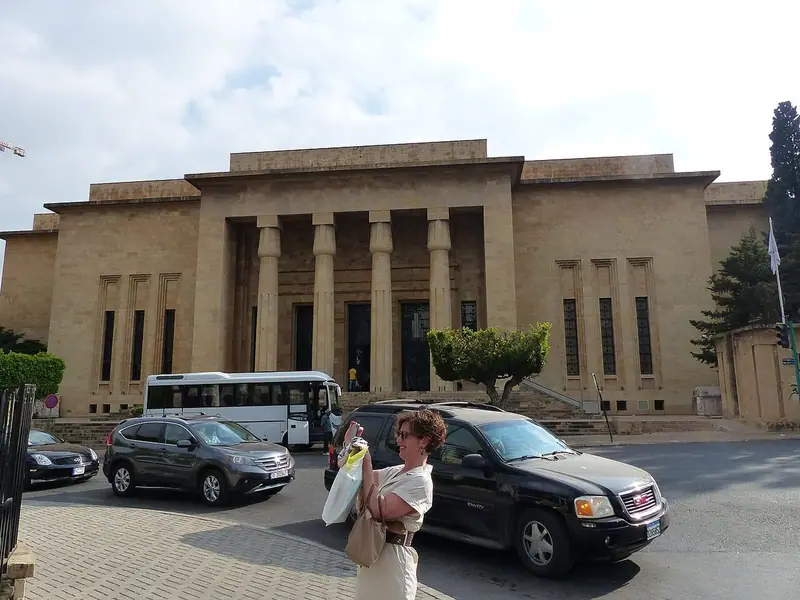 Free preview · Stop 1
The Museum Building
Begin outside, in front of the building’s ochre limestone façade. It was designed in an Egyptian Revival style by the architects Antoine Nahas and Pierre Leprince-Ringuet, built in the 1930s and opened in 1942. During the civil war of 1975 to 1990 the museum stood on the demarcation line between the warring sides, at a crossing known as Museum Alley, and it was shelled, occupied by fighters and flooded. Inside, the curator Emir Maurice Chéhab and his wife had moved the small objects into the basement and walled it up, covered floor mosaics with concrete, and boxed the heavy statues and sarcophagi in wood and concrete. Thanks to them, most of the collection survived. The museum was restored and reopened in 1999, and repaired again after the port explosion of 2020. Step inside and look up at the light-filled central hall.
Photo: Voyager1500 · CC BY-SA 4.0 · Wikimedia Commons
What to see at the Beirut National Museum: 8 stops, in visit order
- 01
 The Museum BuildingMathaf Bayrut al-WataniFree preview
- 02
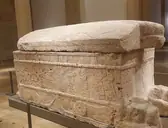 Sarcophagus of AhiramTabut AhiramIn the guide
- 03
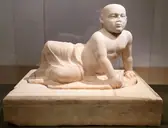 Statues from EshmunMa‘bad IshmunIn the guide
- 04
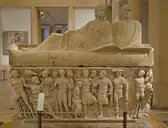 Roman Sarcophagi from TyreTawabit SurIn the guide
- 05
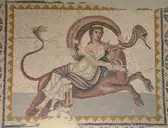 Roman MosaicsAl-Fusayfisa’In the guide
- 06
 Treasures of ByblosKunuz JubaylIn the guide
- 07
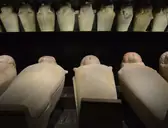 Phoenician SarcophagiAl-Tawabit al-BashariyyaIn the guide
- 08
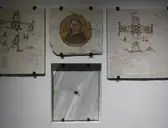 Painted Tombs of TyreMadafin SurIn the guide
History of the Beirut National Museum
The objects in the museum were made by the many peoples who lived in what is now Lebanon over hundreds of thousands of years, from Palaeolithic hunters to Ottoman craftsmen, and above all by the Canaanites and Phoenicians, whose civilisation ran from the Bronze Age, around 3200 BCE, to Alexander the Great’s conquest in 333 BCE, followed by Greeks, Romans and Byzantines. The museum itself was a Lebanese creation. Its collection began after the First World War, a committee was formed in 1923 to raise funds, and the building, designed by Antoine Nahas and Pierre Leprince-Ringuet, was built between 1930 and 1937. It opened in 1942. During the civil war of 1975 to 1990 it stood on the front line, and its curator, Emir Maurice Chéhab, and his team saved the collection by hiding small objects and encasing the large ones in concrete. It reopened in 1999 after restoration.
Beirut National Museum guide: questions
How many stops does the Beirut National Museum guide have?
8 stops, in visit order: 1. The Museum Building; 2. Sarcophagus of Ahiram; 3. Statues from Eshmun; 4. Roman Sarcophagi from Tyre; 5. Roman Mosaics; 6. Treasures of Byblos; 7. Phoenician Sarcophagi; 8. Painted Tombs of Tyre.
Can I do a self-guided tour of the Beirut National Museum with this guide?
Yes. The guide is made for a self-guided tour: 8 stops in visit order, each with a photo, a story and a voice, so you can explore the Beirut National Museum at your own pace, without joining a group. Download it before you go and it works offline.
How long is each guide?
The 8 stops add up to about 6 minutes of listening in total. You play each stop when you’re ready, so you can go at your own pace.
Does the guide work offline?
Yes, once it’s downloaded. The guide is a single self-contained web page (about 6.5 MB) with the photos, text and audio built in. Download it to your phone before you go (Wi-Fi is best); after that it opens in any modern browser on iPhone or Android, with no app, account or mobile signal needed.
Does it use GPS or need my location?
No. The guide doesn’t use GPS and doesn’t know where you are: you play each stop when you reach it. It works on iPhone and Android in any modern browser, and it’s in English.
What’s included?
One self-contained HTML guide: 8 stops in visit order, each with a photo, text and a voice, plus the story of who built the site.
Who built the Beirut National Museum?
The objects in the museum were made by the many peoples who lived in what is now Lebanon over hundreds of thousands of years, from Palaeolithic hunters to Ottoman craftsmen, and above all by the Canaanites and Phoenicians, whose civilisation ran from the Bronze Age, around 3200 BCE, to Alexander the Great’s conquest in 333 BCE, followed by Greeks, Romans and Byzantines. The museum itself was a Lebanese creation.
Where is the Beirut National Museum?
The National Museum of Beirut is Lebanon’s principal museum of archaeology, standing at a busy crossroads on Damascus Road, close to the old Beirut racecourse.
Is there a free audio guide to the Beirut National Museum?
The first stop, The Museum Building, is free to read and hear on this page, so you can try the Beirut National Museum audio tour before you buy. The full guide, with all 8 stops, is a one-off purchase: download it once and it’s yours to keep, working offline.
Is the Beirut National Museum guide worth it?
If you’d like to know what you’re looking at, yes. For $10 you get 8 stops in visit order, each with a photo, a short history and a voice you play when you’re ready, about 6 minutes of listening in all. It’s short on purpose, so you spend your time looking, not listening. It’s yours to keep, works offline and needs no app. The first stop is free on this page, so you can try it before you buy. If you’d like hours of detail, a guided tour will go deeper.
Audio guide or guided tour?
It depends how you like to visit. This guide lets you explore the Beirut National Museum at your own pace, at any time, for a one-off price. A guided tour gives you a live expert you can ask questions, but at fixed times and usually for a higher price. Many people use both: a tour for the big picture, and the guide to read beforehand or to revisit the stops in their own time.
Is this the official Beirut National Museum guide?
No. It’s an independent guide by The Historian Guide, not affiliated with or endorsed by the operator of the Beirut National Museum. For tickets and opening hours, check the official site operator before you go.
Does the guide include entry tickets or opening hours?
No. The guide is a digital companion only. Admission to the Beirut National Museum is separate, so check the official site operator for current tickets and opening hours before you go.
- Stop 1 · The Museum Building (also the cover): Voyager1500 · CC BY-SA 4.0 · Wikimedia Commons · resized
- Stop 2 · Sarcophagus of Ahiram: Emna Mizouni · CC BY-SA 4.0 · Wikimedia Commons · resized
- Stop 3 · Statues from Eshmun: Eli+ · Public domain · Wikimedia Commons · resized
- Stop 4 · Roman Sarcophagi from Tyre: Following Hadrian · CC BY-SA 2.0 · Wikimedia Commons · resized
- Stop 5 · Roman Mosaics: Following Hadrian · CC BY-SA 2.0 · Wikimedia Commons · resized
- Stop 6 · Treasures of Byblos: Onceinawhile · CC BY-SA 4.0 · Wikimedia Commons · resized
- Stop 7 · Phoenician Sarcophagi: Following Hadrian · CC BY-SA 2.0 · Wikimedia Commons · resized
- Stop 8 · Painted Tombs of Tyre: RomanDeckert · CC BY-SA 4.0 · Wikimedia Commons · resized


All photographs from Wikimedia Commons under the licences shown.
More guides in Lebanon
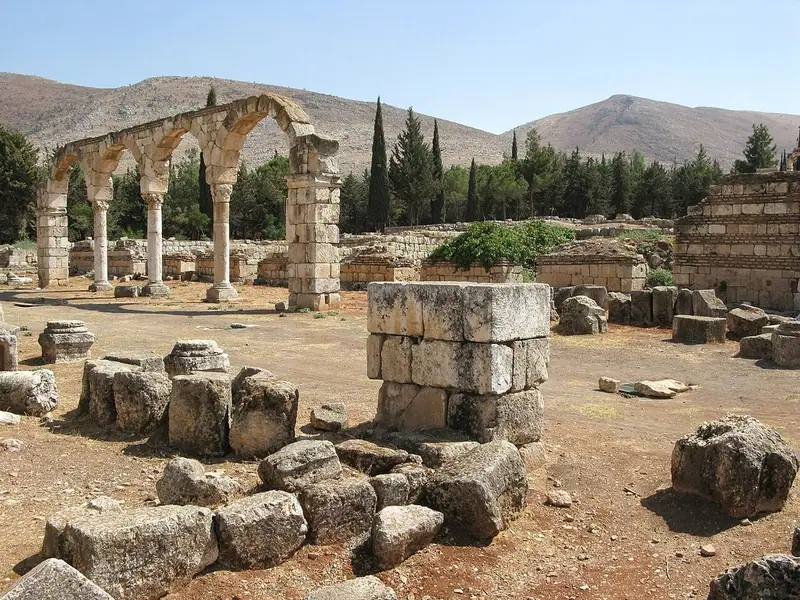 Umayyad8 stops · early 8th century
Anjar audio guide
A planned Umayyad town of colonnaded streets, a four-way tetrapylon and palace walls laced with stone and brick.
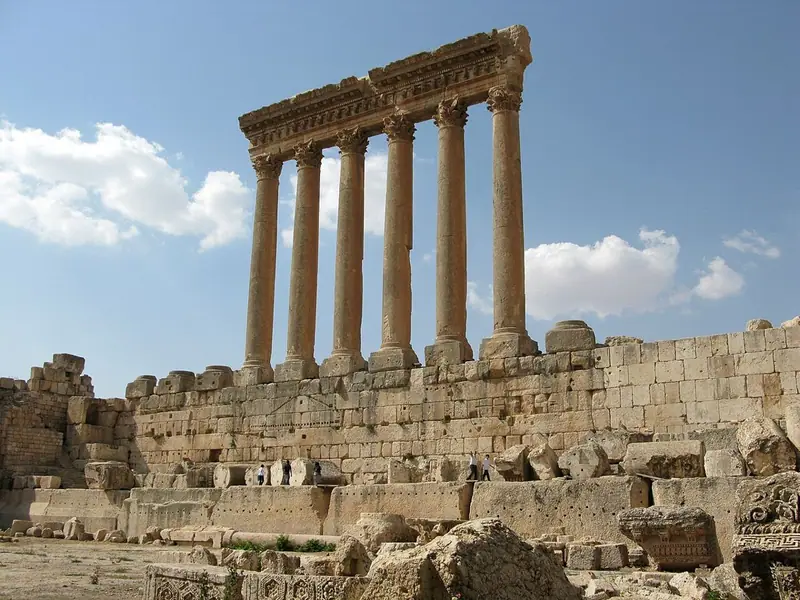 Roman9 stops · 1st c. BCE – 3rd c. CE
Baalbek audio guide
Heliopolis, City of the Sun: the largest temples Rome ever raised, and the thousand-tonne stones that went into them.
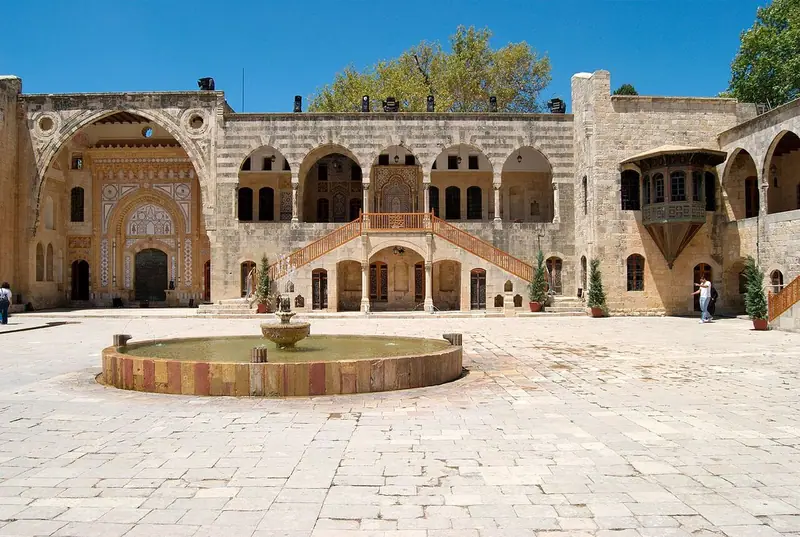 Ottoman8 stops · 1788–1818
Beiteddine Palace audio guide
Emir Bashir’s palace of arcaded courtyards, painted reception rooms and a marble hammam, high in the Chouf.
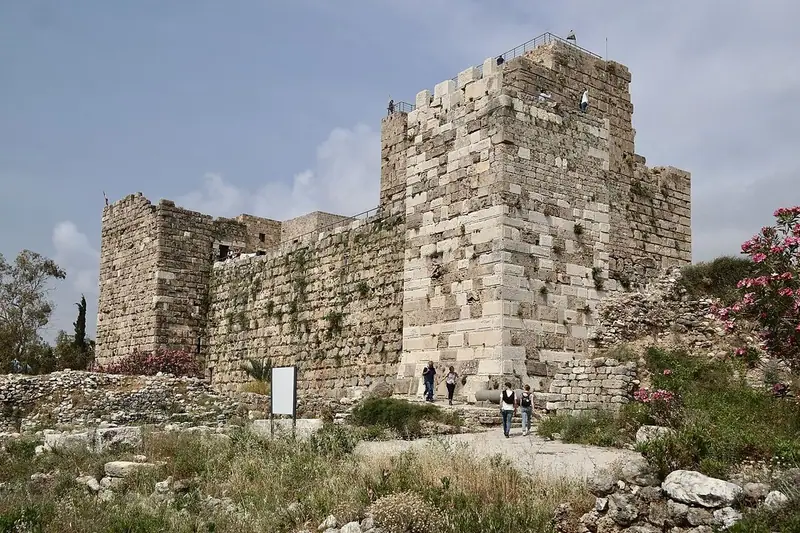 Phoenician8 stops · c. 3000 BCE onwards
Byblos audio guide
Bronze Age ramparts, the Temple of the Obelisks and a Crusader castle on one of the oldest inhabited headlands in the world.
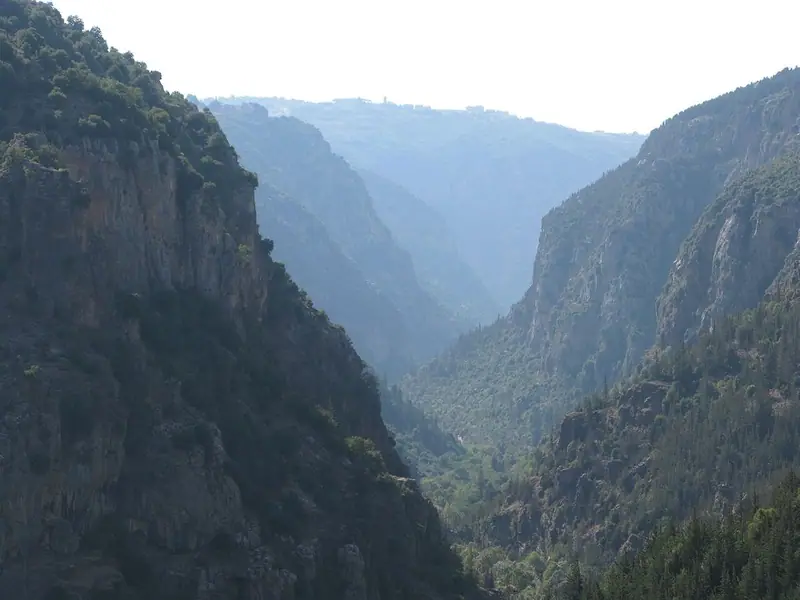 Maronite6 stops · c. 6th–19th century
Qadisha Valley audio guide
Down from the Cedars of God into the Holy Valley, where hermitages and monasteries cling to the cliffs.
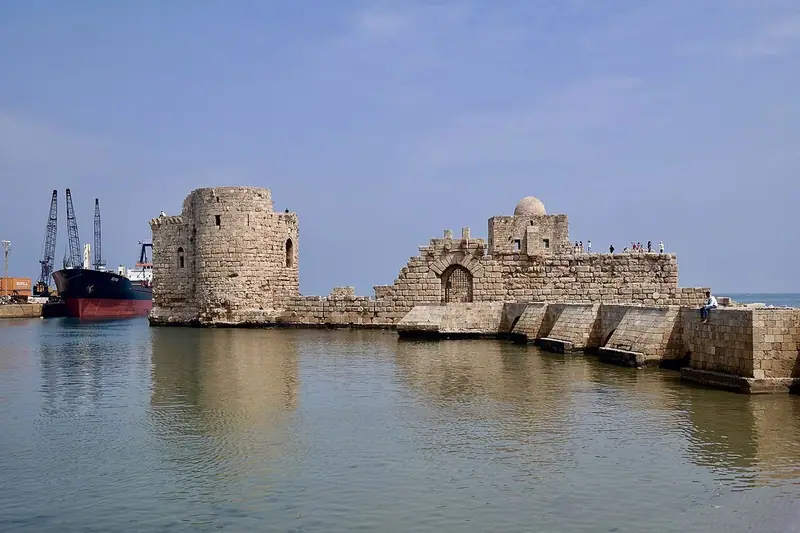 Crusader7 stops · from 1228 CE
Sidon Sea Castle audio guide
A Crusader castle on an island joined to the shore, then the old souks, the Khan al-Franj and a soap museum.
Every guide, in every country
Beirut National Museum and every other guide we publish, including future ones. One payment, no subscription.