Before you start
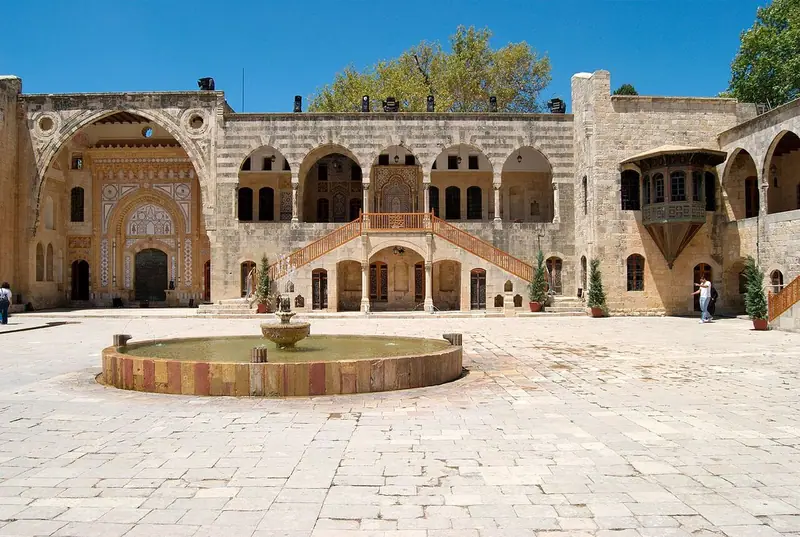
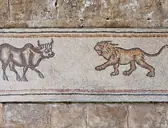
Beiteddine Palace stands on a terraced hillside in the Chouf mountains, about 45 kilometres south-east of Beirut, facing the old town of Deir el-Qamar across a green valley. Its name means ‘House of Faith’, and it is one of the finest examples of Lebanese architecture from the early nineteenth century. The palace is still the summer residence of the President of Lebanon, so part of it is closed to visitors, and every summer its courtyards host the Beiteddine Festival of music and theatre. This guide begins in the public outer courtyard and the outstanding collection of Byzantine mosaics in the old stables beneath it, then follows the palace inwards, through the formal central court and its reception rooms to the private quarters and the baths, and ends at the emir’s tomb.
Use it as a self-guided tour of Beiteddine Palace: 8 stops in visit order, each played when you’re ready, at your own pace.
 Free preview · Stop 1
Outer Courtyard
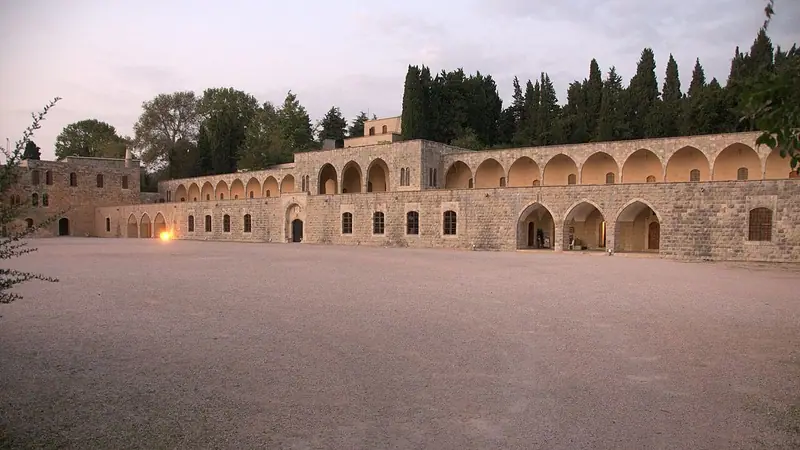
You enter through the main gate into the outer courtyard, a vast open space about 107 metres long and 45 metres wide. This was the public part of the palace, where visitors, petitioners, soldiers and horses gathered, and where the emir’s subjects came to seek an audience. It is deliberately plain and imposing. Along the right-hand side runs a two-storey wing called the Madafa, where guests were received and lodged; hospitality was an important part of a ruler’s duty and prestige in Mount Lebanon. Walk to the edge of the courtyard and look out over the valley towards Deir el-Qamar, the earlier seat of the emirs, on the facing hillside. In summer this courtyard fills with seats and a stage for the Beiteddine Festival, one of Lebanon’s major summer festivals.
Photo: Serge Melki from Indianapolis, USA · CC BY 2.0 · Wikimedia Commons
What to see at Beiteddine Palace: 8 stops, in visit order
- 01
 Outer CourtyardDar al-BaraniyyeFree preview
- 02
 Mosaic MuseumMathaf al-Fusayfisa’In the guide
- 03
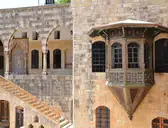 Double StaircaseAl-DarjIn the guide
- 04
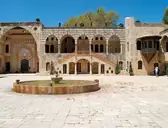 Central CourtyardDar al-WustaIn the guide
- 05
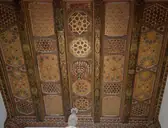 Reception RoomsAl-Qa‘atIn the guide
- 06
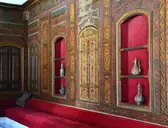 Private QuartersDar al-HarimIn the guide
- 07
 HammamAl-HammamIn the guide
- 08
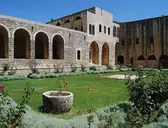 Tomb of Emir BashirDarih al-Amir BashirIn the guide
Site map of Beiteddine Palace
History of Beiteddine Palace
The palace was built by Emir Bashir II of the Shihab family, who ruled the semi-autonomous Emirate of Mount Lebanon, under the Ottoman Empire, for most of the years between 1789 and 1840. The Shihabs held the emirate from 1697 until 1842, and the wider Ottoman Empire, of which it was part, lasted from around 1300 until 1922. Bashir built the palace between 1788 and 1818, on the site of a Druze hermitage, employing local masons and craftsmen, with Italian influences in the design. It is the work of a powerful, ambitious ruler who wanted a seat to match his status. In 1840 Bashir was forced into exile and died in Istanbul in 1850; the Ottomans then used the palace as a government building, and under the French Mandate it held local offices. In 1943, the year Lebanon became independent, it was made the president’s summer residence.
The full history continues in the guide.
Beiteddine Palace guide: questions
How many stops does the Beiteddine Palace guide have?
8 stops, in visit order: 1. Outer Courtyard; 2. Mosaic Museum; 3. Double Staircase; 4. Central Courtyard; 5. Reception Rooms; 6. Private Quarters; 7. Hammam; 8. Tomb of Emir Bashir.
Can I do a self-guided tour of Beiteddine Palace with this guide?
Yes. The guide is made for a self-guided tour: 8 stops in visit order, each with a photo, a story and a voice, so you can explore Beiteddine Palace at your own pace, without joining a group. Download it before you go and it works offline.
How long is each guide?
The 8 stops add up to about 6 minutes of listening in total. You play each stop when you’re ready, so you can go at your own pace.
Does the guide work offline?
Yes, once it’s downloaded. The guide is a single self-contained web page (about 7.9 MB) with the photos, text and audio built in. Download it to your phone before you go (Wi-Fi is best); after that it opens in any modern browser on iPhone or Android, with no app, account or mobile signal needed.
Does it use GPS or need my location?
No. The guide doesn’t use GPS and doesn’t know where you are: you play each stop when you reach it. It works on iPhone and Android in any modern browser, and it’s in English.
What’s included?
One self-contained HTML guide: 8 stops in visit order, each with a photo, text and a voice, plus the story of who built the site.
Who built Beiteddine Palace?
The palace was built by Emir Bashir II of the Shihab family, who ruled the semi-autonomous Emirate of Mount Lebanon, under the Ottoman Empire, for most of the years between 1789 and 1840. The Shihabs held the emirate from 1697 until 1842, and the wider Ottoman Empire, of which it was part, lasted from around 1300 until 1922.
Where is Beiteddine Palace?
Beiteddine Palace stands on a terraced hillside in the Chouf mountains, about 45 kilometres south-east of Beirut, facing the old town of Deir el-Qamar across a green valley.
Is there a free audio guide to Beiteddine Palace?
The first stop, Outer Courtyard, is free to read and hear on this page, so you can try the Beiteddine Palace audio tour before you buy. The full guide, with all 8 stops, is a one-off purchase: download it once and it’s yours to keep, working offline.
Is the Beiteddine Palace guide worth it?
If you’d like to know what you’re looking at, yes. For $10 you get 8 stops in visit order, each with a photo, a short history and a voice you play when you’re ready, plus a site map of the stops, and about 6 minutes of listening in all. It’s short on purpose, so you spend your time looking, not listening. It’s yours to keep, works offline and needs no app. The first stop is free on this page, so you can try it before you buy. If you’d like hours of detail, a guided tour will go deeper.
Audio guide or guided tour?
It depends how you like to visit. This guide lets you explore Beiteddine Palace at your own pace, at any time, for a one-off price. A guided tour gives you a live expert you can ask questions, but at fixed times and usually for a higher price. Many people use both: a tour for the big picture, and the guide to read beforehand or to revisit the stops in their own time.
Is this the official Beiteddine Palace guide?
No. It’s an independent guide by The Historian Guide, not affiliated with or endorsed by the operator of Beiteddine Palace. For tickets and opening hours, check the official site operator before you go.
Does the guide include entry tickets or opening hours?
No. The guide is a digital companion only. Admission to Beiteddine Palace is separate, so check the official site operator for current tickets and opening hours before you go.
- Stop 1 · Outer Courtyard: Serge Melki from Indianapolis, USA · CC BY 2.0 · Wikimedia Commons · resized
- Stop 2 · Mosaic Museum: Eusebius · CC BY 3.0 · Wikimedia Commons · resized
- Stop 3 · Double Staircase: Fblancart · CC BY-SA 4.0 · Wikimedia Commons · resized
- Stop 4 · Central Courtyard (also the cover): Peripitus · CC BY-SA 3.0 · Wikimedia Commons · resized
- Stop 5 · Reception Rooms: Peripitus · CC BY-SA 3.0 · Wikimedia Commons · resized
- Stop 6 · Private Quarters: Fblancart · CC BY-SA 4.0 · Wikimedia Commons · resized
- Stop 7 · Hammam: Willem van de Poll · CC0 · Wikimedia Commons · resized
- Stop 8 · Tomb of Emir Bashir: Peripitus · CC BY-SA 3.0 · Wikimedia Commons · resized


All photographs from Wikimedia Commons under the licences shown.
More guides in Lebanon
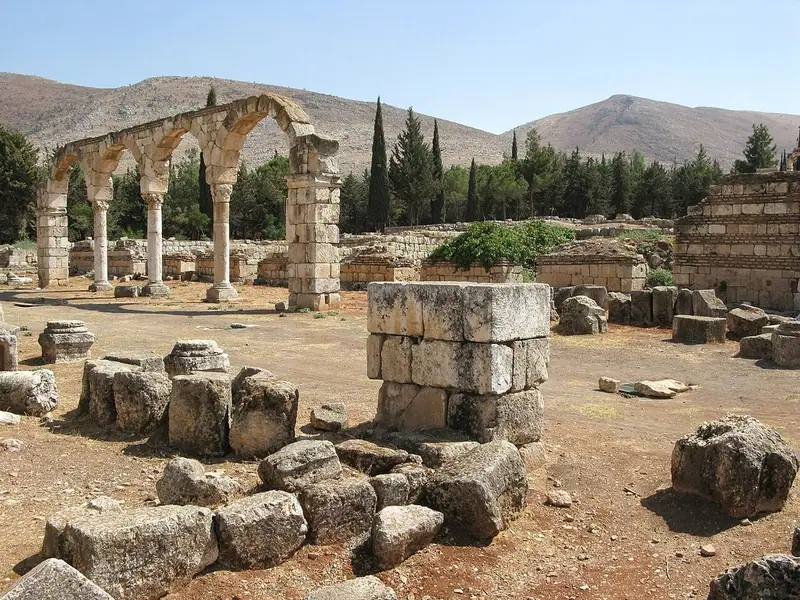 Umayyad8 stops · early 8th century
Anjar audio guide
A planned Umayyad town of colonnaded streets, a four-way tetrapylon and palace walls laced with stone and brick.
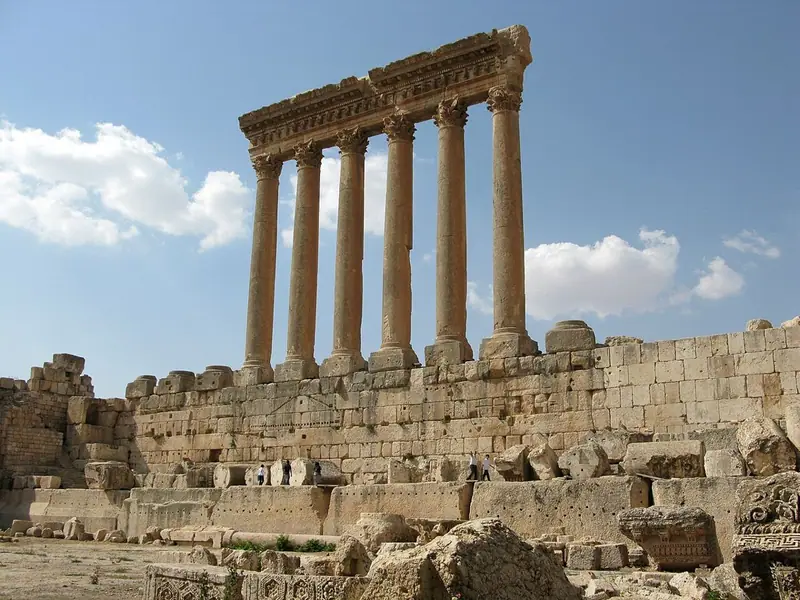 Roman9 stops · 1st c. BCE – 3rd c. CE
Baalbek audio guide
Heliopolis, City of the Sun: the largest temples Rome ever raised, and the thousand-tonne stones that went into them.
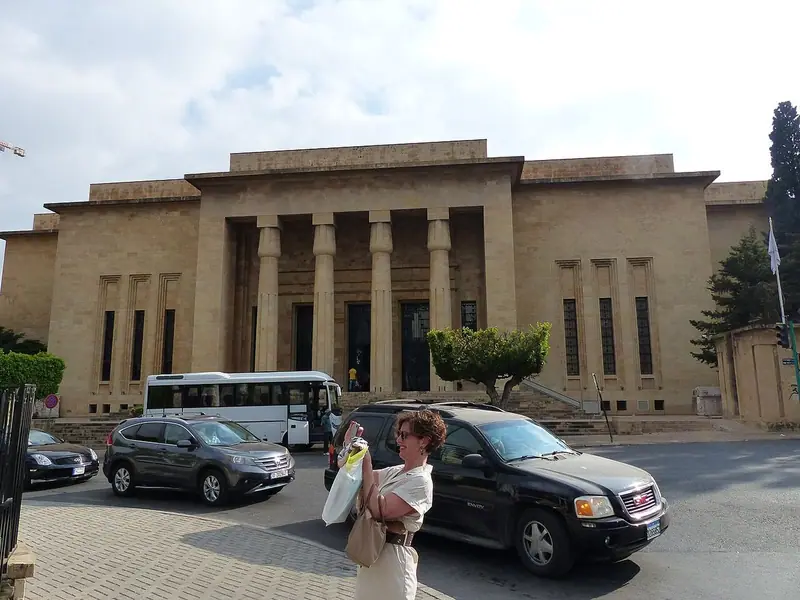 Phoenician8 stops · collection c. 3200 BCE – 19th century CE
Beirut National Museum audio guide
The Sarcophagus of Ahiram, Phoenician sarcophagi and Roman mosaics: Lebanon’s long story in one building.
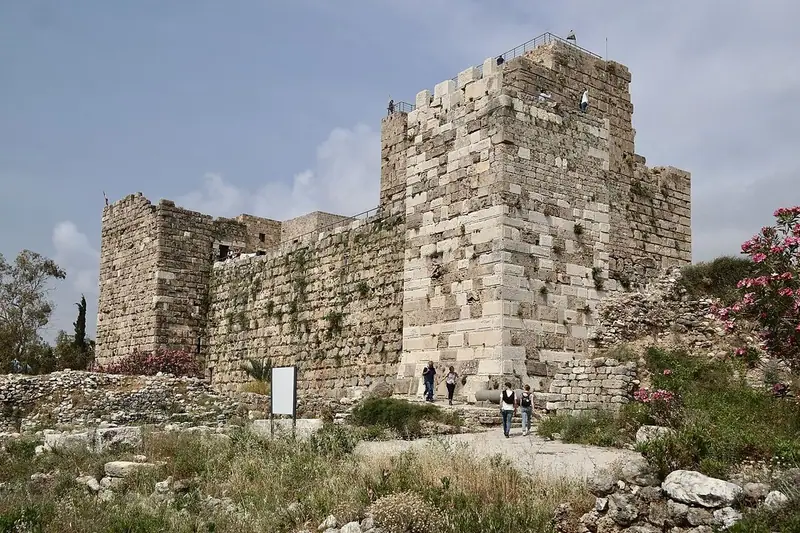 Phoenician8 stops · c. 3000 BCE onwards
Byblos audio guide
Bronze Age ramparts, the Temple of the Obelisks and a Crusader castle on one of the oldest inhabited headlands in the world.
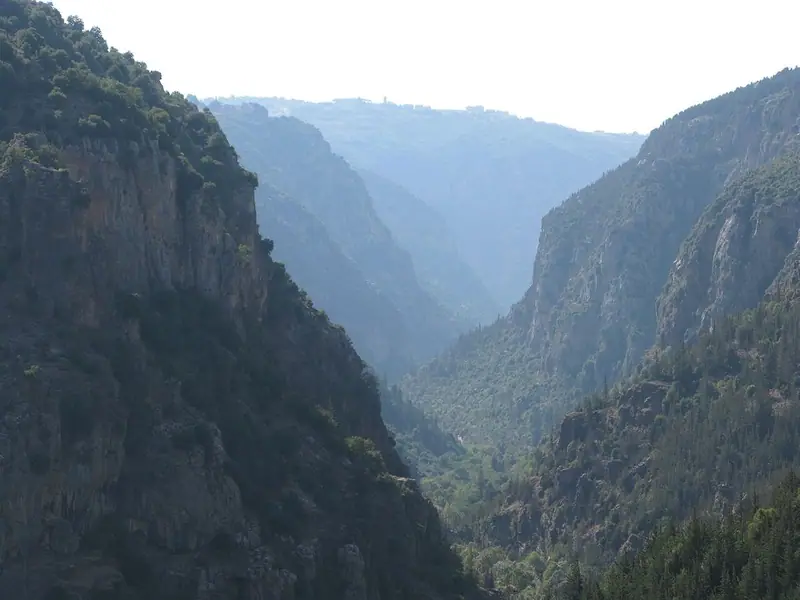 Maronite6 stops · c. 6th–19th century
Qadisha Valley audio guide
Down from the Cedars of God into the Holy Valley, where hermitages and monasteries cling to the cliffs.
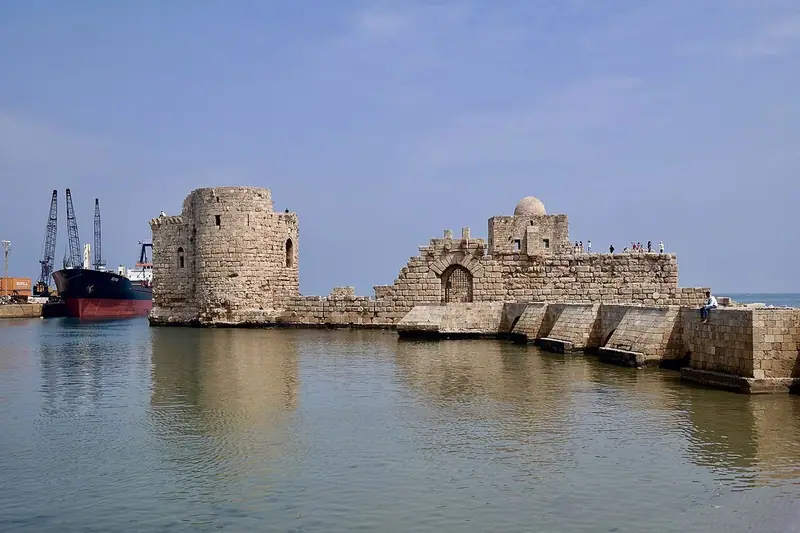 Crusader7 stops · from 1228 CE
Sidon Sea Castle audio guide
A Crusader castle on an island joined to the shore, then the old souks, the Khan al-Franj and a soap museum.
Every guide, in every country
Beiteddine Palace and every other guide we publish, including future ones. One payment, no subscription.