Before you start
Sidon, known in Arabic as Saida, is a busy port on the coast of southern Lebanon, about 40 kilometres south of Beirut. Its Crusader Sea Castle sits on a small island just off the harbour, joined to the shore by a stone causeway, and right behind it lies the old walled town, a dense maze of vaulted souks, mosques, caravanserais and Ottoman houses. Everything in this guide can be reached on foot, and the walk is short, though the lanes of the old town twist and turn. This guide starts at the Sea Castle, then heads into the old town by way of the Debbane Palace, the souks, the Khan al-Franj and the Soap Museum, and finishes at the land castle on the hill to the south.
Use it as a self-guided tour of the Sidon Sea Castle: 7 stops in visit order, each played when you’re ready, at your own pace.
 Free preview · Stop 1
Sea Castle
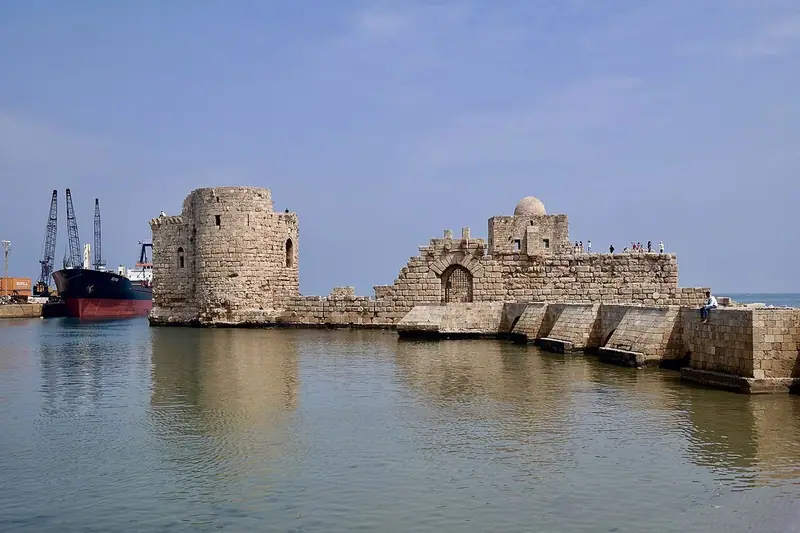
Begin at the Sea Castle, reached by a stone causeway about 80 metres long that crosses the water from the harbour. The Crusaders built the castle in 1228 on a small island, a natural strongpoint that the Phoenicians had used before them; the island is thought to have held a temple to Melqart, the god whom the Greeks linked with Herakles. The Mamluks damaged the castle when they took Sidon, then rebuilt it and gave it the long causeway, and in the seventeenth century the Druze emir Fakhr al-Din II restored it again. As you cross, look at the walls: dozens of Roman columns were laid sideways through the masonry to bind it together, their round ends poking out like the barrels of guns. Today the castle consists mainly of two towers joined by a wall, and it is wonderfully photogenic from the shore.
Photo: Choinowski · CC BY-SA 4.0 · Wikimedia Commons
What to see at the Sidon Sea Castle: 7 stops, in visit order
- 01
 Sea CastleQal‘at Saida al-BahriyyaFree preview
- 02
 West Tower and RoofAl-Burj al-GharbiIn the guide
- 03
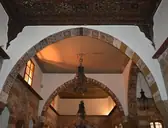 Debbane PalaceQasr DabbanaIn the guide
- 04
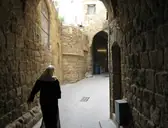 Old SouksAl-Aswaq al-QadimaIn the guide
- 05
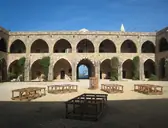 Khan al-FranjKhan al-FranjIn the guide
- 06
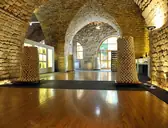 Soap MuseumMathaf al-SabunIn the guide
- 07
 Castle of St LouisQal‘at al-Mu‘izzIn the guide
Site map of the Sidon Sea Castle
History of the Sidon Sea Castle
Sidon was one of the great cities of the Phoenicians, the seafaring Canaanite people of the Levant. Excavations beneath the land castle have found a settlement going back to the Early Bronze Age, around 3000 BCE, and Phoenician civilisation was at its height from about 1200 BCE until Alexander the Great arrived in 333 BCE. Sidon was famous for its glass and its purple dye, and under Persian rule in the fifth and fourth centuries BCE it became the leading city of Phoenicia. Greeks, Romans and Byzantines followed, then Arab rule from the 630s. The castles you will see were built by the Crusaders, who captured Sidon in 1110 and held it, with interruptions, until 1291, when the Mamluks took over and repaired them. Most of the old town’s buildings date from Ottoman rule, between 1516 and the First World War, when local notable families built the khans, palaces and soap factories that still stand.
Sidon Sea Castle guide: questions
How many stops does the Sidon Sea Castle guide have?
7 stops, in visit order: 1. Sea Castle; 2. West Tower and Roof; 3. Debbane Palace; 4. Old Souks; 5. Khan al-Franj; 6. Soap Museum; 7. Castle of St Louis.
Can I do a self-guided tour of the Sidon Sea Castle with this guide?
Yes. The guide is made for a self-guided tour: 7 stops in visit order, each with a photo, a story and a voice, so you can explore the Sidon Sea Castle at your own pace, without joining a group. Download it before you go and it works offline.
How long is each guide?
The 7 stops add up to about 5 minutes of listening in total. You play each stop when you’re ready, so you can go at your own pace.
Does the guide work offline?
Yes, once it’s downloaded. The guide is a single self-contained web page (about 6.2 MB) with the photos, text and audio built in. Download it to your phone before you go (Wi-Fi is best); after that it opens in any modern browser on iPhone or Android, with no app, account or mobile signal needed.
Does it use GPS or need my location?
No. The guide doesn’t use GPS and doesn’t know where you are: you play each stop when you reach it. It works on iPhone and Android in any modern browser, and it’s in English.
What’s included?
One self-contained HTML guide: 7 stops in visit order, each with a photo, text and a voice, plus the story of who built the site.
Who built the Sidon Sea Castle?
Sidon was one of the great cities of the Phoenicians, the seafaring Canaanite people of the Levant. Excavations beneath the land castle have found a settlement going back to the Early Bronze Age, around 3000 BCE, and Phoenician civilisation was at its height from about 1200 BCE until Alexander the Great arrived in 333 BCE.
Where is the Sidon Sea Castle?
Sidon, known in Arabic as Saida, is a busy port on the coast of southern Lebanon, about 40 kilometres south of Beirut.
Is there a free audio guide to the Sidon Sea Castle?
The first stop, Sea Castle, is free to read and hear on this page, so you can try the Sidon Sea Castle audio tour before you buy. The full guide, with all 7 stops, is a one-off purchase: download it once and it’s yours to keep, working offline.
Is the Sidon Sea Castle guide worth it?
If you’d like to know what you’re looking at, yes. For $10 you get 7 stops in visit order, each with a photo, a short history and a voice you play when you’re ready, plus a site map of the stops, and about 5 minutes of listening in all. It’s short on purpose, so you spend your time looking, not listening. It’s yours to keep, works offline and needs no app. The first stop is free on this page, so you can try it before you buy. If you’d like hours of detail, a guided tour will go deeper.
Audio guide or guided tour?
It depends how you like to visit. This guide lets you explore the Sidon Sea Castle at your own pace, at any time, for a one-off price. A guided tour gives you a live expert you can ask questions, but at fixed times and usually for a higher price. Many people use both: a tour for the big picture, and the guide to read beforehand or to revisit the stops in their own time.
Is this the official Sidon Sea Castle guide?
No. It’s an independent guide by The Historian Guide, not affiliated with or endorsed by the operator of the Sidon Sea Castle. For tickets and opening hours, check the official site operator before you go.
Does the guide include entry tickets or opening hours?
No. The guide is a digital companion only. Admission to the Sidon Sea Castle is separate, so check the official site operator for current tickets and opening hours before you go.
- Stop 1 · Sea Castle (also the cover): Choinowski · CC BY-SA 4.0 · Wikimedia Commons · resized
- Stop 2 · West Tower and Roof: © Vyacheslav Argenberg / http://www.vascoplanet.com/ · CC BY 4.0 · Wikimedia Commons · resized
- Stop 3 · Debbane Palace: Raghad.kabtool · CC BY-SA 4.0 · Wikimedia Commons · resized
- Stop 4 · Old Souks: © Vyacheslav Argenberg / http://www.vascoplanet.com/ · CC BY 4.0 · Wikimedia Commons · resized
- Stop 5 · Khan al-Franj: Ankara · CC BY-SA 3.0 · Wikimedia Commons · resized
- Stop 6 · Soap Museum: Personal photographer of the Soap Museum · CC BY-SA 4.0 · Wikimedia Commons · resized
- Stop 7 · Castle of St Louis: O.Mustafin · Public domain · Wikimedia Commons · resized


All photographs from Wikimedia Commons under the licences shown.
More guides in Lebanon
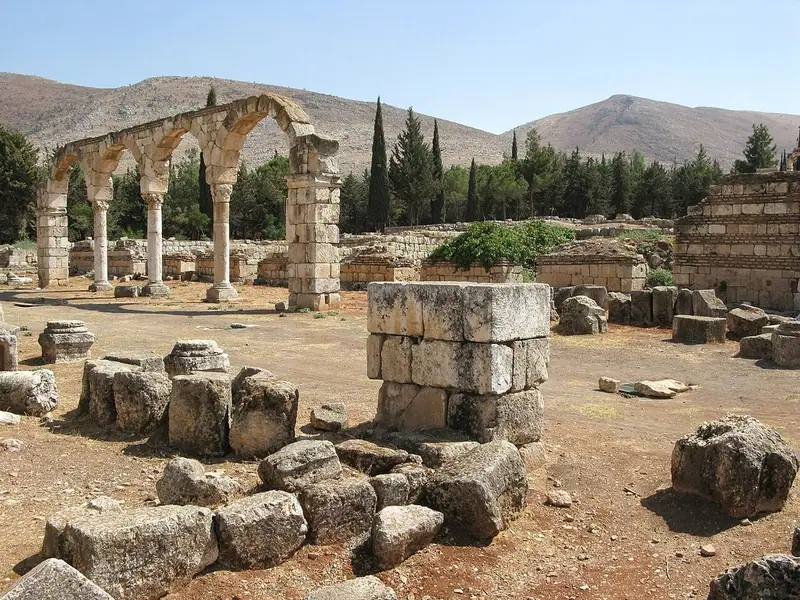 Umayyad8 stops · early 8th century
Anjar audio guide
A planned Umayyad town of colonnaded streets, a four-way tetrapylon and palace walls laced with stone and brick.
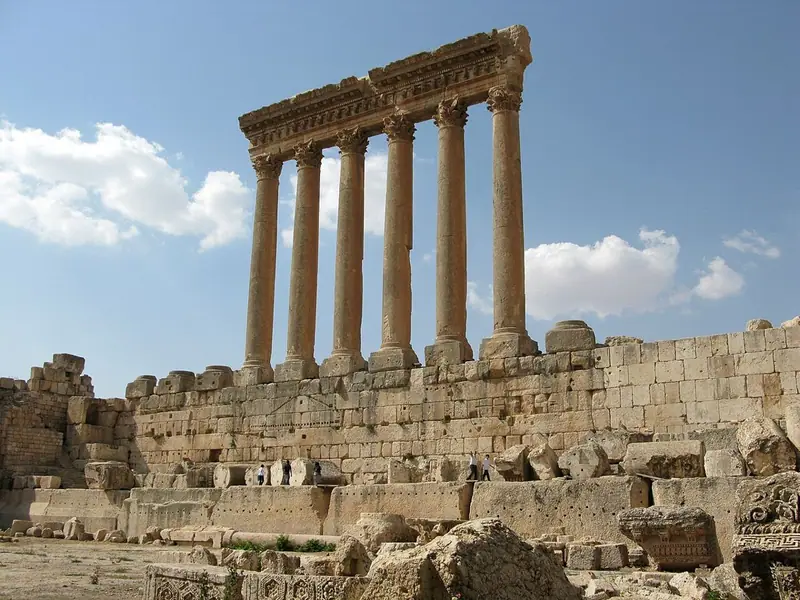 Roman9 stops · 1st c. BCE – 3rd c. CE
Baalbek audio guide
Heliopolis, City of the Sun: the largest temples Rome ever raised, and the thousand-tonne stones that went into them.
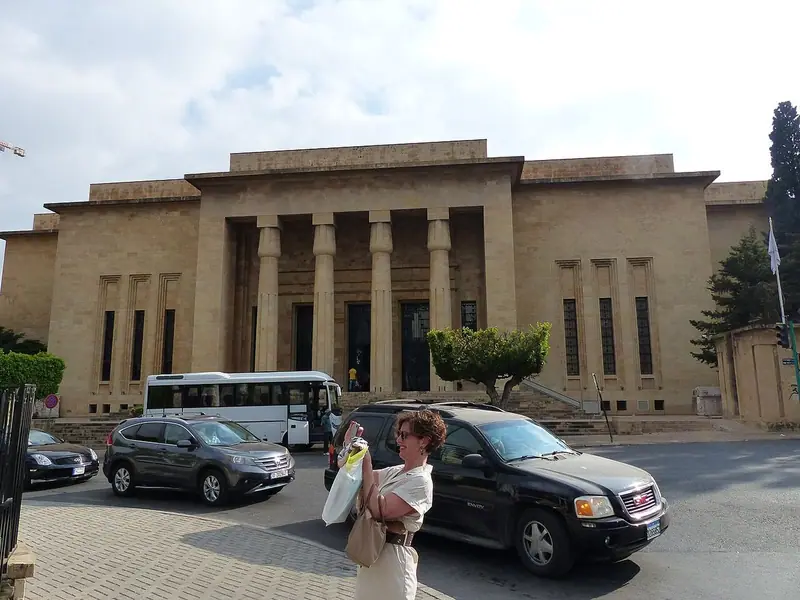 Phoenician8 stops · collection c. 3200 BCE – 19th century CE
Beirut National Museum audio guide
The Sarcophagus of Ahiram, Phoenician sarcophagi and Roman mosaics: Lebanon’s long story in one building.
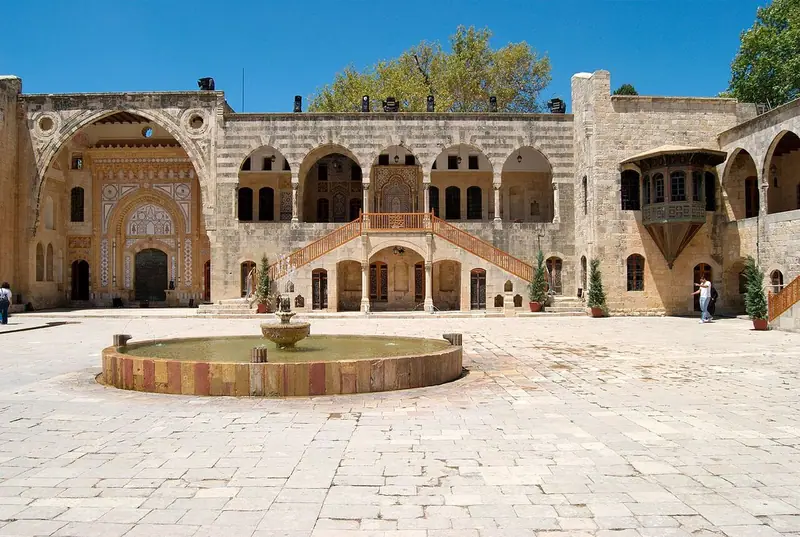 Ottoman8 stops · 1788–1818
Beiteddine Palace audio guide
Emir Bashir’s palace of arcaded courtyards, painted reception rooms and a marble hammam, high in the Chouf.
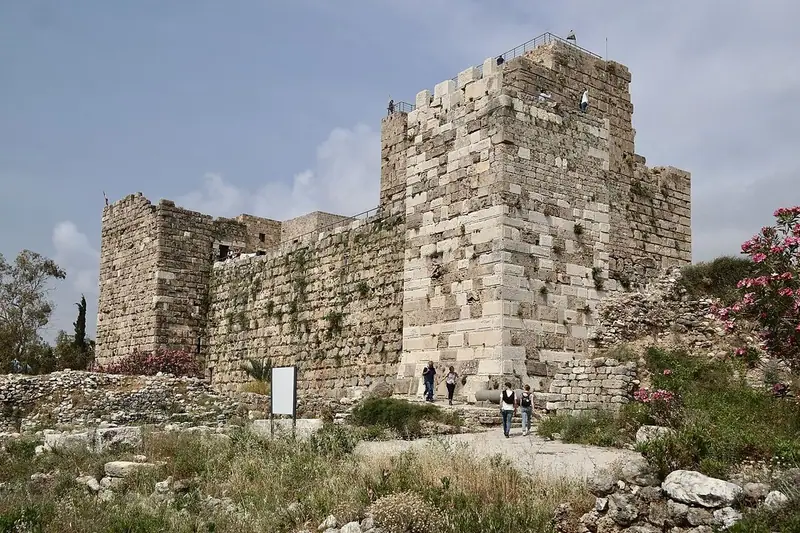 Phoenician8 stops · c. 3000 BCE onwards
Byblos audio guide
Bronze Age ramparts, the Temple of the Obelisks and a Crusader castle on one of the oldest inhabited headlands in the world.
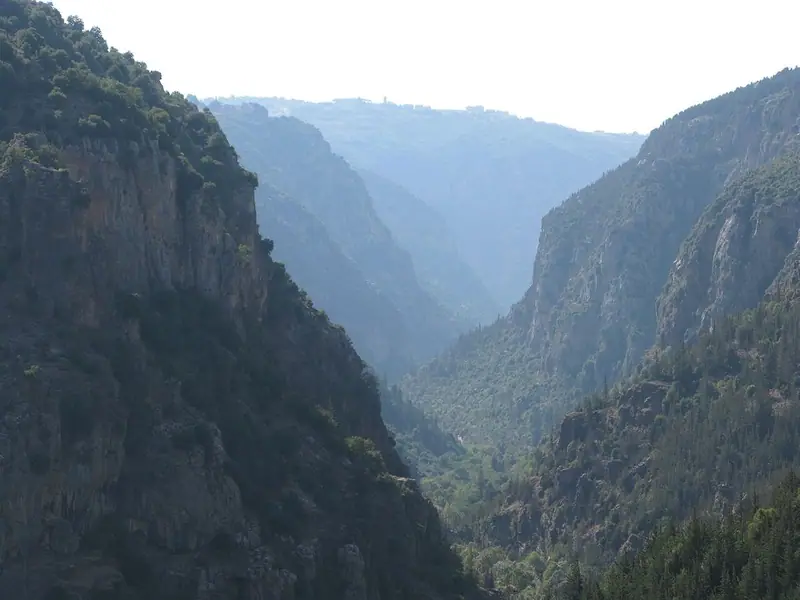 Maronite6 stops · c. 6th–19th century
Qadisha Valley audio guide
Down from the Cedars of God into the Holy Valley, where hermitages and monasteries cling to the cliffs.
Every guide, in every country
Sidon Sea Castle and every other guide we publish, including future ones. One payment, no subscription.