Before you start
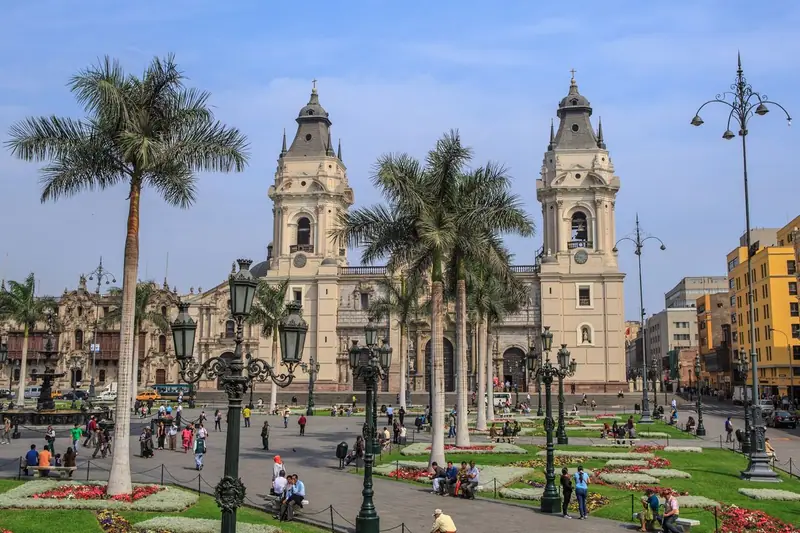
Lima was founded in 1535 by Francisco Pizarro as the City of the Kings, and it became the capital of Spain’s South American empire. Its historic centre, badly damaged by earthquakes and as often rebuilt, is still organised around the Plaza Mayor, with the cathedral, the government and the archbishop facing one another across a bronze fountain. This guide begins in that square, visits the cathedral and the palaces, walks to the monastery of San Francisco and its catacombs, and continues to the façade of the Torre Tagle Palace and the Plaza San Martín. The route is about two kilometres and takes two to three hours with visits. The centre was declared a World Heritage Site in 1988. For a fuller visit to the Dominican church of Santo Domingo, with the tombs of St Rose of Lima and St Martin de Porres, allow a short extra walk north-west of the Plaza Mayor.
Use it as a self-guided tour of the Historic Centre of Lima: 6 stops in visit order, each played when you’re ready, at your own pace.
 Free preview · Stop 1
The Plaza Mayor
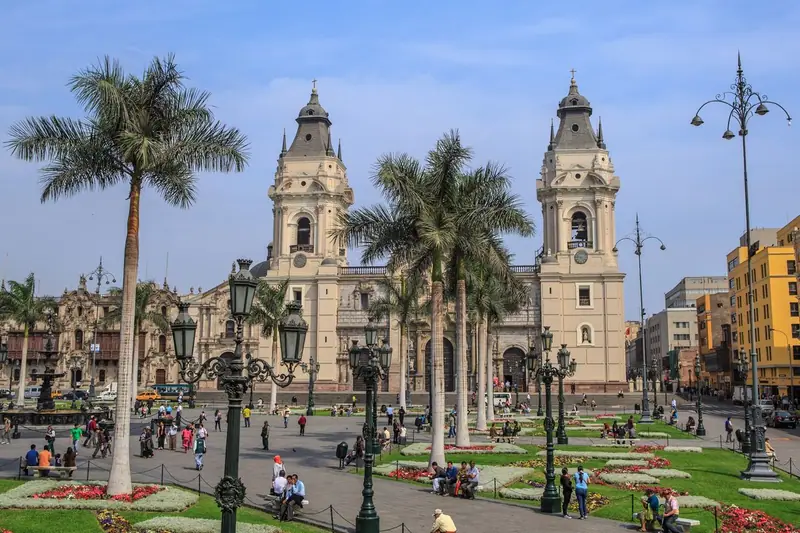
The Plaza Mayor, also called the Plaza de Armas, is the square Pizarro laid out in 1535, and it has been the ceremonial heart of Lima ever since. A bronze fountain of 1651 stands in the centre. Around the four sides are the buildings of church and state: the cathedral on the east, the Government Palace on the north, the Archbishop’s Palace beside the cathedral, and the municipal palaces on the south and west. The arcades and the balconies have been renewed after earthquakes, but the plan is the original one, a Spanish founding square imposed on the valley. This is the place to begin, and to return to. From the fountain, go first to the cathedral, whose towers close the eastern side.
Photo: Murray Foubister · CC BY-SA 2.0 · Wikimedia Commons
What to see at the Historic Centre of Lima: 6 stops, in visit order
- 01
 The Plaza MayorThe square of the foundationFree preview
- 02
 Lima CathedralThe church of the City of the KingsIn the guide
- 03
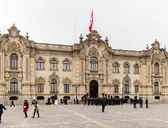 The Government Palace and the Archbishop’s PalaceFacades of church and stateIn the guide
- 04
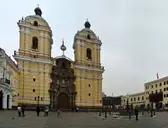 The Monastery of San Francisco and the CatacombsThe Franciscan city of the deadIn the guide
- 05
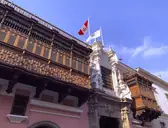 The Torre Tagle PalaceThe balconies of viceregal LimaIn the guide
- 06
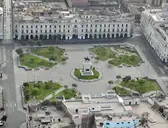 Plaza San MartínThe square of independenceIn the guide
Site map of the Historic Centre of Lima
History of the Historic Centre of Lima
On 18 January 1535 Francisco Pizarro founded a Spanish city in the Rímac valley, on a site already inhabited, and named it the City of the Kings. It became the seat of the Viceroyalty of Peru, the most powerful Spanish government in South America, and its convents, palaces and enclosed wooden balconies gave it a character that travellers remarked on for centuries. Severe earthquakes, especially in 1687 and 1746, brought much of the centre down, and what you walk through is largely a colonial city rebuilt in the eighteenth century, with later republican additions. Independence was proclaimed in 1821; the Plaza San Martín, laid out a century later, commemorates that change. In 1988 the historic centre was inscribed as a World Heritage Site.
The Historic Centre of Lima guide: questions
How many stops does the Historic Centre of Lima guide have?
6 stops, in visit order: 1. The Plaza Mayor; 2. Lima Cathedral; 3. The Government Palace and the Archbishop’s Palace; 4. The Monastery of San Francisco and the Catacombs; 5. The Torre Tagle Palace; 6. Plaza San Martín.
Can I do a self-guided tour of the Historic Centre of Lima with this guide?
Yes. The guide is made for a self-guided tour: 6 stops in visit order, each with a photo, a story and a voice, so you can explore the Historic Centre of Lima at your own pace, without joining a group. Download it before you go and it works offline.
How long is each guide?
The 6 stops add up to about 4 minutes of listening in total. You play each stop when you’re ready, so you can go at your own pace.
Does the guide work offline?
Yes, once it’s downloaded. The guide is a single self-contained web page (about 5.6 MB) with the photos, text and audio built in. Download it to your phone before you go (Wi-Fi is best); after that it opens in any modern browser on iPhone or Android, with no app, account or mobile signal needed.
Does it use GPS or need my location?
No. The guide doesn’t use GPS and doesn’t know where you are: you play each stop when you reach it. It works on iPhone and Android in any modern browser, and it’s in English.
What’s included?
One self-contained HTML guide: 6 stops in visit order, each with a photo, text and a voice, plus the story of who built the site.
Who built the Historic Centre of Lima?
On 18 January 1535 Francisco Pizarro founded a Spanish city in the Rímac valley, on a site already inhabited, and named it the City of the Kings. It became the seat of the Viceroyalty of Peru, the most powerful Spanish government in South America, and its convents, palaces and enclosed wooden balconies gave it a character that travellers remarked on for centuries.
Where is the Historic Centre of Lima?
Lima was founded in 1535 by Francisco Pizarro as the City of the Kings, and it became the capital of Spain’s South American empire.
Is there a free audio guide to the Historic Centre of Lima?
The first stop, The Plaza Mayor, is free to read and hear on this page, so you can try the Historic Centre of Lima audio tour before you buy. The full guide, with all 6 stops, is a one-off purchase: download it once and it’s yours to keep, working offline.
Is the Historic Centre of Lima guide worth it?
If you’d like to know what you’re looking at, yes. For $10 you get 6 stops in visit order, each with a photo, a short history and a voice you play when you’re ready, plus a site map of the stops, and about 4 minutes of listening in all. It’s short on purpose, so you spend your time looking, not listening. It’s yours to keep, works offline and needs no app. The first stop is free on this page, so you can try it before you buy. If you’d like hours of detail, a guided tour will go deeper.
Audio guide or guided tour?
It depends how you like to visit. This guide lets you explore the Historic Centre of Lima at your own pace, at any time, for a one-off price. A guided tour gives you a live expert you can ask questions, but at fixed times and usually for a higher price. Many people use both: a tour for the big picture, and the guide to read beforehand or to revisit the stops in their own time.
Is this the official Historic Centre of Lima guide?
No. It’s an independent guide by The Historian Guide, not affiliated with or endorsed by the operator of the Historic Centre of Lima. For tickets and opening hours, check the official site operator before you go.
Does the guide include entry tickets or opening hours?
No. The guide is a digital companion only. Admission to the Historic Centre of Lima is separate, so check the official site operator for current tickets and opening hours before you go.
- Stop 1 · The Plaza Mayor (also the cover): Murray Foubister · CC BY-SA 2.0 · Wikimedia Commons · resized
- Stop 2 · Lima Cathedral: Avodrocc · CC BY 2.0 · Wikimedia Commons · resized
- Stop 3 · The Government Palace and the Archbishop’s Palace: Diego Delso · CC BY-SA 4.0 · Wikimedia Commons · resized
- Stop 4 · The Monastery of San Francisco and the Catacombs: CEllen · CC BY-SA 4.0 · Wikimedia Commons · resized
- Stop 5 · The Torre Tagle Palace: Miguel Francisco Rueda Ñañez · CC BY-SA 4.0 · Wikimedia Commons · resized
- Stop 6 · Plaza San Martín: Ministerio de Defensa del Perú · CC BY 2.0 · Wikimedia Commons · resized


All photographs from Wikimedia Commons under the licences shown.
More guides in Peru
 Spanish Colonial7 stops · 16th–19th century CE
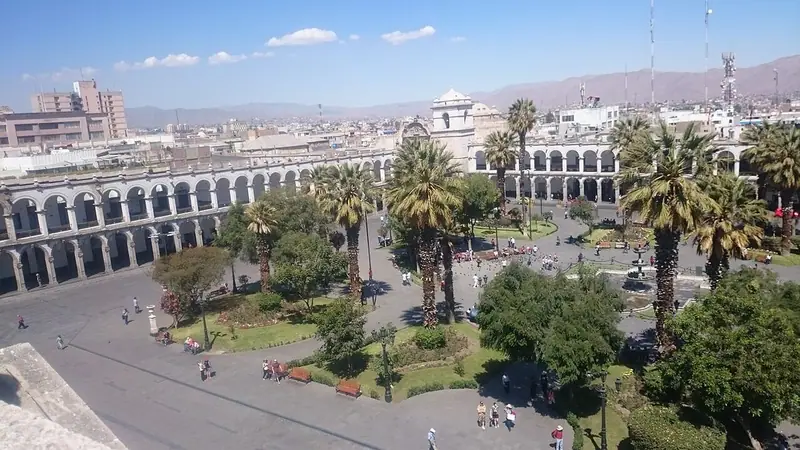
Arequipa audio guide
The White City of volcanic stone: the Santa Catalina Monastery, the cathedral and La Compañía on the Plaza de Armas, the ice maiden Juanita and the Yanahuara viewpoint.
 Chimú8 stops · c. 900 – 1470 CE
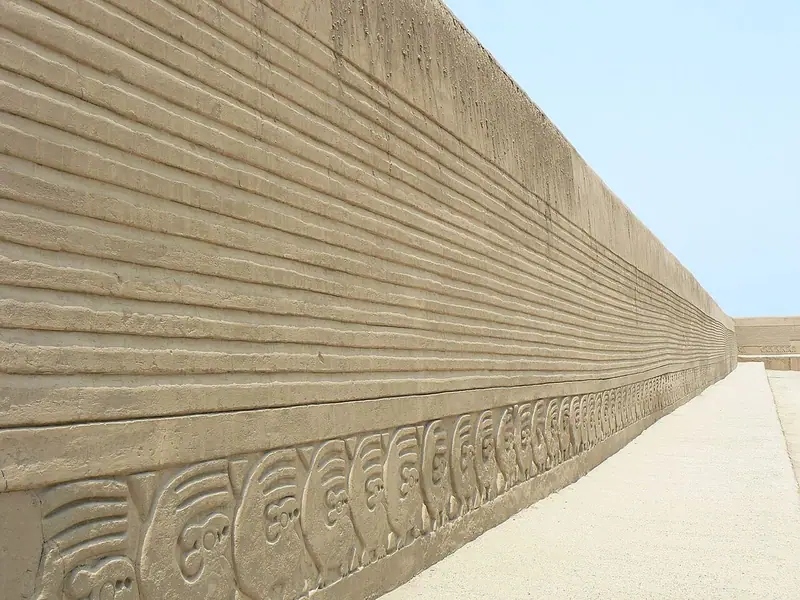
Chan Chan audio guide
The vast adobe capital of the Chimú kings by the Pacific: the palace of Nik An with its friezes of fish and nets, its audiencias and royal tomb, and the rainbow temple of the Huaca Arco Iris.
 Inca7 stops · 15th–18th century CE
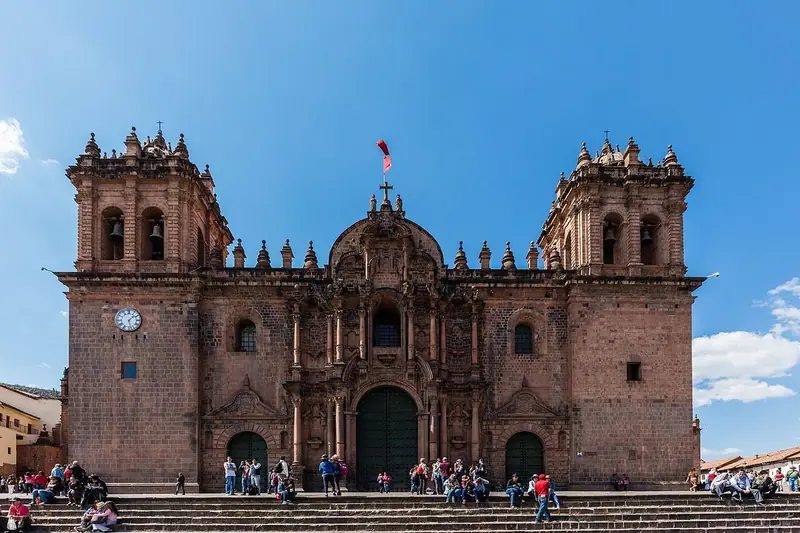
Historic Centre of Cusco audio guide
From the Plaza de Armas past the Twelve-Angled Stone and San Blas to the Qorikancha, temple of the Incas.
 Inca8 stops · 15th century CE
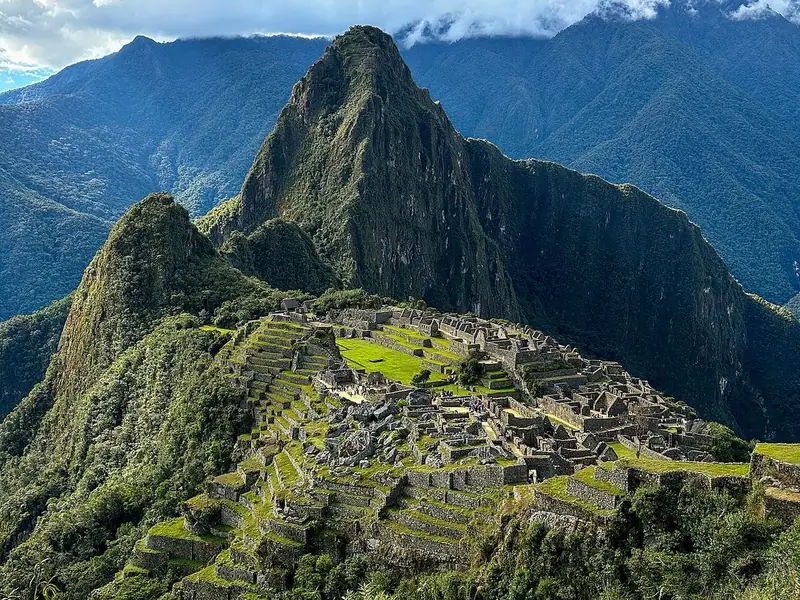
Machu Picchu audio guide
Through the city gate to the Temple of the Sun, the Intihuatana and the Temple of the Condor, high above the Urubamba.
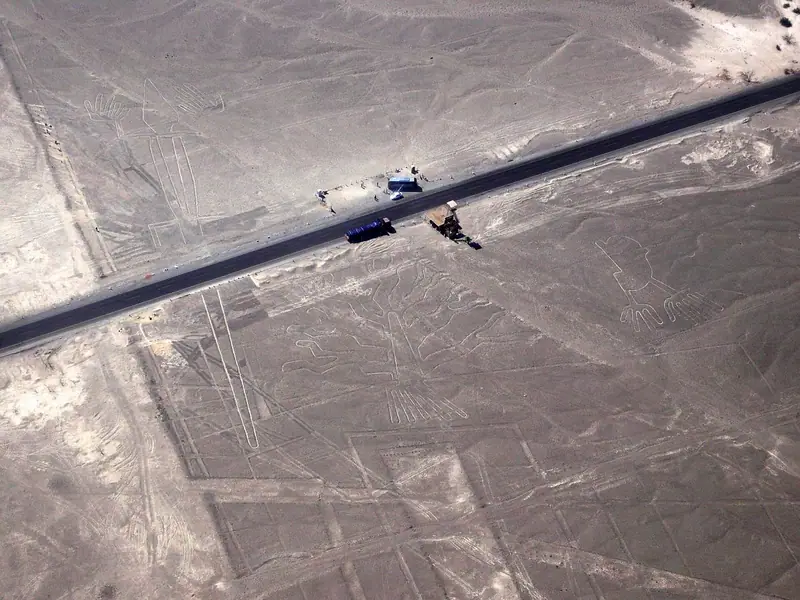 Nazca and Paracas cultures6 stops · c. 500 BCE – 800 CE
The Nazca Lines audio guide
The desert drawings of the Paracas and Nazca peoples, from the hillside figures of Palpa and Maria Reiche’s tower to Cahuachi, the aqueducts of Cantalloc and the Chauchilla cemetery.
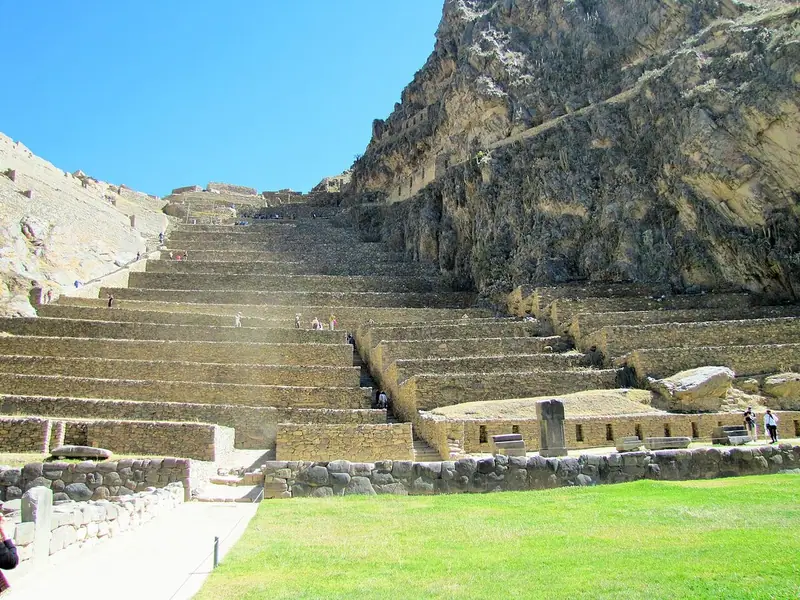 Inca6 stops · 15th–16th century CE
Ollantaytambo audio guide
The Pumatallis terraces, the Temple Sector’s six great monoliths and the Inca town below.
Every guide, in every country
The Historic Centre of Lima and every other guide we publish, including future ones. One payment, no subscription.