Before you start
Between about 500 BCE and 500 CE, the people of the desert coast of southern Peru drew lines, shapes and giant figures of animals and plants across the stony plains between Palpa and Nazca. Most can only be made out from the air or from the hills, and their purpose is still debated. This guide follows the Pan-American Highway south from the older figures near Palpa to the house of Maria Reiche, who spent her life protecting the lines, and to her viewing tower beside them. It then visits the great ceremonial centre of Cahuachi, the underground aqueducts of Cantalloc and the ancient cemetery of Chauchilla.
Use it as a self-guided tour of the Nazca Lines: 6 stops in visit order, each played when you’re ready, at your own pace.
 Free preview · Stop 1
The Palpa Lines
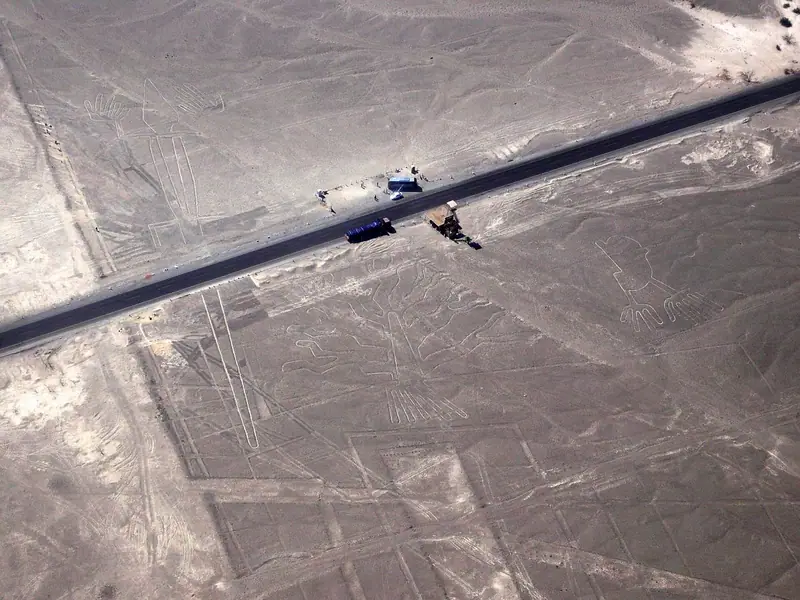
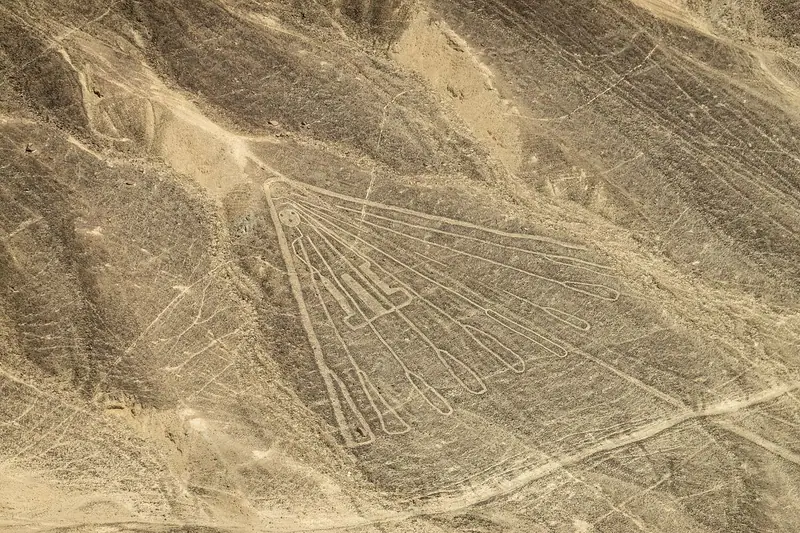
Begin north of Nazca, near the town of Palpa, where a viewing tower stands beside the Pan-American Highway. The geoglyphs around Palpa include some of the oldest in the region, made by people of the Paracas culture before the Nazca. Unlike most of the Nazca figures, which lie flat on the open plain, many of these were laid out on the slopes of hills, where they could be seen from the valley below. Some show human figures and faces, which are rare on the Nazca plain. Archaeologists working here since the 1990s have mapped hundreds of geoglyphs, and in 2018 drones revealed many more, too faint to be seen from the ground. From the tower you can look across the hillsides and their figures, among them a large circular design. From here, continue south along the highway, across the plain of San José, to the house of Maria Reiche.
Photo: PsamatheM · CC BY-SA 4.0 · Wikimedia Commons
What to see at the Nazca Lines: 6 stops, in visit order
- 01
 The Palpa LinesThe oldest figuresFree preview
- 02
 Maria Reiche’s HouseThe lady of the linesIn the guide
- 03
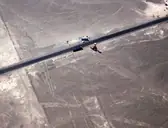 The Viewing TowerThe Tree, the Hands and the LizardIn the guide
- 04
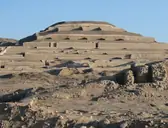 CahuachiThe sacred city of the NazcaIn the guide
- 05
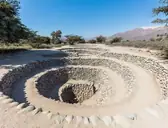 The Cantalloc AqueductsWater under the desertIn the guide
- 06
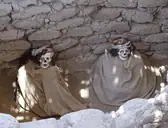 The Chauchilla CemeteryThe ancient dead of the desertIn the guide
Site map of the Nazca Lines
History of the Nazca Lines
The lines were made by two peoples. The first, from about 400 to 200 BCE, belonged to the Paracas culture, famous for its textiles. They were followed by the Nazca culture, which flourished in the river valleys of this coast from about the first century BCE until around 800 CE, and made most of the lines between about 200 BCE and 500 CE. The Nazca were farmers who built a ceremonial centre at Cahuachi, made finely painted pottery and wove brilliant textiles, and found ways to bring water to their fields in one of the driest deserts on Earth. The lines were made by removing the reddish-brown, iron-stained stones that cover the desert to expose the pale ground beneath, in shallow trenches only a hand’s breadth deep. Because it almost never rains here and there is little wind, many have survived for two thousand years.
The full history continues in the guide.
The Nazca Lines guide: questions
How many stops does the Nazca Lines guide have?
6 stops, in visit order: 1. The Palpa Lines; 2. Maria Reiche’s House; 3. The Viewing Tower; 4. Cahuachi; 5. The Cantalloc Aqueducts; 6. The Chauchilla Cemetery.
Can I do a self-guided tour of the Nazca Lines with this guide?
Yes. The guide is made for a self-guided tour: 6 stops in visit order, each with a photo, a story and a voice, so you can explore the Nazca Lines at your own pace, without joining a group. Download it before you go and it works offline.
How long is each guide?
The 6 stops add up to about 5 minutes of listening in total. You play each stop when you’re ready, so you can go at your own pace.
Does the guide work offline?
Yes, once it’s downloaded. The guide is a single self-contained web page (about 6.5 MB) with the photos, text and audio built in. Download it to your phone before you go (Wi-Fi is best); after that it opens in any modern browser on iPhone or Android, with no app, account or mobile signal needed.
Does it use GPS or need my location?
No. The guide doesn’t use GPS and doesn’t know where you are: you play each stop when you reach it. It works on iPhone and Android in any modern browser, and it’s in English.
What’s included?
One self-contained HTML guide: 6 stops in visit order, each with a photo, text and a voice, plus the story of who built the site.
Who built the Nazca Lines?
The lines were made by two peoples. The first, from about 400 to 200 BCE, belonged to the Paracas culture, famous for its textiles.
Where is the Nazca Lines?
Between about 500 BCE and 500 CE, the people of the desert coast of southern Peru drew lines, shapes and giant figures of animals and plants across the stony plains between Palpa and Nazca.
Is there a free audio guide to the Nazca Lines?
The first stop, The Palpa Lines, is free to read and hear on this page, so you can try the Nazca Lines audio tour before you buy. The full guide, with all 6 stops, is a one-off purchase: download it once and it’s yours to keep, working offline.
Is the Nazca Lines guide worth it?
If you’d like to know what you’re looking at, yes. For $10 you get 6 stops in visit order, each with a photo, a short history and a voice you play when you’re ready, plus a site map of the stops, and about 5 minutes of listening in all. It’s short on purpose, so you spend your time looking, not listening. It’s yours to keep, works offline and needs no app. The first stop is free on this page, so you can try it before you buy. If you’d like hours of detail, a guided tour will go deeper.
Audio guide or guided tour?
It depends how you like to visit. This guide lets you explore the Nazca Lines at your own pace, at any time, for a one-off price. A guided tour gives you a live expert you can ask questions, but at fixed times and usually for a higher price. Many people use both: a tour for the big picture, and the guide to read beforehand or to revisit the stops in their own time.
Is this the official Nazca Lines guide?
No. It’s an independent guide by The Historian Guide, not affiliated with or endorsed by the operator of the Nazca Lines. For tickets and opening hours, check the official site operator before you go.
Does the guide include entry tickets or opening hours?
No. The guide is a digital companion only. Admission to the Nazca Lines is separate, so check the official site operator for current tickets and opening hours before you go.
- Stop 1 · The Palpa Lines: PsamatheM · CC BY-SA 4.0 · Wikimedia Commons · resized
- Stop 2 · Maria Reiche’s House: Unukorno · CC BY 3.0 · Wikimedia Commons · resized
- Stop 3 · The Viewing Tower (also the cover): Max Berger · CC BY-SA 4.0 · Wikimedia Commons · resized
- Stop 4 · Cahuachi: Ed88 · CC BY-SA 3.0 · Wikimedia Commons · resized
- Stop 5 · The Cantalloc Aqueducts: Diego Delso · CC BY-SA 4.0 · Wikimedia Commons · resized
- Stop 6 · The Chauchilla Cemetery: andy_king50 · CC BY-SA 3.0 · Wikimedia Commons · resized


All photographs from Wikimedia Commons under the licences shown.
More guides in Peru
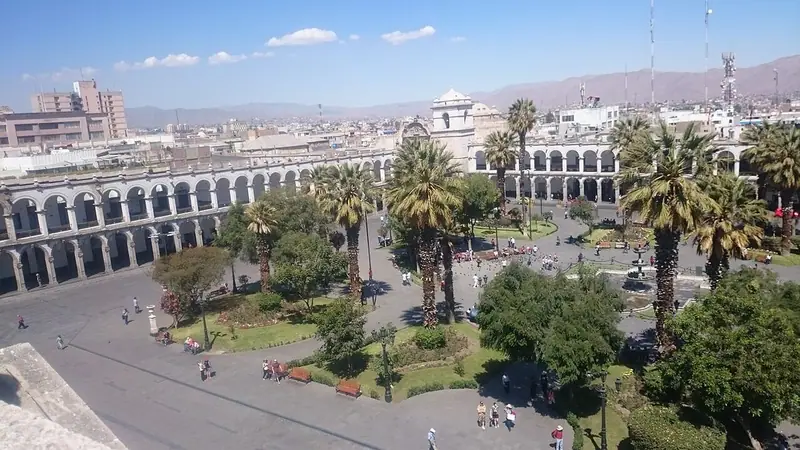 Spanish Colonial7 stops · 16th–19th century CE
Arequipa audio guide
The White City of volcanic stone: the Santa Catalina Monastery, the cathedral and La Compañía on the Plaza de Armas, the ice maiden Juanita and the Yanahuara viewpoint.
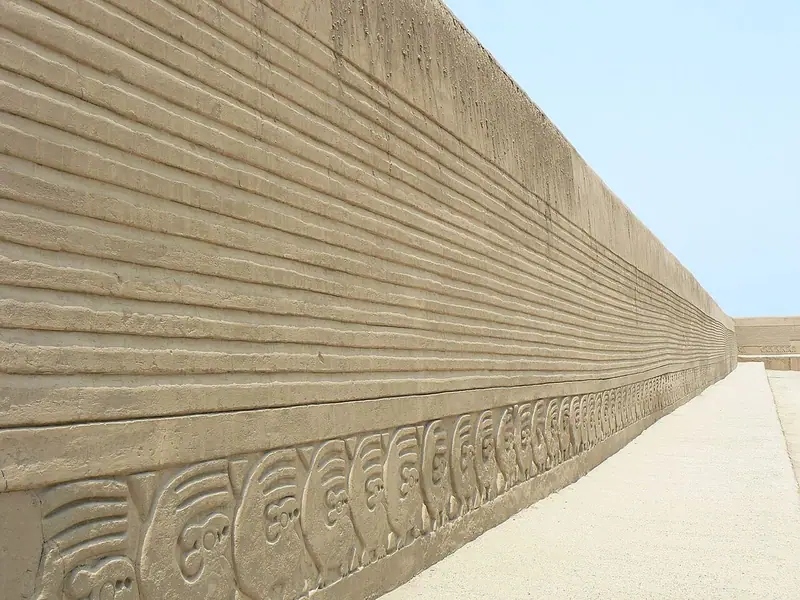 Chimú8 stops · c. 900 – 1470 CE
Chan Chan audio guide
The vast adobe capital of the Chimú kings by the Pacific: the palace of Nik An with its friezes of fish and nets, its audiencias and royal tomb, and the rainbow temple of the Huaca Arco Iris.
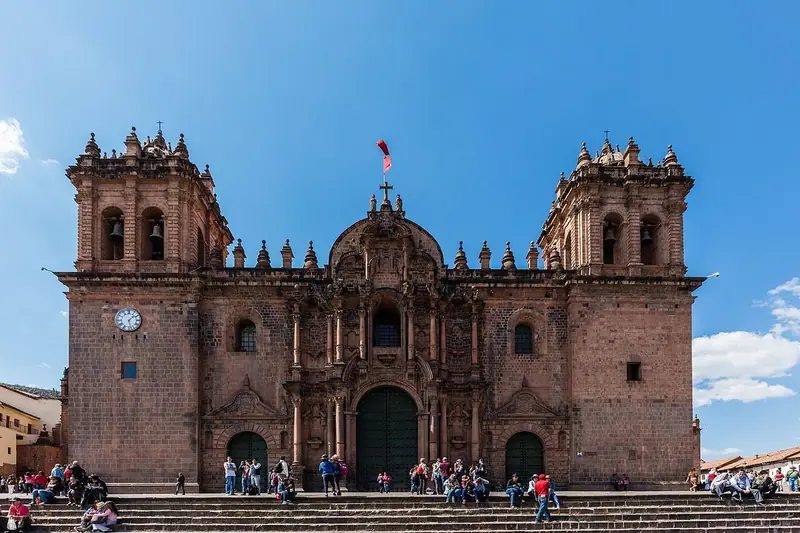 Inca7 stops · 15th–18th century CE
Historic Centre of Cusco audio guide
From the Plaza de Armas past the Twelve-Angled Stone and San Blas to the Qorikancha, temple of the Incas.
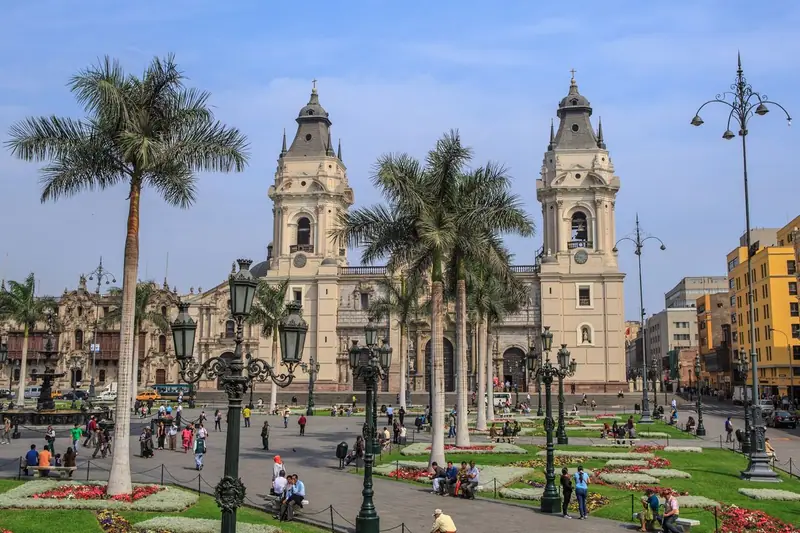 Spanish viceroyalty and republican Peru6 stops · 1535–1921
The Historic Centre of Lima audio guide
The Plaza Mayor of Lima, the cathedral and the palaces of church and state, the monastery and catacombs of San Francisco, the balconies of Torre Tagle and the Plaza San Martín.
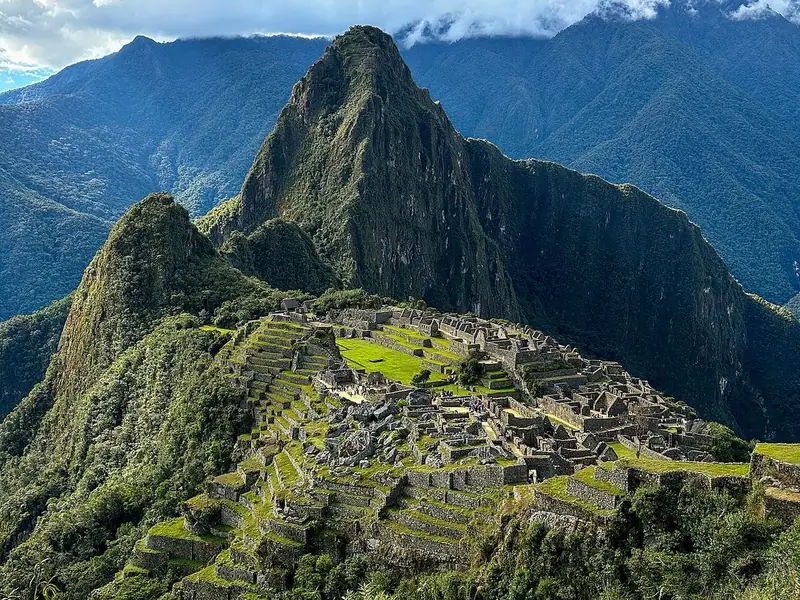 Inca8 stops · 15th century CE
Machu Picchu audio guide
Through the city gate to the Temple of the Sun, the Intihuatana and the Temple of the Condor, high above the Urubamba.
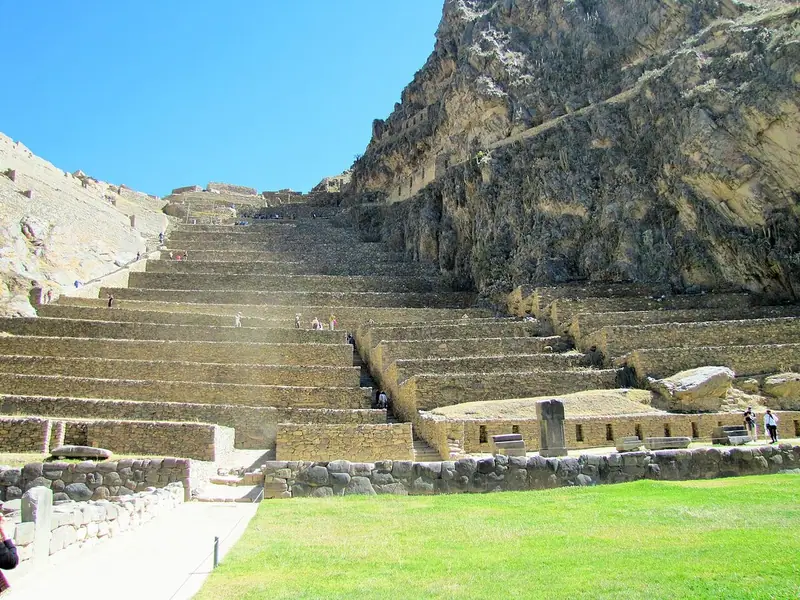 Inca6 stops · 15th–16th century CE
Ollantaytambo audio guide
The Pumatallis terraces, the Temple Sector’s six great monoliths and the Inca town below.
Every guide, in every country
The Nazca Lines and every other guide we publish, including future ones. One payment, no subscription.