Before you start
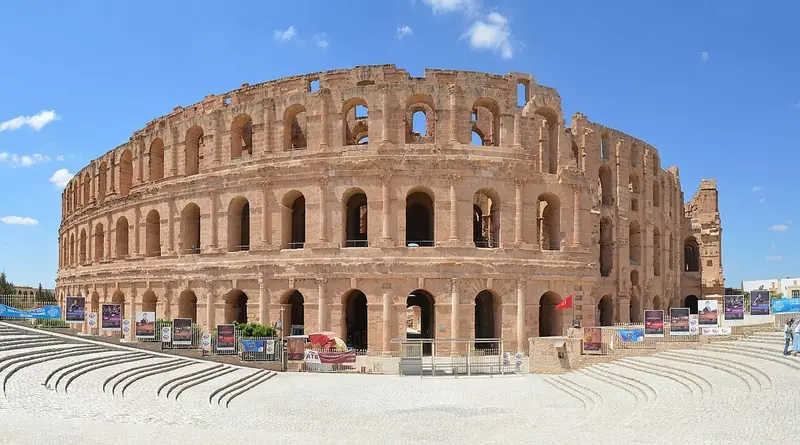
Rising above the low houses of the small town of El Jem, in the olive-growing plains of central Tunisia, stands one of the largest and best preserved amphitheatres of the Roman world. Built in the third century CE for the Roman town of Thysdrus, it could hold an estimated thirty-five thousand spectators, and it is a World Heritage Site. This guide begins outside, looking at the town and the great outer wall, then enters the corridors and the arena, descends into the passages beneath it, and climbs to the upper tiers, before ending at the archaeological museum nearby. There is little shade inside the arena, so bring water and a hat in summer. Take care on the steps and the upper levels, where there are few railings.
Use it as a self-guided tour of the Amphitheatre of El Jem: 8 stops in visit order, each played when you’re ready, at your own pace.
 Free preview · Stop 1
The Town of Thysdrus
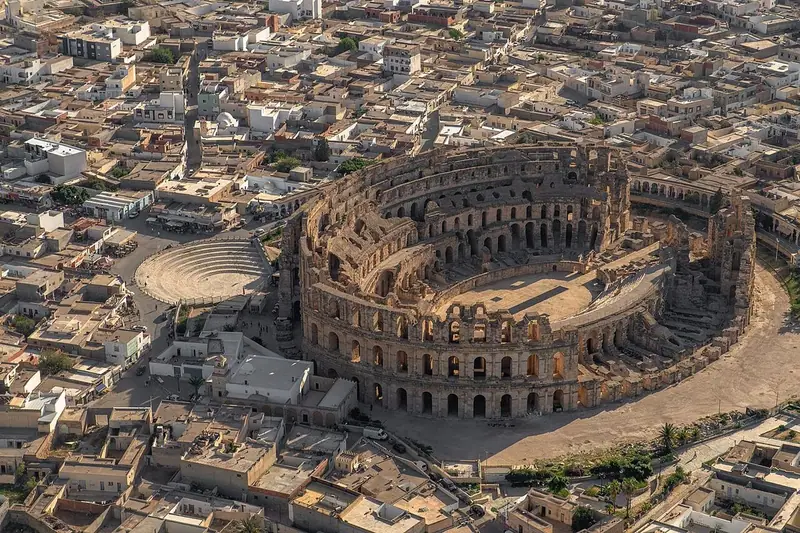
Begin by looking at the amphitheatre rising above the modern town of El Jem, which stands on the site of the Roman town of Thysdrus. In the second and third centuries CE, this was a wealthy town, made rich by the olive oil of the surrounding plains, which was shipped to Rome and across the Mediterranean. Its leading citizens built fine houses decorated with mosaics, and public buildings worthy of a great city. This is the third amphitheatre built here, for the town had two earlier and smaller ones, and the remains of an earlier, smaller amphitheatre can still be seen nearby. Notice how the great oval building dominates the town, as it must have done in Roman times, when it was by far the largest building in the region.
Photo: Skander zarrad · CC BY-SA 4.0 · Wikimedia Commons
What to see at the Amphitheatre of El Jem: 8 stops, in visit order
- 01
 The Town of ThysdrusAn Olive Oil CityFree preview
- 02
 The Outer WallThree Tiers of ArchesIn the guide
- 03
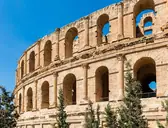 The ArcadesA Refuge and a FortressIn the guide
- 04
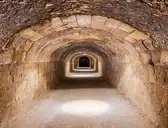 The GalleriesCorridors of StoneIn the guide
- 05
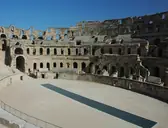 The ArenaGames and SpectaclesIn the guide
- 06
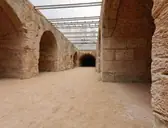 The Underground PassagesBeneath the ArenaIn the guide
- 07
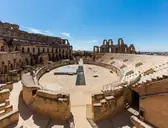 The Upper TiersA View over the ArenaIn the guide
- 08
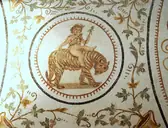 The MuseumMosaics of ThysdrusIn the guide
History of the Amphitheatre of El Jem
Thysdrus grew rich in the second and third centuries CE from the olive oil produced on the surrounding plains and exported across the Roman world. In 238 CE, a revolt began here, when local landowners proclaimed the elderly governor of Africa, Gordian, emperor. The amphitheatre was built around this time, perhaps under his grandson, the emperor Gordian the Third, and it may never have been fully finished. In later centuries it served as a fortress and a refuge, and its stones were taken for building, but much of it still stands.
Amphitheatre of El Jem guide: questions
How many stops does the Amphitheatre of El Jem guide have?
8 stops, in visit order: 1. The Town of Thysdrus; 2. The Outer Wall; 3. The Arcades; 4. The Galleries; 5. The Arena; 6. The Underground Passages; 7. The Upper Tiers; 8. The Museum.
Can I do a self-guided tour of the Amphitheatre of El Jem with this guide?
Yes. The guide is made for a self-guided tour: 8 stops in visit order, each with a photo, a story and a voice, so you can explore the Amphitheatre of El Jem at your own pace, without joining a group. Download it before you go and it works offline.
How long is each guide?
The 8 stops add up to about 5 minutes of listening in total. You play each stop when you’re ready, so you can go at your own pace.
Does the guide work offline?
Yes, once it’s downloaded. The guide is a single self-contained web page (about 7.1 MB) with the photos, text and audio built in. Download it to your phone before you go (Wi-Fi is best); after that it opens in any modern browser on iPhone or Android, with no app, account or mobile signal needed.
Does it use GPS or need my location?
No. The guide doesn’t use GPS and doesn’t know where you are: you play each stop when you reach it. It works on iPhone and Android in any modern browser, and it’s in English.
What’s included?
One self-contained HTML guide: 8 stops in visit order, each with a photo, text and a voice, plus the story of who built the site.
Who built the Amphitheatre of El Jem?
Thysdrus grew rich in the second and third centuries CE from the olive oil produced on the surrounding plains and exported across the Roman world. In 238 CE, a revolt began here, when local landowners proclaimed the elderly governor of Africa, Gordian, emperor.
Where is the Amphitheatre of El Jem?
Rising above the low houses of the small town of El Jem, in the olive-growing plains of central Tunisia, stands one of the largest and best preserved amphitheatres of the Roman world.
Is there a free audio guide to the Amphitheatre of El Jem?
The first stop, The Town of Thysdrus, is free to read and hear on this page, so you can try the Amphitheatre of El Jem audio tour before you buy. The full guide, with all 8 stops, is a one-off purchase: download it once and it’s yours to keep, working offline.
Is the Amphitheatre of El Jem guide worth it?
If you’d like to know what you’re looking at, yes. For $10 you get 8 stops in visit order, each with a photo, a short history and a voice you play when you’re ready, about 5 minutes of listening in all. It’s short on purpose, so you spend your time looking, not listening. It’s yours to keep, works offline and needs no app. The first stop is free on this page, so you can try it before you buy. If you’d like hours of detail, a guided tour will go deeper.
Audio guide or guided tour?
It depends how you like to visit. This guide lets you explore the Amphitheatre of El Jem at your own pace, at any time, for a one-off price. A guided tour gives you a live expert you can ask questions, but at fixed times and usually for a higher price. Many people use both: a tour for the big picture, and the guide to read beforehand or to revisit the stops in their own time.
Is this the official Amphitheatre of El Jem guide?
No. It’s an independent guide by The Historian Guide, not affiliated with or endorsed by the operator of the Amphitheatre of El Jem. For tickets and opening hours, check the official site operator before you go.
Does the guide include entry tickets or opening hours?
No. The guide is a digital companion only. Admission to the Amphitheatre of El Jem is separate, so check the official site operator for current tickets and opening hours before you go.
- Stop 1 · The Town of Thysdrus: Skander zarrad · CC BY-SA 4.0 · Wikimedia Commons · resized
- Stop 2 · The Outer Wall (also the cover): Mrabet.amir · CC BY-SA 4.0 · Wikimedia Commons · resized
- Stop 3 · The Arcades: Diego Delso · CC BY-SA 4.0 · Wikimedia Commons · resized
- Stop 4 · The Galleries: Diego Delso · CC BY-SA 4.0 · Wikimedia Commons · resized
- Stop 5 · The Arena: GIRAUD Patrick · CC BY-SA 2.5 · Wikimedia Commons · resized
- Stop 6 · The Underground Passages: Agnieszka Wolska · CC BY-SA 3.0 · Wikimedia Commons · resized
- Stop 7 · The Upper Tiers: Diego Delso · CC BY-SA 4.0 · Wikimedia Commons · resized
- Stop 8 · The Museum: Verity Cridland · CC BY 2.0 · Wikimedia Commons · resized


All photographs from Wikimedia Commons under the licences shown.
More guides in Tunisia
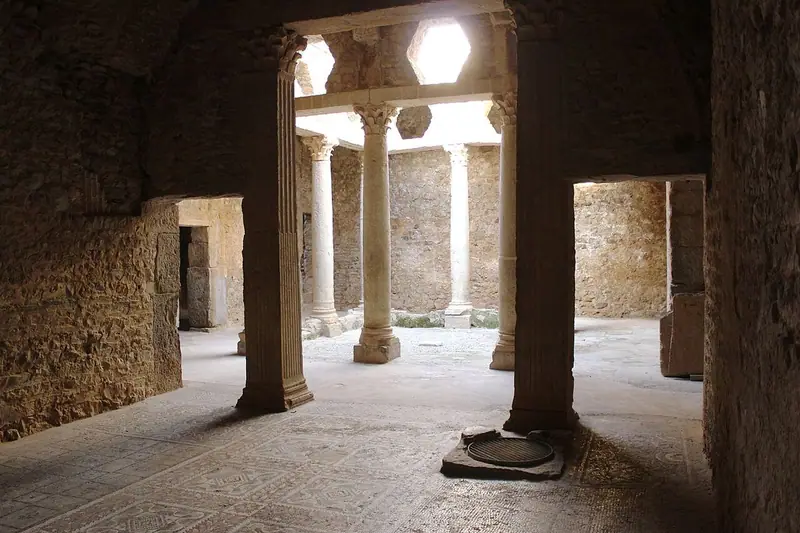 Roman8 stops · 2nd century BCE – 7th century CE
Bulla Regia audio guide
The royal Numidian town where Romans lived underground: villas with a whole storey below the street and their mosaics still in place.
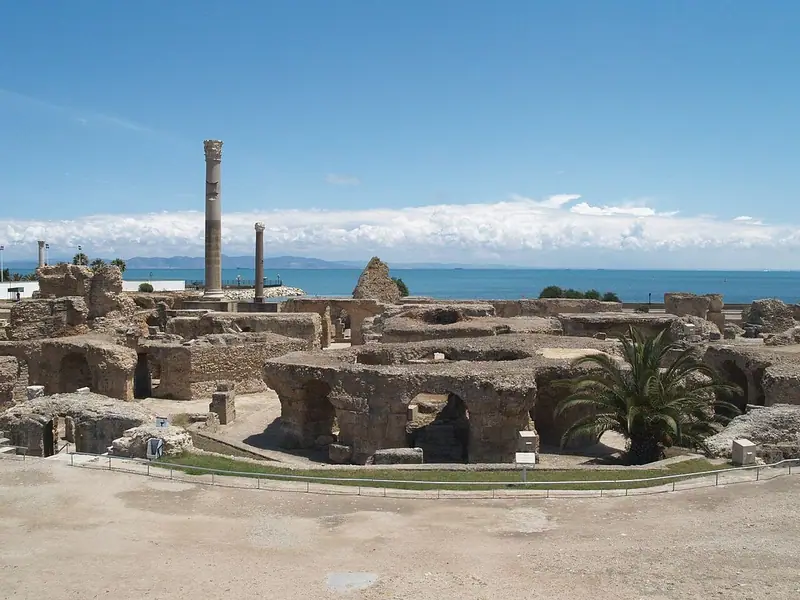 Phoenician8 stops · 9th century BCE – 7th century CE
Carthage audio guide
Trace the great Phoenician rival of Rome from Byrsa Hill and the Punic ports to the Antonine Baths of the Roman city that rose from its ruins.
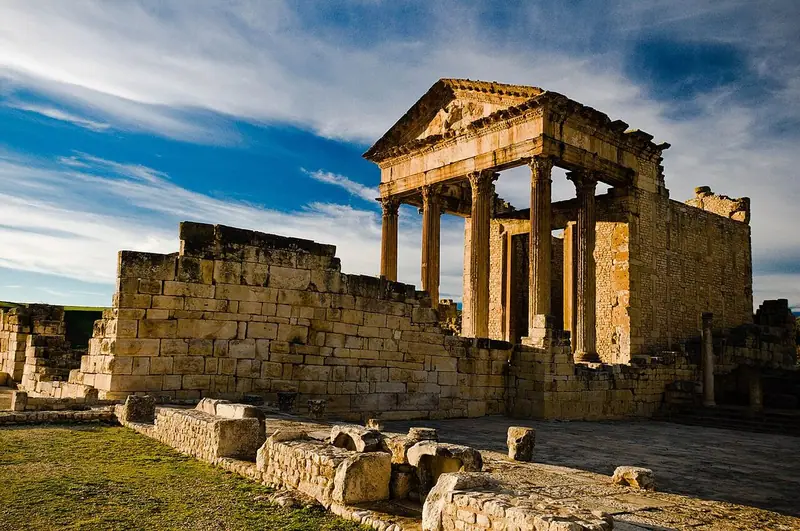 Roman8 stops · 2nd century BCE – late antiquity
Dougga audio guide
Explore the best-preserved Roman small town in North Africa, its theatre, Capitol and baths standing in open countryside above olive groves.
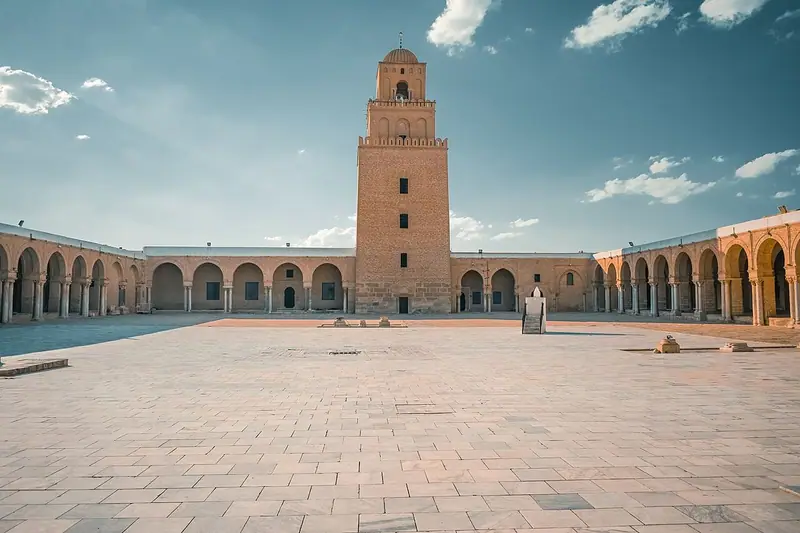 Aghlabid8 stops · 670–11th century CE
Kairouan audio guide
From the Aghlabid Basins to the Great Mosque of the first great Islamic city of North Africa, revered as one of the holy cities of Islam.
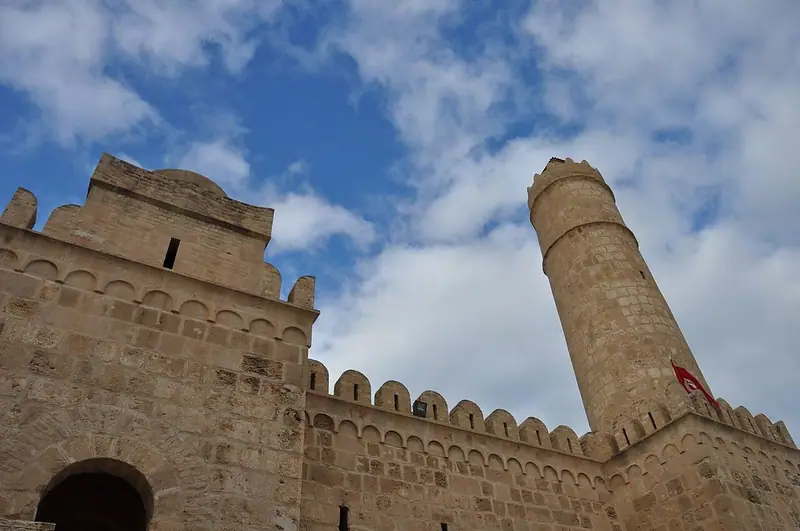 Aghlabid9 stops · 8th–11th century
Medina of Sousse audio guide
The fortified seaport of the Aghlabids: the ribat and its watchtower, the fortress-like Great Mosque, the souks and the mosaics of the kasbah museum.
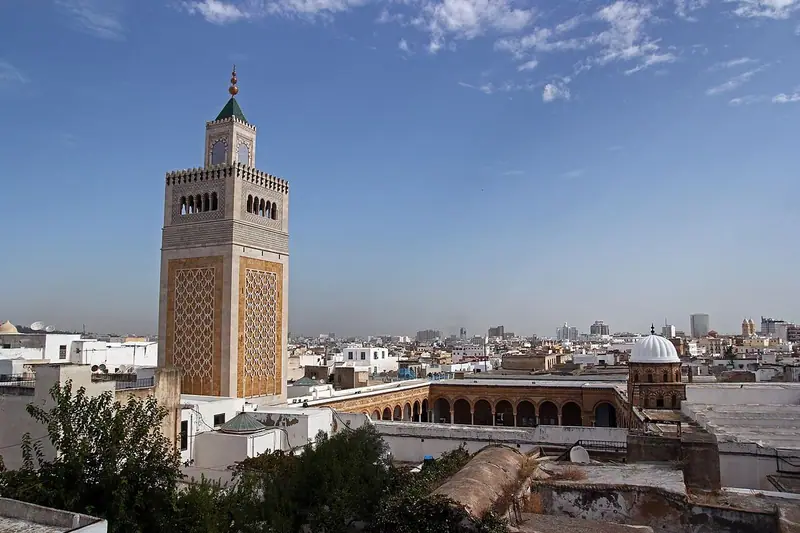 Hafsid9 stops · 698 – 19th century
Medina of Tunis audio guide
The old walled city of Tunis, with the Al-Zaytuna Mosque, its covered souks, palaces of the beys and the royal mausoleum of the Tourbet el Bey.
Every guide, in every country
Amphitheatre of El Jem and every other guide we publish, including future ones. One payment, no subscription.