Before you start
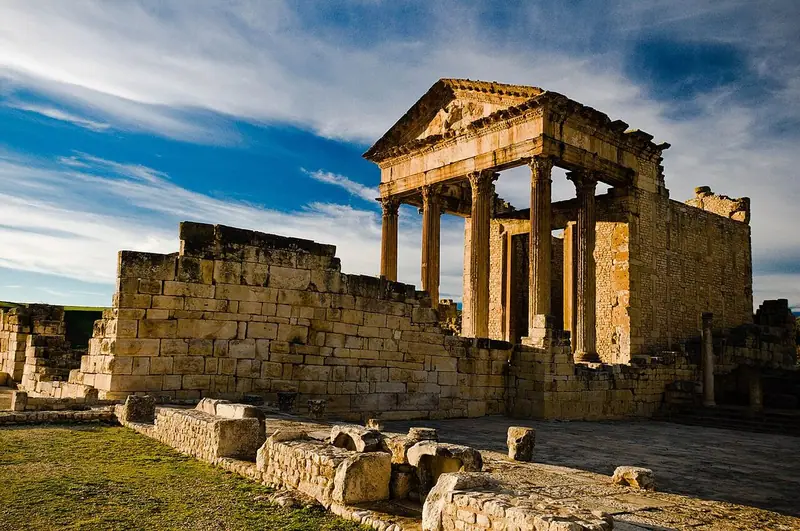
On a hillside above a wide valley of olive groves and wheat fields in northern Tunisia lie the ruins of Dougga, ancient Thugga, described by UNESCO as the best-preserved Roman small town in North Africa. Spread over about seventy-five hectares, its temples, theatre, baths and streets stand in open countryside, far from any modern city. This guide begins at the theatre, continues through the forum and the temples, past the baths, and ends at a Numidian royal tomb below the town. The site is large and hilly, with uneven paths and little shade, so wear sturdy shoes and bring water and a hat. Allow plenty of time, as the ruins are spread out across the slope.
Use it as a self-guided tour of Dougga: 8 stops in visit order, each played when you’re ready, at your own pace.
 Free preview · Stop 1
The Theatre
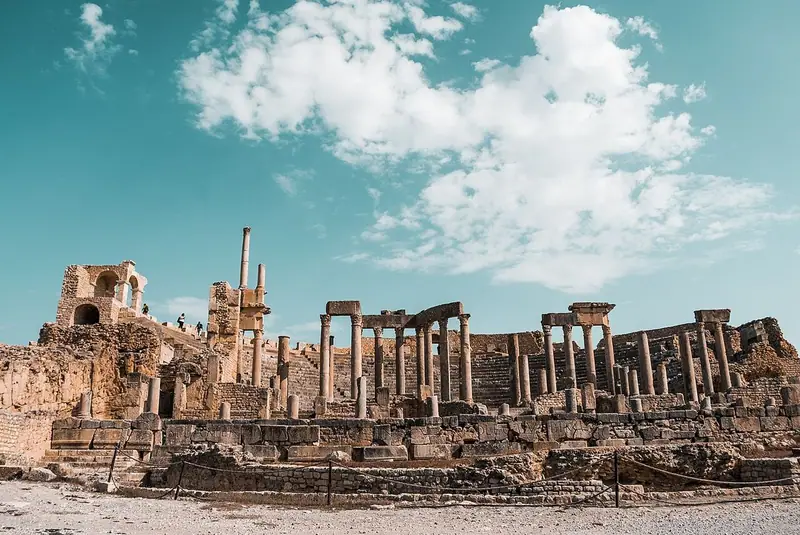
Begin at the theatre, built into the hillside in 168 or 169 CE, and one of the best preserved in Roman Africa. It could seat about three thousand five hundred people, though the town probably had only about five thousand inhabitants. Climb the tiers of seats and look down at the stage, with its row of columns still standing behind it, and beyond them, the valley stretching away into the distance. An inscription records that the theatre was paid for by a wealthy citizen, who gave it to his town. Notice how the builders used the slope of the hill to support the seating, as Greek and Roman builders often did. The theatre has been restored, and is still used for performances, including a summer festival of drama and music.
Photo: Monaam Ben Fredj · CC BY-SA 4.0 · Wikimedia Commons
What to see at Dougga: 8 stops, in visit order
- 01
 The TheatreStage above the ValleyFree preview
- 02
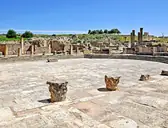 The Square of the WindsA Compass in StoneIn the guide
- 03
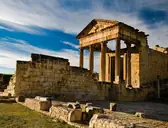 The CapitolTemple of JupiterIn the guide
- 04
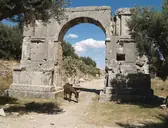 The Arch of Severus AlexanderA Gateway of HonourIn the guide
- 05
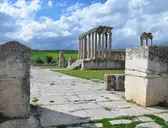 Temple of Juno CaelestisThe Heavenly GoddessIn the guide
- 06
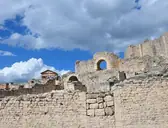 The Licinian BathsWinter BathsIn the guide
- 07
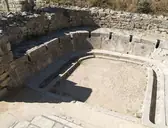 The Baths of the CyclopesA Public LatrineIn the guide
- 08
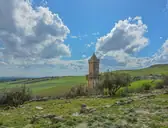 The MausoleumA Numidian PrinceIn the guide
Site map of Dougga
History of Dougga
Dougga was a Numidian town long before the Romans came, and its people spoke a Berber language and were influenced by Punic Carthage. After the fall of Carthage in 146 BCE, the region came under the Numidian kings, and later the Romans, and for two centuries a community of Roman settlers lived beside the local town. In the second and third centuries CE, wealthy citizens paid for grand public buildings, and in 205 CE the town became a municipium, and later a Roman colony. It declined in late antiquity, and the Byzantines built a fort around the forum. Excavations began in the early twentieth century, and the site became a World Heritage Site in 1997.
Dougga guide: questions
How many stops does the Dougga guide have?
8 stops, in visit order: 1. The Theatre; 2. The Square of the Winds; 3. The Capitol; 4. The Arch of Severus Alexander; 5. Temple of Juno Caelestis; 6. The Licinian Baths; 7. The Baths of the Cyclopes; 8. The Mausoleum.
Can I do a self-guided tour of Dougga with this guide?
Yes. The guide is made for a self-guided tour: 8 stops in visit order, each with a photo, a story and a voice, so you can explore Dougga at your own pace, without joining a group. Download it before you go and it works offline.
How long is each guide?
The 8 stops add up to about 6 minutes of listening in total. You play each stop when you’re ready, so you can go at your own pace.
Does the guide work offline?
Yes, once it’s downloaded. The guide is a single self-contained web page (about 7.7 MB) with the photos, text and audio built in. Download it to your phone before you go (Wi-Fi is best); after that it opens in any modern browser on iPhone or Android, with no app, account or mobile signal needed.
Does it use GPS or need my location?
No. The guide doesn’t use GPS and doesn’t know where you are: you play each stop when you reach it. It works on iPhone and Android in any modern browser, and it’s in English.
What’s included?
One self-contained HTML guide: 8 stops in visit order, each with a photo, text and a voice, plus the story of who built the site.
Who built Dougga?
Dougga was a Numidian town long before the Romans came, and its people spoke a Berber language and were influenced by Punic Carthage. After the fall of Carthage in 146 BCE, the region came under the Numidian kings, and later the Romans, and for two centuries a community of Roman settlers lived beside the local town.
Where is Dougga?
On a hillside above a wide valley of olive groves and wheat fields in northern Tunisia lie the ruins of Dougga, ancient Thugga, described by UNESCO as the best-preserved Roman small town in North Africa.
Is there a free audio guide to Dougga?
The first stop, The Theatre, is free to read and hear on this page, so you can try the Dougga audio tour before you buy. The full guide, with all 8 stops, is a one-off purchase: download it once and it’s yours to keep, working offline.
Is the Dougga guide worth it?
If you’d like to know what you’re looking at, yes. For $10 you get 8 stops in visit order, each with a photo, a short history and a voice you play when you’re ready, plus a site map of the stops, and about 6 minutes of listening in all. It’s short on purpose, so you spend your time looking, not listening. It’s yours to keep, works offline and needs no app. The first stop is free on this page, so you can try it before you buy. If you’d like hours of detail, a guided tour will go deeper.
Audio guide or guided tour?
It depends how you like to visit. This guide lets you explore Dougga at your own pace, at any time, for a one-off price. A guided tour gives you a live expert you can ask questions, but at fixed times and usually for a higher price. Many people use both: a tour for the big picture, and the guide to read beforehand or to revisit the stops in their own time.
Is this the official Dougga guide?
No. It’s an independent guide by The Historian Guide, not affiliated with or endorsed by the operator of Dougga. For tickets and opening hours, check the official site operator before you go.
Does the guide include entry tickets or opening hours?
No. The guide is a digital companion only. Admission to Dougga is separate, so check the official site operator for current tickets and opening hours before you go.
- Stop 1 · The Theatre: Monaam Ben Fredj · CC BY-SA 4.0 · Wikimedia Commons · resized
- Stop 2 · The Square of the Winds: Dennis G. Jarvis · CC BY-SA 2.0 · Wikimedia Commons · resized
- Stop 3 · The Capitol (also the cover): Mohamed Amine ABASSI · CC BY 2.0 · Wikimedia Commons · resized
- Stop 4 · The Arch of Severus Alexander: Institute for the Study of the Ancient World · CC BY 2.0 · Wikimedia Commons · resized
- Stop 5 · Temple of Juno Caelestis: Noomen9 · CC BY-SA 4.0 · Wikimedia Commons · resized
- Stop 6 · The Licinian Baths: Noomen9 · CC BY-SA 4.0 · Wikimedia Commons · resized
- Stop 7 · The Baths of the Cyclopes: Institute for the Study of the Ancient World · CC BY 2.0 · Wikimedia Commons · resized
- Stop 8 · The Mausoleum: IssamBarhoumi · CC BY-SA 4.0 · Wikimedia Commons · resized


All photographs from Wikimedia Commons under the licences shown.
More guides in Tunisia
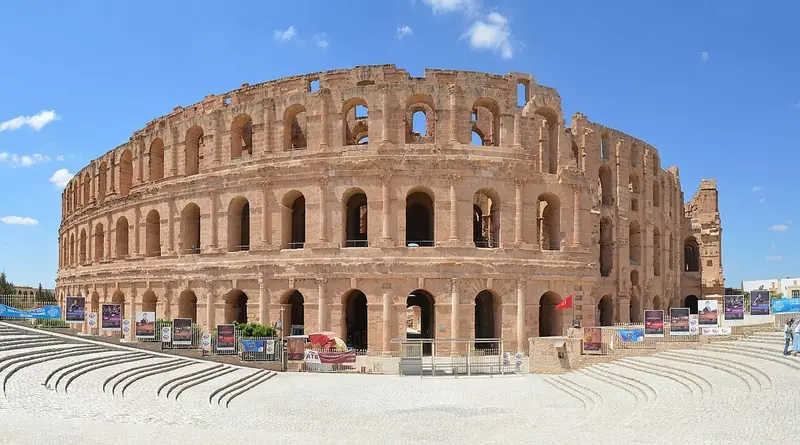 Roman8 stops · 3rd century CE
Amphitheatre of El Jem audio guide
Stand in the arena of one of the largest and best preserved amphitheatres of the Roman world, built for the town of Thysdrus and its thirty-five thousand spectators.
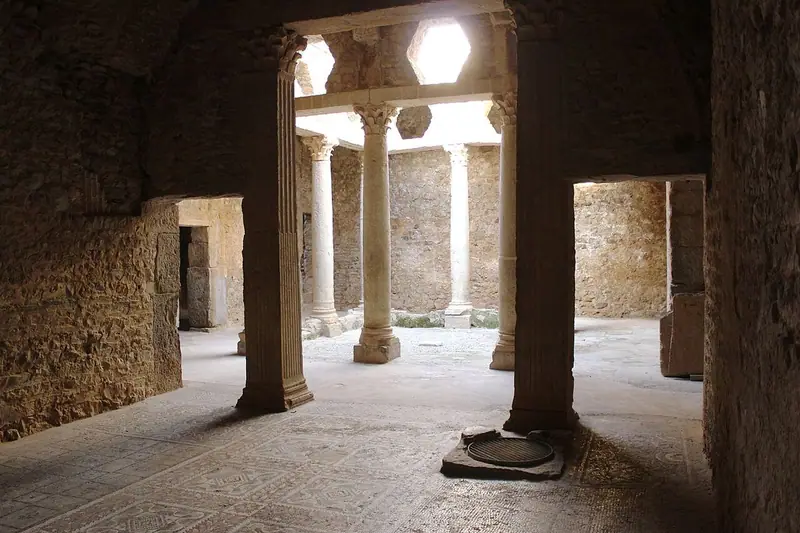 Roman8 stops · 2nd century BCE – 7th century CE
Bulla Regia audio guide
The royal Numidian town where Romans lived underground: villas with a whole storey below the street and their mosaics still in place.
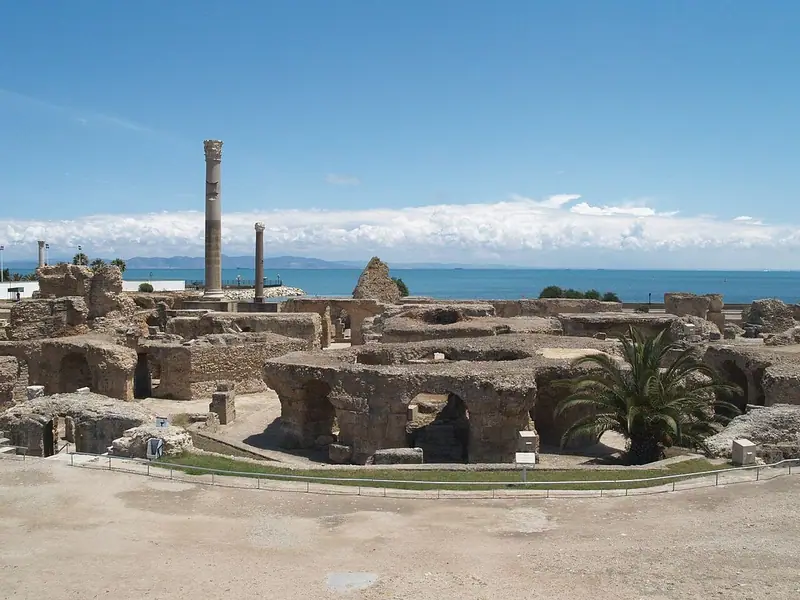 Phoenician8 stops · 9th century BCE – 7th century CE
Carthage audio guide
Trace the great Phoenician rival of Rome from Byrsa Hill and the Punic ports to the Antonine Baths of the Roman city that rose from its ruins.
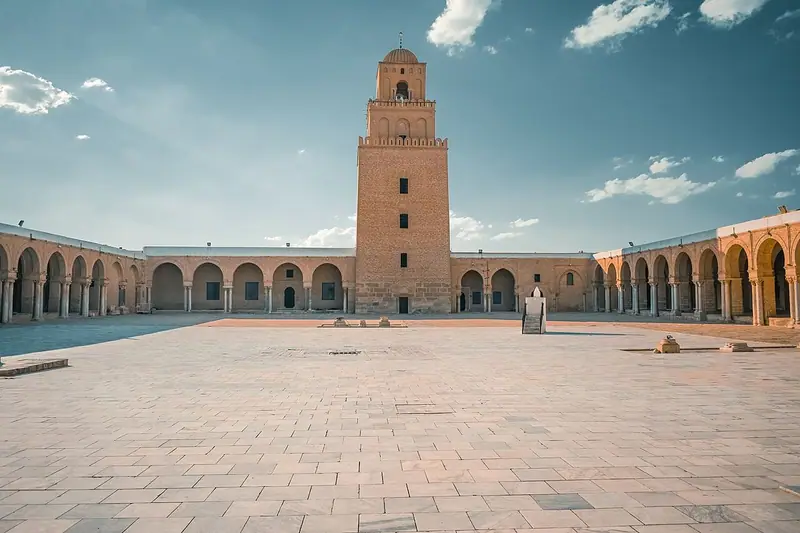 Aghlabid8 stops · 670–11th century CE
Kairouan audio guide
From the Aghlabid Basins to the Great Mosque of the first great Islamic city of North Africa, revered as one of the holy cities of Islam.
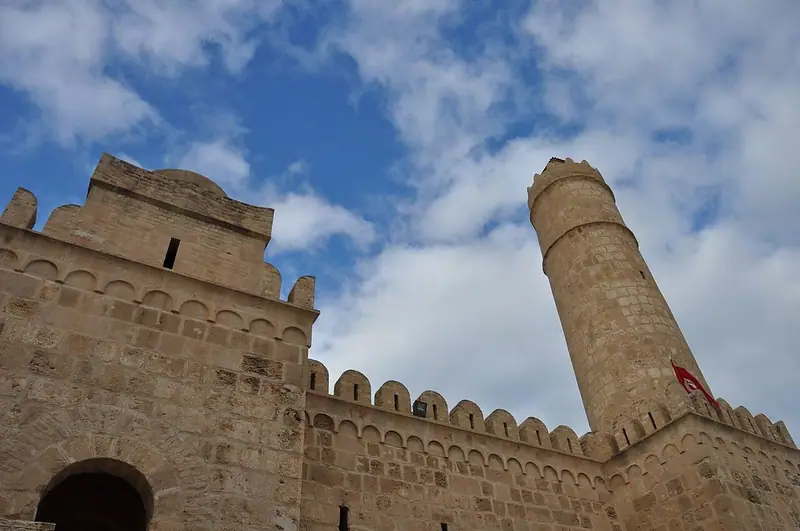 Aghlabid9 stops · 8th–11th century
Medina of Sousse audio guide
The fortified seaport of the Aghlabids: the ribat and its watchtower, the fortress-like Great Mosque, the souks and the mosaics of the kasbah museum.
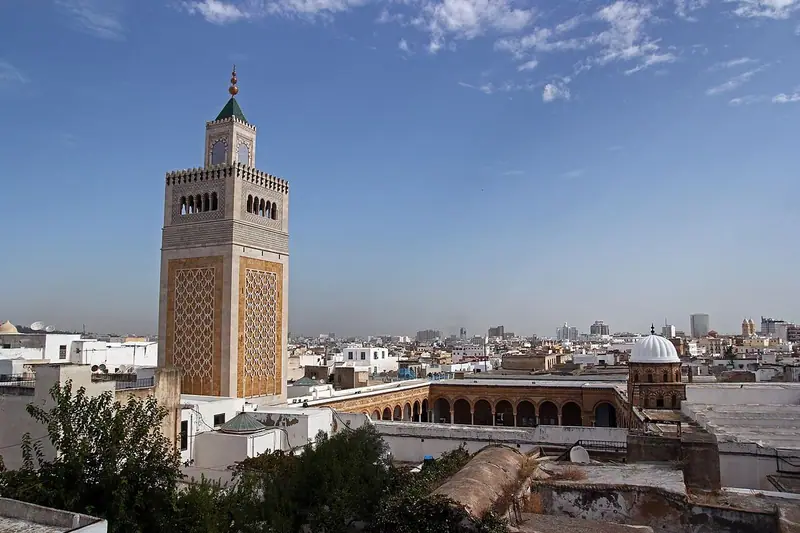 Hafsid9 stops · 698 – 19th century
Medina of Tunis audio guide
The old walled city of Tunis, with the Al-Zaytuna Mosque, its covered souks, palaces of the beys and the royal mausoleum of the Tourbet el Bey.
Every guide, in every country
Dougga and every other guide we publish, including future ones. One payment, no subscription.